
For a useful M/M dark-romance shortlist, begin with the kind of power you want to follow. Consider God of Fury for the premise of an obsessive encounter, Wrong Way Home for a captive-and-captor setup, or He Is Poison for entry into a continuing criminal-family story. These are different invitations, rather than interchangeable degrees on a darkness scale. Read their individual content information before deciding which invitation you want to accept.
This guide uses official descriptions to help you discover a book, not to claim a full-book review. It concentrates on contemporary danger and relationships centered on two men. M/M identifies the pairing; the darkness comes from fictional conduct, circumstances and power. Neither part of that description settles explicitness, personal identity or the kind of resolution a particular volume delivers.
Three books, three starting questions
God of Fury: do you want obsession to disrupt control?
Rina Kent’s God of Fury pairs artist Brandon King with mafia heir Nikolai Sokolov. Penguin’s English description emphasizes Nikolai’s fixation and directs readers to the author’s content note.
The useful selection question is what interests you about being the focus of someone’s attention. Perhaps you want attraction that interrupts an orderly life. Perhaps you want the discomfort of an encounter that one person cannot easily put aside. Those interests can overlap, but they ask different things from the viewpoint and the emotional pacing. Read the sample to see which kind of attention the prose invites you to inhabit.
An opposites-based premise also offers a useful test of characterization. Look for reasons to care about each man’s priorities beyond his function in the pairing. If the controlled character interests you, does his opening perspective offer a specific desire or concern? If the disruptive character interests you, do you enjoy the way his presence changes a scene? These are sample-reading questions, not conclusions about the complete novel.
Do not turn this entry point into a promise that obsession takes a particular form in every chapter. The blurb identifies an attraction mechanism; it cannot supply a scene-by-scene account. If one behavior would determine your choice, investigate that behavior separately rather than treating obsession as a complete answer.
Wrong Way Home: do you want intimacy shaped by captivity?
The authors’ English page identifies Colin as a murder witness, Taron as his captor, and Wrong Way Home as a standalone dark M/M thriller romance.
This is a direct starting question: are you interested in a romantic premise built around restricted freedom? Being trapped by circumstances and being held by a potential partner are different experiences. The latter makes access, movement and the possibility of refusal part of the relationship’s practical structure. If that structure is what you want to explore in fiction, the premise gives you a reason to investigate further.
If you mainly want two people seeking safety together, captivity by a romantic lead may be the wrong opening condition for your mood. You can enjoy dangerous settings without wanting that particular imbalance. Rejecting one premise does not mean you need a universally gentler book; you may simply want the danger positioned somewhere else.
While sampling, notice how the narration positions you relative to uncertainty. Do you enjoy understanding a threatening character slowly, or do you prefer earlier access to his intentions? Either preference changes how an isolated setting feels. The description cannot establish how much uncertainty the complete book retains, so use the opening for voice and ask separately about anything essential beyond it.
He Is Poison: do you want attraction entangled with obligation?
The official series page lists He Is Poison as book one. Assassin Domenico must train Seth, the Don’s son, who is forced back into mafia life against his wishes.
Here the selection question concerns divided loyalties. An assigned role creates a reason for the men to interact before affection can simplify anything. Ask whether you want duty to remain part of the reading pleasure: who gives an order, who is expected to comply, and whose future is being arranged by other people? A crime-family framework can make those questions as compelling as the private attraction.
That framework calls for a different time commitment from choosing one isolated encounter. The authors’ books overview presents Guns n’ Boys as a finished series. A finished series is a reading route, not evidence that every volume offers the same romantic stopping point. Check the sequence before opening later descriptions, which can disclose changes you might prefer to encounter in order.
Choose this route when following an evolving bond alongside continuing criminal pressures appeals to you. If your current wish is to complete one immediate arc in one volume, first clarify the first book’s resolution. A series number describes placement; it does not answer that separate emotional question.
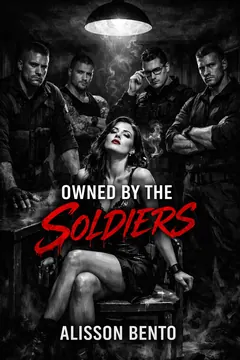
From Alisson Bento’s books
A military romance about a hero who claims her and never lets anyone forget it.
Kindle edition · Check Kindle Unlimited availability on Amazon.
Translate atmosphere into practical power
After those entry points, identify what one person can actually do. Wealth, physical strength, organizational status and private information are different resources. A wealthy man may be unable to change a family decision. Someone with little public status may know the secret that changes everyone else’s options. The dramatic question is how a resource affects a choice.
Imagine an invented romance between two adult men in which one controls a safe apartment. Shelter could be a freely offered kindness, a bargaining tool or a restriction disguised as protection. The apartment looks identical in all three versions. What changes is whether its recipient can leave, refuse a condition or obtain help elsewhere. That distinction produces a more informative recommendation request than asking for a powerful hero.
Write the premise in verbs: one man follows, trains, confines, bargains with, conceals information from or protects the other. Then add what the other can do in response. You are identifying the pressure you want the opening to establish. A description with impressive adjectives but no intelligible interaction may need a sample before it becomes a useful choice.
Decide where you want the emotional risk
Two books can feature criminals while making different demands on your trust. You might want the romantic partners to become a refuge from a violent environment. You might want attraction to a person whose own choices create the danger. You might want both, with cooperation and mistrust pulling in different directions. Avoid letting the setting answer the relationship question for you.
An invented bodyguard premise shows the difference. In one version, an adult client hires a guard, retains control of his movements and falls for him while an outside threat grows. In another, the guard hides information to make the client dependent on him. In a third, the client knowingly offers a bargain involving a restriction he can later renegotiate. Those versions may share scenery, yet the reader’s central uncertainty changes.
Our dark romance and romantic suspense comparison explores that distinction. Use it to name your preference, then return to the individual book. A category comparison cannot establish the contents of a title whose specific notes you have not checked.
Ask precise questions about consent and resistance
Enemies, forced proximity and power exchange are not interchangeable descriptions. Enmity concerns conflict. Proximity concerns access to space. A power exchange concerns what people allow or expect from one another. A story can combine them, but one tag does not explain whether a specific act is agreed to, contested or imposed. If that distinction affects your reading, ask directly.
A useful question might be: does the romantic lead cause the confinement, and is that confinement part of the developing attraction? Another might ask whether coercion concerns sexual contact, money, movement or information. Request a brief answer about one issue without requesting the circumstances of a later revelation. The person answering should know which book and edition you mean.
Resistance can be interesting for different reasons. A reader may want verbal antagonism between people who retain meaningful options. Another may specifically seek a fictional loss of options. Calling both requests enemies to lovers obscures the choice. Naming the desired pressure makes it easier to find a suitable book and to set one aside without arguing about its marketing label.
Make a content boundary specific enough to check
A general request for something dark but not too dark leaves the hardest part unstated. Identify the event or behavior you want checked and the depiction that matters. A brief reference, a remembered experience and a sustained scene can affect readers differently. You may care about the theme itself, who causes it, or how directly it appears.
For a hypothetical example, you might be comfortable with an invented criminal setting but want to avoid partner-caused confinement. Another reader might seek captivity while avoiding a completely different topic. Neither preference reduces to one intensity number. A precise boundary distinguishes the shortlisted books without pretending one is universally suitable for beginners.
Use the spoiler-light content-note guide if you need a method. Start with the title’s own author or publisher information. A missing warning is not proof that a theme is absent. If the available information does not resolve a firm boundary, choose a clearer option or obtain a narrower answer; ambiguity need not become your reading experiment.
Separate one-volume reading from a larger universe
Rina Kent identifies God of Fury as Legacy of Gods book five and says it can be read on its own. That is useful structural information. It does not mean a shared universe contains no references to earlier relationships, nor does standalone function as a personalized content recommendation.
Distinguish three questions: can I understand the setup, will reading this disclose earlier developments, and where does the romantic arc reach the stopping point I want? You may care about only one. Someone browsing for a particular pairing might accept background spoilers. Someone planning an entire family saga might prefer publication order even when an individual book can stand alone.
Keep the investigation narrow. Read ordering information before browsing every sequel blurb. A later description can reveal a changed relationship or a character’s survival simply by naming its starting conditions. If you need reassurance about closure, request the volume where that closure occurs without asking what produces it. This preserves more discovery than reading summaries until you feel certain.
Use a sample to test the reading experience
A sample helps you decide whether you like inhabiting the tension. Read an ordinary conversation as carefully as an alarming incident. Do the voices feel different? Are you drawn to the viewpoint’s observations? Does the prose give you enough spatial information to understand the encounter? These are immediate pleasures you can evaluate without claiming knowledge of the rest of the book.
Notice how much attention goes to the wider world. Some readers enjoy learning a hierarchy, tracing obligations and meeting a large cast. Others want the opening to stay close to the two men. Neither preference measures sophistication. It tells you how much surrounding story you want to carry while following the attraction.
Keep the sample’s limits in view. An opening can establish narrative distance and cadence, but later chapters can introduce new material. Do not read a calm first scene as a guarantee about the whole novel, or an intense scene as proof that every page maintains the same pace. Combine your voice preference with separate information about structure and content.
Build a shortlist around one reading mood
Imagine an adult reader saying, “I want attraction complicated by obsession, but I do not want to investigate a long reading sequence tonight.” That reader could begin with God of Fury and its title-specific notes. The reason is the match between an interest and an advertised premise, not a claim that it satisfies every boundary or that other books are less emotional.
A second hypothetical reader wants restricted freedom central to the romantic tension. That reader has a reason to investigate Wrong Way Home. The next step is to check the particular kinds of confinement and other material that matter to them. If the premise already conflicts with their preferences, they can remove it without searching for a reassuring review that overrides the description.
A third reader wants a longer route through criminal obligations and an ongoing relationship. That reader could examine He Is Poison and the Guns n’ Boys ordering information. Their decision concerns narrative commitment as much as attraction. Decide how much continuity you want before treating a first-volume number as if it described a complete isolated experience.
These hypothetical readers need different books even if all three enjoy M/M dark romance. Finish the sentence “Tonight I want the story to keep asking…” Perhaps your answer concerns desire, escape or divided loyalty. Choose one main question, then check a small shortlist against it. Collecting ten more titles rarely fixes an unnamed preference.
Keep pairing, identity and explicitness separate
A romance between two men does not give you every word either character uses for himself. Nor does a character’s initial account of attraction establish all the identities the narrative may explore. If a particular representation is central to your choice, seek specific author information rather than converting a premise into a complete identity claim.
Similarly, M/M is not a heat rating. Check explicitness separately. A dark label cannot establish the frequency or type of intimacy. You can want morally difficult fiction with less detailed sexual presentation, or explicit fiction with a particular relationship structure. Those coherent preferences deserve separate answers.
For configuration vocabulary, our MM, MFM and MMF explainer addresses male-male connections inside broader romantic groups. The shortlist here concerns two-male-lead premises. When browsing beyond it, confirm the central relationship rather than assuming every book carrying an MM note offers the same arrangement.
Select one premise, open its official description, read the relevant content information and try the voice. Keep an unresolved question visible rather than replacing it with an assumption. Browse the dark romance catalog for a broader reading path. The useful choice is the book whose central pressure interests you and whose specific information lets you decide with confidence.