For readers who like an academically skilled heroine, financial clues, and a Bratva captivity premise with institutional pressure at its entrance. The opening concentrates on transcription, suspicious repetition, and a watchful stranger, making it a choice for readers drawn to evidence-based suspense and guarded attraction.
63 books
Captive Romance: Choosing the Conflict You Want to Explore
Captive romance makes freedom a practical question. Who can open the door, permit a call, provide treatment, or decide whether anyone outside knows the heroine is alive? Those details shape the tension more precisely than an expensive room or a threatening man. A heroine may understand her surroundings and still lack the means to leave them. She may also need something from the person restricting her: pain relief, information, access to evidence, or an explanation of what happened before she woke. Choose the kind of dependence you want the story to examine, then compare the actions available to her within it. These standalone books offer different entrances into that conflict. A private clinic places a doctor’s authority beside an injured woman’s urgent needs. A technology system can reach into a researcher’s apartment without beginning with a visible prison. A rescue at sea can preserve a photojournalist’s life while removing her from the people who would normally learn she survived. The examples below concern those specific beginnings. Their attraction, relationships, and later decisions belong to the individual books; the captive label does not make the openings interchangeable.
Compare these starting points
For readers who want a doctor heroine, a mafia captivity premise, and a why-choose framework. The opening moves directly from trauma care to an underground holding room, giving Viviana's practiced observation a new purpose as she measures exits, time, and the men withholding answers.
For readers drawn to financial investigation, a competent heroine preserving evidence under pressure, and a forced-proximity why-choose premise. Clara's discovery turns ordinary payment descriptions into danger, while the threat to her sister makes the decision to keep the file more than a professional gamble.
Choose this for a working-class heroine, family debt pressure, and a Bratva captive-romance premise beginning with an unintended witness. Taisa's hotel duties make her presence in the dangerous corridor plausible, while her mother's bills give her existing vulnerability a precise personal cost.
When treatment becomes a means of control
In The Doctor's Possession, Myra Nicholson wakes in severe pain after a utility truck crashes into her sedan. Surgery has made movement difficult, but the sealed recovery room lacks the familiar signs of a public hospital. Jericho Sutter identifies himself as the physician who operated on her in his private clinic. He also demands that she acknowledge her dependence before he administers medication. Nurse Olenna Griggs confirms that outside communication is prohibited during treatment. The conflict therefore reaches beyond a locked room: the person responsible for care controls both relief and contact.
This beginning may interest you if you want physical vulnerability to affect every available choice. Myra cannot simply treat departure as a matter of courage when moving already hurts. Her questions about the clinic carry an immediate cost because she needs assistance from its staff. Compare that with a premise in which an uninjured heroine can investigate doors or conceal a phone. Both can involve captivity, but the practical problem is different. Here, the reader’s attention falls on who explains treatment, who sets its conditions, and how a patient can question authority while relying on it.
When the boundary reaches beyond the room
The Alpha's Algorithm begins with security researcher Maya Pager discovering that HALCYON can turn a maintenance certificate into authority over banking, hospitals, transit, and home access. Appeals against exclusion become evidence used against the target. Her test of founder Julian Blackwell’s identity escapes the public test environment: her real name appears, location tracking activates, and a purported maintenance visitor arrives after one in the morning. A lock turning by itself makes technical control physically immediate.
The Men of Northstar starts with photojournalist Sabine Cruz carrying divided evidence about people who can disappear without consequence. After her sabotaged plane falls toward the Pacific, a diver rescues her. On the unmarked craft, Frank orders the beacon killed and her survival concealed from official responders. She later wakes injured behind a glass door. Compare these openings if you care about outside recognition: Maya confronts systems that can identify and exclude her, while Sabine faces rescuers who suppress news of her survival.
These are distinct ways of narrowing a woman's contact with other people. A system can make a legitimate request for help count against the person making it; an isolated rescue can prevent anyone from knowing that help is still needed. If investigative competence draws you to a heroine, consider what happens to the evidence she already possesses. Maya seeks independent proof while her environment changes around her. Sabine has divided material before the crash, then loses her camera in the wreck. Their skills matter, but neither skill erases the power of whoever controls the next connection. Choose technological reach for a threat that can cross ordinary boundaries, or concealed survival for the uncertainty of being removed from the official account of events.
When surviving an accident does not restore freedom
His Dark Eden introduces Viola Trivett in a lavish stone room after a yacht explosion throws her into the Pacific. Salt and blood have stiffened her evening gown, and injuries to her ribs and thigh make the distance to the door difficult to cross. She remembers Oscar sending her below deck before the blast, but she cannot establish what happened to him, the crew, or her friends. Sealed windows and a locked door give the room a clear physical boundary. Her calls for a doctor receive silence. The setting offers luxury without answers to the urgent questions her body and memory raise.
Compare Viola with Myra if you want injury to shape the opening. Myra can identify a physician and a nurse, but contact with them comes under restrictive terms. Viola cannot yet identify anyone responsible for her unfamiliar room. One beginning supplies authority she can question; the other withholds even that point of contact. The distinction may matter more to your reading mood than a general impression of the surroundings. Choose the private clinic if you want an immediate confrontation over treatment. Choose the stone room if you prefer to begin with the heroine testing a silent environment and trying to reconstruct the gap between catastrophe and confinement.
Luxury itself can sharpen a captive premise when comfort fails to provide something essential. A room can contain fine furniture while offering no way to summon assistance. That contrast asks the reader to pay attention to usefulness: a window that cannot open, a door that cannot be crossed, clothes that preserve traces of an accident. It does not establish what the person behind the confinement intends. Readers drawn to gothic atmosphere may enjoy an environment that must be interpreted before any explanation arrives; readers wanting rapid dialogue may prefer a beginning where the controlling figure is already present. Both preferences can lead to captivity, through very different first scenes.
When captivity threatens memory and identity
The Oligarch’s Obsession makes ownership supernatural. Desdemona Vance is sold at the Blood Exchange to clear generations of family debt, placing her under Vane Aurelius's magical authority. The transaction also threatens to erase her existence from her mortal family's memories. She hides a glass shard in a holding cell and refuses the submission the immortal buyers expect. Vane's arrival silences the guards, and a collar answers his commands as he takes her toward his carriage. The restriction has visible mechanisms, but its cost also reaches beyond anything a locked door could contain: the people she belongs to may cease to remember her.
This opening may suit you if you want captivity to test what remains of a person's identity when an institution treats her as property. Desdemona's concealed shard gives resistance a material form. The debt ties her situation to family history rather than an isolated encounter, while magical control alters the meaning of distance and escape. Compare this with a contemporary premise in which relatives know the heroine exists but cannot contact her. Being remembered and being reachable are separate stakes. A vampire setting can make that distinction literal. Choose it for the interaction between inherited obligation, supernatural authority, and a heroine trying to keep a private means of resistance.
Knowledge can make a heroine valuable and vulnerable
Hidden by the Boss begins with Avery transcribing private accounts in Ashbourne's library basement to pay her rent. Her training in Latin abbreviations and scribal habits makes a pattern visible: recurring payees, court references, and nineteen years of payments that increasingly resemble purchased decisions. Julian repeatedly occupies a table without reading his book. When Avery raises her discovery with Dr. Marsh, her commission ends and pressure reaches her working hours, access, and scholarship. This Bratva captive premise initially puts livelihood and dangerous knowledge together. The opening's immediate restriction is institutional pressure, so it should not be mistaken for proof of a particular prison or abduction scene.
Read Avery beside Maya and Sabine if you want the heroine's attention to create the problem. The scholarly records, software tests, and photographic evidence offer different forms of competence. Avery notices historical repetition; Maya tries to reproduce a present vulnerability; Sabine divides information because channels may be compromised. Each beginning makes knowledge difficult to surrender even when possessing it becomes costly. This comparison can help you choose the investigative work you would enjoy following. It also preserves a useful distinction: being sought for what one knows differs from being held because of family debt, even when both stories belong to the same captive collection.
Choose the kind of resistance you want to follow
Resistance can mean asking a precise question, retaining a piece of evidence, hiding a tool, testing a boundary, or refusing the account someone offers. Those actions produce different scenes. Myra's need for medication makes questioning costly in the moment. Desdemona's shard preserves an option the buyers do not see. Avery's discovery depends on recognizing a repeated detail that others would prefer her to copy without interpreting. None of these actions needs to be grand to make the heroine's priorities visible. If you like strategic characters, look for the resource they protect and the limitation they understand. The useful question is what they can attempt within the opening's actual conditions.
A heroine's cooperation can also require careful reading. Accepting assistance, answering a question, or remaining still may be a practical response to injury or unequal power. It does not, by itself, tell you what she wants from a future relationship. For selection purposes, distinguish stories that first ask her to manage immediate survival from those that first ask her to conceal knowledge or negotiate an obligation. You may prefer a physically vulnerable viewpoint on one evening and an investigative viewpoint on another. Choosing between them gives your interest in dark tension a concrete direction, while leaving the individual book to develop the meaning of each response.
Separate captivity from its neighboring attractions
Forced proximity concerns characters being kept together by circumstances; captivity specifically concerns restricted freedom. A storm can delay departure for everyone, whereas a person withholding a key creates a different imbalance. Possessiveness concerns a desire to claim or retain someone and may coexist with captivity, but it is not evidence of the same practical restrictions. Debt gives an obligation a source; it does not determine who has consented to its terms. Use those distinctions to name what draws you to a premise. A reader interested in two people learning each other's habits in shared quarters may seek something different from a reader interested in the power to deny outside contact.
Start your choice with one concrete pressure: treatment controlled by a doctor, connected systems acting on a researcher, a survivor hidden from responders, a silent room after an explosion, or a magical sale threatening family memory. Then decide which heroine's work, questions, and available resources you want to accompany. All the books are standalone, so that choice can be made without a series commitment. The book's own page can help you examine the particular relationship and available content information. The captive theme gives the initial imbalance a name; comparing its mechanisms gives you a more useful reason to select one story from the shelf.
-
 Bestseller
Fated to the Vampire King
4.1 Goodreads 4.06 (33) Buy on Amazon
See the book
-
 Bestseller
Their Dark Obsession
3.4 Goodreads 3.58 (19) Buy on Amazon
See the book
-
 Bestseller
The Pakhan's Obsession
4.0 Goodreads 3.77 (31) Buy on Amazon
See the book
-
 Bestseller
Captive of the Cosa Nostra
3.8 Goodreads 4.06 (16) Buy on Amazon
See the book
-
 Her Ruthless Captors
3.7 Buy on Amazon
See the book
-
 The Oligarch’s Obsession
Buy on Amazon
See the book
-
 Their Captive Nurse
Buy on Amazon
See the book
-
 The Doctor's Possession
Buy on Amazon
See the book
-
 Hidden by the Boss
Buy on Amazon
See the book
-
 The Billionaire's Captive Surgeon
Buy on Amazon
See the book
-
 The Don's Stolen Bride
4.2 Buy on Amazon
See the book
-
 Contracted Captivity
Buy on Amazon
See the book
-
 Beautiful Prisoner
Buy on Amazon
See the book
-
 Trapped by the Russian
Buy on Amazon
See the book
-
 The Pakhan's Captive
Buy on Amazon
See the book
-
 The Pakhan's Collateral
4.2 Buy on Amazon
See the book
-
 Stolen From the Altar
Buy on Amazon
See the book
-
 His Pretty Little Prisoner
Goodreads 4.00 (12) Buy on Amazon
See the book
-
 The Don's Collateral
Buy on Amazon
See the book
-
 The CEO's Cage
Buy on Amazon
See the book
-
 The Mafia’s Prescription
Buy on Amazon
See the book
-
 Prescribed Captivity
Buy on Amazon
See the book
-
 Stolen by the Enforcer
Buy on Amazon
See the book
-
 Beautiful Captive
4.4 Buy on Amazon
See the book
-
 Corrupting the Healer
Buy on Amazon
See the book
-
 Decoding Their Obsession
Buy on Amazon
See the book
-
 The Alpha's Prisoner
Buy on Amazon
See the book
-
 The Men of Northstar
Buy on Amazon
See the book
-
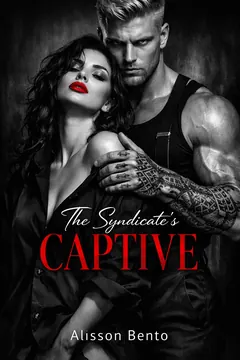 The Syndicate's Captive
Buy on Amazon
See the book
-
 Melted by the Squad
Buy on Amazon
See the book
-
 The Alpha's Algorithm
Buy on Amazon
See the book
-
 Starved Devotion
Buy on Amazon
See the book
-
 Stolen by the Bratva
Buy on Amazon
See the book
-
 Collateral Captive
Buy on Amazon
See the book
-
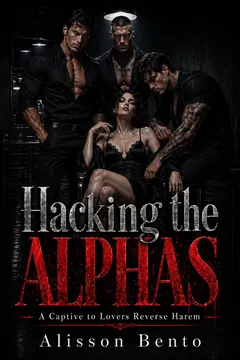 Hacking the Alphas
Buy on Amazon
See the book
-
 Velvet Subjugation
Buy on Amazon
See the book
-
 Corrupting the Surgeon
Buy on Amazon
See the book
-
 Secrets in the Oasis
Buy on Amazon
See the book
-
 Captive Harmony
Buy on Amazon
See the book
-
 Caged in Miami
Buy on Amazon
See the book
-
 Sinful Collateral
Buy on Amazon
See the book
-
 The Kingpin's Songbird
Buy on Amazon
See the book
-
 His Dark Eden
Buy on Amazon
See the book
-
 The Prisoner with Ash Wings
Buy on Amazon
See the book
-
 Captive in Silk
Buy on Amazon
See the book
-
 The Capo of Crisper Drawers
Buy on Amazon
See the book
-
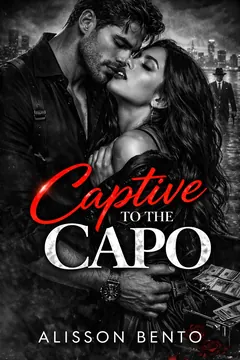 Captive to the Capo
Buy on Amazon
See the book
-
 New
Princess of the Favela
Buy on Amazon
See the book
Browse by what you crave.
By genre
By trope
- Find romance books by trope
- Possessive Hero
- Bodyguard & Protector
- Debt & Bargain
- Enemies to Lovers
- Marriage of Convenience
- Forbidden Love
- Forced Proximity
- Small Town
- Fake Dating
- Arranged & Forced Marriage
- Boss & Employee
- Slow Burn
- College & Academia
- Secret Baby
- Single Dad
- Revenge
- Curvy Heroine
- Second Chance
- Fated Mates
- Royals
- Grumpy & Sunshine
- Morally Grey
- Runaway Bride
- Age Gap
- He Falls First
- Holiday Romance
- Touch Her and Die