Choose this for a horse trainer heroine, a capable mechanic, and forced proximity rooted in a real transport problem. The opening suits readers who enjoy western working life, practical boundary-setting, and banter between people whose skills must cooperate before either can afford to relax.
23 books
Small-Town Romance: Community, Privacy and Belonging
Small-town romance makes a place of repeated contact part of the relationship. A shop, workshop, inn or working property can connect people who cannot remain anonymous simply because an encounter has ended. The appeal may be practical help, inherited belonging, familiar routines or the difficulty of keeping a private problem private. A small community is not automatically gentle, and a rural setting does not automatically make every story about a ranch. These standalone novels offer horse transport, printing and bookbinding, herbal magic, a coastal bakery, a bookstore rescue and an inherited inn. Begin with the kind of place you want to spend time in. Then ask what its local connections give the heroine and what they make harder. A community can provide someone who knows how to help, while also giving someone else knowledge she would rather they did not possess.
Compare these starting points
For readers who want a cowboy single-dad romance shaped by childcare, financial pressure, and complicated shared history. The nanny and employer dynamic has personal weight here: helping a household means encountering its grief and its boundaries. A standalone choice for readers drawn to family life and the difficulty of accepting support.
A good fit for readers seeking a bookshop setting, a returning heroine, a single father, and a slow-burn relationship. Family letters and bereavement give the small-town atmosphere emotional substance. Choose this standalone for a romance where reconnecting with a place is closely tied to learning who deserves your trust.
For readers drawn to cozy reverse harem mysteries, a Cornish harbor village, and a heroine who works with letterpress and bookbinding. The body in Nell's paper vault, missing trade tool, and delivery-door key give the opening tangible clues within a closely connected community.
Repeated contact is useful when the place has a purpose
An attractive setting becomes more interesting when its businesses and routes do something. A delivery carries valuable horses, a print shop stores paper and tools, an inn hosts visitors and a garage holds carefully ordered work. These functions create reasons for people to meet beyond a chance introduction. For readers, the useful choice is the activity that makes returning to a place feel worthwhile. Do you want service, restoration, practical labor or an investigation interrupting routine?
Too Stubborn to Love begins with a failed truck that threatens Hallie Brandt's horse delivery. Crashing into the Billionaire begins with a bakery delivery ruined by a collision. Both women need their work to produce money, but the community enters differently. Hallie must find capable transport help after exhausting safe alternatives. Wren Calloway returns to her grandmother's inn and meets the man whose SUV she just damaged as its private Hollywood guest. Choose between hiring urgently needed skill and discovering an awkward encounter has followed you home.
Local knowledge can help or become leverage
Hallie has three trained sale horses ready for Cody when her diesel truck dies before dawn. A late delivery could mean a penalty and loss of a future commission. Orson Gentry, who took her family's original ranch, calls with another offer dressed as concern. His call during the transport crisis makes the valley's information network uncomfortable rather than reassuring. Hallie hires Clay, a mechanic and driver whose handwritten card gives no surname, then sets clear rules before he works on the rig.
Choose Too Stubborn to Love if you want community familiarity alongside a heroine defending her working independence. Clay respects her livestock judgment, while the transport problem requires both people's skills. The contrast is between knowledge used to pressure and competence used to cooperate. Smallness matters because news of her difficulty travels, but practical boundaries still matter inside the urgent hiring decision. This is different from choosing a town mainly for neighbors who offer comfort. Here the delivery asks what reliable help looks like when other attention feels like leverage.
A familiar business can become an investigation scene
Proofing a Murder follows Nell Vale into her dawn shift at the Beacon Press. After checking type, ink and paper, she finds Gideon Blackwood dead against a stack in the vault. A bookbinder's paring knife is missing, along with the spare key to the north delivery door. Fire officer Rowan Cade provides support, while Detective Inspector Silas Mercer asks about a recent site visit and who handled that key. In Greyhaven Cove, the victim's development interests and family tensions are already known.
This opening makes familiarity useful and troubling at once. Nell's precise routines give her a way to notice what is absent. The tools of an inherited business become possible evidence, while the workspace she knows comes under official scrutiny. Choose this cozy small-town why-choose mystery for trade detail and a murder interrupting a place that ordinarily supplies order. Compare it with Hallie's truck problem: both heroines know their work intimately, but one must arrange transport and the other must explain an altered workspace to investigators.
Village ritual can make an impossible change recognizable
Secrets of the Still Room introduces Maisie Garrow waking to deadly cold inside a room she has kept warm correctly. Frost has blackened herbs prepared for Briarwood's Wintertide Tea Fair. The village's Longlight should hold that cold outside until the solstice, and thirty days remain before its yearly tending. Maisie relabels, sweeps and works harder, but the familiar routine cannot explain what has entered. Her recipe ledger holds her mother's handwriting stopped halfway through a word eleven years earlier.
Choose this if you want the community's calendar and shared protection to matter as much as its streets. The tea fair gives the herbs a practical purpose; the Longlight gives the cold a specific reason to feel wrong. The ledger adds family loss inside the same carefully maintained place. Unlike a setting where an outside visitor causes the disturbance, the sanctuary itself has changed. Readers who like herbal work and unsettling domestic detail can begin here, with the village's ordinary expectations forming the measure of an extraordinary problem.
An inn can make a chance collision impossible to leave behind
In Crashing into the Billionaire, Wren hopes a complimentary breakfast will win the film catering contract her bakery needs. She must find fifteen thousand dollars before Friday's bank deadline. A sliding box of croissants distracts her from Beckett Hale's stopped SUV, and the collision ruins the food while adding an insurance claim. He checks that she is unhurt and handles the exchange without anger. Wren returns to her grandmother's Saltwind Inn, where the private Hollywood guest turns out to be the same man.
This coastal small-town marriage-of-convenience premise offers an encounter tied to local work and family accommodation. The bakery connects her urgency to a possible contract; the inn makes the stranger's presence recur. Choose it if you enjoy comic embarrassment with money pressure that remains concrete. Compare Wren's returning guest with Nell's arriving officials. In one, a shared location repeats an accidental meeting; in the other, a familiar business becomes the focus of an investigation. The town supplies different reasons why a difficult morning cannot simply be left at the doorway.
A rescue can cross the boundary between two local workplaces
Fixing Her Heart begins outside Clara Evans's bookstore, Paws and Pages. She tries to bring a filthy stray dog to safety, but a sanitation truck's brakes frighten him. The animal bolts into Hayes Automotive and across the spotless floor of Wyatt Hayes's vintage-engine workshop. Wyatt emerges from beneath a Mustang to find paw prints, a breathless Clara and a dog determined to lean against his clean uniform. Her efforts to reclaim the collar spread the mess while his refusal to take dependents fails to move the animal.
Choose this protective-hero small-town romance if you want the initial contrast carried by a practical rescue that goes sideways. The two businesses give the meeting texture: a shopkeeper trying to help and a mechanic whose carefully ordered space is invaded. The dog is the immediate reason for conversation, rather than a vague statement that neighbors keep meeting. Compare with Wren's collision if an unruly opening appeals. One destroys a hoped-for delivery; the other interrupts a clean workspace. Both connect comic trouble to people with work they were trying to perform.
An inherited inn can connect belonging to repairs
Sweeter Than Maple brings Holly Maple from Manhattan to her grandmother's inn, where cracked columns, a sagging porch and a kitchen needing substantial work wait. Nan's letter gives her a year and a day to decide whether to keep the keys. Marigold Pratt, Nan's longtime friend, offers coffee, pie and an introduction to Jude Callahan, the only contractor within forty miles. Jude looks at the structural problems before giving social reassurance. Holly meets the inheritance with a permit binder and an inventory of work.
This premise may suit readers who want a return measured through building decisions. Community help comes through someone who knew Nan and knows the available contractor. Yet an introduction cannot make repair needs disappear. Compare Holly's inn with Maisie's Still Room: both places contain family memory and practical work, but Holly confronts visible structural damage while Maisie confronts cold that should not be possible. Choose whether you want belonging tied to renovation or to village magic beginning to fail. Both make the place significant before a romantic response can define it.
Privacy and support do not always increase together
A closely connected place can supply useful contacts while making a setback more visible. Hallie's transport trouble draws Orson's attention; Holly receives a contractor introduction from her grandmother's friend. These are different uses of community knowledge. When selecting, ask who knows about the problem and what they do with that information. A place's small size does not establish that every resident is generous or that every approach is unwelcome. The actual opening gives you the distinction.
Also consider the kind of newcomer you want to follow. A returning inheritor has memories and a decision about remaining. A visitor at an inn can complicate a resident's routine. A recently hired specialist must earn trust through work. You may enjoy any of these positions, but they create different questions about belonging. For a shortlist, name whether the heroine needs contacts, privacy, reliable skill or an explanation of a changed place. That helps you choose the community's role rather than assuming it only supplies atmosphere.
Think about what you want to recognize when a character walks through a door. A workplace can offer the satisfaction of familiar tools: Nell knows the press and Maisie knows her herbs. It can offer the friction of another person’s rules: Clara enters a workshop whose cleanliness matters to Wyatt. An inherited building can instead make every familiar room a decision, as Holly begins an inventory of repair needs. Those are distinct ways to spend time in a small place. If routine comforts you, choose the work whose details you enjoy before something interrupts them. If a new arrangement interests you, choose the space where two kinds of responsibility must meet. A romance grounded in local contact can appeal through either pattern. The preference is about what you would like the setting to make visible, rather than how many residents you expect the town to contain.
Does small town require a ranch, a gentle plot or one couple?
No. The setting can sit beside a print-shop mystery, herbal fantasy, a threatened bakery or a working horse operation. Proofing a Murder includes why choose, while Secrets of the Still Room brings fantasy and suspense. Those differences matter if you want a particular relationship framework or level of outside complication. Use the additional genre and trope information to narrow your preference, then read the individual description for the situation actually introduced.
All these books are standalone. Small town itself does not define explicit content, sensitive material, exclusivity or an ending. The useful first choice pairs a place with a pressure: transport help for Hallie, evidence in Nell's press, failed seasonal protection for Maisie, bakery finances for Wren, a dog in Clara's neighboring workshop or structural repairs for Holly. Read a sample for how the heroine responds and how local people enter her problem. You can return to the broad setting repeatedly while choosing a different kind of work, privacy and belonging each time.
-
 Too Stubborn to Love
Buy on Amazon
See the book
-
 The Doctor's Ranch
4.1 Goodreads 4.58 (19) Buy on Amazon
See the book
-
 A Farrier for the Cowboy
4.4 Buy on Amazon
See the book
-
 The Little Bookstore in Cedar Hollow
Buy on Amazon
See the book
-
 Crosswind Cowboy
4.2 Buy on Amazon
See the book
-
 Intoxicating Touch
4.0 Goodreads 3.77 (31) Buy on Amazon
See the book
-
 Sweeter Than Maple
Buy on Amazon
See the book
-
 The Nanny He Never Forgot
Buy on Amazon
See the book
-
 A Cowboy's Way Home
Buy on Amazon
See the book
-
 The Lawyer’s Cowboy
Buy on Amazon
See the book
-
 Dusthallow Days
Buy on Amazon
See the book
-
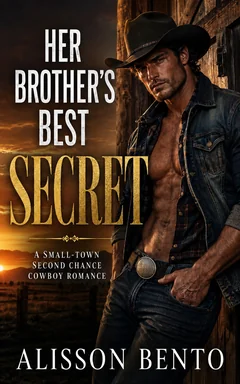 Her Brother's Best Secret
Buy on Amazon
See the book
-
 Crashing into the Billionaire
Buy on Amazon
See the book
-
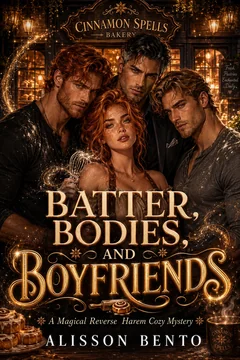 Batter, Bodies, and Boyfriends
Buy on Amazon
See the book
-
 Secrets of the Still Room
Buy on Amazon
See the book
-
 A Recipe for Forever
4.6 Buy on Amazon
See the book
-
 Fixing Her Heart
Buy on Amazon
See the book
-
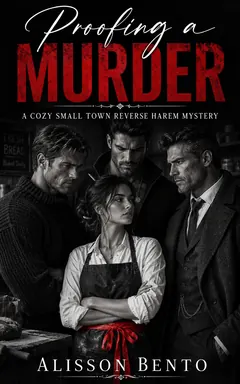 Proofing a Murder
Buy on Amazon
See the book
-
 New
The CEO's Nine-Year Secret
Buy on Amazon
See the book
-
 Under Montana Skies
Buy on Amazon
See the book
-
 Only One Bed in Aspen
Buy on Amazon
See the book
-
 Five Christmases Later
Buy on Amazon
See the book
-
 After the Rain, I Find You
Buy on Amazon
See the book
Browse by what you crave.
By genre
By trope
- Find romance books by trope
- Possessive Hero
- Captor & Captive
- Bodyguard & Protector
- Debt & Bargain
- Enemies to Lovers
- Marriage of Convenience
- Forbidden Love
- Forced Proximity
- Fake Dating
- Arranged & Forced Marriage
- Boss & Employee
- Slow Burn
- College & Academia
- Secret Baby
- Single Dad
- Revenge
- Curvy Heroine
- Second Chance
- Fated Mates
- Royals
- Grumpy & Sunshine
- Morally Grey
- Runaway Bride
- Age Gap
- He Falls First
- Holiday Romance
- Touch Her and Die