For readers drawn to a priest hero, an injured heiress seeking refuge, and a dark forbidden-romance premise. The opening concentrates on consent to physical help, medical need, and guarded information, appealing to readers who want protective attention tested by a heroine's distrust and an approaching external threat.
32 books
Forbidden Romance: Choose the Boundary That Matters
Forbidden romance starts with attraction that crosses a meaningful boundary. The pleasure of the trope depends on what that boundary is and what the characters risk by approaching it. A religious vocation, a professional responsibility, a team contract, and loyalty to a community do not produce the same conflict. Nor does the word forbidden tell you whether the story begins with tenderness, argument, manipulation, or immediate danger. Alisson Bento’s standalone catalogue offers several ways into this tension. You can choose a priest confronted with an injured visitor, a tutor setting rules for a famous athlete, or a hockey rookie whose contract reaches into his personal life. Use the guide to identify the obstacle that interests you, then compare how the opening makes that obstacle felt.
Compare these starting points
For readers drawn to shifter pack politics, a lively diner heroine, and attraction complicated by an enemy's rescue. Lulu's role as both waitress and Beta makes her alert to social patterns, while the Council brand gives the opening's uneasy pack integration a visible personal marker.
Choose this for a peer-tutor heroine, a famous football player struggling to organize coursework, and attraction constrained by professional rules. The opening treats academic support as specific work, letting banter emerge from assignment planning while public attention adds pressure to an otherwise ordinary session.
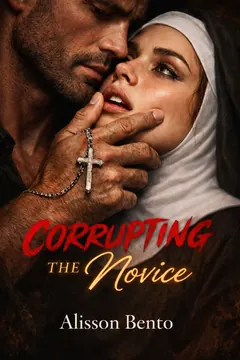
Choose this for a novice heroine, a dark captive mafia premise, and a debt that threatens an entire religious community. Lena's careful observation of her brother's behavior and Nicolás's concern over criminal authority give the opening a specific mixture of personal betrayal and institutional stakes.
Name the actual restriction
Before deciding that a book fits your mood, ask who considers the relationship unacceptable and why. The answer may be an institution, a family member, an employer, a pack, or the characters themselves. A rule backed by money or authority creates different pressure from a private fear of disappointing someone. You may want a clear prohibition that makes every meeting risky, or a divided loyalty that forces characters to reconsider what belonging means. Naming the restriction gives you a better choice than searching only for a dramatic title. It tells you which part of the characters’ lives attraction might disturb.
Imagine two hypothetical couples keeping an encounter secret. One hides because a supervisor can terminate a contract; the other hides because their communities remember a recent conflict. The same gesture of concealment carries different consequences. In the first, employment and financial security matter. In the second, friendship, history, and group trust may matter more. Neither scenario establishes how the relationship will end. They simply show why the source of the prohibition is useful to a reader. When you compare descriptions, look for a concrete cost rather than treating secrecy itself as sufficient explanation.
Religious authority can shape very different openings
His Forbidden Confession begins when Clara Vance enters Father Julian’s church injured and struggling to speak. He recognises a parishioner who watches the exits and discovers blood beneath the confessional screen. Clara refuses an ambulance and police, says her family is responsible, and protects an object hidden in her coat lining. Julian keeps his hands visible, asks before helping her stand, and distinguishes medical care from the authorities she fears. This opening may interest you if you want immediate danger and personal boundaries to make a refuge complicated before any completed confession.
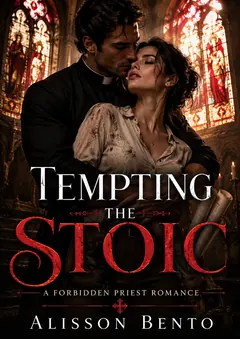
Tempting the Stoic introduces Thelma Gallagher documenting a dangerous fracture in cathedral scaffolding. Father Joseph Hayes has restricted the restoration crew’s access and orders her down; the rig fails before she can reach the ladder. His rescue brings them into a narrow recess behind the altar while debris falls. Here professional opposition and physical peril create proximity. Compare the two books by their first demand on the priest: one must respond to an injured visitor’s refusal of authorities, while the other confronts an emergency arising from a dispute over work. The religious setting does not make these encounters interchangeable.
Distinguish refuge from control
If you enjoy religious forbidden romance, consider separately how much coercion you want in its opening. Kneel for the Father places Oona Hayes in an alpine blizzard after she has fled violence. Priest Amos Cross carries her into the rectory, declines a request to seek medical help because the roads are impassable, and locks her inside a bedroom. The premise turns urgently needed shelter into confinement. Those details are more useful than assuming that sanctuary means uncomplicated care. They let you judge whether a dependent heroine and a priest’s unilateral control match the experience you want to read.
Profane Offerings begins from another kind of imbalance: knowledge. Estelle enters a Boston confessional with a prepared lie for Father Daniel Floyd. He believes she betrayed him eight years earlier over a five-million-dollar theft; she knows Perry stole the money and stages a confession designed to make Daniel recognise her. Choose this premise if concealed truth and deliberate performance interest you. The opening involves a manipulative confrontation rather than a simple appeal for protection. Reading those beginnings beside each other helps separate a coercive sanctuary from a trap built around disputed history, even though both use religious authority.
Professional limits create their own form of tension
The Quarterback’s Equation opens with Lila Reyes accepting a tutoring reassignment because the paid hours matter. University quarterback Carter Hale arrives late, with missing work and an eligibility warning recorded in his referral. Lila establishes boundaries and finds that his spoken understanding exceeds what the unfinished assignments suggest. The academic task stays specific: deadlines, study bias, and ways to translate reasoning into written work. Cameras outside the room add attention she did not request. This may suit you if you want forbidden attraction rooted in competence and professional obligations, with the celebrity’s difficulty visible alongside his charm.
For this kind of reading choice, ask what makes the initial task valuable in its own right. A tutor has responsibilities toward learning and fair assessment; a communications director has responsibilities toward the organisation’s public account. Attraction can complicate those duties without replacing them. You might prefer tension built through arguments over standards, or through the temptation to bend a rule for someone becoming personally important. These are reading criteria rather than predictions about a particular ending. A description that names real work gives you a clearer basis for judging the character dynamic than a general promise of irresistible chemistry.
Choose the kind of hockey boundary you want
The Coach’s Daughter Clause makes the restriction explicit in a rookie contract. Thomas Andrew Townsend signs a nine-million-dollar deal with the Seattle Ice Box, hoping to secure the stability his foster childhood lacked. Coach Stan Davidson warns that personal or romantic involvement with Gillian Lucas could cost Thomas his pay and contract. The coach’s contempt for Gillian provokes a reaction Thomas cannot easily show. For readers, the opening places a concrete financial threat beside a golden-boy reputation and an uneasy response to authority. It starts from the player’s viewpoint before a relationship has begun.
Secret Between the Boards approaches a coach’s-daughter premise through Haley King’s job as communications director. Her father, head coach Martin King, expects her to protect the Dallas franchise’s image. An unreliable map sends her into goalie Samuel Walker’s private preparation room, where an accidental encounter unsettles her practiced composure. Her surname represents coaching power as well as family. Compare these books according to the position you want to inhabit: a rookie protecting a newly earned contract, or a professional balancing public responsibility and family loyalty. The shared label conceals an important difference in who holds which responsibilities.
Publicity can make private attraction harder to choose
Breakaway on Ice introduces Chloe Davis under suspicion of passing her father’s hockey strategy to a rival captain. Footage near an opposing locker room has become a story the franchise wants contained during a league investigation. Team enforcer Jaxson Hayes intercepts her in the arena tunnels and proposes a secret relationship as an alternative headline; the rumour starts before she agrees. This opening combines forbidden romance with fake dating and immediate media pressure. Choose it if negotiating a public performance with someone who distrusts the heroine sounds more compelling than quietly avoiding a personal rule.
Secrecy and public performance can pull characters in opposite directions. In a hidden attraction, the question may be whether they can keep an encounter private. In a fake relationship, they may have to make affection visible while keeping its real meaning unresolved. A useful comparison asks who benefits from the story outsiders are told, who gets to consent to that story, and who carries the reputational cost. Those questions can sharpen your reading preference without deciding whether any specific character will become trustworthy. They explain why a manufactured headline offers a different starting tension from a contractual prohibition.
Group loyalty changes what a forbidden bond means
Secrets of the Moon Gala places Lulu Sherman in the Black Mountain Diner while her pack absorbs surviving wolves from its former enemy, Iron River. She remembers an Iron River wolf who rescued her from a wrecked car during the operation to recover her kidnapped friend Thalia. His involvement in the abduction and his help make her attraction difficult to place inside a simple account of loyalty. Hostile conversation about the newcomers meets her instinct to welcome them. This forbidden fated-mates shifter premise may interest you if the emotional obstacle grows from recent history and a community learning how to live together.
A supernatural bond and a social prohibition answer different questions. A fated-mates label concerns the romantic framework; pack politics concerns how that framework meets collective memory and authority. Do not assume that recognising a bond automatically resolves the work of trust. If you prefer fantasy tension, you may care most about how characters read threats, interpret loyalties, or respond when an outsider disrupts an established group. Compare those preferences with contemporary settings where the restriction comes from employment or family power. The setting changes what counts as evidence and what a private decision can mean to everyone around the couple.
Read the heroine’s chosen future alongside the romance
Stolen From the Altar introduces Lena Hart preparing for religious vows at Sacred Heart when her brother Marcus disguises a creditor’s arrival as diocesan paperwork. His gambling has pledged deeds covering the church, parish house, and convent land. Nicolás Varela’s collection also creates a problem of authority within his own organisation. This opening may suit you if a chosen community and a planned vocation matter alongside the romantic pressure. Lena is facing a threat to a future she has already begun to imagine, rather than merely encountering someone a relative dislikes.
You can use the same comparison across this shelf: identify what existed before the attraction and what is now at risk. It might be a vocation, a professional appointment, a contract, or a place within a pack. Decide whether you want an external rule to dominate the opening or a more intimate conflict over loyalty and judgment. All the selections are standalone, so start with the boundary that carries the most meaning for you. The individual page can then help you assess the particular premise and content; the forbidden label supplies a useful doorway, while the characters’ existing commitments explain why stepping through it matters.
-
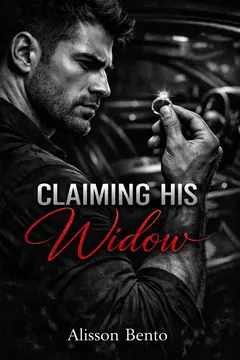 Claiming His Widow
4.2 Goodreads 4.41 (22) Buy on Amazon
See the book
-
 Blindfolded by the Beach
Buy on Amazon
See the book
-
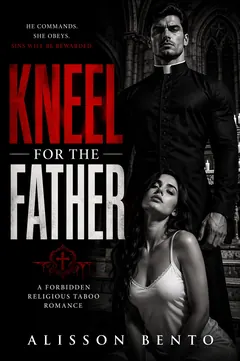 Kneel for the Father
Buy on Amazon
See the book
-
 Stolen From the Altar
Buy on Amazon
See the book
-
 Puck Defiance
Buy on Amazon
See the book
-
 Secrets of the Moon Gala
Buy on Amazon
See the book
-
 The Coach’s Daughter Clause
Buy on Amazon
See the book
-
 Her Brother's Best Secret
Buy on Amazon
See the book
-
 Ruined by the Collar
Buy on Amazon
See the book
-
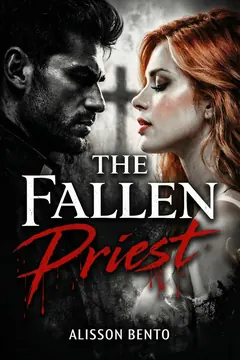 The Fallen Priest
3.9 Goodreads 3.93 (15) Buy on Amazon
See the book
-
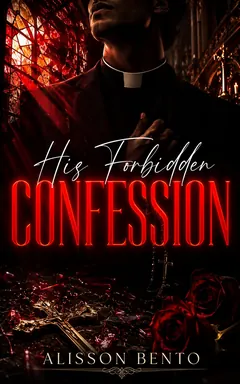 His Forbidden Confession
Buy on Amazon
See the book
-
 The Quarterback's Equation
Buy on Amazon
See the book
-
 Corrupting the Novice
Goodreads 4.20 (10) Buy on Amazon
See the book
-
 Breakaway on Ice
Goodreads 4.80 (10) Buy on Amazon
See the book
-
 The Virgin in Grey
Buy on Amazon
See the book
-
 Secret Between the Boards
Buy on Amazon
See the book
-
 Bratva Priest
Buy on Amazon
See the book
-
 Tempting the Stoic
Buy on Amazon
See the book
-
 Profane Offerings
Buy on Amazon
See the book
-
 Ashes of the Skycourt
Buy on Amazon
See the book
-
 The Gangster's Captive
Buy on Amazon
See the book
-
 The Mobster's Doctor
Buy on Amazon
See the book
-
 The Heir's Captive
Buy on Amazon
See the book
-
 The Beast's Prisoner
Buy on Amazon
See the book
-
 Sleeping with Danger
Buy on Amazon
See the book
-
 Bought by the Dark Judge
Buy on Amazon
See the book
-
 Stolen by the Enemy
Buy on Amazon
See the book
-
 Marked by the Don
Buy on Amazon
See the book
-
 The Billionaire's Vow
Buy on Amazon
See the book
-
 The King of the Forbidden City
Buy on Amazon
See the book
-
 The King's Forbidden Game
Buy on Amazon
See the book
-
 The Barbarian's Contract
Buy on Amazon
See the book
Browse by what you crave.
By genre
By trope
- Find romance books by trope
- Possessive Hero
- Captor & Captive
- Bodyguard & Protector
- Debt & Bargain
- Enemies to Lovers
- Marriage of Convenience
- Forced Proximity
- Small Town
- Fake Dating
- Arranged & Forced Marriage
- Boss & Employee
- Slow Burn
- College & Academia
- Secret Baby
- Single Dad
- Revenge
- Curvy Heroine
- Second Chance
- Fated Mates
- Royals
- Grumpy & Sunshine
- Morally Grey
- Runaway Bride
- Age Gap
- He Falls First
- Holiday Romance
- Touch Her and Die