For readers who enjoy hockey rivalries, concealed family motives, and enemies forced into daily proximity through a job. Ivy's monitoring role gives revenge a specific instrument: the conduct reports on which Volkov's reinstatement depends, even as their first conversation makes professional detachment difficult.
36 books
Enemies to Lovers Romance: Choose the Reason for the Conflict
Enemies to lovers becomes more useful as a reading preference when you can name what makes the characters opponents. A remembered injury is different from a competition with one prize. A professional disagreement can involve people who both want to protect somebody but disagree about the means. An assassination assignment places a very different weight on proximity. The attraction matters because it complicates an existing reason to resist, not simply because two people exchange sharp remarks. These standalone novels bring opposition into hockey, football, corporate negotiation, fantasy competition, poison work, and art provenance. Choose the conflict whose practical details interest you. Ask what the heroine wants before attraction intervenes, how she knows the person she opposes, and what authority each has over the encounter. An enemy may possess information she needs, control something she wants to save, or compete for a place neither is willing to abandon. Those differences help you find the kind of resistance you want to read.
Compare these starting points
Choose this for rare-book clues, unequal campus power, and a dark college enemies-to-lovers framework. The opening makes scholarship funding and collection procedures part of the same pressure, suiting readers who enjoy a meticulous heroine challenging a privileged man's control over both evidence and access.
Choose this for a poison-skilled heroine, an assassination assignment, and fantasy court hostility rooted in a specific communal loss. The opening pairs laboratory-like tests with a literal climb from the warren, giving revenge and class power a tangible setting before the romantic conflict develops.
For readers who enjoy a capable operations executive, an adversarial company review, and enforced proximity at a shared desk. Taylor's defense of her physical supply network gives the conflict business substance, while the thirty-day mandate makes avoiding Callahan an unavailable professional option.
A grievance creates a different starting point from a disagreement
An established grievance gives hostility a history. The heroine may know what happened, believe she knows who caused it, and have organised her life around that account. A new disagreement asks a different question: what does an encounter reveal about priorities neither person has previously needed to explain? For selection, decide whether you want attraction to unsettle a settled judgment or emerge while the characters are still forming their first judgment of one another.
The distinction affects what you may enjoy following. With a private grievance, hidden identity or undisclosed motives can make an ordinary exchange carry two meanings. With a professional clash, the subject of an argument can be interesting in its own right. Neither structure requires you to assume that hostility conceals affection from the first page. Look for the event, resource, or responsibility that makes resistance reasonable to the person experiencing it. That gives the romantic tension a concrete foundation rather than asking banter to supply the entire conflict.
A hockey monitor holds power over the man she blames
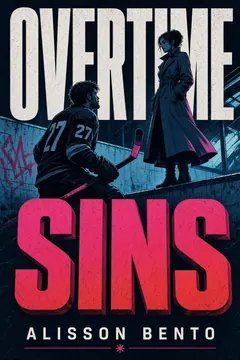
Overtime Sins gives Ivy a private reason to watch captain Kazimir Volkov. His hit permanently damaged her brother Danny’s hand and ended Danny’s hockey career. Ivy enters the Boston Rampart’s arena under her mother’s surname. Her athlete-industry experience qualifies her to monitor Volkov during ninety days of close access, living where he lives and filing compliance logs twice daily. One further reportable incident could end his conditional reinstatement.
This is a useful choice if you want the heroine to possess an institutional tool alongside her anger. Ivy can document conduct that affects Volkov’s future, while the personal history behind her attention remains concealed. Their first meeting beside the empty rink introduces attraction that troubles her carefully ordered grievance. Compare the job’s stated purpose with the reason she privately wants it. The overlap between observation, responsibility, and resentment offers something sharper than two athletes competing for the same position.
A family company turns resistance into a daily task
Ruthless Executives places Taylor Walters and Callahan Rhodes in the Glass Suite under a thirty-day mandate. Taylor is Walters Heritage’s chief operating officer and knows its warehouses, fleet, and production network. She also knows the debt left by her grandfather. Callahan is the venture capitalist threatening the family company. A due-diligence clause requires the pair to work at the same desk for six hours each day, making avoidance impractical.
The first demands concern room layout and secure servers. Taylor refuses to surrender her workspace or the operational knowledge that gives it meaning. Choose this premise if you like arguments in which apparently small details carry larger claims about control. A desk and a server arrangement can reveal who expects to set the conditions of cooperation. Compared with Ivy’s monitoring role, Taylor’s access is inseparable from a business she already runs. Her resistance protects an existing professional position rather than using a new job to approach an old enemy.
A planned assassination makes competence dangerous to its target
Venom for the Moon Court introduces Sorrel Vane after years of training in poison work. Mother Yarrow names Caelan Sivrelle of the Moon Court as her intended victim. The court’s ash killed Sorrel’s parents, brother, and hundreds of others in the lower warren. A summons offers access as a cup-runner, carrying wine to the man she has been prepared to kill. She climbs nine hundred steps with her father’s tools and a concealed vial.
Vesper Malleon tests Sorrel’s unusual tolerance and practiced judgment within a hierarchy that despises her origins. The promised possibility of skin-to-skin contact threatens to complicate a carefully prepared revenge. This fantasy opening may appeal if you want skill and social contempt to matter alongside lethal intent. Sorrel has a method, history, and route toward her target. The reader’s question is how proximity changes the pressure on that preparation, rather than whether a vague dislike will produce teasing conversation.
Rivals can compete for a home rather than revenge
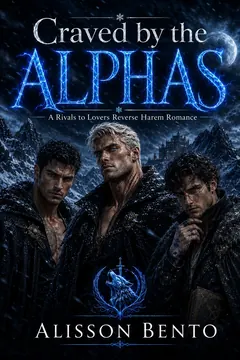
Craved by the Alphas gives cartographer Cassia Ashwood a concrete prize: the ancestral territory containing her ruined family keep. Four entrants must reach, map, and claim three power nodes during the dangerous Solstice flux. Corrupted magic spreads poisonous mist through the Boreas Basin, and Cassia’s scarred palm makes contact with shifting energy especially risky. Her professional knowledge belongs to the contest’s requirements, while her personal history belongs to the land.
Rafe Galdor, who abandoned their mating bond three years earlier, is among her rivals. Northern Alpha Torin Varg wants the territory for his pack, and scholar-wolf Evander Corvus questions the others’ reliance on force. This why-choose fantasy premise combines several reasons for opposition without making every rival’s motive identical. Choose it for contested homecoming, mapping, and difficult terrain. Compared with Sorrel’s approach to one intended victim, Cassia enters a competition in which several people want the same place for different reasons.
A professional standard can expose a personal family history
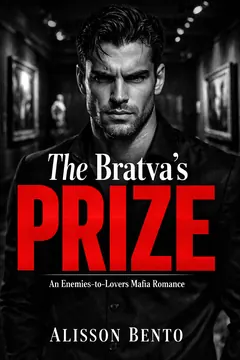
In The Bratva’s Prize, provenance specialist Lena Hart examines a masterpiece in Vladimir Sergeev’s gallery and finds her grandfather’s concealed ultraviolet mark. The mark contradicts the acquisition file and ties the painting to the collection lost in the raid that ruined her family. Her training also reveals false customs stamps and an impossible registrar reference. Professional judgment requires her to refuse certification of the ownership account presented to her.
Vladimir wants a signature confirming authenticity while leaving that ownership story alone. When Lena names the family history behind her findings, he locks the viewing room. This opening offers opposition through evidence that is both technically legible and personally consequential. If you enjoy a heroine whose expertise creates leverage and danger at the same moment, this is a precise reason to investigate the title. Unlike an assignment built around approaching an enemy, the encounter’s professional task reveals how directly the disputed object touches Lena’s past.
Two people can disagree about whom they are protecting
Defending the Zone puts Josi Shaw and lead strategist Marcus Herrera in a confrontation over Josi’s quarterback brother Beckett. She manages his career while concealing medical records that could void his contract. His shoulder, supported by cortisone, keeps the franchise in playoff contention. Marcus has noticed deterioration in his throwing mechanics. A dropped burner phone gives him leverage to challenge Josi’s concealment as another team operator approaches the medical corridor.
Their hiding place provides privacy and then becomes the site of an argument about injury, responsibility, and protection. Josi understands the career and public stakes; Marcus refuses to disregard his data. Choose this football opening if incompatible methods interest you more than a shared desire for the same prize. Both are concerned with Beckett, but that does not make their decisions equivalent. The subject of disagreement is tangible enough to follow alongside attraction: what information should determine the response to a worsening shoulder?
Decide whether hidden motives or open terms attract you
Some readers like knowing why the heroine is hostile while the person she confronts remains unaware of part of the reason. Others prefer an argument both participants can name. Those choices change how you interpret restraint, silence, and apparent cooperation. As a hypothetical example, an employee checking an opponent’s conduct may ask a routine question that also serves a concealed grievance. A publicly contested workspace makes the claim easier for both sides to recognise.
Ivy’s surname and private history make her professional access carry additional meaning. Taylor’s resistance to Callahan concerns an operational role she can defend openly. Sorrel’s concealed vial makes her court service part of an assassination plan. Lena’s discovery brings family history into a professional dispute once she states it. Choose by whether you want disclosure itself to create suspense or whether you want to watch the characters argue about known conditions. An enemies-to-lovers label can encompass both forms without promising the same rhythm of revelations.
The obstacle should survive the first moment of attraction
For choosing a premise, it helps to ask what would still need attention if both characters admitted interest immediately. Ivy would still have monitoring duties and her brother’s injury in her history. Taylor’s company would still face financial pressure. Cassia’s competitors would still contest the territory and its hazardous nodes. Josi and Marcus would still need to confront the implications of Beckett’s shoulder. Those practical questions make attraction consequential instead of letting it replace the subject of the story.
This does not predict how any novel resolves its conflict. It identifies what makes the opening worth following. You may prefer a disagreement that demands a decision, an old grievance that demands understanding, or a resource neither person can simply relinquish. The stronger your interest in that question, the less your choice depends on expecting a familiar sequence of arguments, kisses, and reconciliation. Name the unresolved task and you can compare books whose covers or tags might otherwise make them appear alike.
Enemies, rivals, and revenge are useful adjacent distinctions
Rivalry foregrounds competition: two or more people pursue a prize, status, or opportunity that puts them at odds. Revenge foregrounds a response to a remembered wrong. Enemies to lovers foregrounds opposition within a romantic connection. These features can overlap, but a rival does not automatically carry a private vendetta, and a revenge plan may involve other people beyond the romantic target. Ask which aspect provides the tension you most want to explore.
Forced proximity can supply the repeated encounters that make opposition difficult to ignore. Taylor’s daily desk requirement and Ivy’s close monitoring access provide different practical versions. Why-choose adds several romantic connections, as Cassia’s premise shows, rather than prescribing a single shared grievance. Use related collections to narrow your next choice while keeping the individual cause of hostility in view. The most helpful combination explains both why these people resist and why they continue to encounter one another.
Choose the argument you would want to keep reading
Start with a plain preference: a hockey monitor concealing a family grievance, an executive defending her company, a trained venomer entering a hostile court, a cartographer competing for home, a provenance specialist refusing a false account, or a football manager disputing medical responsibility. These openings offer different uses of knowledge and authority. The heroine’s immediate objective gives you a way to choose even before deciding which atmosphere sounds most appealing.
All six selections are standalone books. For explicit content, sensitive subjects, relationship boundaries, and endings, consult the individual book’s information. Opposition alone does not establish those details or guarantee a particular redemption pattern. Your clearest expectation can instead concern the first conflict: what is being contested, whose account you are following, and what makes accepting attraction difficult. Choose the problem that sparks curiosity as well as the romantic dynamic. That creates a specific reason to begin this story rather than relying on hostility as a complete description.
-
 Bestseller
Sold to the Night
4.4 Goodreads 4.11 (27) Buy on Amazon
See the book
-
 The Mafia's Baby
3.9 Goodreads 4.28 (29) Buy on Amazon
See the book
-
 The 365-Day Contract
Buy on Amazon
See the book
-
 Slava's Prize
3.8 Goodreads 3.67 (15) Buy on Amazon
See the book
-
 Calculated Obsession
3.7 Goodreads 3.63 (41) Buy on Amazon
See the book
-
 Captured in the Night
Buy on Amazon
See the book
-
 My Christmas Pretender
4.5 Buy on Amazon
See the book
-
 Overtime Sins
Buy on Amazon
See the book
-
 Owning the Enemy
Buy on Amazon
See the book
-
 Craved by the Alphas
Buy on Amazon
See the book
-
 The Bratva's Prize
Buy on Amazon
See the book
-
 The Strike & The Suit
Buy on Amazon
See the book
-
 Their Secret Queen
Buy on Amazon
See the book
-
 The Witch and the Winged Lord
Buy on Amazon
See the book
-
 The Billionaire’s Audit
Buy on Amazon
See the book
-
 Dirty Capital
Buy on Amazon
See the book
-
 Caged in Miami
Buy on Amazon
See the book
-
 Contracted Wife
Buy on Amazon
See the book
-
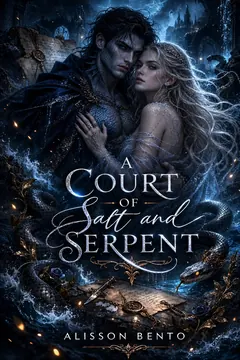 A Court of Salt and Serpent
Buy on Amazon
See the book
-
 Ruthless Executives
Buy on Amazon
See the book
-
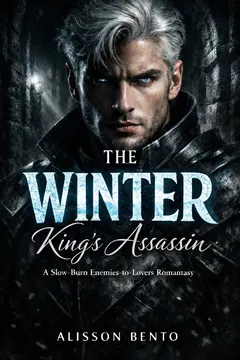 The Winter King's Assassin
Buy on Amazon
See the book
-
 Pit Stop for Love
Buy on Amazon
See the book
-
 Calculated Sins
4.1 Goodreads 4.20 (10) Buy on Amazon
See the book
-
 The Cruel CEO’s Contract
Buy on Amazon
See the book
-
 Venom for the Moon Court
Buy on Amazon
See the book
-
 Defending the Zone
Buy on Amazon
See the book
-
 A Trial of Ash and Light
Buy on Amazon
See the book
-
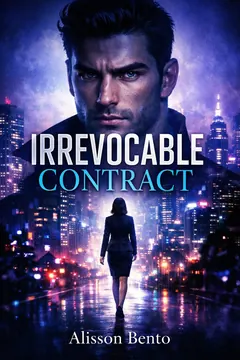 Irrevocable Contract
Buy on Amazon
See the book
-
 Bought by the Cruel Alpha
Buy on Amazon
See the book
-
 The Judge's Deal
Buy on Amazon
See the book
-
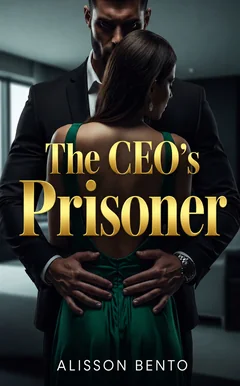 The CEO's Prisoner
Buy on Amazon
See the book
-
 Stolen by the Enemy
Buy on Amazon
See the book
-
 The Tycoon's Submissive
Buy on Amazon
See the book
-
 King of Ashes & Embers
Buy on Amazon
See the book
-
 The Woman Who Said No
Buy on Amazon
See the book
-
 Merger at Midnight
Buy on Amazon
See the book
Browse by what you crave.
By genre
By trope
- Find romance books by trope
- Possessive Hero
- Captor & Captive
- Bodyguard & Protector
- Debt & Bargain
- Marriage of Convenience
- Forbidden Love
- Forced Proximity
- Small Town
- Fake Dating
- Arranged & Forced Marriage
- Boss & Employee
- Slow Burn
- College & Academia
- Secret Baby
- Single Dad
- Revenge
- Curvy Heroine
- Second Chance
- Fated Mates
- Royals
- Grumpy & Sunshine
- Morally Grey
- Runaway Bride
- Age Gap
- He Falls First
- Holiday Romance
- Touch Her and Die