For romance books with tattoo artists, start with the character’s actual job and the other protagonist’s reason for entering the studio. Someone with extensive tattoos may work in an entirely different field. An artist may meet a partner through employment, an old relationship, or a social circle. Those routes offer different encounters, even when covers suggest the same visual mood.
Three useful starting points are Under Locke by Mariana Zapata, Repeat by Kylie Scott, and Rule by Jay Crownover. Choose the relationship structure first; then use a sample to see whether the artistic workplace receives the attention you want. The following comparisons concern premises and reading preferences, rather than reviews based on full-book reading.
A tattooed character is not necessarily a working artist
There are three separate appeals: visible body art, a character who creates art for a living, and a studio that becomes an important social setting. A novel can offer one without giving equal space to the others. Identifying your priority makes a recommendation more useful than asking for a tattooed hero and hoping the profession follows.
Look for an occupational statement rather than an image. Owning a studio establishes a business connection; it does not automatically establish how much personal artistic work appears. Identifying a tattoo artist confirms the profession but cannot tell you how many chapters take place at work. Keep those questions separate when comparing possible reads.
Tattoos do not establish criminal involvement, emotional damage, sexual preferences, income, or temperament. An artistic occupation cannot guarantee a patient partner either. These characteristics need their own evidence. You can enjoy the visual appeal without treating appearance as a complete account of personality, or expecting every artist to express the same form of attraction.
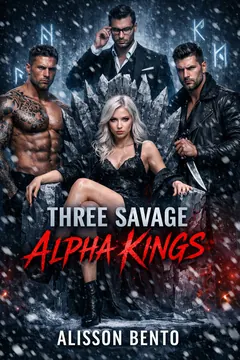
From Alisson Bento’s books
A shifter romance about one heroine, more than one devoted hero, and no choosing.
Kindle edition · Check Kindle Unlimited availability on Amazon.
Three books, three relationship starting points
In Under Locke, Mariana Zapata places Iris in a tattoo-shop job and identifies Dex as her boss. That is an employment-based entry point. The reading question is whether you want attraction tied to the place where one protagonist earns a living. A boss’s attention and a stranger’s attention can carry different consequences, even when both scenes happen behind the same counter.
Kylie Scott’s Repeat identifies Ed Larsen as a tattoo artist and pairs an ex’s return with amnesia. This gives the studio a different possible meaning: an address where personal history can be confronted. Consider that route if renewed trust interests you more than learning a new job. The premise alone does not establish the amount of professional detail.
Jay Crownover’s Rule identifies Rule as a tattoo artist and Shaw as a pre-med student with longstanding feelings. This points toward an existing connection across different lives. Consider that structure when your curiosity concerns how an artist is perceived beyond work. An established social connection does not automatically promise a colleague relationship or a client romance.
These leads contrast the relationship’s starting position. They are not a ranking and do not settle requirements for intimacy, later conflict, or an ending. Treat those as independent checks, especially if a particular content boundary determines whether you want to begin. A confirmed profession can make a book relevant without making it your best choice today.
Map the studio roles before choosing the chemistry
A studio can contain artists, an owner, reception staff, visiting professionals, clients, and friends. The person greeting a customer is not necessarily the person creating the artwork. Someone may also hold more than one role. When a description is vague, preserve that uncertainty instead of promoting every employee to artist or every artist to owner.
For a workplace mood, ask who can assign tasks, change hours, or influence continued employment. For a collaboration mood, ask whose creative judgment matters and whether the protagonists share a project. For a reunion, ask whether the studio is mainly the place the returning person knows how to find. The same location can support very different kinds of dependence.
Consider two invented adult couples. In one story, a receptionist and a studio owner notice each other during the working day. In another, an independent illustrator visits an artist to discuss a joint exhibition. Both offer creative surroundings. Only the first necessarily introduces employment authority between the romantic leads; the second introduces a shared task with potentially separate livelihoods.
Neither arrangement is automatically better. The first may suit attraction complicated by professional dependence. The second may suit negotiation between different creative voices. Adding the relationship roles to your request narrows the choice without requiring spoilers. It also helps a recommender explain what is confirmed and what the description leaves unclear.
A studio ensemble does not define the romantic structure
Several artists sharing a workplace can create a lively supporting cast without becoming romantic partners. If you like conversations among colleagues but want one central couple, ask for both preferences. If you want more than one love interest, confirm that structure separately. A group photograph or a series built around one studio cannot settle the question.
Consider another hypothetical difference: a colleague may challenge the artist about a missed commitment, while a sibling brings an old grievance into the studio. Both can complicate the romance without being romantic rivals. When a recommendation mentions a close-knit crew, ask what that closeness contributes: friendship, business loyalty, family pressure, or additional romantic bonds. These are different reasons for a busy studio to matter.
When the studio is also someone’s livelihood
Employment gives repeated contact an ordinary reason. The protagonists may discuss bookings, coordinate an event, or complete an administrative task whether or not they are getting along. Attraction can feel cumulative as the reader sees patterns across interactions. The useful question is whether repetition changes what each person understands, rather than merely putting them in the same room again.
Imagine an invented scene between adults. A new receptionist catches a scheduling error before a public exhibition evening. The owner thanks them privately but takes the credit in front of the team. Another version gives the receptionist public credit and asks how they would prevent the problem next time. The incident is identical; the evidence about the relationship differs.
Gratitude for a job can coexist with annoyance, attraction, or an ambition to leave. You might enjoy exploring that complexity, or prefer a romance without employment dependence. The boss and employee romance guide examines hierarchy more broadly. Here, decide whether the intimacy of a small artistic business makes that hierarchy interesting for your current reading mood.
Also watch whose work becomes visible. Reception, organization, and communication can shape the setting even when the narrative’s glamour belongs to an artist. A reader seeking two capable protagonists may enjoy those contributions receiving recognition. This is a question for the sample, not a claim that each named book handles every role in a particular way.
A returning ex brings private history into a public place
A reunion produces different tension from a new job. People can recognize one another immediately while disagreeing about what their past means. Colleagues or customers may be near a conversation one person wants kept private. That contrast between a public working identity and a private relationship can be the particular attraction you want.
Repeat offers a lead for this route, but choosing a tattoo artist is a narrower decision than choosing a memory-loss plot. Ask whether reconnecting with someone known before the opening appeals to you. Then decide whether the wider premise fits. A profession can match perfectly while another central element makes the book unsuitable for today’s mood.
In a hypothetical reunion between adults, one former partner arrives during an open-studio event hoping for an immediate explanation. The artist has promised to introduce another person’s work. Postponing the conversation could feel dismissive, considerate, or painfully necessary depending on what is said and offered afterward. The profession creates a competing commitment; it cannot answer the emotional question automatically.
If this is your preferred structure, request former partners with one working tattoo artist, and specify whether the business should remain important. That is more precise than asking for “second chance with tattoos.” The latter could produce a reunion where neither person has an artistic occupation and no studio enters the story.
Look for creative decisions rather than decorative equipment
Artistic work contributes to characterization when someone must choose, explain, revise, or respond to another person’s idea. A room full of drawings establishes atmosphere. A disagreement about whose name belongs on shared artwork can reveal pride, generosity, insecurity, or conflicting values. You do not need technical vocabulary to notice what the decision costs each person.
Imagine two invented adult artists preparing promotional artwork for a studio anniversary. One wants a uniform visual style; the other wants individual contributors’ approaches preserved. Neither preference must be foolish. Their disagreement lets the romance discover how each understands collaboration and recognition. Attraction can grow through understanding rather than one person surrendering all artistic judgment.
If creative identity matters, look for a choice that would not exist in an arbitrary office setting. Perhaps someone responds to criticism, struggles to describe an idea, or takes pride in another artist’s progress. These are possible signals, not mandatory scenes. A relationship-centered novel may deliberately keep the profession lighter, which could be exactly what another reader wants.
The broader blue-collar romance guide explores attraction to practical competence. This narrower route adds authorship, aesthetic judgment, studio roles, and whose ideas receive attention. Its appeal might be creating something meaningful together rather than watching a capable person solve a practical problem. Knowing that distinction helps you describe what felt missing from a superficially matching book.
Privacy and public artwork can pull in different directions
A studio can be public-facing while someone’s reasons for choosing an image remain personal. In fiction, this creates possibilities around what a protagonist notices and what they are entitled to repeat. A scene involving artwork need not disclose every person’s private history to make the romantic leads perceptive. Restraint can reveal as much about attention as a dramatic confession.
For an invented adult couple, imagine a studio exhibition featuring several local artists. One protagonist wants to post a photograph including the other’s unfinished work. Asking first can become a meaningful scene about being seen. Posting without asking creates a different story about exposure and repair. Publicity does not automatically mean support; the response gives the gesture its significance.
A tattoo motif can function as personal symbolism. Some readers enjoy discovering an image’s meaning; others prefer art to remain part of everyday appearance without a dramatic explanation. Neither preference requires treating every tattoo as a clue to trauma. Ask whether you want symbolic artwork, a creative workplace, or both before choosing your next novel.
Use a sample for evidence it can provide
Begin with one reading question: do you want to spend time with this character’s working voice? Notice whether dialogue differs with a colleague, a stranger, and the romantic interest. Does confidence become arrogance everywhere, or does narration reveal a more particular person? You are testing your response to characterization, not scoring the artist’s professional credentials.
Then consider the other protagonist. Do they ask questions, notice something specific, or have an interest beyond admiration? In a workplace opening, can you identify the task they are trying to complete? In a reunion, can you identify what they want from the encounter? A clear immediate purpose can reveal more about your likely enjoyment than a cover’s styling.
The romance sample guide offers a broader method for voice and rhythm. Add a studio-specific observation: does the workplace change a choice or supply atmosphere? Either can suit your goal. If the sample ends before the studio appears, the question remains open; it does not establish that the profession disappears later.
Which of the three should you investigate first?
Choose Under Locke first if your central question is how attraction changes when contact is tied to a job. Its place in this comparison is the tattoo-shop workplace: it is not evidence that Iris practices the art herself. Compare it with Rule by asking whether you want the romantic interest to be part of the protagonist’s employment or part of an already familiar social world. If you would remove the shop job from your ideal story without losing anything important, the employment route may not be your strongest preference.
Choose Repeat first if the encounter you want is a return rather than an introduction. Compared with Under Locke, your immediate interest shifts from establishing a working relationship to reconsidering a personal one. Compared with Rule, the distinction is not simply that people have a past: former partners and longstanding feelings are different starting positions. Decide whether you want the uncertainty of trying again with an ex. If memory loss is an unwanted central element, a matching occupation is not enough reason to choose this particular lead.
Choose Rule first if you are more curious about recognition across different lives than about starting a studio job or resuming an ended partnership. Ask what you want from the contrast: being understood beyond a visual image, seeing familiar people differently, or following attraction that predates the opening. Those are reading interests, not promises about later scenes. If your indispensable requirement is two artists creating together, none of these short descriptions establishes that pairing. Keep looking for an explicitly confirmed collaboration instead of treating the nearest match as an exact answer.
Make your next request precise enough to help
Start with the professional requirement: one romantic lead must work as a tattoo artist. Add the connection you want: employee and boss, independent colleagues, client and artist, former partners, or an existing friendship. Include the amount of workplace attention you want. State reading boundaries separately without expecting the profession to predict them.
Keep original titles across languages until you confirm an official edition. Check the exact book’s language and series position. Crownover’s official reading order places Rule first in Marked Men; it does not make every later title another tattoo-artist romance. Read individual premises rather than extending one occupation across a whole series.
For your next step, choose which relationship starting point attracts you most, then check the sample and indispensable content information. Browse the romance catalog to follow that preference into other settings. The useful discovery is a story where both the artist’s role and the relationship’s shape fit the experience you want.