Start with Birthday Girl for a forbidden domestic premise, Bully for the beginning of Fall Away, or Corrupt for Devil’s Night. If you want the Sanoa Bay connections to accumulate in order, choose Tryst Six Venom, then Five Brothers, then Midnight Curfew. These are different doors into Penelope Douglas’s work, not successive levels of darkness that everyone should climb.
This map uses official descriptions and reading guidance, checked on 24 October 2026. It compares advertised situations and connections rather than claiming a complete reading of every novel. The intended audience is adult; that does not mean every character is an adult throughout every book. In particular, Credence begins with a minor under guardianship. Choose the relationship situation first, then the relevant reading branch.
Choose the conflict you actually want to follow
Birthday Girl and Misconduct are useful candidates when you want a single novel and a recognizable social boundary. They are not interchangeable examples of “forbidden”: a boyfriend’s father and a pupil’s parent create different pressures. Bully is a better starting question if your interest is a damaged friendship becoming a hostile relationship. Corrupt introduces a revenge-oriented group world, which gives you another reason to continue beyond the first romance.
For a sapphic bully-romance premise, investigate Tryst Six Venom. For the Jaeger household and several possible attractions, investigate Five Brothers, while keeping its explicitly stated relationship structure in view. For Dallas and Callum, investigate Midnight Curfew. Wanting one of those relationships is a more useful reason to select a book than wanting whichever title is most frequently recommended.
There is no need to decide today whether you will read Douglas’s entire bibliography. Choose one branch, and preserve the order inside it where the author recommends doing so. Crossing between independent branches can wait until you know which features you want more of: the same community, another kind of boundary, a different central pairing, or simply the writing itself.
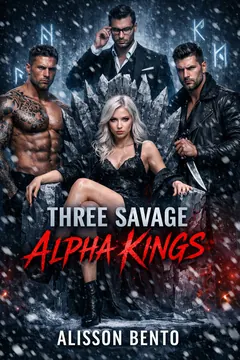
From Alisson Bento’s books
A shifter romance about one heroine, more than one devoted hero, and no choosing.
Kindle edition · Check Kindle Unlimited availability on Amazon.
Birthday Girl and Misconduct: two adult social boundaries
The official Birthday Girl description, in English, identifies Jordan as nineteen and Pike as thirty-eight, her boyfriend’s father. Douglas lists power imbalance and misogynistic language. Those facts make this an entry point to consider for age-gap domestic tension, rather than a general promise of comfort or safety.
The useful attraction here may be the difficulty of sharing ordinary space with someone whose place in your life makes attraction complicated. A kitchen or a driveway has a different meaning from a secret criminal meeting: domestic routines keep bringing people into contact. If that is the part of the premise that interests you, Birthday Girl offers a clear candidate without requiring you to start a named series. If the boyfriend’s-father relationship itself is unwelcome, a standalone label does not solve the mismatch.
Misconduct’s official page instead pairs teacher Easton Bradbury with Tyler Marek, a pupil’s father. The distinction matters: this is not a teacher-student pairing. Consider it when professional boundaries and an adult’s obligations toward a child are the questions that attract you.
Put the two choices beside each other. With Birthday Girl, ask whether the household relationship is what you want to explore. With Misconduct, ask whether you want attraction complicated by a professional encounter. You may be interested in one and completely uninterested in the other even though a recommendation list puts both under the same broad label.
Neither recommendation requires calling these books the author’s gentlest work. A reader can prefer adult workplace concerns without preferring less conflict. Likewise, choosing an age-gap premise does not mean accepting every form of unequal power. Let the exact situation do the selecting, then use the opening sample to decide whether the voice draws you into that situation.
Fall Away: begin with Bully, then distinguish the companion
Bully introduces Tate and former friend Jared through school bullying. This is a useful beginning when the question that interests you is what happens after someone familiar becomes a source of humiliation. The prior friendship is a selection clue: hostility from a former confidant asks a different emotional question from danger posed by a stranger.
The Fall Away series page places Bully → Until You → Rival → Falling Away at the opening of the branch. Until You is Jared’s perspective, rather than the next new couple’s book. Follow that distinction when planning your reading. A change of viewpoint is a reason to return to familiar events, not evidence that you accidentally obtained the same product twice.
For the later sequence, the author’s Hellbent preparation guide places Aflame → Next to Never after Falling Away. The same guidance connects the older generation with the later series. This gives you a coherent family route if recognition across generations is part of the attraction.
The Next Flame collects Aflame and Next to Never. Do not add all three titles as three separate narrative stages. Choose the contents you need in the format you want. Adrenaline is bonus material, so keep it separate from that central sequence when recording what you have already read.
A practical Fall Away plan therefore distinguishes new relationship focus, another viewpoint, later novellas and a combined edition. Those distinctions matter more than forcing every cover into a single numbered shopping list. If you stop after sampling Bully because school humiliation is the wrong conflict for you, that gives you useful information; Birthday Girl and Misconduct remain different possible entrances.
Devil’s Night: follow the group sequence and place the extras
For the revenge branch, start with Corrupt. Our individual Corrupt guide concentrates on its premise; the question here is where that choice takes you next. Douglas’s series index gives this route: Corrupt → Hideaway → Kill Switch → Conclave → Nightfall → Fire Night.
Notice the two shorter numbered entries. Conclave is 3.5 and Fire Night is 4.5. The official Conclave page specifically places it after Kill Switch and before Nightfall, with the preceding three novels to be read first. A short work is not automatically a suitable sampler; its position may make it a poor introduction even when its length looks convenient.
The author’s reading-order note places Punk 57 between Corrupt and Hideaway in this world’s timeline, while allowing it to be read independently. For a reader who enjoys recognizing crossover characters, that is a useful insertion point. For someone deciding whether to try Douglas at all, it also means Punk 57 can be considered on its own premise.
That premise, on the Punk 57 page, centers on Misha and Ryen’s correspondence and an encounter beyond the letters. Consider it for the discrepancy between a private connection and a public identity. That is a different selection question from wanting the Devil’s Night group story, even though the worlds connect.
Do not treat the revenge branch as an automatic next step after any Douglas book. The Corrupt content notes include kidnapping, attempted sexual assault and dubious consent. Punk 57 has its own warnings for bullying and references to sexual blackmail. Check the relevant book rather than transferring your comfort with one title to the whole connected world.
Sanoa Bay: a shared place with distinct relationship choices
Begin this route with Tryst Six Venom if you want to see the connections develop from the earlier book. Its official description identifies a standalone F/F bully romance involving Clay and Olivia. The content notes include homophobia, outing and sexual assault. Its relationship configuration does not make its hostile school setting a gentle alternative to the other branches.
For selection, consider what matters most: a sapphic central romance, conflict around social belonging, or the chance to explore a connected community. These interests can coexist, but they need not. Someone seeking an affirming, low-conflict school romance should not infer that promise from F/F alone. Someone specifically seeking hostile attraction may find the stated premise more relevant than a generic list of the author’s best-known titles.
Next, Five Brothers explicitly describes multiple love interests with one endgame romance. That narrow structural statement is valuable. It does not supply the identity of the final partner, and this guide will not reveal it, but it does prevent a mistaken promise of a lasting why-choose arrangement.
The practical difference from Tryst Six Venom is therefore not simply “more characters.” You are choosing another central relationship setup in a connected social world. If following several possible attractions is part of the pleasure, keep Five Brothers on your shortlist. If a sustained multi-partner relationship is a requirement, the author’s wording is a reason to seek a different candidate rather than relying on the title’s number.
The current third option is Midnight Curfew, featuring male rivals Dallas and Callum. The author’s September 2026 release note calls it independently readable while recommending Tryst Six Venom and/or Five Brothers beforehand. It is therefore part of the current map, not an undated future placeholder.
For the fullest introductory route, use Tryst Six Venom, Five Brothers, Midnight Curfew. For a reader specifically interested in Dallas and Callum, the independently readable label permits a shorter route, with the tradeoff of meeting a family already established elsewhere. Decide whether recognition or immediate interest matters more to you. Neither choice requires inventing a rule that every shared-world book is compulsory.
Hellbent: a new generation, with a current third book
The starting route is Falls Boys → Pirate Girls → Quiet Ones. The Quiet Ones release announcement confirms it as installment three and recommends the preceding two. Older lists showing Quiet Ones only as forthcoming should not decide your present route.
Falls Boys opens Hellbent, with Fall Away helpful rather than required. That creates a genuine choice. Start with the earlier generation if returning family connections are a main pleasure; start with Falls Boys if the new branch is your immediate attraction and you accept encountering those connections without their original buildup.
Pirate Girls advertises school rivalry and a two-week school ‘prisoner exchange’: the heroine is sent to stay with Hunter in the rival town. Despite the title, this is not an invitation to a historical seafaring adventure. The distinction helps if you discover books by a few evocative words: an attractive title can send you toward the wrong setting unless you check the actual description.
Quiet Ones brings Quinn and Lucas into focus. Its current description establishes Quinn as twenty-one, with Lucas twelve years older. That makes this another age-gap candidate, but its place in an established family branch gives you a different reading commitment from choosing Birthday Girl alone.
The author also cautions that Hellbent develops over time. Do not treat the available opening books as proof that the entire planned branch is finished. If you only begin completed series, make that a separate check before selecting this route. If you happily follow an ongoing community, begin with the available sequence and leave announcements outside your immediate reading plan.
Where Credence belongs, and why its boundary matters
Credence can be chosen independently; it is not an entrance exam for Fall Away or Hellbent. Its official page establishes Tiernan as seventeen at the start of guardianship and lists sexual violence and dubious consent. An adult audience label must not be turned into an assurance about an all-adult cast.
That makes it a very specific household choice. Select it because this premise interests you after checking the warnings, rather than because its isolated setting seems like a convenient break from series reading. Our Credence premise guide follows the individual book. The three-author standalone comparison is more useful if you are choosing between that household and other kinds of dark-romance settings.
Within this author map, its role is narrower: a possible independent doorway with connections elsewhere, whose guardianship premise should remain explicit. Familiarity with another Douglas book does not settle whether this one suits your boundaries.
Three ways to carry an interest into the next book
Suppose your first attraction is Birthday Girl’s domestic proximity. Your next choice need not be Credence merely because both involve a household. The guardian setup changes the boundary substantially. If you want another adult social complication, compare Misconduct’s professional encounter first. If you want the enclosed household specifically and accept Credence’s stated premise, that is a different, deliberate route. This hypothetical comparison preserves the thing you liked without treating every shared roof as equivalent.
Suppose instead that Punk 57 draws you because of the distance between correspondence and in-person identity. Bully might interest you as another relationship built around knowing someone and confronting hurtful conduct. Corrupt offers a connected world but shifts the selection question toward group revenge. Decide whether you want a related interpersonal question or the crossover connection. Those are separate reasons to continue, and either can be the more compelling one.
A third hypothetical reader wants to keep visiting Sanoa Bay after Tryst Six Venom. Five Brothers continues the community route while changing the advertised relationship setup; Midnight Curfew offers another pairing. Familiar geography does not make those configurations identical. Someone who wants another F/F central romance should not assume the next connected title supplies it. Someone interested in the family across different pairings can follow the branch for precisely that variety.
These paths make the bibliography useful after the first choice as well as before it. Carry forward a specific interest, compare the next book’s actual premise, and notice what changes. That lets you enjoy connections without turning an author’s name into a promise that every novel repeats your favorite experience.
Match the story before choosing a translated edition
The original titles here identify works and sequence positions. The linked author descriptions are in English; a link to a national retailer does not itself establish that the listed text is translated. Check the edition’s language, publisher and contents before carrying this order over to a local purchase or borrowing plan.
This matters especially for Until You and The Next Flame. One is another viewpoint within a branch; the other is a combined volume. A translated cover or a different format may make those distinctions less obvious. Match the actual contents rather than treating every new cover as another installment. Conversely, do not assume that two similarly named products contain the same complete text.
Choose one immediate destination: Birthday Girl for its domestic boundary, Bully for Fall Away, Corrupt for Devil’s Night, Tryst Six Venom for the longer Sanoa Bay route, or Falls Boys for Hellbent. If none of those situations appeals, browse the dark romance catalog with a clearer sense of what you are seeking. A useful author map helps you choose a book; it does not require you to become a completist.