
Start Morgane Moncomble with Un automne pour te pardonner if you want the numbered entrance to Seasons, Un hiver pour te résister if figure skating is your main attraction, or Viens, on s’aime if you would rather begin with friendship becoming romantic. There is no single sequence connecting every book she has written. Choose a branch first, then respect the connections inside that branch.
For Seasons, the straightforward order is autumn, winter, spring, summer. However, Hugo explicitly presents these romances as independently readable. Starting with the season whose central situation interests you is therefore reasonable. Publication order is our recommendation for readers who want to discover the surrounding relationships gradually; it is not a publisher-imposed prerequisite.
This guide uses official descriptions and edition information to help you choose, without revealing resolutions or pretending that every synopsis predicts the entire reading experience. French titles provide a stable reference across markets. A translated title can differ substantially, and an English title on a cover does not automatically mean an English-language edition.
Seasons: The Four Books in Order
The four main novels are:
- Un automne pour te pardonner — book one, Camélia and Lou.
- Un hiver pour te résister — book two, Lily and Orion.
- Un printemps pour te succomber — book three, Nolia and Camille.
- Un été pour te retrouver — book four, Jasmine and Andréa.
The official Seasons collection is useful for matching covers to titles. Its display order can reflect the edition catalogue rather than the order in which you should read. A paperback date, illustrated edition or new cover also does not add another season to the sequence.
Think of two different choices: understanding an individual couple and controlling what you learn about the wider circle. The publisher permits the first without requiring all previous books. Reading one to four is still the simplest way to avoid discovering surrounding developments out of order. Independent readability cannot promise that every reference to other characters will be free of information you would rather discover yourself.
If you have already read winter, you do not need to restart it after autumn. Continue with spring or return to the opening book, depending on whether your priority is another romance or a fuller sense of the collection. Reading order should remove friction, not turn leisure reading into corrective homework.
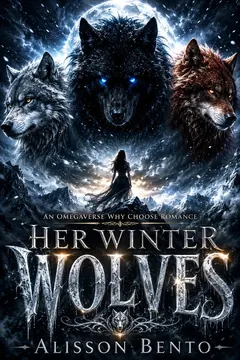
From Alisson Bento’s books
A shifter romance about one heroine, more than one devoted hero, and no choosing.
Kindle edition · Check Kindle Unlimited availability on Amazon.
Autumn: Choose Questions of Trust and Accountability
In the publisher’s presentation of autumn, Camélia’s legal ambitions intersect with a murder accusation involving Lou and their painful history. That is the essential selection detail: the past and the investigation cannot be cleanly separated.
Our reason to recommend this entrance is the double question it offers. A mystery asks what happened; rebuilding trust after earlier harm asks what another person deserves now. Those are different kinds of judgment. If you enjoy comparing evidence with emotional suspicion, the premise gives you something more specific to choose than an autumnal cover or an enemies-to-lovers label.
It is a less obvious first choice when you mainly want sporting ambition or an invented relationship performed in public. Those hooks belong elsewhere in the catalogue. Nor should a legal setting be mistaken for a promise of procedural realism. A synopsis establishes a fictional situation; it does not certify the accuracy of courtroom practice.
Before opening the book, decide whether the accusation itself interests you or whether you are mostly curious about forgiveness. Either can be a valid reason. If only the second appeals, keep the mystery component in your expectations rather than treating it as a brief obstacle on the way to the couple.
Winter: Choose a Partnership with Professional Stakes
Winter’s official description pairs figure skaters Lily and Orion. For a reader choosing between seasons, that shared activity is more informative than the weather: romantic proximity also involves the need to work together.
An athletic partnership invites a different reading question from autumn’s accusation. What happens when trusting someone matters to your performance as well as your private life? You can be interested in that tension without knowing every skating rule. The useful test is whether training, ambition and cooperation sound like part of the pleasure you want from a romance.
Our guide to sports romances with two professional athletes explores why shared careers change the balance of risk. Here it supplies a comparison tool, not a claim that every sporting romance handles ambition identically.
Choose winter before autumn if the sporting situation is what brought you to Moncomble in the first place. Choose autumn first if learning about the surrounding characters in numbered order matters more. Neither decision requires declaring one novel superior. Also avoid reading the ice setting as a guarantee of lightness: the description itself signals difficult circumstances, and individual content preferences deserve a separate check.
Spring: Choose a Public Bargain and Its Unequal Pressures
For spring, the essential hook is Nolia and Camille’s fake engagement. Hugo’s book page establishes the arrangement; the reasons to choose it are different from winter’s professional partnership or autumn’s investigation.
A fictional engagement places the relationship before an audience. Our suggested reading lens is to notice who needs that audience to believe the story, and what each person can afford to lose. Pretending to love someone can be an entertaining mechanism, but money, reputation and family expectations can make an apparently mutual agreement uneven.
That is why this is the season to consider if you enjoy negotiating appearances. It is not enough that two people have chemistry: the premise asks what they must perform, and for whom. The distinction between fake engagement and fake dating helps clarify why announcing a future can place different pressure on a couple than announcing a date.
Do not choose it solely because a billionaire character suggests an easy escape from practical worries. Wealth is a feature of the setup, not proof that everyone has equal freedom. Conversely, liking invented relationships does not require you to enjoy investigation plots. Spring is a legitimate independent entrance when the bargain is the attraction.
Summer: Choose a Reunion Rather Than a First Beginning
Summer’s publisher description identifies Jasmine and Andréa as former lovers brought together during travel in Tuscany. That makes it the clearest Seasons option for someone specifically seeking a second chance.
The useful difference is not simply that these characters have a past. Autumn also involves prior hurt. A reunion of former partners asks what would make an existing romantic relationship workable again. Our recommendation is to approach summer with that question, rather than assuming that remembering an old attraction is equivalent to rebuilding a future.
If you enjoy evaluating apologies, the guide to earned reconciliation in second-chance romance offers questions to carry into the reading. It does not establish what any particular character eventually does.
The travel setting also makes this a useful alternative to winter: one places the couple inside a sporting partnership, while the other uses a reunion on the road. Choosing scenery is perfectly legitimate, but do not let a sunny cover substitute for checking the relationship premise. For the most cautious route through the surrounding characters, keep summer fourth. For a reader whose strongest preference is reunion romance, it can be the first season you try.
Viens, on s’aime and Its Companion
The early contemporary route begins with Viens, on s’aime, followed by Aime-moi je te fuis. Hugo identifies the latter as a spin-off. Start with the first to meet the original pairing before moving into the connected circle; these are not additional Seasons volumes.
Loan and Violette provide the friendship-to-romance entrance. The useful reader decision is whether you want intimacy to grow out of an existing bond rather than an imposed bargain or suspicion. Familiarity can make changing the relationship feel risky in a different way: a new romance can affect a friendship that already matters.
The official companion description turns to Zoé and Jason. It changes the central couple, so do not choose it expecting a second instalment that simply continues Loan and Violette’s romance.
For a hypothetical reader who wants friends, housemates and awkward interpersonal history before a four-book collection, this pair is a sensible route. For someone who arrived specifically for skating, it is unnecessary preliminary reading. Publication history can explain an author’s catalogue without becoming a compulsory syllabus. Start here because the relationship appeals, not because being a new reader supposedly obliges you to begin at the earliest publication.
L’As de cœur, L’As de pique and a Short Extra
Another branch runs from L’As de cœur to L’As de pique. Hugo explicitly calls the second book a spin-off. New covers issued for these titles should not be confused with new sequels.
The first introduces Rose and Levi through poker. The second centres on Daisy and Thomas in a celebrity and protection context. These are useful contrasting hooks: strategic competition and a public-facing life create different reasons for characters to conceal things. Choose the first if the game itself attracts you; follow with the second if you want the connected branch rather than another season.
A whole new world is a short additional work, not the missing fifth Seasons novel. Its publisher-supplied description features Rose and Levi alongside another couple. Keep it after L’As de cœur if you prefer meeting returning characters in their main story before a bonus outing. The novels remain the main route through this branch; the shorter meeting is a detour for readers who already want more time with Rose and Levi.
There is no need to interleave this branch with Seasons. Finishing one branch before changing direction can make names easier to follow, but it is a personal convenience. Similar themes or a shared author name do not by themselves establish a single chronological universe.
Standalones: Choose the Particular Kind of Return
Nos âmes tourmentées, Falling Again and En équilibre offer other starting points without requiring the Seasons sequence. Their situations should not be reduced to a single generic promise of emotional intensity.
Nos âmes tourmentées gives Azalée a return to Charleston and a meeting with neighbour Eden. The selection question is whether returning to a difficult place appeals to you. A hometown return and a reunion with a former partner are different structures; summer is the clearer option when the latter is specifically what you want.
Falling Again reconnects Fleur and Aaron after childhood. It is worth considering if the appeal is the distance between remembered closeness and a present encounter. That distinguishes it from a couple who already shared an adult relationship. You do not need to decide in advance which kind of return is more moving; choose the one you want to explore now.
En équilibre belongs to Hugo’s Young Adult line and follows Lara’s aerial-circus ambition. It changes the entry question again, towards a young person’s relationship with aspiration and self-image. An author’s adult romance audience does not make every book in her catalogue interchangeable in readership or emphasis.
Inheritance, True Colors and Collaborative Work
An author guide now also needs Inheritance. At the October 2026 check, the official pages identify La Révolte de la Reine as volume one and La Vengeance de la veuve noire as volume two of a planned trilogy. Choose that numbered route if you want the historical branch. A planned third volume is not a reason to invent its title or treat the trilogy as completely published.
This branch is a change of fictional setting, not Seasons with different covers. It is also fiction, so historical dates and places do not make its characters a substitute for learning actual history.
For a change of format, True Colors is a collaboration with Lyly Blabla published by Hugo BD. Read volume one before volume two; the latter continues the central story. A graphic work asks you to read expressions, composition and gaps between panels alongside words. Choose it because that medium interests you, rather than assuming that illustrated pages are merely a condensed novel.
Unhappy New Year is separately credited to five authors, including Moncomble. Treat collaborative work as its own selection, not another instalment of her solo series. These distinctions explain why a list of every edition or contribution can be less useful than a map of the actual reading branches.
Match the Edition, Then Make One Choice
For English readers, Sourcebooks identifies autumn as A Fall to Forgive You, Seasons book one. The German edition uses A Fall to Forgive, without the final word. That small difference is a practical reason to check the language field rather than searching by title alone. The French names above remain the reference points for this guide.
Before choosing any edition, match author, original title where supplied, language, volume number and format. Page counts can differ with typesetting and translation; a longer edition is not automatically a longer story. A collectible binding is also not evidence of a new reading prerequisite. Check the contents if additional material matters to you.
Then choose one entrance: autumn for the numbered Seasons route, winter for skating, spring for a fake engagement, summer for former lovers, or an earlier branch for a different relationship setup. Read the opening sample and consult the edition’s content information if you have specific boundaries. This guide does not promise an exact heat level, an absence of difficult material or a particular resolution.
Once you know which relationship mechanism you want next, you can use that preference beyond one author. The Alisson Bento book catalogue is a separate place to browse romance by interest; it is not a catalogue of Moncomble’s editions. The immediate next step remains simple: pick one book for a concrete reason, and let that reading help you choose your second.