
Choose a romantasy audiobook by the kind of information you enjoy holding in your head. A dragon academy offers ranks and rivalries; a faerie court asks you to track trust; a magical card quest gives you objects to remember; a partnership built around shared power makes the relationship itself a useful anchor. These are different pleasures, even when the covers all promise magic and romance.
Four useful candidates are Rebecca Yarros’s Fourth Wing, Sarah J. Maas’s A Court of Thorns and Roses, Rachel Gillig’s One Dark Window and Liane Mars’s Bound by Flames. The edition examples below include German recordings and one English comparison. They are starting points for choosing a sample, rather than ratings of performances or promises about a complete series ending. Narrator credits and official descriptions establish the editions; the listening suggestions are ways to evaluate your own response.
Start With the World You Want to Remember
An easy audiobook is not necessarily a short audiobook. You may happily remember ten names if each belongs to a clear rivalry, while three similar titles can become confusing when you cannot see their spelling. Ask what normally pulls you through a scene: a practical problem, a charged conversation, a mystery, or the anticipation of a particular reunion. That preference gives you a better first choice than the number of hours on a product page.
For a training setting, try Fourth Wing. For the shift from a familiar human perspective into an unfamiliar social world, consider A Court of Thorns and Roses. If a contained magical problem appeals more than an institutional hierarchy, investigate One Dark Window. If you want the fantasy premise to put the two central characters into immediate practical dependence, look at Bound by Flames. None of those routes automatically means a gentle story; atmosphere and listening clarity are separate questions.
You do not need to memorize the whole world before pressing play. Establish one character’s immediate objective and listen for what can prevent it. Add names as they become relevant to that objective. This keeps the opening attached to desire and consequence rather than turning an evening’s entertainment into an examination of fictional geography.
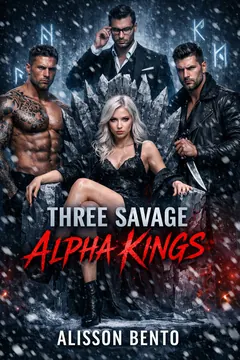
From Alisson Bento’s books
A shifter romance about one heroine, more than one devoted hero, and no choosing.
Kindle edition · Check Kindle Unlimited availability on Amazon.
Fourth Wing: Follow Relationships Within the Academy
Yarros’s official book page identifies Fourth Wing as the first Empyrean novel and describes Violet’s entry into dragon-rider training. That setting supplies a useful listening question: who can change her chances? Hear each introduction first as an ally, rival, authority or uncertain connection. A role is easier to carry into the next scene than an unfamiliar surname alone.
The German Hörbuch Hamburg edition credits Dagmar Bittner and Vincent Fallow and labels the recording unabridged. Use that specific edition as an audition candidate if you understand German. Two credited performers do not, by themselves, tell you how every exchange is assigned. What matters in your sample is whether you can distinguish narration, spoken disagreement and a character’s private response without watching a screen.
Imagine listening during a walk. At a stopping point, try explaining the current practical danger in one sentence and the most important relationship in another. If you can do both, you have enough orientation to continue even if a minor name escaped you. If you remember only terminology, rewind to the beginning of the interaction rather than repeatedly replaying a single unfamiliar word. A scene often gives a name meaning through what that person wants.
This is the candidate to investigate when competition interests you as much as romantic attraction. Let the academy structure help organize the cast, but do not assume the relationship can be detached from the fantasy conflict. Readers looking for a romance that concludes within one volume should check the series arc separately; a book-one label is useful information about commitment, not an ending guarantee.
A Court of Thorns and Roses: Listen for Changes in Trust
The German recording Das Reich der sieben Höfe – Dornen und Rosen is listed by Der Audio Verlag as an unabridged reading by Ann Vielhaben. Its human-to-fae premise makes this a different audition from an academy story. Your first organizing question can be less about who outranks whom and more about what Feyre believes, fears or has reason to reconsider.
Try listening to an interaction with three things in mind: what is said openly, what appears to be withheld, and what the viewpoint character can reasonably know. You are not trying to solve the entire plot in advance. You are noticing whether a change of confidence feels intelligible to you in audio. A performance can appeal because it lets you sit inside one perspective, even when a larger world remains partly unfamiliar.
This route may suit someone who remembers emotional situations more readily than lists. Instead of constructing a court encyclopedia, keep a mental marker for the last interaction that altered a relationship. When you return after a break, that marker is often more useful than a list of every place name. If you read alongside the recording, a brief glance at a name can resolve spelling without requiring you to reread the chapter.
Do not select this edition solely because a later volume dominates recommendations. A series’ most discussed relationship or setting may depend on earlier developments. Begin with the opening book when you want those developments to arrive in order. The important choice is whether you enjoy discovering a social world through a limited viewpoint, rather than whether you already recognize the series abbreviation.
One Dark Window: Give the Magic a Concrete Anchor
Gillig’s One Dark Window offers another route into listening: a quest involving magical cards. The German Silberfisch recording credits Nina Reithmeier. The English Hachette Audio recording credits Lisa Cordileone; both product records identify unabridged editions. These are different language recordings, rather than interchangeable versions of one performance.
For an audition, notice whether the central magical problem gives you something tangible to follow. A named object can be easier to remember when you attach it to a question: who needs it, what would obtaining it change, and why does possessing it matter now? You do not need an exhaustive inventory at the opening. Remembering an object’s current function is often enough to understand the next decision.
The premise also invites a useful test of internal and external information. When a story involves something within a character’s mind, ask whether you can tell whose knowledge is shaping the moment. You may enjoy uncertainty about motives while still wanting clarity about the immediate conversation. Those preferences are compatible. Rewind if you lose the speaker; keep going if you understand the exchange and are simply curious about its implications.
Compare the German and English samples only if you understand both languages comfortably enough to follow the prose. A voice that sounds appealing for thirty seconds is not necessarily the language choice you want for an entire fantasy novel. Listen for the ease of returning after a distraction, not merely the pleasure of a striking introduction. For this candidate, the connection between an object, a secret and a decision is a better audition target than a promise that the book contains a particular quantity of romance.
Bound by Flames: Let the Partnership Organize the Fantasy
The Osterwoldaudio edition of Bound by Flames credits Franziska Trunte and identifies German as the original language. Its premise links dragon riding to a two-person partnership. That makes it a useful comparison with Fourth Wing: choosing a dragon story does not necessarily mean choosing the same relationship between training, power and dependence.
For this audition, concentrate on the practical meaning of partnership. Can you explain what one person needs from the other? Does cooperation feel different from simply finding someone attractive? These are listening questions, not claims that one book handles them better. They help you discover whether you prefer a fantasy problem that repeatedly brings the central pair into the same frame.
Try imagining your next listening session before choosing. If you want a clear relationship to return to after work, a premise organized around two people may be attractive. If you want a larger competitive environment, the academy candidate may be the better first sample. You can enjoy both while choosing one for the amount of attention available this week. Avoid treating a current preference as a permanent verdict on a subgenre.
An English title on a German-original book is an especially useful reminder to inspect language rather than infer it from the cover. The recording discussed here is a German listening option. A translated article about it does not establish an audiobook in every language. If you do not listen in German, use it as a comparison of story structure while looking for a verified edition you can understand.
Separate a Reading From a Dramatic Adaptation
Worldbuilding can reach your ear through narrated prose or through a production that assigns dialogue to a larger cast. Fourth Wing illustrates why the exact record matters. GraphicAudio’s English edition is explicitly a dramatized adaptation and divides the first novel into two parts. RBmedia’s German announcement describes a separate radio-play production. Neither label is interchangeable with the Hörbuch Hamburg unabridged reading.
Choose according to what you want to follow. If you enjoy the language of narration, an unabridged reading may be your first audition. If different acting voices help you hold a cast apart, investigate the adaptation’s sample. Music and effects may be welcome atmosphere for one listener and extra information for another. A larger cast does not remove the need to understand names, loyalties or why a conversation matters.
Before borrowing or buying, check whether the item is a complete novel, one adaptation part, a bundle or supplementary material. Continue with the matching production when continuity matters to you. For the broader distinction between performance labels, use our credits-first audiobook guide; the decision here is which fantasy world you want those voices to help you follow.
A Useful Sample Test Takes Two Passes
On your first pass, listen for enjoyment. You should be allowed to like a voice without defending that preference. On a second pass, test orientation: who is present, what is being attempted, and what changed? Use a publisher’s sample where one is provided, without assuming it contains the same kind of scene as every later chapter. Opening exposition and a quiet conversation test different aspects of your attention.
Keep the test fair. Use roughly the same listening conditions and your normal comfortable volume. Begin near ordinary speed, then adjust if the delivery feels easier another way. A speed setting is a personal tool, not a measure of reading ability. If a name remains elusive, a quick text lookup can help; you need not slow an entire novel merely to decode one spelling.
Give each candidate a different question. For Fourth Wing, ask whether the academy relationships stay distinct. For Dornen und Rosen, ask whether shifts in trust keep you engaged. For One Dark Window, ask whether the magical problem stays concrete. For Bound by Flames, ask whether the partnership provides a clear thread. This avoids four auditions becoming a vague contest over which sample sounds most dramatic.
Build a Listening Routine Around Scene Meaning
Stop at a chapter or scene boundary when convenient, and leave yourself a short memory cue: a question still open, a relationship under pressure or an object whose importance has changed. You can keep that cue privately in a note or simply say it to yourself. It should remind you why you want to continue, rather than reproduce a plot summary or collect spoilers from someone else’s guide.
When switching between text and audio, find your place through a scene’s content as well as its chapter label. Editions can package material differently, and an adaptation need not align paragraph for paragraph. If you have lost your place, search for a recognizable interaction instead of assuming an identical percentage means an identical moment. Resume a little before the last meaningful decision to recover its emotional context.
If access is the remaining obstacle, our guide to legitimate free audiobook routes explains that separate question. Availability depends on the specific edition, territory and service. Keep the edition identity you selected when checking a catalog; a familiar cover alone does not confirm the language or recording you wanted.
Choose One World for Your Next Session
For names, prefer an author’s explanation over a fan’s confident spelling guess. Popverse’s interview material with Yarros includes her discussion of pronunciation. That is a place to investigate a specific Fourth Wing name; it does not establish that every recording uses identical pronunciations. Keep the question narrow: connecting a written name to a sound can help you recognize the person next time. You can follow Violet’s immediate problem without memorizing a complete pronunciation list, just as following a card’s function in One Dark Window does not require reciting every object in advance.
Start with the candidate whose organizing question already interests you. Choose the academy for rivalry, the court for changing trust, the cards for an object-centered mystery, or the shared dragon partnership for practical dependence. Those are ways into a sample, not rigid descriptions of everything the books contain. Let your response to the actual recording settle the next step.
Check the author’s and publisher’s content information if particular material affects your choice. Do not infer a complete warning list from a gentle voice or a beautiful cover. If you want a shorter change of reading mood between long fantasy sessions, browse the Alisson Bento book catalog for a separate next read. You can choose a new story without committing to another entire audio series.
The best first purchase or loan is the edition you can identify and the world you want to re-enter tomorrow. Remembering every invented word is optional. Following what a character wants, what makes it difficult and why another person matters gives you a much stronger reason to keep listening.