Start with Weather Girl if you want a heroine living with depression in a workplace romance; Yours Truly if letters and a difficult first impression appeal to you; Take a Hint, Dani Brown if you want an anxious hero within a fake relationship; or The Charm Offensive if you prefer a queer romance under the pressure of reality television. These are different romantic experiences, rather than interchangeable examples of a single kind of representation.
The useful question is not simply whether a book mentions mental health. It is whose experience you will follow, what brings the couple together, and how much public performance you want around their private connection. A medical workplace, a television production and an academic setting give characters very different reasons to misunderstand each other. Selecting that surrounding story can be as important as finding a familiar term in a description.
This guide compares confirmed representation and advertised romantic premises. It does not grade a character against a clinical checklist or offer a treatment recommendation. You can want recognition, an unfamiliar perspective, lively courtship or emotional distance from your own circumstances. None of those preferences requires you to choose the same book every time.
Weather Girl: Ari, depression and the difference between being cheerful and being known
Rachel Lynn Solomon explicitly identifies the heroine of Weather Girl as living with depression in her publication-day author note. The publisher’s description introduces meteorologist Ari and sports reporter Russell, whose attempt to reunite their divorced bosses becomes their own romantic complication.
That combination gives this choice a particular appeal. Workplace collaboration supplies a reason for two people to encounter each other without beginning with a declaration of desire. Matchmaking adds something they can discuss and organize together. If you enjoy attraction developing while characters concentrate on an apparently different problem, this is the clearest starting point among these four books. You are choosing a shared project as well as a heroine’s perspective.
There is also a useful distinction between liking someone in a social role and knowing them beyond it. A cheerful colleague can be easy to enjoy at work; a relationship asks different questions about availability, privacy and expectations. For a reader interested in representation, the attraction of Ari’s premise is the possibility of following both kinds of visibility. That is an interpretive reason to choose the book, not a promise that every reader with depression will recognize their own life in her.
Compare this with The Charm Offensive. Both premises involve television, but the romantic architecture differs. Ari and Russell’s collaborative scheme is the starting attraction here; Cochrun places a romantic connection inside the machinery of a dating show. Choose Weather Girl when colleagues becoming personally important sounds more inviting than an explicitly manufactured public love story. The shared medium does not make the emotional pressures identical.
Ari’s weather work and Russell’s sports reporting retain two different professional perspectives within the same television workplace. Their project concerns the bosses’ failed marriage, so they have a shared task without being declared a couple themselves. Compare that route with the doctors in Yours Truly: would you rather enter through colleagues organizing something together, or through a first impression being reconsidered in writing? The occupational roles make this a more concrete choice than “a workplace romance with representation.”
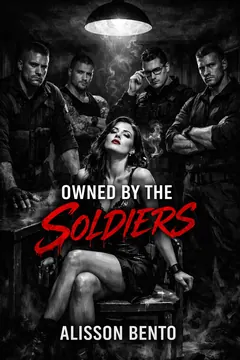
From Alisson Bento’s books
A military romance about a hero who claims her and never lets anyone forget it.
Kindle edition · Check Kindle Unlimited availability on Amazon.
Take a Hint, Dani Brown: Zaf’s anxiety within a fake relationship
Talia Hibbert’s author FAQ confirms that the hero of Take a Hint, Dani Brown has an anxiety disorder. Her book page introduces Dani, an academic, and Zaf, a security guard and former rugby player, whose apparent relationship becomes publicity for his children’s sports charity after a rescue video circulates.
This is the choice for readers who want the attraction to involve a deliberate romantic arrangement. Fake dating puts a different question on the table from straightforward workplace familiarity: what have these people agreed to perform, and what do they actually want? The pleasure of the premise lies in watching the boundary between those categories become interesting. The sports charity gives their public fiction an object beyond looking like a couple: useful attention is at stake. That makes a different bargain from a relationship staged solely to improve one person’s image, and gives you something specific to compare with Charlie’s reason for joining television in The Charm Offensive.
Zaf’s former sporting career is worth retaining in the comparison. It prevents a recommendation from reducing him to “the anxious one,” just as Dani’s academic work gives her an identity beyond being somebody’s prospective partner. Readers drawn to competence and adult responsibilities can begin with that contrast. An occupation is not proof of emotional ease, and an anxiety label is not a substitute for a character’s ambitions, humor or preferences.
The contrast with Yours Truly is especially useful. Both offer a route toward an anxious male romantic lead, but the advertised engines are different. Choose Hibbert when an agreed public fiction is the attraction. Choose Jimenez when the possibility of revising a poor first impression through written communication interests you more. This is a more precise distinction than trying to rank which hero is “more anxious,” a comparison that would not tell you which courtship you want to read.
Readers who dislike fake relationships should take their own taste seriously. Confirmed representation does not obligate you to enjoy a trope that usually leaves you cold. Conversely, if a fake-dating setup is one of your reliable pleasures, it can be a useful way to explore a character experience you have not previously sought out. The familiar romantic mechanism and the unfamiliar perspective can coexist without one cancelling the other.
Yours Truly: Jacob, anxiety and a different pace of introduction
In a primary interview with the American Booksellers Association, Abby Jimenez discusses writing Jacob’s anxiety. The publisher’s premise brings Jacob and Briana together as doctors, with letters changing their initial connection and a kidney donation involving her brother.
Letters offer a distinct romantic invitation. They make room for choosing words and reconsidering an impression rather than relying entirely on immediate charm. For a reader who is tired of every attractive character winning a room instantly, that structure can be more enticing than another effortless meeting. The point is not that written communication is universally better. It is that the courtship begins to make another kind of attention possible.
The professional setting also matters to selection. A doctor is not the same fictional role as a dating-show contestant or a former athlete. If you enjoy characters whose working identities appear established while their romantic understanding remains uncertain, Jacob’s premise may be particularly appealing. Professional competence and difficulty connecting are not mutually exclusive categories in a reader’s choice of hero. Neither should be used to erase the other.
There is an additional selection issue here that should not disappear behind the anxiety recommendation: the family medical storyline. A reader might welcome letters and a quiet hero while wanting to avoid a kidney-donation plot for personal reasons. Another might find that combination compelling. The book need not be declared suitable or unsuitable for everyone; recognizing its second major premise gives you a more informed decision than an isolated representation tag.
Compare Yours Truly with Weather Girl if you are deciding between two contemporary workplace romances. One invitation is written reconsideration alongside a family medical situation; the other is collaborative matchmaking. Your preference may depend on what you want the couple to do together before you know them well. That question produces a concrete choice without pretending that the two books deliver the same emotional rhythm or identical reading intensity.
The Charm Offensive: private connection inside a public romantic script
The publisher’s page presents Charlie, a dating-show star seeking to repair his image, and Dev, the producer who constructs televised love stories. Alison Cochrun’s official book page and content notes explicitly identify anxiety, panic, depression and discussion of OCD among the book’s mental-health themes.
Dev’s work creating love stories and Charlie’s interest in repairing his image give them different reasons to participate in the show. Choose this when those unequal expectations, alongside the tension between an expected public romance and a developing private attachment, sound interesting. Reality dating provides a particularly visible version of a familiar romantic question: whose idea of a desirable relationship is being followed? For a reader interested in queer romance, that public script is a meaningful part of the premise rather than interchangeable scenery. The advertised match and the connection attracting your attention pull in different directions.
Dev and Charlie also make this a useful contrast to recommendations built around one partner’s label. The author’s notes describe several mental-health subjects; they should not be turned into a game of assigning every term to every character. You can select the book for the combination of romance and these confirmed themes without inventing a diagnostic profile from a short description. The actual people and their interaction remain the reason to read.
Public performance is the strongest practical divider between this and Yours Truly. If you are looking for the intimacy suggested by letters, a dating-production premise may not satisfy the same mood. If you want a story that brings cameras, expectations and romantic presentation into the foreground, Cochrun supplies the more direct invitation. Neither format makes a relationship automatically more sincere; they create different fictional obstacles for sincerity to move through.
The author’s notes are also more informative than a vague promise of a comforting romantic comedy. They name specific subjects so you can decide whether those belong in tonight’s reading. A joyful destination and difficult material are not contradictory possibilities. Read those notes if the distinction matters to you, rather than treating the cover’s mood as an inventory of what happens inside. This is a selection tool, not a prediction of your personal reaction.
Four books, four reasons for the couple to be misread
These choices become clearer if you compare the misunderstanding that first interests you. Weather Girl invites you toward people working on somebody else’s relationship. Take a Hint, Dani Brown offers a relationship whose public definition begins as an arrangement. Yours Truly turns attention toward an impression that correspondence can complicate. The Charm Offensive places private attraction inside a ready-made public romantic story.
Those differences matter because “communication” is a broad word. You may enjoy a couple learning to name what is already changing, but dislike a plot built around public performance. You may love theatrical romantic circumstances while finding medical family pressure too close to home. Selecting a surrounding plot is not avoiding representation; it is recognizing that representation lives inside an entire novel, with its own source of momentum.
Consider a hypothetical reading weekend. On Friday you want a familiar fake-dating device, so you sample Hibbert. On Sunday you want colleagues cooperating, so you try Solomon. There is no need to interpret that switch as a change in your attitude toward mental health. Your appetite for a particular courtship has changed. A good shortlist should help with that ordinary choice instead of treating every book with a related label as equivalent.
For another useful distinction, think about who controls the public story. A staged couple, a television franchise and two coworkers meddling in their bosses’ lives create different kinds of apparent control. A letter creates a more limited space: one person can decide what to say, but cannot control the other person’s response. These are reading lenses for the premises above, not claims that any character performs a flawless model of communication.
What recognition can mean without asking one character to represent everyone
There are several ways to feel recognized by fiction. You might identify with a character’s discomfort with being misread, their desire to keep working, their wish to be wanted, or their sense of humor. Those points of contact need not depend on sharing a diagnosis. You can also share a term with a character and find their particular circumstances unfamiliar. A reading recommendation should leave room for both experiences.
This is why the named characters matter more than a list of conditions. Ari, Zaf, Jacob, Dev and Charlie belong to specific romantic situations. A book can give you something to think about without becoming a universal account of depression or anxiety. Calling representation “perfect” before considering whose experience is being discussed is less useful than identifying the perspective and the relationship you want to spend time with.
It is equally reasonable to ask for a story in which a character has desires beyond being supported. Attraction, work, play, ambition and the possibility of disappointing someone are part of what makes a romantic character interesting. Support can be one aspect of a relationship without becoming its only purpose. In these comparisons, keep returning to what the couple wants from each other, not only what one person might provide.
If your preferred focus is a broader emotional-recovery arc, the separate guide to trauma recovery in romance explores that reading question. It is a different starting point from choosing among these named characters. For navigating overlapping preferences, combining romance tropes can help you keep the relationship structure in view.
Pick the next book by its relationship, then check the edition
For a simple first decision, choose one element you actively want: matchmaking colleagues, a fake couple, letters, or a television romance that goes outside its expected script. Then decide whether the confirmed mental-health themes belong with your present reading mood. This sequence gives you something positive to choose, rather than making your whole decision an attempt to predict every possible discomfort.
These titles are given in English to identify the works consistently. A translated edition may use a different title; match the author and original title before choosing print, ebook or audio. Do not assume that a familiar-looking cover confirms the language, that every territory has the same formats, or that a translated title found informally is an official edition. The descriptions linked above identify the works, not a current stock guarantee.
A useful next step is to read the opening sample of your chosen book and ask whether you want more time with these particular people. You need not finish a novel to prove that representation matters to you. Nor must a book feel effortless to become worthwhile reading. The decision is whether this relationship, in this form, is the one you want to follow now. You can browse the wider Alisson Bento book catalog when you want to choose your next romantic direction.
Sources and scope
Sources checked 24 October 2026: the linked official author pages, publisher descriptions, Solomon’s publication note and Jimenez’s primary author interview. This is a discovery comparison based on those materials, not a claim of full-novel reading or a clinical assessment. The short content discussion is selective rather than an exhaustive warning list.