For Stefania S.’s Love Me Love Me, begin with Cuori magnetici if you are reading the original Italian sequence. Continue with Anime elettriche, Amore senza fine and Ancora insieme. If you are reading a translation, follow that edition’s own sequence instead: the Italian numbers cannot safely be transferred to every language. In particular, the English Polar Opposites is identified as Book One, Part Two, while the Italian second book is Anime elettriche. Those are different bibliographic instructions.
The central story follows June White and James Hunter, beginning in a California high-school environment. This is a continuing relationship to approach from its opening, rather than a collection in which each attractive cover offers an unrelated couple. The most useful first decision is therefore the language you will actually read. After that, choose the opening edition and keep its publisher’s numbering beside your next-book list.
This guide compares publisher descriptions and edition records. It explains what those records establish without presenting an unread novel as a full-book review. Later-volume descriptions can reveal developments from earlier installments, so the discussion below keeps their plot detail limited.
Identify the series before comparing covers
The author credit to look for is Stefania S. Searching only the phrase Love Me Love Me can return an adaptation, other similarly named works or several formats of the same book. June White, James Hunter and the Italian title Cuori magnetici are useful additional identity anchors. A retailer selling an imported book may display information in your local language while supplying a text written in a different one.
The first-volume premise places June in Laguna Beach after another move with her mother. She is starting again during her final school year and finds making friends difficult. James’s hostility complicates a welcome that is otherwise unexpectedly warm. The English publisher’s opening-book description confirms that setup. It gives you a reason to consider the story if you enjoy attraction entangled with social uncertainty and a new beginning.
That description does not establish every later event, the complete content profile or a final resolution. Nor does James’s difficult past make the book interchangeable with any romance about a dangerous man. Here the starting frame is a young person entering an existing school community. If you want workplace rivals, a marriage arrangement or an adult couple managing an established partnership from page one, those are different premises to seek.
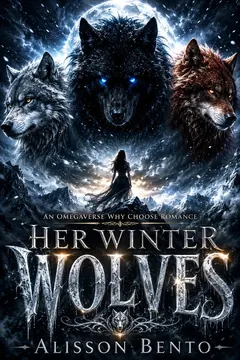
From Alisson Bento’s books
A shifter romance about one heroine, more than one devoted hero, and no choosing.
Kindle edition · Check Kindle Unlimited availability on Amazon.
The original Italian route has four numbered books
The Italian sequence is Love Me Love Me 1: Cuori magnetici → Love Me Love Me 2: Anime elettriche → Love Me Love Me 3: Amore senza fine → Love Me Love Me 4: Ancora insieme. Storytel’s Italian series record brings the four audio entries together under Stefania S. and Sperling & Kupfer. Publisher-supplied ebook records provide the individual title checks.
Cuori magnetici establishes the starting situation
Choose Cuori magnetici to meet June’s new circumstances and the people around her before moving into their complications. It is the starting choice even if a later cover or a particular relationship moment first attracted your attention. A scene circulating online is a fragment, not an alternative introduction to all the decisions that give it significance.
There is also an edition distinction within this first title. The Sperling & Kupfer special-edition listing specifically advertises extra chapters. That makes the extra material a feature of the identified edition; it does not turn the special edition into a fifth numbered novel. If you already own the opening book, compare the edition description before buying a second copy for its cover alone.
Anime elettriche continues an existing relationship story
The Italian record for Anime elettriche identifies it as volume two. Its description assumes events and connections already established around June and James. That is a concrete reason to keep the original sequence, rather than treating the new subtitle as permission to start again with unrelated protagonists.
For a newcomer, the title and number are enough to plan the next step. Reading its complete synopsis before starting Cuori magnetici may expose earlier developments. For someone who has already finished the first Italian book, the new subtitle is the key search term: a listing that merely says Love Me Love Me 2 is less informative when mixed with translated catalogs using different divisions.
Amore senza fine is the third Italian title
The publisher-supplied record for Amore senza fine places it third. Its promotional description calls it the final chapter of the series, wording that needs to be read alongside the subsequently listed fourth volume. An older description can preserve the framing used for that particular release; it should not erase a later numbered book from your reading plan.
This is a helpful distinction when a friend remembers the story as a trilogy. You need not decide that either the friend or every catalog is unreliable. Record which edition and publication stage they mean, then consult the four-book Italian sequence. Most practically, finish the third volume before opening the fourth volume’s full description, because even the fourth book’s initial circumstances reveal changes that earlier readers have not yet encountered.
Ancora insieme belongs after those first three
The Italian fourth-volume record gives the subtitle Ancora insieme. Its premise follows June and James at a later stage and brings family responsibilities and a new problem involving William into their story. These broad features explain why this is a continuation rather than a substitute opening. They are not a claim about how its conflicts ultimately resolve.
If your immediate interest is that later relationship stage, the earlier volumes still supply the route to it. Alternatively, you may decide you would rather find a novel that begins with the life situation you want. Both are reasonable choices. The distinction is between following this particular couple’s development and selecting a different book whose starting premise already matches your mood.
Why an English second purchase is not Italian book two
In English, the verified opening pair is Love Me, Love Me: Magnetic Hearts followed by Love Me, Love Me: Polar Opposites. The publisher’s trade record for Polar Opposites explicitly labels it Book One, Part Two. That small subtitle matters more for matching editions than a retailer’s broad series label or an abbreviated social-media recommendation.
The practical consequence is straightforward. If you have finished Magnetic Hearts in English, look for Polar Opposites as the continuation. Do not jump directly to the Italian Anime elettriche because you have purchased one physical English book and assume you now need “book two” in another language. You may be comparing a translated part with an original numbered volume.
This guide does not claim exact chapter boundaries between the languages. A split original can produce different page counts, chapter arrangements and marketing titles. Recognizing a split is enough to avoid the most obvious mistaken purchase; moving between languages halfway through requires the contents pages or explicit publisher confirmation. Matching the last remembered scene to a public synopsis is less reliable and more likely to reveal later events.
French numbers make the same caution especially important
Hachette’s verified French sequence begins Love Me Love Me, tome 1, Cœurs magnétiques; tome 2, Pôles opposés; then tome 3, Âmes électriques. The French second-volume page and French third-volume page establish those numbered titles directly.
Notice the useful mismatch: Âmes électriques is French tome three, while the Italian Anime elettriche is original volume two. Translating the subtitle gives you a clue about a connection, but it does not make the volume numbers identical. A list that translates the four Italian subtitles and assigns them French numbers one through four would give a French reader the wrong purchase instructions.
If you begin in French, follow Hachette’s French numbering from Cœurs magnétiques. If you already read Italian volume one and want to continue in French, ask the publisher or bookseller to verify the boundary rather than ordering from the subtitle alone. The verified records establish the discrepancy; they do not supply a complete chapter-by-chapter conversion chart.
Spanish and German anchors, and the Portuguese question
Montena’s Spanish records identify Love me, love me. Libro 1 – Corazones Magnéticos and Love me, love me. Libro 2 – Polos Opuestos. The Spanish first-book page and second-book page confirm the published titles. Keep the whole subtitle when searching, because Libro 2 does not identify Italian volume two.
For German, the publisher-supplied cbt edition record identifies Love Me, Love Me – Unsere Herzen ziehen sich an and lists Unsere Küsse sind magisch next. The storefront around that record is Italian, but the book’s language field is German. This is a particularly clear example of why a website’s country or interface language cannot tell you the language of the actual text.
A Portuguese-language article about the series is not evidence of a Portuguese translation. The sources checked here do not establish a published Portuguese edition. Portuguese readers can use the confirmed original and translated titles to investigate imports without replacing them with an invented Portuguese subtitle. A listing at a Portuguese retailer can still describe a Spanish book; verify the language and ISBN of the exact copy.
Choose the emotional premise as well as the sequence
The opening asks whether you want a relationship developing amid a new school environment, attraction that conflicts with first impressions and uncertainty about the people already occupying that world. The English publisher positions the book as slow-burn, angsty new adult romance. Hachette places its first French edition in young-adult romance and marks it for readers aged sixteen and above on the French first-volume page. Those are market-specific descriptions, not a universal suitability certificate.
For an adult romance reader, a school setting may be the decisive attraction or the decisive reason to choose something else. For a younger reader or someone choosing a gift, check the exact edition’s guidance and content information rather than deriving suitability from the attractive cover. The premise alone cannot establish the absence of subjects you wish to avoid, and a slow-burn label does not answer how explicit the whole series becomes.
If the appeal is specifically school-based relationship drama, our Mona Kasten reading-order guide provides a separate route through Maxton Hall and other Kasten series. That comparison concerns choosing a reading project. Ruby and James Beaufort do not belong to June and James Hunter’s story, and sharing a familiar first name does not create a crossover.
Compare reading commitments without relying on page counts
A four-volume original and a translated opening divided into parts create different practical reading projects. Someone who wants one English paperback for a holiday can begin with Magnetic Hearts, while understanding that buying one paperback does not establish that they have completed the first Italian volume’s narrative territory. Someone planning to read the complete Italian sequence can use the four subtitles as a purchase list. Neither plan requires assuming all translated continuations have already appeared.
Page totals do not solve this difference. Type size, layout, format and added material can change the number of pages even before a translation is involved. The special edition’s advertised extra chapters are a documented difference, whereas a lower page total alone is not evidence of an abridgment. If completeness matters to your purchase, look for an explicit edition statement rather than comparing two numbers from different formats.
Publication dates answer a different question again. A later translation of an early original book is new to that language’s readership without becoming a new stage in June and James’s chronology. For a book group, specify the publisher, language and complete title when agreeing on the next installment. Otherwise two members can both reasonably say they have finished “book two” while having reached different points in the story.
Consider a hypothetical bilingual reader who has just finished French Pôles opposés and wants to practice Italian with the next book. The safe next action is to verify where that French edition ends, then compare the original volume’s contents. It is not enough to decide that the next integer must be three. Another hypothetical reader simply wants to restart in Italian; choosing Cuori magnetici removes the boundary question and restores the original introduction.
This is also useful when borrowing rather than buying. Give the librarian the author and the edition-specific subtitle, then mention that the original and translated numbering differ. A library record that groups the series broadly may still have exactly the copy you need. The extra detail helps distinguish that copy from the neighboring translation without asking anyone to recount the ending or identify a revealing plot twist.
Plan your next copy without turning the search into spoilers
For a first-time Italian reader, write the four Italian subtitles in order and begin with Cuori magnetici. For a first-time English reader, write Magnetic Hearts then Polar Opposites, retaining the part wording. For a French reader, keep Cœurs magnétiques, Pôles opposés and Âmes électriques under their French numbers. These short notes solve different edition problems without needing a summary of every subsequent conflict.
For a returning reader switching formats, compare author, title, language, number and whether the edition includes extra chapters. An audiobook can have a different publication date from the ebook without becoming a sequel. A special cover can belong to the same narrative position. A journal or other companion item should not be inserted into the novel sequence merely because the series name appears prominently on it.
For someone arriving from an adaptation, start with the opening book in your chosen language. Recognizing characters on screen does not establish which translated part you have already covered in prose. Avoid using a film’s runtime, a trailer’s final scene or a collection of online clips as a chapter conversion system. The opening volume gives you the book’s own introductions and relationships in context.
When the unresolved question concerns a sensitive subject rather than numbering, use our guide to checking content notes without major spoilers to frame a narrow question. That is a general information method, not a claim that this series shares every dark-romance theme. If you want a different starting premise or a standalone commitment, browse the romance catalog. Alisson Bento’s books are standalone stories; their catalog does not extend Stefania S.’s sequence.
The useful result is a reading plan that names both the story and the edition: Stefania S., June and James, your language, the complete subtitle and the next verified part. Once those pieces agree, you can choose the emotional journey on its merits instead of letting an inconsistent number choose it for you.


