
Ti odio, anzi no, ti amo! is the Italian title of Sally Thorne’s The Hating Game. The English and Italian names identify the same Lucy Hutton and Joshua Templeman novel, available in different editions. They are not two installments that you need to read consecutively. If you have searched for the reversed phrase “ti amo anzi no ti odio,” check the author and the characters against the official record before choosing a result.
The reading invitation is specific: two colleagues who already spend their working days competing must contend with attraction while seeking the same promotion. Choose this book if you want career rivalry to supply the pressure around an adult romantic comedy. A wealthy employer hiring a subordinate, a dangerous enemy or a fake relationship would offer different reasons for the protagonists to collide. This guide uses the author’s and publishers’ descriptions to help you choose; it does not claim a complete reading of the novel or rate its execution.
One Novel, Two Clearly Identifiable Italian Editions
The Braidense National Library record for the 2016 Italian edition names Sally Thorne, gives the title Ti odio, anzi no, ti amo! and ISBN 9788869051494, and describes a printed volume of 381 pages. Its uniform-title field explicitly connects this edition to The Hating Game. The Google Books record for the 2023 HarperCollins Italia edition identifies ISBN 9791259852809, the same Italian title and 384 pages. These identifiers distinguish editions of the work; the library’s publication year is 2016.
Those dates describe editions. They do not mean the characters returned in a new adventure in 2023. The author’s and 2023 edition’s descriptions identify Lucy Hutton, Joshua Templeman, Bexley & Gamin and the promotion that turns their existing rivalry into a consequential contest. That combination is much more useful for identification than cover color or a photograph associated with the film. A different cover can make a familiar book appear unfamiliar, especially when the original title becomes more prominent.
Use the ISBN to identify the edition or format shown in the record, and use author plus title to identify the work. A library may hold an earlier edition while a shop displays the later one; either can be the novel you want. The records alone do not establish changes in translation, added scenes or identical typesetting. If bonus material or a particular translator matters to you, inspect the exact edition’s credits and contents. Buying both versions is unnecessary simply to follow the story.
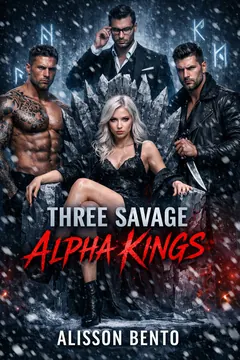
From Alisson Bento’s books
A shifter romance about one heroine, more than one devoted hero, and no choosing.
Kindle edition · Check Kindle Unlimited availability on Amazon.
Lucy and Joshua Have Something Concrete to Lose
The author’s book page introduces Lucy as someone who takes pride in being liked at Bexley & Gamin. Joshua is the colleague who does not reward that approach. They share an office and have developed repeated contests of attention and one-upmanship. The promotion changes the meaning of that behavior: Lucy could become Joshua’s boss, and the English description says she intends to resign if she loses.
This is a useful distinction for a reader. The pair are not strangers who can avoid a bad first impression by leaving a party. Their workplace requires continuing contact, and their ambition gives them a shared prize. Attraction therefore arrives inside a problem that already matters to each of them. You can be interested in the romantic turn while also wanting Lucy’s professional objective to remain legible.
The premise also makes Lucy’s accommodating public identity relevant. A person who wants everyone’s approval meets someone who appears unmoved by it. That sets up a question about how she understands herself as well as how she understands Joshua. This is an interpretation of the advertised starting situation, not a claim about an unverified later revelation. If that tension appeals, the opening can show whether her particular way of noticing and responding makes you want to continue.
Coworker Competition Differs From Boss Romance
At the beginning of the description, Lucy and Joshua are colleagues competing for advancement. The possibility that one could supervise the other is part of what the promotion would change. That is a different invitation from a story whose initial romantic dynamic depends on a boss already holding authority over an employee. The workplace matters in both, but the source of pressure is different.
In a colleague rivalry, recognition can become unusually personal. Each person sees the other’s habits, competence and responses to frustration repeatedly. The announced contest asks you to watch how professional judgment and private attention become entangled. If you enjoy two adults wanting the same thing before they know what they want from each other, that is a strong reason to sample this book.
It does not follow that matching positions remove every imbalance. Personality, confidence and the consequences of losing can affect how an exchange feels. Read for whether Lucy can answer back, pursue her own ambitions and interpret what happens in a way you enjoy following. Our coworker romance guide explores shared work, rivalry and influence more broadly. Here, the deciding feature is the promotion’s ability to change the relationship between these particular colleagues.
What “Enemies to Lovers” Means in This Setup
The author and Italian publisher describe Lucy and Joshua’s hostility through everyday contests in a shared office. That makes the rivalry recognizable without requiring a criminal threat, a war or a family feud. If your preferred enemies story needs a profound moral disagreement, compare that wish with the actual description. Office antagonism can deliver excellent romantic friction, but it asks for a different scale of opposition.
The repeated games also invite a particular kind of attention: who notices whom, who reacts first, and who appears to control the interaction. The advertised staring and mirror games suggest that being observed already matters before either person openly acknowledges attraction. The interesting selection question is whether you enjoy romantic attention appearing in the language of competition. You need not find workplace hostility desirable in real life to find that fictional mechanism entertaining.
However, irritation and enjoyable banter are not automatically the same experience. A sharp exchange can feel playful to one reader and exhausting to another. Rather than deciding from the trope alone, read a passage containing both leads and notice your response to its rhythm. Are you eager for the next answer? Do you enjoy Lucy’s interpretation of Joshua’s behavior? Those concrete responses tell you more about your fit with this particular comedy than simply liking the idea of opposites.
Attraction Complicates the Contest Instead of Replacing It
Both official descriptions disclose a kiss during an elevator ride. Mentioning that advertised event does not require guessing how later intimacy unfolds. Its importance to the premise is that Lucy begins questioning the meaning she has assigned to Joshua’s behavior. A relationship she has understood through antagonism now becomes harder to categorize while her professional objective remains in play.
This gives you two different reasons to turn a page. One is competitive: who will succeed, and what will the contest cost? The other is interpretive: has Lucy understood the person sitting opposite her? If both questions interest you, the book’s advertised design is likely to attract your attention. If you want the working environment to disappear immediately once attraction begins, the shared promotion may be a less appealing complication.
The author presents the book as an adult workplace romantic comedy and describes it as sexy. That establishes broad positioning, not a precise heat score. It does not identify every intimate act, the frequency of scenes or every content concern. Treat the romantic-comedy label as an indication of the principal invitation and use the sample or edition notes for any narrower requirement. There is no need to turn a broad category into a certainty it cannot support.
Choose by the Pleasure You Want From the Rivalry
Start here if you like a contained social setting where repeated encounters can acquire new meaning. Lucy and Joshua already have a pattern; the promotion and attraction interfere with it. That premise is different from watching strangers invent a relationship from scratch. Familiar habits can be part of the appeal because small deviations become noticeable.
You may also be drawn to a heroine whose professional self-image is involved in the romantic problem. Lucy’s desire to be liked and her determination to win do not point in exactly the same direction. The question is not only whether Joshua is appealing. It is whether following Lucy as she negotiates approval, ambition and attraction sounds rewarding to you. Try her narrative presence before committing to the entire book.
Consider another starting point if you chiefly want expansive family history, a large suspense investigation or a romance in which work is only incidental. Those preferences do not make this premise inadequate; they call for a different center of attention. Likewise, a reader wanting initial friendship might prefer a relationship that begins with collaboration rather than established antagonism. Name the interaction you want, then see whether the sample offers that pleasure.
Read a Sample for Voice and Professional Stakes
An opening sample can settle a narrower and more useful question than “Will I love the whole book?” Notice how Lucy describes the shared space, interprets a reaction and separates a professional concern from a personal irritation. You are testing whether you want to spend a novel inside this particular presentation of the rivalry. The sample cannot certify every later choice, but it can give you direct contact with the prose.
Pay attention to competence as well as attraction. Since the promotion provides a concrete prize, you may want to understand what being good at the job means in this fictional workplace. Do you enjoy the balance between work-related detail and romantic observation? Some readers want substantial professional texture; others want a concentrated comedy whose office mainly supplies proximity and friction. You can choose that balance without treating one preference as more sophisticated.
Finally, consider how you react when Lucy reads Joshua’s expressions and behavior. Uncertainty about another person can create anticipation, but it can also frustrate a reader who prefers immediate emotional transparency. If you keep wanting another exchange, you have useful evidence of interest. If you are waiting impatiently for the entire tone to change, the book may be better saved for another mood rather than forced into tonight’s reading.
The Bonus Epilogue Is Not a Sequel Novel
On her official FAQ page, Thorne says she has no plans to write a sequel to The Hating Game. She explains that the original unpublished epilogue was included at the back of 99 Percent Mine, her second book, and refers to print and electronic editions. That is an author statement about bonus material and plans, not an instruction to treat 99 Percent Mine as book two about Lucy and Joshua.
If the bonus is the reason you are seeking that volume, check the contents of the actual edition in your language. A statement about editions on the English author site should not be stretched into a guarantee covering every translated printing. You can ask a bookseller or library to confirm the epilogue’s presence without asking for its plot. The distinction protects both your reading sequence and your expectations about what a purchase contains.
The FAQ also addresses The Comfort Zone, a project previewed in some copies of The Hating Game. Thorne says she did not finish it and it would not be published. A preview in an older book is therefore not reliable evidence of a currently available follow-up. Follow the author’s explanation rather than treating every title mentioned in back matter as an installment waiting to be located.
The Film Can Identify the Story but Cannot Identify Your Edition
Thorne’s official book page identifies a film adaptation starring Lucy Hale and Austin Stowell. If you recognize those performers on a cover, that may explain why an edition looks different from an older copy. It does not turn the novel into a separate screen-series installment, nor does it tell you which bonus pages, translation or format the edition contains.
A film and a novel also ask you to encounter the relationship through different forms. Performance and visual timing may be what first attracts you; on the page, you need to enjoy how the prose directs your attention. If you arrived through the film, a sample helps you decide whether reading this version of the rivalry interests you independently. No scene-by-scene fidelity claim is needed to make that choice, and this guide does not supply one.
What the Two Titles Emphasize
The English title places the game in the foreground; the Italian wording makes the movement between hate and love more explicit. Those different emphases can help explain why one cover first caught your attention. They do not create different plots. If “game” makes you expect an agreed strategy or a pretended relationship, return to the advertised situation: shared work, habitual rivalry and one promotion that both colleagues want.
Likewise, the Italian contrast between feelings is not a timetable for the romantic development. It cannot tell you how quickly attraction becomes trust, or which exchange you will find convincing. Those questions belong to the narrative itself. Identifying the title gives you the right novel; a sample lets you test its voice. Keeping those two decisions distinct makes it easier to choose an edition without assuming that recognizing the premise already establishes your enjoyment.
Make One Deliberate Next Choice
For an Italian copy, keep Sally Thorne, Lucy Hutton, Joshua Templeman and the title Ti odio, anzi no, ti amo! together in your search. Then specify the edition only if its format or contents matter. For an English copy, use The Hating Game. Reversed wording in a search query does not require a second reading order or a second purchase when the result is this same novel.
After sampling, decide which feature you want more of: colleague competition, a concentrated comic voice, professional ambition or the reinterpretation of familiar behavior. That makes your next recommendation more useful than asking only for another book with “hate” in its title. The Alisson Bento catalog offers additional romance discovery by premise and trope; its books are separate works, so read each description rather than expecting a continuation of Thorne’s characters. Choose the rivalry whose reasons and voices make you curious, then let the actual story answer the questions its premise has raised.