Bully romance generally describes a romantic story in which targeted hostility or humiliation forms an important part of the relationship between the central characters. For choosing a book, the useful distinction is repeated targeting supported by unequal influence, rather than simply sharp dialogue or two people competing. Ask who can make ordinary participation costly for the other person, whether the behavior is ongoing or remembered, and what the story asks the relationship to address afterward.
This is a working literary distinction, not a clinical definition or a standardized publishing category. Authors and readers apply the label differently. The guide discusses narrative expectations without graphic material; the named books are discovery examples verified through official descriptions, not claimed complete-book reviews. School settings also require care: an adult readership label does not establish that every character is an adult throughout a story.
Start with the pattern, not the insult
An insulting exchange can establish dislike without establishing a bully-romance premise. Two characters may speak harshly during one argument, enjoy competitive teasing or misunderstand each other before learning better. Repeated targeting offers another experience: the reader follows someone whose encounters with a particular person keep producing a foreseeable personal cost.
The pattern may involve reputation, exclusion, access to a shared place or the expectation of public embarrassment. Those are narrative dimensions to identify, not a checklist every book must contain. Their importance lies in accumulation. A remark that looks minor in isolation can carry a different weight when the targeted character must anticipate another encounter tomorrow.
Ask what changes if the characters simply stop talking. Rivals might still compete for the same prize. Former friends might still need to understand a rupture. Someone facing social targeting might continue meeting its effects through other people. That difference tells you whether the conflict lives mainly inside a conversation, inside a contest or across a wider social environment.
This also separates the trope from a forceful personality. Confidence, an intimidating reputation or a commanding manner does not automatically mean a character repeatedly targets the romantic lead. Look for the actual relationship situation instead of treating every dominant character as a bully.
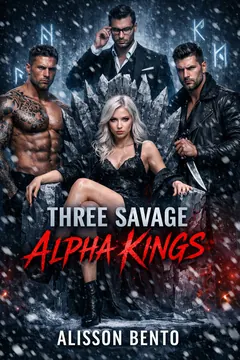
From Alisson Bento’s books
A shifter romance about one heroine, more than one devoted hero, and no choosing.
Kindle edition · Check Kindle Unlimited availability on Amazon.
Rivalry, enmity and targeting promise different transformations
Rivalry begins with competing interests. Enmity can arise from substantive opposition or distrust. Targeting places more emphasis on what one person repeatedly does to another and on the influence that makes it difficult to escape the consequences. A story can combine these ingredients, but they are not interchangeable explanations for every hostile romance.
Imagine two fictional adults, both in their thirties, competing for one place on a regional tennis team. They challenge each other’s training methods and want the same opportunity. That establishes rivalry. If one believes the other deliberately abandoned an earlier doubles partnership, the premise adds distrust. Neither fact by itself establishes an ongoing campaign of humiliation.
Now imagine a different adult-only premise in which one player’s influential circle repeatedly excludes the other from ordinary club practice sessions. The issue extends beyond who joins the team. The targeted person’s ability to belong and participate has become part of the conflict. This invented contrast clarifies the reading experience; it is not a description of any named book below.
Our enemies-to-lovers and rivals-to-lovers guide explains the broader opposition distinction. For bully romance, add a more specific question: what pattern would have to stop, and what consequences would remain after it stopped?
The audience around the couple matters
Public hostility is not merely private hostility with more witnesses. An audience can determine whether a remark becomes a lasting reputation, whether exclusion spreads or whether someone feels able to enter an ordinary shared space. The supporting cast can therefore be part of the central reading experience rather than background decoration.
Notice the different functions people perform. One person initiates the targeting. Another repeats a story without checking it. Someone offers private kindness while remaining publicly silent. Another person refuses to join in. A novel need not give everyone equal attention for these differences to matter. Their responses affect how isolated the central character feels and what a later change would need to reach.
For selection, distinguish one hostile love interest from hostility backed by a group. You may enjoy a concentrated two-person conflict while disliking repeated scenes of public humiliation. You might instead want the larger social system challenged, with friends and institutions reconsidering their conduct. Both preferences can sit beneath a broad bully tag.
This audience question also changes how a romantic gesture reads. A private apology can address an intimate injury while leaving a public falsehood intact. A public defense can change the social atmosphere while leaving the personal relationship unresolved. Neither act automatically accomplishes the other’s task. Ask which kind of aftermath you want the book to explore.
Compare three official premises without inventing their outcomes
Penelope Douglas’s official Bully page identifies Tate and Jared as former friends and presents recurring school humiliation and exclusion. The author places it at the start of Fall Away. The distinctive invitation is the loss of an earlier closeness: someone once familiar becomes the source of hostility. Consider that premise when damaged shared history interests you more than a first encounter between strangers.
Rina Kent’s Cruel King page instead identifies Levi, Astrid and Royal Elite School, describing the book as a complete standalone prequel. It offers an entry associated with an established hierarchy and a hostile school environment. The standalone statement answers a reading-commitment question; it does not certify a particular level of cruelty, an all-adult cast or the absence of difficult subjects.
For a different time frame, Hachette’s Vicious description connects Emilia and Baron Spencer through an earlier school history and his pursuit of her in New York a decade later. Her mother’s position as live-in caretaker on his family’s estate makes their earlier proximity materially unequal, rather than a clash between identical rivals. The publisher identifies him as a lawyer and her as an artist, and calls the novel independently readable within Sinners of Saint. Its discovery value here is the adult return of a history, rather than an assumption that a new setting erases what came before.
These three choices organize curiosity differently: a former friendship, a school hierarchy and a later reunion carrying earlier hostility. None of those descriptions proves how convincingly the novel handles accountability. This guide does not rank their redemption arcs, guarantee their endings or assign heat ratings. The point is to choose the starting question you actually want to follow.
Read the timeline as well as the setting
An ongoing hostile relationship offers a different reading experience from an adult reunion with a former tormentor. In the first, the reader may spend substantial time inside the targeting environment. In the second, the past can shape present expectations even when the characters’ practical circumstances have changed. A time jump changes the narrative position; it does not itself demonstrate growth.
Ask what you want to witness directly. You might want the history to be brief background and the present to concentrate on changed conduct. Another reader may want the earlier situation dramatized in detail. Both can be interested in reconciliation while wanting very different proportions of past and present.
A school, university, workplace or small community is also more than scenery. It changes how often people meet and which shared connections remain after an argument. The useful question is what makes distance difficult in this particular story. Do not transfer assumptions about one setting into another, or assume that an adult workplace guarantees less social cruelty.
Reader category, character age and the age within a flashback are separate facts. Check them through the actual edition or official description when they matter. A cover, a campus label or the phrase New Adult cannot replace that information. Here, the literary discussion stays non-graphic and does not treat school characters as automatically over eighteen.
Explanation is one part of repair, not its completion
A revelation can explain why a fictional person acted cruelly. It does not by itself show that the behavior has stopped, that consequences have been addressed or that trust has become reasonable. These are distinct stages for readers who want a substantial movement from hostility toward love.
A useful sequence of questions is: what becomes understandable, what changes in conduct, and what choice becomes possible afterward? This is not a prescribed formula for every novel. It is a way to identify the payoff you seek. Some readers mainly want the emotional force of a revelation. Others want sustained changed behavior before they can enjoy the romantic resolution.
Consider a hypothetical adult romance in which a hurtful public claim is corrected. That correction changes the public account. It does not necessarily resolve the private fear of being targeted again. Alternatively, the aggressor may become considerate in private while refusing to correct the public account. The story has changed one dimension and left another active.
You can enjoy a dramatic fantasy while keeping those distinctions visible. Calling a novel a favorite does not require proving that every fictional action was justified. Disliking its repair process does not require diagnosing its readers. Describe what the narrative made convincing for you, and what you wanted more time to see.
Look for what happens when the audience changes
One revealing reading lens is whether behavior remains different when no romantic reward is immediately available. Does a character act differently around friends, rivals or someone whose approval matters? The question concerns consistency in the represented story, not a real-world test to apply to people.
An audience can also complicate an apparent reconciliation. Former allies may keep behaving according to old expectations. The central pair can privately understand one another while the surrounding group still treats the targeted person as available for ridicule. If the social aftermath is part of your interest, ask whether the book gives it room rather than assuming a romantic declaration repairs the entire environment.
Conversely, you may prefer a concentrated couple story that leaves the wider community mostly in the background. That is a legitimate selection preference. The useful distinction is whether you want two people to change their relationship, a group to change its conduct or both. The same trope label cannot settle that scale for you.
Agency and consent deserve their own questions
A witty response does not establish equal power. A character can answer brilliantly while still depending on the other person’s family, workplace or social circle. Equally, a quiet response does not establish passivity. Look at what the character’s decisions can actually change. Our guide to heroine agency explores that broader narrative question.
Consent is another separate issue. Bullying does not specify the consent conditions of every intimate scene, and romantic attraction does not establish agreement. If CNC, dub-con or non-con appears in a description, use the dedicated literary glossary for those distinctions. They should not be collapsed into a generic claim that a book is simply intense.
Nor does fighting back erase an imbalance or make every previous act mutual. A defensive action, retaliation and an ongoing pattern of targeting can occupy different places in a narrative. For choosing a book, describe the conduct you are willing to read rather than deciding that both characters must carry equal responsibility because both sometimes behave badly.
Content notes refine the choice; they do not replace it
Kent’s official warning page lists bullying for Cruel King as well as several other Royal Elite entries while attaching different additional subjects to individual books. That illustrates why the shared label is not a complete advisory or a uniform intensity scale. The linked list contains sensitive subjects and possible spoilers; consult the particular title rather than transferring one book’s notes to another.
Separate the form of hostility from other boundaries. Public humiliation, threats, discrimination, confinement and sexual violence are different questions even when a recommendation groups them under dark romance. You do not need to accept every category because you are curious about one difficult relationship. Likewise, accepting a category does not mean wanting it depicted with every possible degree of detail.
A broad request such as “nothing too dark” may leave the important distinction unstated. Try naming the experience: no group humiliation; past targeting only; an adult reunion; substantial acknowledgment of consequences. Those requests identify narrative features without asking someone to reveal every incident or defend your preferences.
Turn the label into a useful next-book request
Begin with one attraction and one essential condition. For example: “I want an adult reunion with a former bully, with most attention on the present and sustained changed behavior.” Another reader might ask for hostility involving social status but no repeated public humiliation. These are hypothetical preference statements, not confirmed recommendations for the three novels discussed above.
Then add the scale of the relationship commitment. Do you want an independently readable couple story, a continuing relationship or a wider connected world? A prequel, first installment and standalone within a series answer different organizational questions. Confirm the chosen title’s own guidance before building a list from a shared author name.
Keep the original title, author and reading language together when locating an edition. This guide retains the verified original titles; it does not invent translated publication names or establish current subscription access. Once your essential questions are answered, use a sample for voice and the opening dynamic rather than continuing to accumulate labels.
The romance catalogue offers a broader browsing route if these particular premises do not appeal. Carry forward the distinction that matters to you: repeated targeting, the social world that sustains it and the kind of change you want to witness. That gives bully romance a concrete reading question instead of treating cruelty itself as a universal measure of romantic intensity.