
Scorpion’s Secret by Kristin Glimmer is the first Desired Obsession book. Its advertised situation follows Valentina, whose holiday with her best friend in Russia becomes an abduction and a coerced assignment between mafia clans. She is told to kill or seduce her captor’s enemy to save her friend’s life, while attraction to that enemy and his brother complicates the assignment. Choose it for that collision of coercion, loyalty and multiple romantic possibilities, rather than an uncomplicated holiday romance.
The English main title is also an edition trap: the print product identified here is German. This article does not establish an English translation or a translated edition in its own reading language. It is a discovery guide based on the publisher’s material and edition records, not a claimed complete reading, an ending explanation or a guarantee of the final romantic group.
Confirm the author and the exact series
The publisher’s own shop page identifies Kristin Glimmer, Desired Obsession and volume one. It also uses the German subtitle Du gehörst uns. Keep those elements together when searching. An English title alone is not evidence of an English-language novel, and a subtitle should not be translated into an invented published edition name.
The publisher is Black Edition. Its official website directs readers to the Loveletters bookshop for its books, which establishes why that shop is relevant to the publisher’s presentation. The particular product page, rather than a general genre shelf, supplies the premise and content notes used here. A catalogue label and a book-specific description serve different purposes.
The author also writes books outside Desired Obsession. Finding Kristin Glimmer on another cover does not make that title the next volume of Valentina’s story. Use the series list for the sequence and the individual record for the product. That small distinction prevents a recommendation about a similar mood from being mistaken for a necessary continuation.
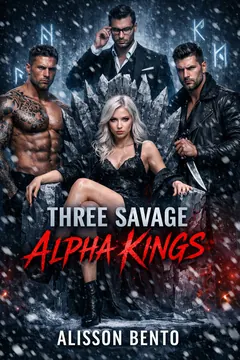
From Alisson Bento’s books
A shifter romance about one heroine, more than one devoted hero, and no choosing.
Kindle edition · Check Kindle Unlimited availability on Amazon.
A holiday becomes an assignment she did not freely select
The official description makes Valentina’s original intention ordinary: spending a relaxed holiday with her best friend. The abduction changes her purpose. Her movement into the mafia conflict is not advertised as a professional investigation she already chose to undertake. Someone else tries to turn her into a weapon against a rival.
That difference changes the reader’s point of interest. In a professional undercover premise, training, an institution and operational goals may organise the heroine’s decisions. Here, the announced leverage is personal and imposed. A reader can be interested in how she thinks within that pressure without assuming skills, resources or support that the description has not established.
If what draws you is a competent operative who voluntarily enters a target’s home, the site’s undercover-agent romance guide offers another starting question. Scorpion’s Secret instead asks you to begin with an abducted woman and a threat to someone important to her. Those are distinct reasons to enter danger, even if secrecy and attraction later become relevant to both kinds of story.
The best friend makes the demand personal
The assignment’s stated purpose is saving Valentina’s best friend. That gives her more to weigh than her own immediate attraction or safety. Her bond with her friend gives the captor a way to pressure her into approaching his enemy. It invites interest in loyalty under pressure rather than merely in which dangerous man seems most appealing.
Ask whether this is the emotional tension you want. Some readers enjoy a heroine whose decisions involve responsibility for someone else. Others prefer her freedom to explore desire without a threatened third person shaping each choice. You do not need the eventual outcome to identify that difference. The premise already tells you why ignoring the demand is not presented as an ordinary, costless option.
Being motivated by a friend does not prove that every decision is freely chosen. Nor does it tell us how the friend behaves, what they know or which role they later occupy. Keep the advertised stakes separate from an invented character history. You can understand why the threat matters without filling in scenes, secrets or sacrifices the sources do not reveal.
The target and his brother complicate allegiance
The description places the captor’s enemy and that enemy’s brother on the other side of Valentina’s imposed task. Attraction to them begins to disturb her determination. That is a concrete reason to investigate the romance: the people she is expected to act against become emotionally consequential, rather than remaining distant pieces in a criminal contest.
The brothers’ existing connection and their separate connections to Valentina are different matters. Sharing a family tie does not tell you whether they behave alike, agree on everything or build trust at the same pace. If you enjoy several potential relationships, look for individual motives and interactions in the sample. Do not reduce two people to one collective promise just because the description introduces them together.
Likewise, being an enemy of her captor does not automatically establish a safe rescuer. The premise makes opposition visible; it does not settle every person’s conduct. The guide to captive why-choose romance develops this distinction between captors, helpers and partners. Here, its usefulness is keeping Valentina’s particular conflict intelligible without deciding her eventual trust for her.
Criminal factions create a question beyond attraction
The advertised power game involves two mafia clans. That matters because Valentina’s assignment has a purpose for the people arranging it, independent of her feelings. The target is somebody’s enemy. A change in her attachment can therefore affect more than a private conversation: it conflicts with what she has been told to do.
Readers drawn to conflicting agendas have a specific reason to try this setup. You may want to watch a heroine distinguish what another person wants from what she herself believes. Alternatively, you might prefer the criminal world to remain lighter background while a relationship takes centre stage. The description does not quantify that balance, so a useful follow-up asks how central the imposed mission remains without requesting the moment it changes.
Treat the clans as fictional structures. The premise is not evidence about how real Russian organisations operate, how a country treats visitors or what a real criminal would do. Its role in this guide is narrative: rival powers create pressure on Valentina’s choices. You can assess that reading invitation without turning a dark romance into reporting about an actual society.
Multiple interests and the final group are separate claims
The publisher shop uses Reverse Harem and Why Choose among its labels. That is relevant positioning for readers interested in more than one romantic connection. At the same time, the promotional description raises questions about trust and choice. Those signals identify a field of complicated attachments; they do not let this guide announce which named or suggested men belong to the final relationship.
This matters if a particular arrangement is essential for you. Perhaps you want a heroine who ends with several partners, but do not need every introduced man included. Perhaps you have a firm preference about relationships between those partners. Neither the number of men in a blurb nor a broad shelf tag answers every such question. Seek the precise relationship information you need for the series, without requesting how each revelation unfolds.
Do not turn the existence of volume two and three into a promise that the complete group arc closes inside volume one. The book’s first-position label is clear; its exact ending structure is not established by the sources used here. If you require a self-contained romantic resolution in one sitting, clarify that point before buying rather than treating an introductory title as automatic standalone completion.
Possessive language introduces an argument about autonomy
The German subtitle and the promotional address from Scorpion foreground a claim of belonging. Valentina’s answer in that same presentation asserts her own ownership of herself. Read the two together. The marketing does not simply offer possession without resistance; it stages an opposition between what somebody claims over her and what she says about her own freedom.
For a reader, this can create more than one attraction. You may enjoy the charge of possessive language itself, the heroine’s refusal to accept its terms, or the uncertainty about whether desire changes how she responds. Those are distinct pleasures. Knowing which one matters to you helps you ask about the book without demanding that a blurb settle every later conflict.
It also keeps a useful boundary between dialogue and narrative fact. A character saying that someone belongs to them does not establish agreement by the other person. A character asserting independence does not prove that she has every practical resource needed to act freely. The advertised abduction and threat to her friend make that gap relevant here. You can be interested in the struggle over autonomy while still checking the actual coercive content. Neither a possessive subtitle nor a defiant reply supplies an automatic answer about the eventual relationship.
The publisher’s warning is specific to this book
The product page’s warning names an interrupted beginning of rape, self-harming behaviour, suicide or intense thoughts about it, torture, violence, murder and traumatic childhood. It then marks additional subjects as potentially peripheral, including trafficking and forced prostitution. Read the complete current wording; this grouping is deliberately shorter than the source’s full list.
Preserve those differences in wording. A subject listed as potentially peripheral should not become a confidently described scene, and an interrupted assault should not be relabelled as either absent or completed. If the distinction matters to your boundary, request clarification at the level you need. Broad darkness and explicitness cannot substitute for that title-specific question.
You can be interested in obsessive attraction while declining a particular form of violence or coercion. That does not require defending your taste or proving endurance. Conversely, choosing deliberately dark fiction does not mean a description should soften the actual warnings. Match the book to the material you want to read, and let uncertain details remain uncertain rather than replacing them with reassuring guesses.
Read the sequence without opening later plot summaries
The publisher’s Desired Obsession collection identifies Scorpion’s Secret as volume one, Skull’s Decision as volume two and Shadow’s Truth as volume three. This is a practical order for beginning. You do not need to read the later blurbs to establish it, and those blurbs may reveal changes in Valentina’s circumstances.
Keep the distinctive names and subtitles with their own records. A listing for Skull’s Decision is a later book, not an alternative cover of Scorpion’s Secret. A character card carrying the first book’s name is merchandise, not a fourth novel. Publisher collections can place both kinds of product together, so select the book record before comparing formats or offers.
For a reading plan, decide how much commitment you want now. You can sample volume one before obtaining the rest, or confirm the later books’ products while avoiding their descriptions. What you should not do is infer the final romantic outcome from three titles alone. Sequence confirms the route; it does not supply the relationship resolution.
The promotional voices are not a full viewpoint map
The publisher’s description addresses the reader through passages labelled Scorpion and Valentina. Those passages help present opposition and possessive attraction in the marketing. They are not sufficient evidence that the novel uses exactly two viewpoints, that every chapter follows the same pattern or that the complete narrative is written in the same form as the blurb.
If viewpoint is important, use an authorised sample of the actual selected edition. Notice whose perspective opens the text and how the writing handles names and transitions. Then distinguish what the sample shows from what requires reading the complete novel. A few pages can test your comfort with voice; they cannot establish the entire distribution of attention across every possible relationship.
This is especially relevant to a book marketed through several interests. You may prefer discovering the men’s intentions alongside Valentina, or seeing their thinking earlier. Both can create suspense differently. Ask about the narrative arrangement without requesting hidden identities or the ending. That keeps the choice concrete while allowing the story’s uncertainty to remain intact.
Verify the German print product
The publisher shop’s product record identifies the decorated print item with number 9783989426474. The Hugendubel trade record identifies that paperback as German and recommends it for adults. Use the number together with author and title; the title’s English wording does not override the language field.
The publisher shop offers variants described as unsigned and with a neutral signature. That identifies a distinction to check, not a guarantee about current stock or personalised inscriptions. If you want someone’s name in a dedication, confirm whether that separate service exists. Similarly, the documented decorated edges belong to the described product; another format should not inherit that feature merely because it shares the title.
For another reading language, look for an actual publisher-confirmed translation rather than translating Du gehörst uns yourself and searching as though you had established a published title. This guide has not verified such editions. Current price, delivery eligibility, ebook compatibility and subscription availability also need their own checks. A correct identification can help you ask a seller a precise question without promising an offer is usable at your address today.
Separate secret identity, setting and heroine positioning
The publisher also attaches Secret Identity to the book. That adds another question to the assignment premise: what information about a person is known, concealed or misunderstood? It does not establish whose identity supplies a revelation, when it is disclosed or whether every false appearance is created for the same purpose. Keep the label as a reason for curiosity rather than treating it as a spoiler answer.
This is different from assuming a professional cover operation. An imposed task can involve concealment without giving the heroine the backing of an institution. In Valentina’s setup, the source of pressure is already identified as a captor. If your interest is the tension between what she is expected to do and what others believe, ask about the importance of hidden information without requesting the concealed name or the moment of exposure.
The shop’s setting tags name Russia and Turkey. Those tags add geographical orientation, but they do not promise a travel itinerary, equal time in both countries or a particular route. The blurb explicitly locates the intended holiday in Russia. Beyond that, let the narrative reveal movement rather than constructing an imagined journey from two catalogue labels. This distinction helps if you came for a specific setting and need to know whether it is central or only part of the wider story.
Curvy Heroine is another publisher label. It identifies a feature of the heroine’s positioning, not proof of a particular body-image arc or a guarantee that the entire narrative centres on appearance. If representation matters to your choice, distinguish wanting a heroine described that way from wanting detailed attention to her experience of her body. Both are valid wishes, but only a sample or a more focused account can establish the second.
Taken together, these labels should refine the main dilemma rather than replace it. You might prioritise hidden identity, a heroine whose physical presentation interests you, or the international setting. Ask which element actually makes you curious about Valentina. The most informative recommendation begins there and keeps the coercive mission in view, instead of combining every tag into a promise of equally prominent themes.
Choose Valentina’s particular dilemma
The strongest reason to explore Scorpion’s Secret is the combination of an imposed mission, a friend’s threatened life and attraction that crosses the intended boundary between captor and target. That gives secrecy and loyalty a particular shape. It is more informative than choosing any book with a dangerous man or any cover associated with mafia romance.
Choose by whether you want that conflict, the publisher’s adult warnings and a series with multiple romantic possibilities. Confirm any essential final-configuration requirement separately, then try an authorised sample in the language you can read. For a different standalone route, browse Alisson Bento’s book catalogue. Those books are independent choices and do not continue Glimmer’s characters or Desired Obsession.