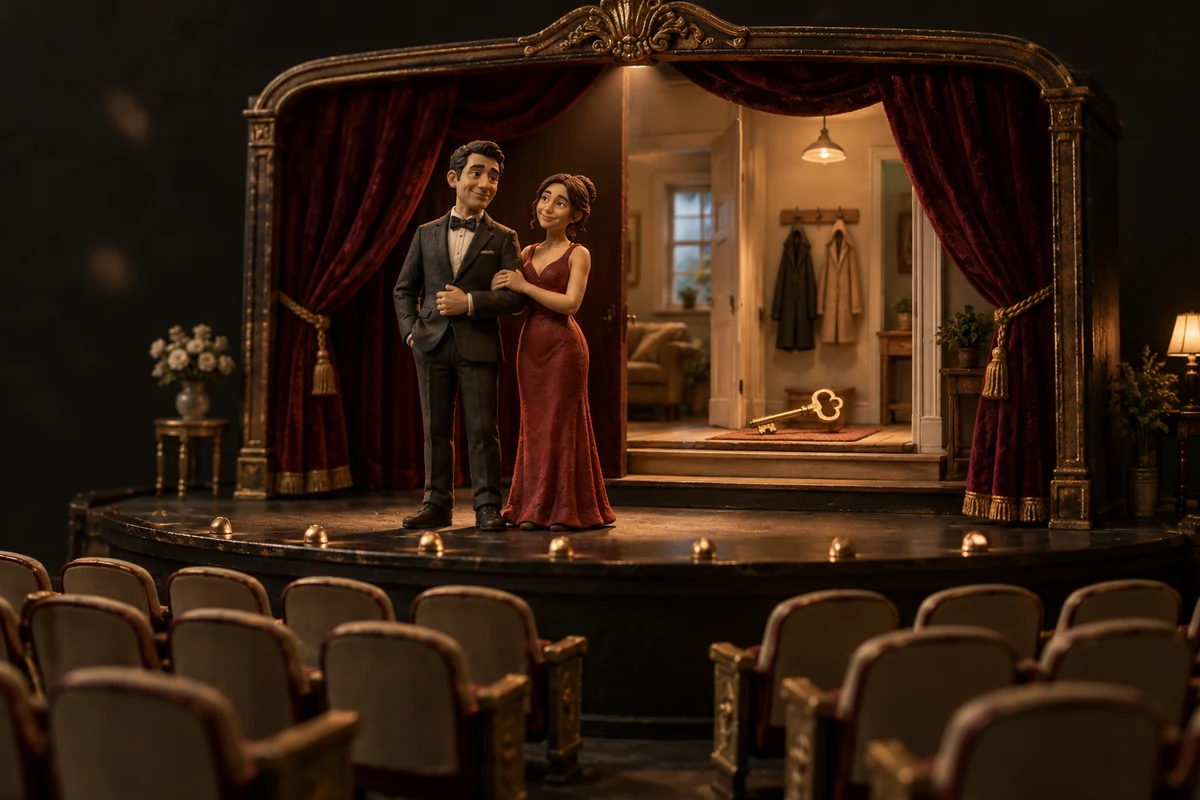
A fake relationship in mafia romance needs a particular audience and a reason that audience has to believe it. A cover built to discourage unwanted attention carries different stakes from one meant to announce an alliance. Settle the public purpose first, then consider how keeping up the performance changes what the adults can safely ask of one another in private.
Identify whom the performance must convince
The audience decides what the pretending involves. Relatives may test family knowledge, rivals may watch public appearances, and staff may notice changes in routine. The couple needs a story that holds up for those observers. You might enjoy awkward rehearsal and improvised answers, or prefer suspense built around whether a carefully prepared cover will survive scrutiny from people with conflicting interests.
For a catalogue example, The Fake Wife Deception has a description that sets out a fake-relationship framework within mafia bodyguard romance. Its opening follows Rhea seeking documents about a property transfer at the Alderton Grand, where she meets Norman in a restricted corridor. The concrete appeal here is documentary suspense and guarded cooperation, rather than an opening built around lighthearted dating practice.

From Alisson Bento’s books
A mafia romance about a captive bargain that turns into the only place she wants to be.
Kindle edition · Check Kindle Unlimited availability on Amazon.
Compare protection with an alliance
A protective cover aims to change how outsiders treat one adult. An alliance cover aims to change how outsiders read the couple’s loyalties or combined power. The adults might agree on the performance while disagreeing about its purpose. If you enjoy bargaining, look for a premise that explains what each expects to gain, rather than one that offers only a general promise of danger.
The same cover can serve different private goals. One adult could need access to a family gathering while the other wants to discourage a proposed alliance. They would need to share enough information to avoid making a public promise neither intended. This is a general example of mismatched incentives, not a claim about any particular novel.
Check how the cover affects private trust
Private trust concerns what the performance allows. A staged affectionate gesture can be useful to the cover without settling whether affection is welcome once the audience leaves. In The Fake Wife Deception’s opening, as the description records it, Rhea wants a traceable chain of evidence, while Norman notices patterns suggesting a controlled handoff. That starting uncertainty gives readers a specific trust problem to explore; it does not show how the later cover or romance resolves.
Read the cover as a story with an audience
A convincing public relationship requires more than affectionate gestures. Observers may expect a shared history, a reason for sudden commitment, or knowledge of each other’s routines. Those expectations shape the scenes. A suspicious relative can turn conversation into a test; an employee can notice that the supposed couple behaves differently when unobserved. If you enjoy improvisation, ask whether the adults have to answer unexpected questions. If you prefer preparation, ask whether they actively build the cover together.
Different audiences can require incompatible performances. A pairing that looks useful to one household may look threatening to another. An appearance meant to discourage a rival could create obligations with relatives who treat the relationship as a real alliance. That complication turns public pretending into an ongoing plot mechanism. Readers who want the cover to stay consequential can ask whether the audience’s reaction changes what the adults need to do next, rather than merely supplying an excuse for one event.
The size of the audience affects intimacy too. Pretending for a single meeting gives the adults a defined performance. Keeping up a cover across a workplace or household turns ordinary routines into part of it. They may need to coordinate arrival times, explanations for absence, or how they address each other. Choose whether you want a concentrated encounter or an arrangement that spreads into daily life. A fake-relationship label alone does not settle the duration or extent of the work.
The Fake Wife Deception’s opening begins before the description explains the later framework’s audience. Rhea is seeking a file about a property transfer at a familiar hotel, and shifting instructions undermine her trust in the process. Norman’s appearance introduces a person who recognizes potentially controlled patterns in the handoff. The description confirms documentary suspense and a fake-relationship premise; it does not identify the exact public terms of the cover. Keep that question open rather than inventing them.
Distinguish a shared plan from a cover imposed on someone
A mutually planned cover can create pleasure through cooperation. The adults may bargain over which appearances are necessary, what personal details they can disclose, and how the performance ends. A cover introduced unilaterally creates a different problem: one person has publicly claimed a relationship before the other agrees. Both can fit a dark mafia setting. Specify whether you want negotiation from the outset, or whether you enjoy tension around being drawn into an already announced fiction.
The adults may agree to take part while understanding the goal differently. One might see the cover as temporary protection, while the other treats it as leverage in a longer alliance. That mismatch can matter even when both know the relationship is fake. Readers who like strategic conflict can ask whether the disagreement concerns the audience, the duration, or the intended benefit. This names the mechanism without requiring a disclosure of the later emotional turning point.
How much information gets shared can make or break the performance. A person who withholds an important motive may cause the other to answer a public question in a way that damages the plan. Alternatively, the adults can build trust by offering useful information before it is demanded. These are more specific forms of tension than simply wondering when their attraction turns real. If you enjoy gradual collaboration, look for a book where planning and correcting the cover give the couple reasons to talk.
Rhea’s wish for a signature and traceable evidence gives her guarded conversation a practical purpose. Norman recognizes patterns that may indicate a controlled handoff, so the exchange brings interpretation alongside attraction. That starting point, as the description gives it, suits readers interested in uncertain cooperation over documents. It does not prove that either character later shares every motive or that the cover is mutually designed. A promising first exchange and the later arrangement need different kinds of confirmation.
Follow the boundary between performed and private affection
A gesture can be necessary for an audience and emotionally ambiguous for the person receiving it. Holding hands at an event might serve the plan while leaving both adults uncertain about what would happen elsewhere. This is a distinctive pleasure of the trope: identical conduct changes meaning depending on who is watching. Readers who like slow interpretation may want that ambiguity to persist. Readers who prefer direct conversations may want the adults to spell out what the performance permits.
A private repetition can become especially charged. Something first done for the cover happens when nobody is watching, inviting a new reading. The change need not be dramatic. A familiar form of address or an offered seat can matter because the reader remembers its public purpose. Ask whether the story builds feelings through these shifts in context, rather than relying only on a statement that pretending has become difficult. That request points to the scenes you want.
Public affection can also create private discomfort. One adult may enjoy the gesture while worrying that admitting the enjoyment would change the arrangement. Another may dislike performing intimacy yet value the cover’s practical benefit. Such differences can give the couple something to negotiate without making either reaction a final verdict on attraction. Decide whether you enjoy awkwardness, restrained longing, or volatile disagreement. The same performance premise can support all three emotional textures.
The end of an event does not always end its effects. A witness may ask follow-up questions, a relative may extend an invitation, or the cover may make another arrangement harder to refuse. These possible consequences let the performance keep generating plot after its first successful appearance. If you want an active cover story, ask whether the adults must adapt it over time. If you mainly want the arrangement to create proximity, a less elaborate performance may suit you.
Choose the suspense that interests you
Suspense can concern whether outsiders will detect the fiction, whether the adults are honest with each other, or whether their real feelings will disrupt an effective plan. These are separate uncertainties. A book might make the first fairly easy while giving the second much more weight. Name the uncertainty you enjoy most. This helps a recommender tell elaborate public deception apart from a romance whose central tension lies in private interpretation.
A documentary mystery adds another strand. The adults may need a cover to gain access while also deciding which records or explanations to trust. That can make the fake relationship part of a broader investigation, rather than the sole plot. The Fake Wife Deception presents disputed property, access, and guarded assessment at the opening. If that combination appeals, ask how much attention the full story gives the investigation relative to maintaining the cover; the description alone does not settle that balance.
The tone can be light in one kind of scene and tense in another. Improvising a believable answer may be amusing even when discovery would carry serious consequences. Conversely, a smooth public performance can feel ominous if one adult is withholding a motive. A mafia setting does not fix that tone automatically. Ask for the particular mixture you want: playful rehearsal with real stakes, tightly controlled deception, or guarded cooperation that stays hard to read.
The comparison of fake dating and marriage of convenience explains how the underlying agreement differs. Here, the focus is on what outsiders must believe. A practical marriage can be real while affection is initially absent; a fake relationship depends on a public account that differs from the private one. Asking about the audience and the cover’s ongoing work keeps those pleasures distinct.
Ask for the performance before the turning point
Useful spoiler-light information includes who proposes the cover, whom it must convince, and whether the adults prepare it together. You can also ask whether the performance stays within one event or runs across daily life. None of these points requires learning the scene where feelings become explicit. They set out the practical structure you will spend time reading, which is often more useful than a generic promise that fake feelings turn real.
Add the private dynamic you want: two adults trading knowledge, mismatched motives gradually exposed, or a reluctant participant negotiating the terms of the fiction. Then a recommendation can address both the external purpose and the relationship texture. Choose the cover whose demands make you curious about how the adults will work together. The attraction becomes distinctive when what they must show other people begins to complicate what they can honestly ask of one another.
A cover can become difficult precisely because it succeeds. An audience convinced of the pairing may invite deeper involvement, expect a longer commitment, or grant access that comes with obligations. That creates a useful distinction between exposure and entanglement. You might prefer suspense about being caught, or find the consequences of being believed more interesting. Ask whether success expands the plan’s demands; that can point you to a sustained fake-relationship plot without revealing the emotional turn.
Also notice whether the adults can revise their shared account. Correcting one awkward detail together can become a small act of trust, while refusing to reconsider it may expose a mismatch in goals. These adjustments let the planning feed directly into the romance, rather than functioning only as preliminary explanation.
Ask for the kind of performance you want: “In this adult mafia fake-relationship story, whom must the couple convince, and is the cover primarily protection or an alliance? Please describe how much planning the arrangement receives without revealing when their feelings become real.” If a document mystery appeals, the book above offers a concrete starting point to investigate alongside those preferences.
Read another angle: Dynastic mafia romance: inherited power and a private future · Mafia office romance: employment inside a criminal business · Fake dating vs marriage of convenience: the deal, the audience, and the real commitment
Explore the wider romance catalogue. The catalogue groups books by genre and trope; it does not confirm every preference discussed in this guide.