Military why-choose romance becomes a relationship story when the people who cooperate under pressure also choose how to know one another beyond the task. Shared expertise can explain why a group functions; it cannot by itself explain why each bond matters. Choose by the heroine’s role in the team and the private differences among its members.
Your next reading choice might be between the intensity of relying on several protectors and the ache of returning to familiar people. Both can involve military experience. Their emotional starting points are quite different, so a description of the mission alone will not settle your choice.
A rescue team creates reliance before it creates intimacy
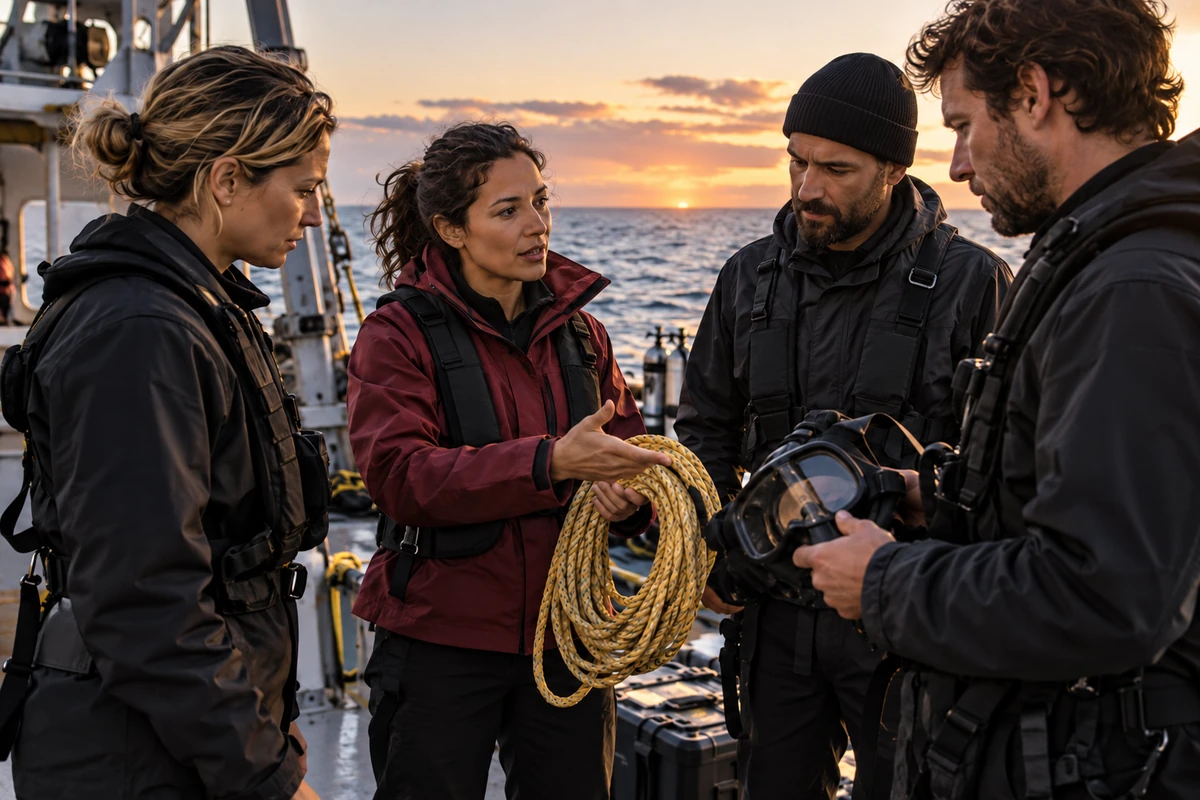
In Protectors of the Deep, research diver Lila Córdova finds hidden weapons and a protected case in a sunken container. An unidentified vessel approaches the research boat while communication fails. Four protectors step into that crisis. The opening gives her reliance on a team a concrete cause: dangerous evidence and distance from shore.
That is a useful starting point if you enjoy immediate cooperation with unfamiliar people. As you sample it, separate trust in someone’s ability to keep the boat safe from trust in their willingness to hear a personal disagreement. A shared emergency can build the first kind quickly while leaving the second uncertain.

From Alisson Bento’s books
A vampire romance about a hero who claims her and never lets anyone forget it.
Kindle edition · Check Kindle Unlimited availability on Amazon.
A civilian task can expose unfinished personal history
The Pilot and Her Cowboys offers another route. Taryn returns for six weeks to teach aerial support and emergency flight procedures at Crosswind Ranch. Gavin, Mason, and Jonah remember her departure and their unresolved connection. Her military flying offers useful expertise, but the assignment also places an old relationship beside a new working plan.
This opening suits a reader interested in a reunion rather than a first meeting. Notice the difference between someone accepting Taryn’s instruction in the air and someone addressing what happened before she left. Professional respect and emotional repair have different work to do; neither one automatically completes the other.
Choose how she changes the group
A heroine who brings evidence, technical skill, or a training goal arrives with something the group needs. That can feel more satisfying than watching a team merely circle her. Look for moments when her information changes a plan, and for separate reasons each partner values her judgment.
Separate coordination from personal understanding
A team can perform effectively because its members know procedures, roles, and one another’s habits under pressure. That coordination offers a strong pleasure from the outset, but romantic understanding asks different questions. Does a partner notice what the heroine values outside the task? Can he hear a concern that does not affect the operation? A why-choose romance becomes distinctive when shared competence opens the door to several particular connections, instead of supplying one collective claim on her attention.
You might enjoy a group that already trusts one another while the heroine remains unfamiliar. In that arrangement, the team’s established shorthand can reassure her in a crisis and leave her out of a conversation. The story can let those effects coexist. Ask whether she learns how the group works through understandable exchanges, or whether she is expected to accept decisions nobody explains. This is a preference about how the newcomer enters the team, not a demand for every operational detail to be explained.
A reunion begins somewhere else. Familiar people may already know the heroine’s habits but misunderstand what has changed during her absence. Recognition can feel warm and constraining at the same time. Taryn’s return to a household that remembers her old ways creates this opening tension. Readers who enjoy being known and then needing to be understood again may prefer that starting point to the immediate reliance on unfamiliar protectors in Lila’s ocean crisis.
These openings also set different kinds of expertise apart. Lila’s observation and documentation make the submerged discovery matter. Taryn brings military flying to a project with training goals. One heroine supplies evidence that draws a team into danger; the other supplies instruction the working group needs. Neither role is simply being present while several capable men act. Choose which contribution makes you more curious about the first cooperation.
Read the crisis for who notices what
The ocean setting gives Lila’s opening practical boundaries. An approaching vessel and compromised communication make distance from shore part of the threat. A reader can therefore understand why help from a team matters without treating military competence as an abstract guarantee. The protected case and concealed weapons also give the group something specific to respond to. The opening’s tension comes from a discovery that cannot be reported through ordinary channels as easily as expected.
When sampling a group rescue, watch how information moves. A heroine may identify the crucial detail while a protector grasps its immediate tactical consequence. Another person might know how to maintain communication or move equipment. Such complementary tasks can give each person a distinct voice through action. If you enjoy teamwork, look for a scene where one person’s observation changes another person’s next move. That chain tells you more than repeated descriptions of everyone as highly trained.
Shared danger can speed up practical trust while leaving personal uncertainty intact. A character may accept an instruction because it addresses an obvious immediate risk, yet still need answers about the person giving it afterward. Readers who want gradual intimacy can ask whether the story lets these kinds of trust develop at different speeds. Readers who enjoy a fast emotional bond may prefer the rescue itself to carry more personal recognition. The premise alone does not fix that pace.
The same distinction applies to instruction. Taryn can teach emergency-flight procedures while still being uncertain about the men waiting at the ranch. Their willingness to learn would answer a professional question; addressing their unresolved connection takes another conversation. The description sets out both work and history, without confirming the later repair. That combination offers a useful starting point for readers who want cooperation to bring unfinished feelings into view rather than settle them instantly.
Choose what the assignment’s duration does to the romance
A defined assignment gives the relationship a practical clock. Taryn’s six-week contract has goals, funding requirements, and an end date. Each meeting therefore takes place beside a future departure that is already built into the plan. For readers who enjoy temporary returns, that clock can make ordinary progress feel charged. A conversation might become more urgent because the chances to have it will not last indefinitely, even before anyone asks whether she will stay.
A rescue that begins in an emergency runs on a different clock. The immediate question is how to get through the danger, not how to finish a scheduled period of work. Afterward, a story may need to create reasons for continued contact, or the crisis may stay active. If you prefer romance that grows during a sustained operation, ask about that continuation. If you enjoy intense short-term reliance followed by a changed connection, ask for that rhythm instead.
The end of an assignment and the end of affection are separate matters. A character can value a relationship while still having work to finish or a life elsewhere. Readers who enjoy practical decisions may want the story to give those obligations room. This is particularly relevant to a fixed-term reunion, where an established contract can remain a meaningful goal after attraction returns. Ask whether the heroine’s task stays important; you can get that answer without learning her eventual decision.
A team may also have commitments that cannot simply be lined up. Different responsibilities can affect who is available for a conversation or a shared task. If you like group romance with a lived-in working texture, ask whether schedules and obligations shape contact. If you prefer a more enclosed adventure, you may want the group together more continuously. Neither approach is automatically more balanced, but the amount of shared time changes the scenes through which individual bonds develop.
Look for separate connections inside the collective story
A different bond need not mean a different personality label. One partner might share a particular memory; another may understand a current professional aim; yet another may offer a useful challenge to a decision. The distinction matters when it changes what the heroine can say or do with each person. Readers who want individually recognizable relationships can ask for separate conversations that reveal different concerns, rather than only equal appearances in group scenes.
Group familiarity can enrich those separate moments. Team members may understand why another is reluctant to speak, or notice a change the heroine has not yet recognized. That creates a network of relationships around the romance. It can also risk letting the group speak for each individual too often. If you want personal commitments stated directly, ask whether partners answer for themselves. A collective promise may be appealing, but it does not necessarily supply the particular intimacy you seek.
The heroine’s role can change the group without requiring her to become its universal solution. She may bring evidence, training, or a goal that alters how its members cooperate. The emotional story can then ask how the group responds to an adult whose contribution is needed but whose personal wishes are still being learned. That tension is more specific than a team simply circling her protectively. It gives the relationship something to negotiate alongside the practical mission.
The named openings set up why-choose frameworks, not every later romantic connection among the adults. If a particular configuration matters, ask for confirmation separately. Military teamwork does not show who is romantically connected to whom, and a group rescue does not reveal how the partners ultimately define their commitments. Keeping those questions apart lets you appreciate the confirmed team premise while requesting the relationship arrangement you actually want.
Decide how much military work you want on the page
Military experience can shape habits and skills without making an active operation the central plot. Taryn’s opening uses flying experience in civilian ranch-and-rescue training. Lila’s opening introduces military protectors through an ocean threat. These are different ways to combine service-related competence with romance. If you want deployed operations, command conflicts, or extended mission detail, ask for those specifically rather than assuming that every military why-choose book supplies them.
The guide to military romance and romantic suspense distinguishes a service background from the plot built around it. For a group romance, add how cooperation becomes personal: unfamiliar protectors learning the heroine’s priorities, former connections facing unresolved history, or a working team adapting to new intimacy. That combination makes a better recommendation request than several skilled men and a dangerous setting.
A spoiler-light answer can name the heroine’s contribution, the initial task, whether the group already knows her, and how much attention separate connections receive outside the operation. It need not reveal the rescue’s outcome or the reunion’s decisive conversation. Choose the premise whose particular form of reliance interests you, then let the book show whether coordinated work turns into a relationship in which each adult can be known individually.
Consider what happens when the heroine disagrees with a shared plan. A team can be efficient while still needing to learn how to hear an outsider’s judgment. A returning specialist can bring a changed perspective to people who remember an earlier version of her. These situations make her contribution visible through friction rather than through praise alone. If you enjoy that process, ask whether disagreement changes how the group works together, and whether partners respond differently to her concern.
You could ask for “a military why-choose story where the heroine contributes expertise, with distinct bonds outside the operation.” These two openings help you choose between discovery-driven protection and a fixed-term reunion. Neither opening settles every later relationship arrangement or ending; the useful promise is the particular way cooperation begins.
Read another angle: Mafia office romance: employment inside a criminal business · Sports why-choose romance: separate partners inside a shared team · Military romance vs romantic suspense: choose the plot behind the service background
Explore the wider romance catalogue. The catalogue groups books by genre and trope; it does not confirm every preference discussed in this guide.