Slow-burn cowboy and rural romance should give you progress during the wait. Repeated contact, growing trust, and changes in what adults disclose can move a relationship even before a major physical step. Choose by what creates those encounters and whether the delay has an emotional purpose you want to follow.
If restoration and homecoming appeal to you, tangible work can make gradual change visible. A damaged building has problems that must be assessed; a familiar town has memories that cannot simply be repaired. The descriptions of two slow-burn openings connect those practical and emotional tasks in different ways.
A renovation creates repeated reasons to cooperate
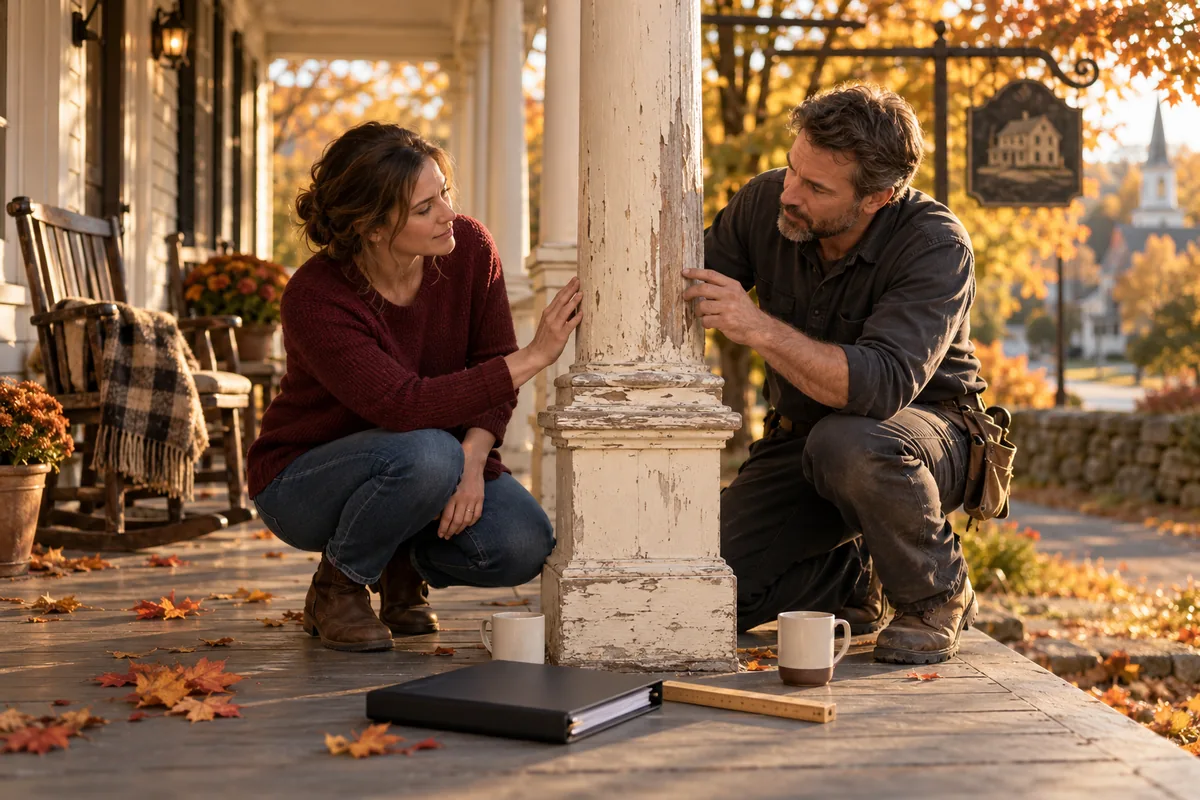
In Sweeter Than Maple, Holly Maple returns to her grandmother’s inn and finds cracked columns, a sagging porch, and a kitchen needing extensive work. A letter gives her a year and a day to decide its future. Jude Callahan, the nearby contractor, studies structural problems before offering reassurance.
Holly responds with a permit binder and an inventory. This opening suits readers who enjoy rebuilding as a source of contact: two people have something specific to examine together. It sets up a small-town slow-burn cozy framework. It does not state when intimacy occurs or turn Jude’s occupation into proof of a ranch-centered plot.

From Alisson Bento’s books
A cowboy romance about a single dad who never planned to fall again.
Kindle edition · Check Kindle Unlimited availability on Amazon.
Inherited belonging can make emotional access the slower task
The Little Bookstore in Cedar Hollow brings Charlotte Monroe back after leaving her job, ending her engagement, and losing her grandmother. Her inheritance requires a year in town. Grandmother’s letters and The Reading Nook put regret beside the question of what to do with a local institution.
Eli Hayes is a firefighter and widowed father with his own connection to the bookstore. This opening offers a different rhythm from inspecting an inn: the place already holds intimate meaning for several people. The book’s description identifies it as a slow-burn small-town romance, with a firefighter rather than a confirmed cowboy lead. Choose it for adjacent rural belonging and careful connection.
Notice what becomes possible at the next encounter
Progress can mean accepting a practical suggestion, sharing an uncomfortable memory, or changing a plan to include another person. Physical attraction and emotional disclosure may develop at different speeds. A sample can show which the narration treats as consequential without revealing the ultimate payoff.
Separate a delayed milestone from an active slow burn
A relationship can postpone a major romantic step while still changing at every encounter. The change might concern trust, attention, or willingness to include the other person in a decision. Conversely, a long delay can feel static if the adults repeatedly return to the same position. If you want a satisfying slow burn, ask what becomes possible over time, rather than requesting a specific page on which something physical happens.
The two named openings confirm slow-burn small-town frameworks while leaving the exact timing and nature of later intimacy unconfirmed. They are adjacent rural examples, not proof of a rancher or riding-centered romantic lead. That distinction keeps their useful mechanics visible: inherited responsibilities create repeated contact and emotional questions. For a strict cowboy preference, confirm the lead’s role separately rather than letting a rural label answer it.
Progress can be quiet. An adult may stop withholding a practical concern, accept a suggestion they initially resisted, or make room in a plan for another person’s expertise. Such changes give the reader evidence of a relationship developing before a declaration. If you enjoy restrained scenes, request this kind of movement. If you prefer more overt longing during the wait, ask whether desire receives sustained attention alongside the practical cooperation.
The reason for delay matters too. Grief, caution, competing responsibilities, or incomplete trust can create different rhythms. A story may let the reader understand the obstacle early or reveal it through encounters. Neither named opening shows every later reason for postponement. Ask a finished reader whether the delay arises from the emotional conflict you enjoy, without requesting the decisive conversation that resolves it.
Read rebuilding as a source of repeated contact
Holly’s inherited inn gives practical cooperation several specific subjects. Cracked columns, a sagging porch, and a kitchen requiring extensive work make restoration more than cosmetic change. Jude studies structural problems before reassurance, while Holly responds with a permit binder and an inventory. These details let the first encounter show how each approaches a task. Readers who enjoy concrete collaboration have a reason to care before romantic progress is explained.
Different kinds of work can create different forms of intimacy. Assessing a problem gives the adults a reason to compare judgment; choosing priorities lets them learn what each values; completing a task can create a shared reference for the next meeting. These are general narrative mechanisms, not later scenes confirmed at Holly’s inn. They show why restoration can sustain a slow burn instead of merely providing one attractive contractor at the opening.
A project also makes disagreement useful. One adult might want to preserve a feature while the other sees a practical limit. A conversation can move the work forward while exposing a personal attachment to the place. Readers who enjoy this overlap can ask for emotionally meaningful practical decisions. If you mainly want atmosphere, you may prefer less detailed negotiation over repairs. The amount of work on the page affects the slow burn’s texture.
The deadline gives Holly’s decisions a horizon. Nan’s letter allows a year and a day to decide whether to keep the keys. This does not confirm a wedding condition or a particular romantic timetable. It gives the heroine a practical future to consider while memories complicate the present task. Readers who like a slow burn beside a longer personal decision can appreciate that structure without inferring the eventual choice.
Compare repairable objects with difficult emotional access
Charlotte’s bookstore has another kind of hold on the returning heroine. The Reading Nook is tied to childhood and to her grandmother’s unanswered letters, while a year in Cedar Hollow is part of the inheritance. Staying initially has an expiration date rather than an openly chosen sense of belonging. The description makes the place emotionally consequential before it identifies every practical step of running it.
Charlotte returns after leaving her job, ending an engagement, and losing her grandmother. These events show a changed life and regret; they do not provide a diagnosis or prove every later response. Readers who enjoy careful rebuilding can be interested in how she approaches a local institution while reconsidering affection she has learned to distrust. The slow-burn pleasure can therefore concern opening to connection as much as scheduling repeated meetings.
Eli’s connection to the bookstore and the woman who ran it gives him a place in that history. He is a firefighter and widowed father, with responsibilities that make a fresh start less simple. This is a confirmed occupation, not a confirmed rancher role. Readers seeking rural belonging and single-parent texture can investigate the example on those terms, while a strict cowboy search needs a separately confirmed match.
The comparison is not that one heroine has practical problems and the other only emotional ones. Holly’s inn carries difficult memories; Charlotte’s bookstore presents a practical future to decide. The difference concerns the opening emphasis: visible structural repair versus inherited belonging and unanswered affection. Choose which kind of first task makes gradual connection interesting to you. Both can create movement during a wait without promising the same scene rhythm.
Look for an encounter that changes the next one
A useful slow-burn scene leaves a residue. After one conversation, the adults might know a concern they could not previously address. After one task, they may trust a particular skill. The next encounter can then begin from a changed position. Readers who dislike empty waiting can watch for this continuity. Repeated proximity becomes meaningful when the story remembers what has been learned.
Attraction and disclosure can move independently. Two adults may notice desire while remaining careful about personal history, or share a difficult memory before either names attraction. These sequences create different tension. Ask whether you want longing to be explicit early or prefer a quieter recognition through growing trust. The slow-burn label does not tell you which form appears, and it does not supply a heat level.
Setbacks can also make progress visible. A misunderstanding may matter because trust had begun to grow; a withdrawal may hurt because an earlier conversation made contact feel possible. If nothing had changed, the setback carries less weight. Readers who enjoy emotional rhythm can ask whether the obstacles respond to developing attachment rather than simply repeating the original distance. This is a structural question that can be answered without revealing the resolution.
Outside responsibilities can sustain the pacing without serving as arbitrary delay. A renovation decision, parenting need, or obligation to a local institution can give the adults something legitimate to do before another private conversation. Readers who enjoy grounded slow burn may welcome that texture. Others may want the romance to occupy more uninterrupted space. Specify the balance rather than assuming slower progression always means less attention to the relationship.
Choose the amount of anticipation you enjoy
Some readers want every ordinary interaction to carry obvious romantic tension. Others prefer the relationship to become apparent gradually through attention and reliability. Both can be slow burn. A practical opening lets you sample how the narration treats looking, listening, and cooperation, but it cannot confirm the entire later pace. Ask about the ongoing balance of longing and ordinary life if that distinction decides your mood.
A longer external deadline can allow leisurely contact, while a short working period can make restraint feel urgent. Holly’s year-and-a-day decision and Charlotte’s year-long inheritance condition set out time on the page without dictating the romantic schedule. Readers can ask whether the full story spans that whole period or uses it mainly as a horizon, while leaving specific intimate milestones unspoiled.
The comparison of slow burn and low spice separates relationship pacing from intimate detail. That distinction remains useful in rural romance: delayed progress does not show what happens later or how explicitly it is described. If both pacing and content level matter, request them separately. A renovation premise cannot answer either question by itself.
A useful recommendation identifies repeated reasons for contact, the kind of trust that changes, and whether the lead’s occupation meets your strict cowboy preference. The two adjacent openings offer restoration and inherited community ties with confirmed slow-burn frameworks. They leave exact milestone timing, intimate detail, and cowboy role unconfirmed. Keeping those boundaries clear lets you choose the gradual relationship mechanics you want without attaching unsupported guarantees to a rural setting.
Progress can also concern what an adult stops doing. They may no longer dismiss a suggestion, avoid a particular place, or end a conversation as soon as it becomes personal. These quieter changes can be satisfying because the reader remembers the earlier pattern. If you enjoy restrained storytelling, ask for shifts in behavior that accumulate rather than a sequence of increasingly dramatic declarations.
A sample can reveal whether ordinary tasks receive that kind of attention. It cannot confirm every later milestone, but it can show the narration making small responses consequential. Choose a slow burn whose first exchanges give you something to notice and remember; that is the basis for feeling movement during the wait.
For a strict cowboy match, confirm the lead’s ranch or riding role separately; a rural setting alone is not enough. For the slow-burn pleasure these openings set out, ask for “repeated practical contact with meaningful trust changes before the relationship’s larger steps.” Both inherited properties supply time and responsibility, making the wait about developing choices rather than a promised page number or an assumed level of intimate detail.
Read another angle: Grumpy/sunshine cowboy romance: temperament during shared work · Single-dad billionaire romance: wealth beside ordinary parenting · Slow burn vs low spice: choose the tension you want
Explore the wider romance catalogue. The catalogue groups books by genre and trope; it does not confirm every preference discussed in this guide.