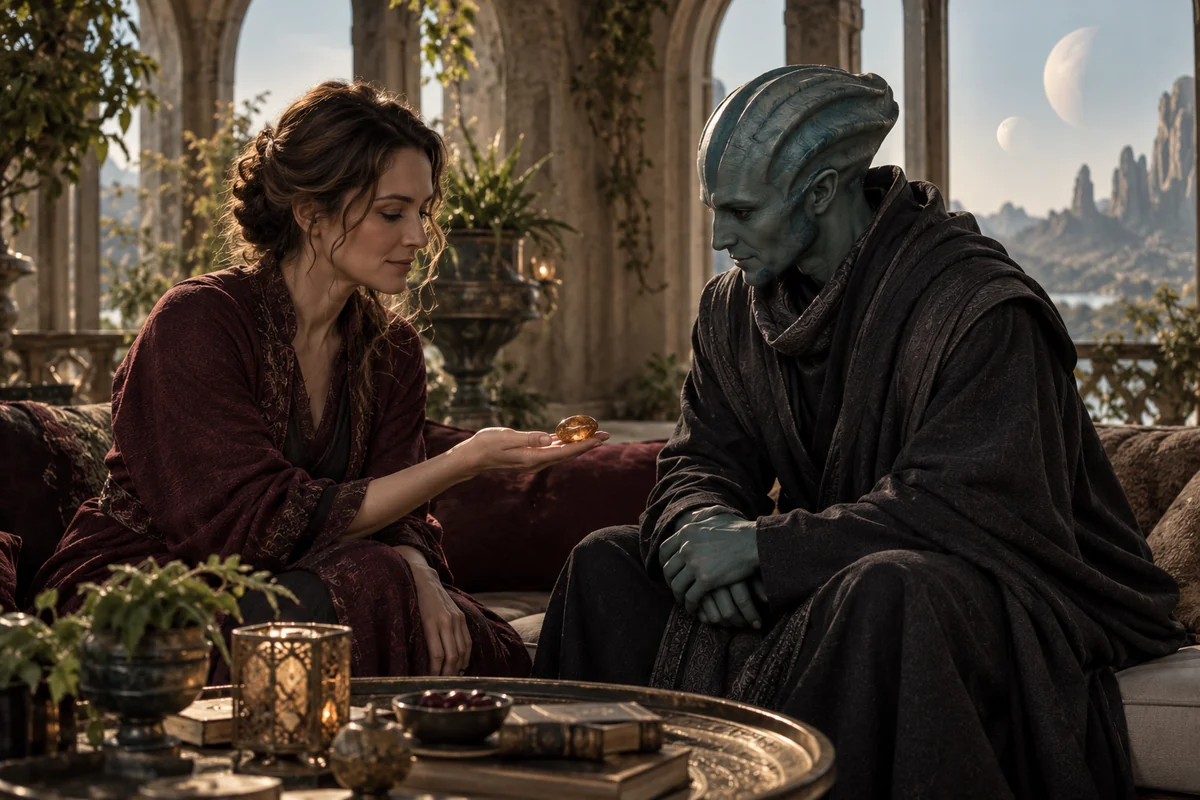
For alien romance, verify that a romantic lead is actually alien, then decide how much language and cultural difference you want in the relationship. A space setting, futuristic technology, or a soulmate label cannot establish species. The most useful choice is whether unfamiliarity creates the central courtship challenge or mainly supplies the backdrop.
Some readers want the patient work of learning what a gesture means. Others want immediate communication so the story can concentrate on attraction, adventure, or an unfamiliar social world. Both are reasonable preferences to state at the outset.
Choose how language shapes the first connection
A shared language lets the lovers argue, ask questions, and explain preferences early. A language barrier can make touch, observation, and misunderstanding more prominent. Translation technology may reduce the problem, though a translated word need not convey every cultural assumption.
For a clearly different science-fiction comparison, Every Breath We Steal opens with signals officer Wren isolating a woman’s voice from interference on a supposedly empty channel. This establishes the effort needed to hear a distant person, not an alien romantic lead. Readers interested in communication as an act of attention can inspect that opening while keeping the species question separate.
Cultural unfamiliarity is different from magical recognition
A culture can give courtship different meanings: who initiates, what a gift promises, or whether privacy is expected. A fated bond may instead supply recognition before either character understands those customs. If you enjoy earned understanding, ask whether the adults still have to learn one another after any automatic connection appears.
Be specific about the cultural friction you welcome. You may like mismatched etiquette and discovery but prefer clear agreement around physical intimacy. Another reader may seek a darker clash of power. Describing that distinction is more helpful than assuming unfamiliar customs will produce a particular tone.
Look for curiosity moving in both directions
Mutual understanding becomes especially engaging when both characters must revise an assumption. An alien setting need not make the human’s habits the unexamined standard. You may want each adult to ask, explain, and occasionally admit that the other’s choice makes sense within a different life.
A focused request is: “I want an alien romantic lead and substantial cultural learning, with communication available early. Does the relationship develop through mutual questions?” It verifies the exact premise while naming the experience you want. Keep body form, relationship arrangement, content, and ending preferences separate so one appealing label does not stand in for all of them.
Read another angle: Gothic romance reader guide: atmosphere secrets and the unsettling house · Dystopian romance: choosing the society beside the love story · Human and supernatural romance: read power imbalance through information and choice
Explore the wider romance catalogue. The catalogue groups books by genre and trope; it does not confirm every preference discussed in this guide.