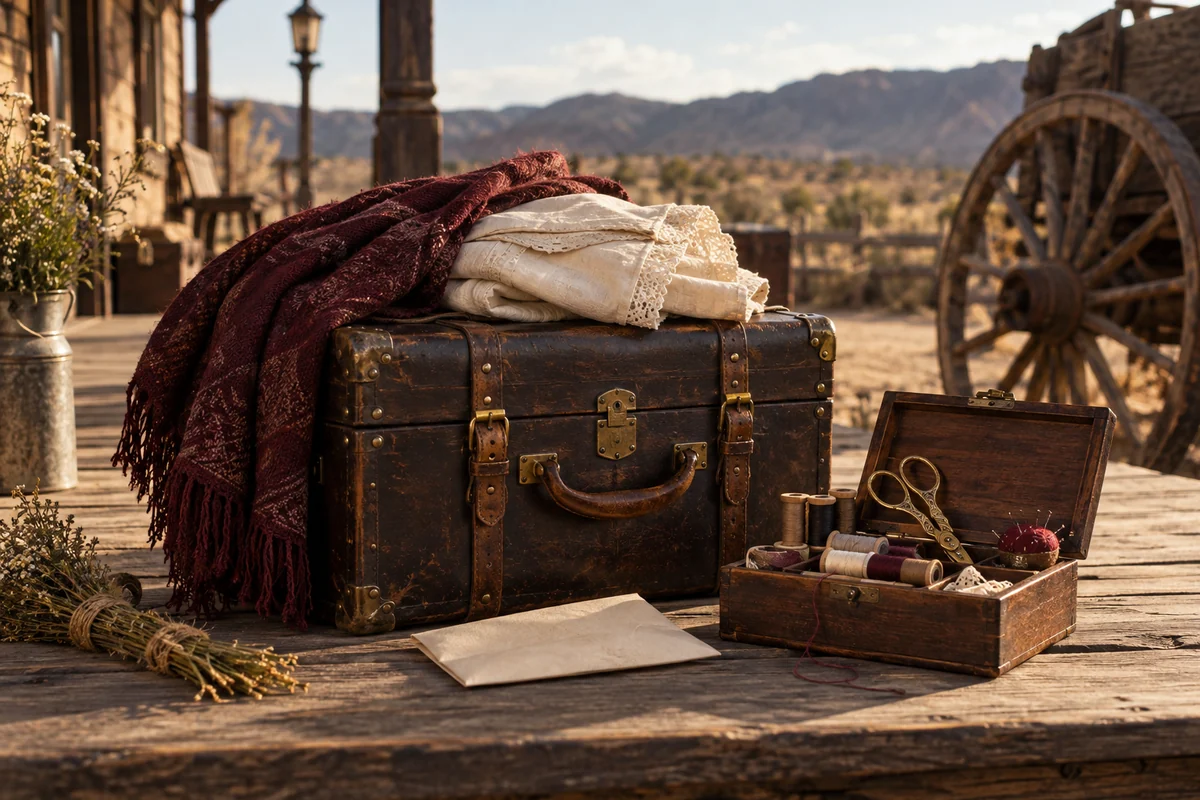
Choose a historical romance era by the social world you want to explore: travel, work, family authority, courtship, and the resources adults can use to change their lives. Verify the book’s actual setting before choosing. A duke, a gown, or a wagon cannot by itself establish a precise date or historical context.
An era is more than a style of clothing. Two books set in the same broad period may offer very different lives if one follows an affluent urban household and the other a working person crossing a frontier. Place and social position can matter as much as the calendar.
Start with the kind of community you want
Do you want a concentrated social circle where reputation travels quickly, a household shaped by inherited authority, or a journey that breaks familiar connections? These are reading preferences you can name before settling on a century. They help explain what you hope a historical setting will contribute.
Wed to the West offers a verified Gold Rush western comparison. Willa travels from Saint Louis after answering a marriage advertisement, then learns that three mining partners wrote the invitation behind its single signature. The opening establishes a journey, a prospective household, and a gap between what the advertisement showed and what awaits her. It does not require us to invent an exact year.
Mobility, marriage, and work create practical choices
Ask how easily the protagonist can leave, earn, communicate, or decline a proposed arrangement within this particular story. Those constraints give courtship its immediate stakes. Broad labels such as historical should not substitute for details about what the character can actually do.
Willa has limited travel money and seamstress experience, and she asks about the marriage of record before following the men’s wagon. Those facts make the western premise tangible: her resources, skills, and questions matter alongside attraction. Readers drawn to practical negotiation can evaluate that opening directly.
Verify the setting before importing expectations
If you want a specific period, ask for the stated date and location, not merely a familiar trope. If accuracy matters to your enjoyment, seek information about the book’s own historical framing rather than expecting every romance in a broad category to make the same claims.
A useful request is: “I want a historical courtship where a working heroine’s ability to travel and earn matters. What is the stated setting?” That leaves room for discovery while anchoring the recommendation. You can then choose the household, community, and material circumstances you want without mistaking decorative cues for verified history.
Read another angle: Dystopian romance: choosing the society beside the love story · Letters and messages in romance: choosing closeness at a distance · Cowboy romance vs Western romance: understand the setting, roles, and era
Explore the wider romance catalogue. The catalogue groups books by genre and trope; it does not confirm every preference discussed in this guide.