If you want letters or messages in romance, decide whether you want correspondence to tell most of the story or simply to shape the couple’s connection. Occasional texts do not make a novel epistolary. A written exchange can create intimacy, distance, suspense, or all three, depending on what the characters are willing to put into words.
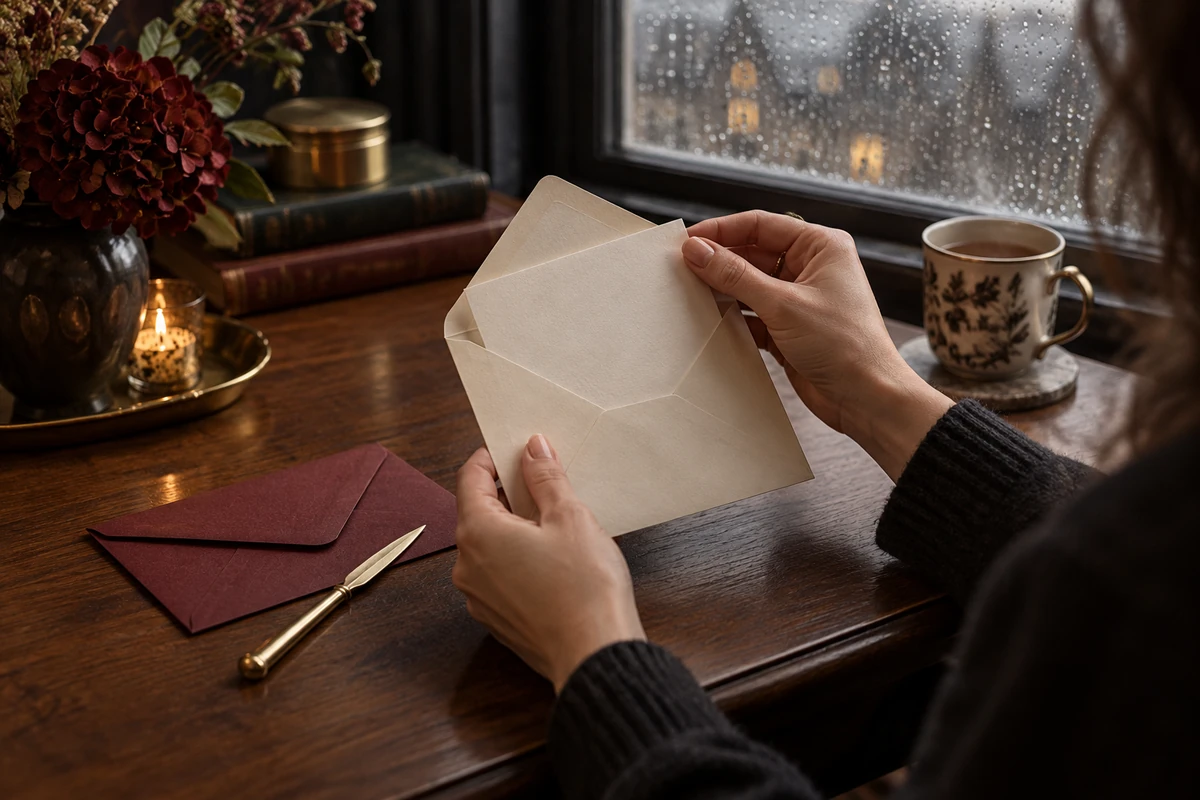
One reader may want the feeling of opening an envelope with the recipient. Another may enjoy ordinary scenes interrupted by a message whose meaning is hard to read. Those are different formats and different pleasures.
Correspondence can be the structure or an interruption
In a predominantly epistolary story, documents carry events and voices that conventional narration might otherwise explain. In a scene-based novel, a message usually enters an existing situation: someone reads it while tired, at work, or beside another person. The context can change how it lands.
For the latter, Too Stubborn to Love offers a specific opening example. With Hallie’s truck dead, Bowen texts to confirm the departure for her horse delivery. She reports a truck issue and promises an update. These brief messages apply scheduling pressure to an already visible problem; the opening is not evidence of a novel told mainly through correspondence.
What the writer leaves out can be as revealing as what arrives
A written message gives its author time to choose words, yet removes many cues the recipient would have in person. A careful reply might conceal panic, spare someone worry, or preserve a boundary. Readers can enjoy knowing why a short sentence cost more effort than it appears to.
Choose whether you want identities known from the start, a private exchange between familiar people, or correspondence whose authors know little about each other. Hidden identity adds a separate uncertainty; long-distance intimacy does not require it.
An in-person meeting changes the available evidence
When correspondents meet, pauses, movement, and tone become harder to edit. That can be the part you most anticipate: discovering whether the written ease survives ordinary company. Alternatively, you may want the exchange itself to remain the main space of the romance.
A focused recommendation request is: “Are letters or messages the main storytelling format, and do they build the central relationship?” Add whether you want the meeting delayed. If you enjoy conventional scenes with meaningful texts, ask for that instead. Choosing the role of correspondence gives you a more reliable reading fit than assuming every mention of a letter promises the same kind of closeness.
Read another angle: Choosing a historical romance era: which social world do you want? · First-person vs third-person romance: choosing how close the voice feels · Single POV vs dual POV: whose secrets do you want?
Explore the wider romance catalogue. The catalogue groups books by genre and trope; it does not confirm every preference discussed in this guide.