
Past tense presents events as having happened; present tense presents them as happening in the narration’s current moment. In romance, either can feel urgent, reflective, tender, or intense. Choose by reading how the tense works with a particular voice, rather than treating it as a reliable forecast of pace.
Tense is also separate from grammatical person. A character can say I walked or I walk. A third-person narrator can say she walked or she walks. If one combination appeals to you, it helps to name both features.
The preference often concerns the narrator’s apparent position in relation to uncertainty. Present narration may make you feel that the next moment is still being discovered. Past narration may feel equally immediate, or suggest that the account is being shaped after the event. Read for the actual framing. A verb ending does not tell you how much the narrator knows about the future.
There is also a difference between the time of an event and the time a character spends considering it. A brief encounter can occupy several pages of thought in either tense. A month can pass in one sentence. If you want a romance that lingers over hesitation, specify that pace of attention rather than choosing present tense as a substitute.
A narrated now can still contain reflection
The opening of Hacking Their Hearts follows Eliza as she waits to intercept a courier. Her pulse is measured, her equipment is checked, and the current action is narrated in present-tense verbs. The sampled passage creates a sense of a plan unfolding under a clock, while also recalling her mother’s knife and earlier preparation.
Those memories do not turn the current scene into past-tense narration. They show that present narration can reach backward when a character thinks about what brought her here. Likewise, a past-tense scene need not sound like a calm report from someone who already knows everything.
Eliza’s opening makes the current moment measurable. She is waiting for a courier, checking her condition and equipment, and watching a plan reach its appointed point. The present tense fits that sequence of immediate assessments. The reading effect comes from the combination of grammar, countdown, and detailed attention, rather than from grammar alone.
At the same time, the knife she carries and the preparation behind her equipment connect the scene to earlier experience. Those backward movements can add meaning without changing the tense of the current action. A reader who wants present narration with a sense of history can look for this balance: the past informs the moment while the scene’s main movement continues now.
The active drive then makes success uncertain again. Eliza prepared to steal it, yet its behavior disrupts what the plan was supposed to buy her. That shift gives the opening urgency beyond its countdown. For a tense preference, the useful observation is how promptly the narration registers new information and changes attention when the expected sequence breaks.
A past-tense version of an unfolding problem can do the same work. The narrator need not announce that everything ended safely or explain the outcome before the character reaches it. Past verbs locate the account grammatically; they do not require reassurance. If suspense is your priority, ask whether the scene keeps knowledge restricted to what the viewpoint character understands.
Reflection likewise does not require distance from the body. A character can remember why an object matters while noticing its weight or temperature now. You might find that layered attention involving, or prefer fewer backward glances during action. That is a preference about how the narration distributes attention across time, and it can occur in either tense.
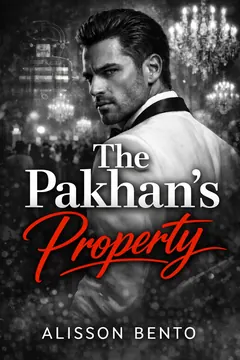
From Alisson Bento’s books
A mafia romance about a wedding she did not choose to a man she cannot escape.
Kindle edition · Check Kindle Unlimited availability on Amazon.
Tense does not determine how quickly the scene moves
Too Stubborn to Love opens in past tense with Hallie hearing her truck die before dawn. The failed engine immediately threatens a horse delivery. Its practical urgency comes from the obstacle and deadline, rather than needing present-tense verbs to make the problem feel close.
A present-tense paragraph can pause for a lengthy description; a past-tense paragraph can race through decisive action. Sentence length, scene focus, and what remains unresolved all affect your experience. If you dislike slow narration, asking only for present tense may miss the real preference.
Hallie’s failed truck creates a different sort of clock. Horses are ready for delivery, and the failure threatens a penalty and future work. The opening’s past tense stays with the immediate difficulty instead of pausing to reassure the reader about what will happen. Practical stakes give each attempt to solve the problem a reason to matter.
Compare how preparation and disruption play out. Eliza begins with a carefully prepared interception; Hallie begins when an expected working vehicle fails. In both samples, plans encounter a problem. If you enjoy pressure created by a changing plan, either tense can deliver it. You can choose the scene pattern first and use tense as a second preference.
Speed on the page also depends on what the scene asks you to track. A short sentence might carry a decisive action, but a sequence of technical details can require slower reading to understand the plan. A longer reflective sentence may feel effortless if its emotional connection is clear. Counted sentence length is less useful than noticing whether your attention stays engaged.
A story can deliberately slow a tense moment. Waiting for a reply, crossing a room, or deciding whether to tell the truth may take longer to read than to happen. That delay can heighten anticipation rather than reduce pace. If you dislike it, ask for brisker handling of interior thought instead of concluding that the tense itself makes the book slow.
Conversely, rapid action can feel emotionally distant if the narration supplies little sense of what the character notices or risks. You may want urgency with enough reflection to understand a choice. “Fast-moving present tense” does not express that balance as clearly as “current action with interior reasoning at the important decisions.”
Listen for the narrator’s position in time
Some past-tense accounts signal a later vantage point through comments about what the narrator did not understand then. Other past-tense scenes give no such signal and remain closely bound to the character’s immediate knowledge. If explicit hindsight reduces suspense for you, ask about retrospective commentary. You can prefer past tense while wanting that commentary kept limited.
Present narration can also be shaped and selective. It does not deliver every second of a character’s life unedited. The account still chooses which sensations, memories, and events to include. If you enjoy the feeling of discovery, look for uncertainty that actually remains alive in the scene, rather than treating present verbs as proof of an unmediated experience.
The emotional difference can be subtle. “I wanted to answer” and “I want to answer” point toward different narrated moments, but both can hold hesitation if the answer is delayed. What follows matters: an explanation, an interruption, a self-correction, or an action. Read enough of the paragraph to see how the desire develops instead of judging from the isolated sentence.
Some readers like the sense of a story being told to them; others like the sensation of accompanying its discovery. Those are useful preferences to name, but individual voices can blur the distinction. A conversational present narrator may sound like a practiced storyteller. A close past narrator may make you feel that every possibility remains open.
Keep person, tense, and viewpoint separate
If you have enjoyed several first-person present books, you may be responding to any part of the combination: the I voice, the narrated now, or access to a particular character’s thoughts. Trying a short passage in a different combination can help identify the deciding feature. A preference becomes more useful when you know what you are actually protecting.
Third-person past narration may feel comfortable because it is familiar to you, while first-person past offers a similar temporal frame with a more explicit speaker. Third-person present offers another combination. None automatically tells you whether both romantic leads receive viewpoints. Ask about that distribution independently when hearing both sides is essential.
A viewpoint switch can change what the reader knows without changing tense. A memory can change the time being described without changing viewpoint. These movements do different jobs. If a sample confuses you, notice which transition caused the difficulty: the speaker, the temporal jump, or the information supplied. That gives you a more precise basis for choosing another book.
The guide to testing a romance sample offers a broader approach to voice and chemistry. Here, use the sample to isolate the time relationship: how the current scene is narrated, how memories enter, and whether future knowledge intrudes. Those features can be assessed without reading the romantic outcome.
Notice how memories enter a romantic scene
A memory can explain why a gesture lands unexpectedly or why a character hesitates before trusting. You may want that context immediately, or enjoy discovering it gradually. Tense determines the grammatical transition into the memory, but the placement determines when it changes your understanding. Ask whether recollection deepens the current exchange or repeatedly pulls attention away from it.
Some readers enjoy an extended return to an earlier event; others prefer a brief recollection embedded in current action. These approaches can appear in past or present novels. If flashbacks interrupt your enjoyment, name their frequency or length as the issue. A past-tense novel is not necessarily a story told through long flashbacks.
Also distinguish an earlier event from a habitual statement. A character saying they always check a door may be revealing a pattern rather than leaving the scene for a particular memory. Such sentences can expand your sense of a person while keeping attention close to what is happening. Read for the function of the shift rather than treating every past verb as a structural break.
For a slower emotional mood, you may value the chance to hold past and present together. An ordinary gesture becomes richer when the character recognizes how differently it would have felt before. For an action-focused mood, you may prefer the relevant history supplied economically. Both are legitimate ways to choose the amount of reflection you want.
Read a decision rather than only the first sentence
Try a sample through one small choice: whether to answer a call, open a door, or tell someone a difficult fact. You may stop noticing the tense once the voice holds your attention. Or the wording may continue to interrupt your reading; that is useful information too.
A focused request is: “I prefer present narration with room for interior reflection,” or “I want past narration that stays close during tense scenes.” The openings examined here confirm the tense of their sampled pages, not the tense of every later chapter. Choose the combination that lets you inhabit the romance most comfortably.
Give an unfamiliar tense enough space for the voice to settle in. Reading through a call, a practical choice, or a brief conversation usually tells you more than the first line. If you remain distracted by the phrasing, you have useful clues about your preference. If you stop noticing it, the combination may suit you better than you expected.
For a recommendation, try: “Past tense, close to the viewpoint character’s immediate knowledge, with little explicit hindsight and room for reflection at decisions.” Or ask for “present tense where memories add context without lengthy interruptions.” Add a viewpoint preference if needed. These requests identify the reading experience while leaving plot surprises intact.
Choose the storytelling moment that supports your attention. Eliza’s present-tense interception and Hallie’s past-tense emergency each show how a plan can become uncertain within a sample. The question is which voice lets you remain with that uncertainty, follow the practical details, and become interested in the relationship that develops around them.
Read another angle: First-person vs third-person romance: choosing how close the voice feels · Romance novella vs novel: choosing space for the relationship · Romance book samples: what to look for in voice, POV, and chemistry
Explore the wider romance catalogue. The catalogue groups books by genre and trope; it does not confirm every preference discussed in this guide.