
Choose a romance novella when you want a more concentrated reading commitment, and a novel when you want more room for a relationship’s surrounding world. Check the actual format and length, then ask whether that work completes its own arc. A short book is not automatically light, explicit, simple, or self-contained.
The useful question is how much company you want to keep with this couple. Tonight you might enjoy one central problem and a small cast. On a longer reading weekend, you might welcome family histories, workplace conflicts, and more time between major romantic decisions.
Think about where you want the narrative to spend its time. You may want the pleasure of one concentrated change in how two people understand each other. Or you may want to watch that understanding tested by work, friends, family, and ordinary routines. A shorter format has less room overall, but your actual preference concerns which of those moments you want to inhabit.
Length is useful information when planning your reading, yet it cannot tell you exactly how long you will spend with a book. Your pace changes with prose density, concentration, and how often you pause over an emotionally difficult scene. Look for the actual edition’s stated length, then allow your own reading habits to shape the plan.
Scope matters as much as the number of pages
A concentrated story might follow one encounter or a limited period in an existing relationship. A longer story has space to show choices recurring in different circumstances. These are possibilities rather than format rules: a novella can include a substantial time span, and a novel can remain focused on very few people.
For a concrete example of scope to examine, Binding Forever begins with Harley’s dinner-table attraction, ceramics work, and pressure concerning a witness statement. Its opening connects several parts of his life. That tells you something about the narrative interests on offer; it does not show a page count or make it a novella recommendation.
A tightly focused story can make an encounter feel substantial by giving it clear context. The adults may already share history, or the opening may quickly set up the problem that makes this meeting matter. A longer work may spend more time building that context through repeated scenes. Decide whether you prefer arriving at a meaningful moment or watching its significance accumulate.
An existing relationship can support a concentrated story because some familiarity is already in place. A new relationship can also work within a shorter span if the central change is well defined. Neither setup guarantees satisfaction. The useful question is what emotional movement the book attempts and whether you want that particular movement as your reading experience.
Cast size changes the feel of scope. A few supporting people can create a rich sense of community if their interactions are consequential. A large cast can provide variety, but may require more attention to names and histories. If you have limited energy, ask for a manageable cast independently of length. A novel can remain intimate; a shorter work can introduce many people.
Binding Forever offers a useful picture of intersecting interests in an opening, rather than a confirmed recommendation based on format. Harley’s Sunday dinner, ceramics work, recorded obligations, and threatened statement connect social attention with professional and legal pressure. You can ask whether you want room to follow several such strands, without claiming that the description shows how long the book is.
The dinner and kiln-yard situations also show why the surrounding world may matter to the attraction. Kendrick notices Harley’s unease; Wes brings pressure into his working environment. Those opening facts give the reader more than an isolated encounter. If you enjoy that layering, ask about work and supporting relationships as part of the story’s scope, then check the actual length separately.
Time span and length are different measurements. A book can spend many pages on a few days or move rapidly across months. If you want to see trust recur under different conditions, the amount of represented time may matter more than the physical size of the book. Ask whether the relationship develops through repeated encounters, not just whether the book is long.
Likewise, a short time span can feel emotionally extensive when the adults bring a shared history into it. A single difficult conversation may refer to years of avoidance or familiarity. Decide whether you enjoy that concentrated reckoning, or want the history dramatized in more scenes. The format label alone does not settle how the past becomes available to you.
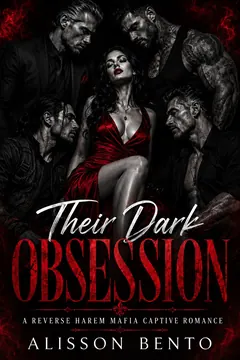
From Alisson Bento’s books
A mafia romance about a captive bargain that turns into the only place she wants to be.
Kindle edition · Check Kindle Unlimited availability on Amazon.
Completion is a separate question from brevity
A shorter work may resolve its central relationship, introduce a later book, or continue an existing story. If you want a complete experience in one sitting, ask about that specific work’s role. A format label alone is less useful than an explicit statement about whether it requires another volume.
Keep the ending category separate too. Completion means the work reaches its own stopping point; it does not tell you whether the romantic outcome is the kind you want. Spoiler-light descriptions can answer both questions without revealing the final scene.
Ask what “complete” means for your purpose. Perhaps you want the central relationship question answered within this work. Perhaps you also want a surrounding danger or family dispute resolved. A book can settle one while leaving another open. A spoiler-light recommendation can describe which threads require later reading without recounting the final romantic scene.
A shorter work may be an entry point, a bonus about established characters, or a main story with its own arc. Those roles demand different amounts of prior knowledge. If you want to begin without preparation, ask whether the opening introduces what a new reader needs. Do not equate shortness with accessibility or assume that a novella is always a good place to enter a series.
An interconnected story can be understandable on its own while making references that returning readers appreciate more deeply. You might welcome that wider world, or prefer a book whose entire relevant history is supplied within its own pages. State the preference directly. Independence of reading order concerns context, not necessarily the absence of other books in the same setting.
The guide to standalone and interconnected books explores that distinction. Use it alongside length information if you are choosing a one-evening read. A manageable page count helps with time; a clear statement about required context helps with where to begin. Neither answer replaces the other.
Ending preference remains a further question. A finished arc is not the same as a confirmed happy romantic outcome, and the description here does not state an ending category for Binding Forever. If a particular outcome is essential, ask for that category explicitly. You can request a brief classification without asking someone to describe the final events.
Also consider how comfortable you are with an emotional pause. Some readers like a short work that closes on one meaningful change even when the characters’ lives clearly continue. Others want a fuller sense of their future. That preference does not make one format inadequate; it identifies how much closure you need from the work you choose tonight.
Look for development rather than simply more events
A longer romance can offer repeated opportunities to revise an impression. A person who seems reliable in one setting may face a different test at work or among friends. Readers may enjoy seeing trust supported by several kinds of behavior. If that repetition is your pleasure, ask for space to follow changing understanding rather than simply asking for a high page count.
A shorter romance may concentrate on fewer tests and make each carry more weight. A practical act of care, a difficult disclosure, or a reconsidered boundary can change the relationship decisively. The fit depends on whether you believe in that change as you read. Brevity can focus attention, but does not automatically make an emotional transition convincing.
Distinguish accelerated attraction from rushed development. Adults can become interested quickly while still needing time to understand each other. A short book can devote its scope to that uncertainty; a long book can move through it rapidly. If you want gradual trust, say so separately from preferring quick chemistry. Those two speeds do not have to match.
More subplots are not necessarily more depth. A professional problem may illuminate the relationship, while another strand may mostly add motion. You might enjoy either use, depending on your mood. Ask whether surrounding conflicts affect what the adults learn about each other, or mainly provide adventure beside the romance. That is a sharper distinction than treating every longer story as emotionally broader.
You can test this in a sample by identifying the first central problem. Does the opening make you curious about the couple, their surrounding obligations, or both? If you are most interested in a secondary thread, consider whether you would still enjoy the book when attention returns to the romance. This question helps align scope with what actually holds you.
Match the commitment to your reading mood
A shorter work can be appealing when you want to hold the main details in mind without taking notes or returning after a long break. Yet a dense short story may require more concentration than a spacious novel with familiar rhythms. If attention is limited, look for clarity of cast and immediate stakes as well as the stated length.
A longer work can suit a weekend when you want to settle into a world and revisit familiar people. It can also suit short daily sessions if the scene structure gives you comfortable stopping places. You do not have to reserve a novel for uninterrupted reading. Decide whether you prefer immersion in one sitting or recurring companionship over several days.
Check whether the attraction is to finishing or to lingering. Finishing a complete short arc can feel satisfying when you have been reading a demanding series. Lingering with ordinary routines can be satisfying when you do not want the relationship to move immediately from crisis to crisis. These are different pleasures, and neither maps perfectly onto a page-count boundary.
If you use an audiobook, the stated running time may be more useful for planning than print pages. If you read an ebook, screen and font settings alter displayed pagination. Choose a length measure that fits your actual edition and medium. The underlying question stays the same: how much attention do you want to give this story now?
Choose length without guessing heat or quality
A concise book can spend many pages on intimacy or none at all. A long book can linger over domestic life, danger, or emotional conflict. Seek content information directly if those preferences matter, rather than estimating them from the physical size of the book.
Try: “I have one evening and want a completed central romance with a small cast. What is the actual length, and does it need a sequel?” For a longer mood, ask for room around the couple’s work and community. Choosing the amount and kind of narrative space gives you a clearer fit than treating either format as inherently more satisfying.
For a precise request, try: “A shorter adult romance that introduces its own cast and completes the central relationship arc, with enough context to understand the choices. Please give the actual format and length and say whether another book is required.” If you want a longer story, add which surrounding life you want on the page: work, friendship, family, or community.
You can protect your time without deciding that one format is better. A novella may fit the concentration you have tonight; a novel may fit your wish to revisit the adults in varied circumstances. Confirm the size and reading role, then use a sample to judge whether the story spends its available space on the experience you want.
Read another angle: Past or present tense in romance: how the storytelling moment feels · Romance book-club questions: discuss choices without reducing the book to tropes · Standalone vs interconnected standalone: where to begin
Explore the wider romance catalogue. The catalogue groups books by genre and trope; it does not confirm every preference discussed in this guide.