Motorcycle-club romance becomes easier to choose when you identify why the heroine approaches the group and which authority she brings with her. In Alisson Bento’s catalogue, Her Three Riders begins with an escape, The Biker’s Cure with mandated rehabilitation, and Protected by the Shifters with a suspicious delivery. Their premises, as described, give the club setting different functions.
A motorcycle alone does not make a story centered on the club. The useful question is whether an organized group, its leaders, or its shared place changes the heroine’s options. A reader might want belonging and loyalty, a confrontation with collective authority, or an outsider entering a world whose rules are unfamiliar. Those preferences require more than a hero’s vehicle.
The three descriptions set out different openings within stated motorcycle-club frameworks. They do not confirm every club rule, initiation practice, later act of protection, or final relationship configuration. The comparison follows why each heroine enters the situation and what she can bring into it, while leaving the group’s later response for the book.
A club can be a destination beyond a husband’s reach
Blythe Yarrow leaves the Tolliver Estate after corrupt judge Garrison Tolliver threatens her younger sister. His influence runs through police, courts, and private security. She takes a hidden burner phone and a valuable wedding ring, turning resources tied to her controlled life into means of escape.
Her destination is Reaper’s Toll MC, led by Ransom Ketch, Lawson Finnegan, and Dexter Nash. She believes they operate beyond her husband’s influence and intends to purchase a lethal solution. Choose Her Three Riders for that dangerous counterproposal; the opening gives a desperate reason to seek the club rather than treating its protection as an uncomplicated gift.
Blythe’s escape is insufficient if it only puts distance between her and the estate. Her husband has threatened her younger sister, and his influence reaches through the ordinary authorities. The description therefore gives her a reason to seek another concentration of power. Readers who enjoy desperate counterproposals can follow that purpose without treating the club as an automatically safe destination.
The ring and the burner phone play practical roles in the departure. The ring carries value tied to the marriage she is leaving; the phone is a resource she has kept hidden. This changes the meaning of familiar objects. If you like escape openings where the heroine uses what she can get rather than waiting for someone to arrive, those details make the action tangible.
Reaper’s Toll matters to her because its leaders operate beyond Tolliver’s influence. The description names Ransom Ketch, Lawson Finnegan, and Dexter Nash as the men she approaches through that group. It does not describe a rescue that has already been negotiated. Blythe arrives with a dangerous purpose and an intended purchase, which makes the encounter ahead a proposal rather than a gift she has received.
That purpose is explicitly lethal in the description. Readers should choose the premise with its dark desperation in view, instead of softening it into a generic request for shelter. The appeal may lie in seeing what a trapped person believes could stop a threat. The opening does not show that her intended solution will be accepted or carried out.
Choose this route if the heroine’s immediate problem is how to confront power that reaches beyond a household. Her approach to the club is personal and urgent. Another reader may prefer an outsider whose reason for contact is work rather than escape; the other examples offer different ways to enter the subgenre without sharing Blythe’s exact situation.

From Alisson Bento’s books
A vampire romance about a hero who claims her and never lets anyone forget it.
Kindle edition · Check Kindle Unlimited availability on Amazon.
Professional authority can clash with club pride
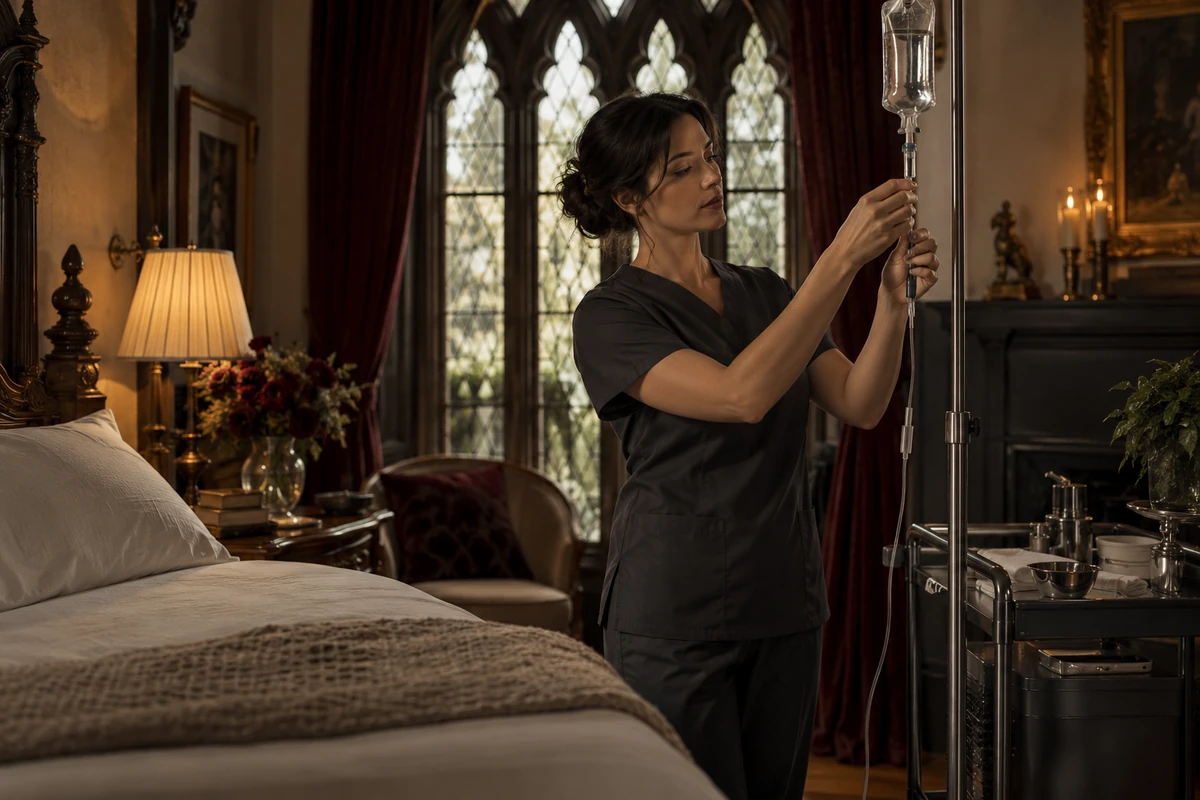
Dr. Selena Price arrives at the Chrome Saints garage for eight weeks of required rehabilitation following an explosion. In The Biker’s Cure, her experience in burn reconstruction and occupational recovery lets her recognize the loss of function behind Jaxson Carter’s swagger. President Bishop Mercer objects to state interference.
Selena needs cooperation, space for treatment, and permission to carry out her assignment. Failure has consequences for the building as well as injured bodies. This opening suits readers who want a heroine with expertise that the group needs but resists. Its conflict concerns the practical terms of care and a club’s response to outside authority.
Selena arrives with an assignment, a set length of time, and expertise the group needs. The mandated rehabilitation follows an explosion and runs for eight weeks. The opening gives her a professional reason to be at the garage before personal attention develops. Readers who enjoy an outsider challenging a close group’s routines can choose this premise for its defined working problem.
Jaxson’s swagger and diminished function offer two accounts of his condition. Selena’s background lets her see what the outward performance does not settle. That is a specific source of conflict between a patient’s presentation and a clinician’s assessment. The scene is fictional characterization, rather than guidance for evaluating real injuries.
Bishop’s objection also has an institutional target: state interference. He resents his men being treated as a compliance requirement. A reader can understand that he frames the group differently from the authority sending Selena, without assuming his resistance is harmless or that every member shares the same response.
Selena needs cooperation and a workable space, not just an appointment title. The garage gives her a place to enter, but carrying out treatment requires other people to participate. Readers interested in professional tension can watch the gap between being sent to do a job and being allowed to perform it effectively.
Failure would put the building at risk, not only the injured bodies. That connects individual recovery to a collective place. If you enjoy a club setting where outside requirements have consequences for the group’s shared environment, this is a concrete opening feature. The description leaves the eventual compliance and recovery outcomes open.
Compare Selena’s reason for contact with Blythe’s. One seeks outside power against a husband; the other brings outside authority into a club that resists it. The direction of the approach changes the friction. You might enjoy the club as a possible resource, as an audience for professional demands, or both in different reading moods.
Follow a suspicious task before the club becomes clear
Victoria’s introduction starts with a delivery she knows how to assess. The unusually heavy case, unnamed account, and instruction to travel alone conflict with her expectations for properly documented vault work. Readers can follow uncertainty through occupational details rather than beginning with an explanation of the group’s whole hierarchy.
The receiving environment adds another layer. An unnaturally scentless floor and dead orchids despite wet soil disturb the apparent business setting. The description places those observations within a shifter motorcycle-club premise, but they do not alone show a species or explain every supernatural ability. The useful reading question is how ordinary job knowledge meets unfamiliar signs.
Mireille and Elias know Victoria’s name without finding it on her paperwork. That gives her another discrepancy to interpret, while Marcus’s earlier warning about the signed copy makes records part of the scene’s unease. These are details the opening supports about reception and custody, not an invented account of the group’s eventual treatment of her.
Choose this opening if you want the club-related world to emerge through a task that grows more questionable. Unlike Blythe, Victoria is not seeking a group as a chosen solution. Unlike Selena, she is not arriving with a treatment mandate. She is responsible for cargo in circumstances that no longer resemble ordinary work.
Distinguish belonging from control of an encounter
A group can offer solidarity while also making an outsider’s entry difficult. The interesting reading question is whose interests the group protects at a particular moment. Blythe hopes its power reaches beyond her husband’s; Selena confronts resistance around care; Victoria has limited information about the people receiving her delivery. These are different tests of collective influence.
Club leaders and individual members may have different stakes. A president’s protective rhetoric, an injured person’s response, and an outsider’s assessment need not align. If you enjoy nuanced group dynamics, ask whether the novel gives distinct reactions space. Do not infer interchangeable personalities from a shared affiliation or a why-choose label.
A shared place can make those differences visible. A garage may be a workplace, a treatment location, and a symbol of independence at once. A reader can enjoy watching the same room mean different things to different people. The Biker’s Cure opening makes the space part of the practical conflict without supplying a complete tour of club life.
Likewise, a destination can represent possibility before it becomes welcome. Blythe’s intention to approach Reaper’s Toll is not evidence that she already belongs there or that the leaders will meet every need. If you prefer earned inclusion, ask how the novel handles the transition from outsider to participant. If quick refuge is essential, confirm that separately.
Choose realistic or supernatural framing directly
Protected by the Shifters explicitly supplies a supernatural framework, while the other two descriptions emphasize escape and rehabilitation. Do not assume the shifter premise shares every feature of a nonparanormal club story, or that motorcycle-club identity fixes a particular creature. Ask for the species or magical system when it is a firm preference.
You may want supernatural elements to complicate ordinary work rather than replace it. Victoria’s knowledge of weight and documentation remains relevant at the start even as the receiving floor becomes strange. That combination can appeal to readers who like professional attention to anchor paranormal uncertainty. The opening sets up that mixture without resolving its cause.
Another reader may want the central pressure to stay social or material. Blythe’s ring, Selena’s treatment space, and the groups’ influence give their openings tangible stakes. Choose the problem you want to inhabit rather than treating all club stories as the same blend of danger and protection.
Ask for the role the club should play
A focused request might be: “Motorcycle-club romance where an outsider has a concrete reason to approach the group. I prefer a professional assignment that challenges collective authority, with individual responses rather than a single group attitude.” For a darker mood, ask for an escape that becomes a dangerous proposal. For paranormal intrigue, ask for a suspicious work task within an explicitly shifter framework.
Add whether you want ordinary club life, work, or external danger to occupy more of the book. The openings here set up immediate reasons for contact, not how many scenes later concern rides, meetings, domestic routines, or confrontations. A recommender can describe that balance without recounting a final decision about loyalty.
Content and ending conditions remain separate. A group called protective can still enter through coercive or dangerous circumstances, and a physician heroine does not promise a gentle tone. Use the actual escape, resistance, or suspicious-delivery details to test your interest. Ask directly about any firm requirement the description does not answer.
Within this catalogue, the useful choice is not simply which group sounds most powerful. It is what brings the heroine to it and what that encounter demands of her: a counterproposal, a treatment assignment, or scrutiny of a job gone irregular. Those distinct purposes let the club framework support a specific reading mood rather than carrying the recommendation alone.
Read another angle: Viking romance: coastal danger, political matches, and capable heroines · Nurse-heroines in romance: clinical command beside dangerous circumstances · Blue-collar romance trope: practical skill, real choices, and chemistry
Explore the wider romance catalogue. The catalogue groups books by genre and trope; it does not confirm every preference discussed in this guide.