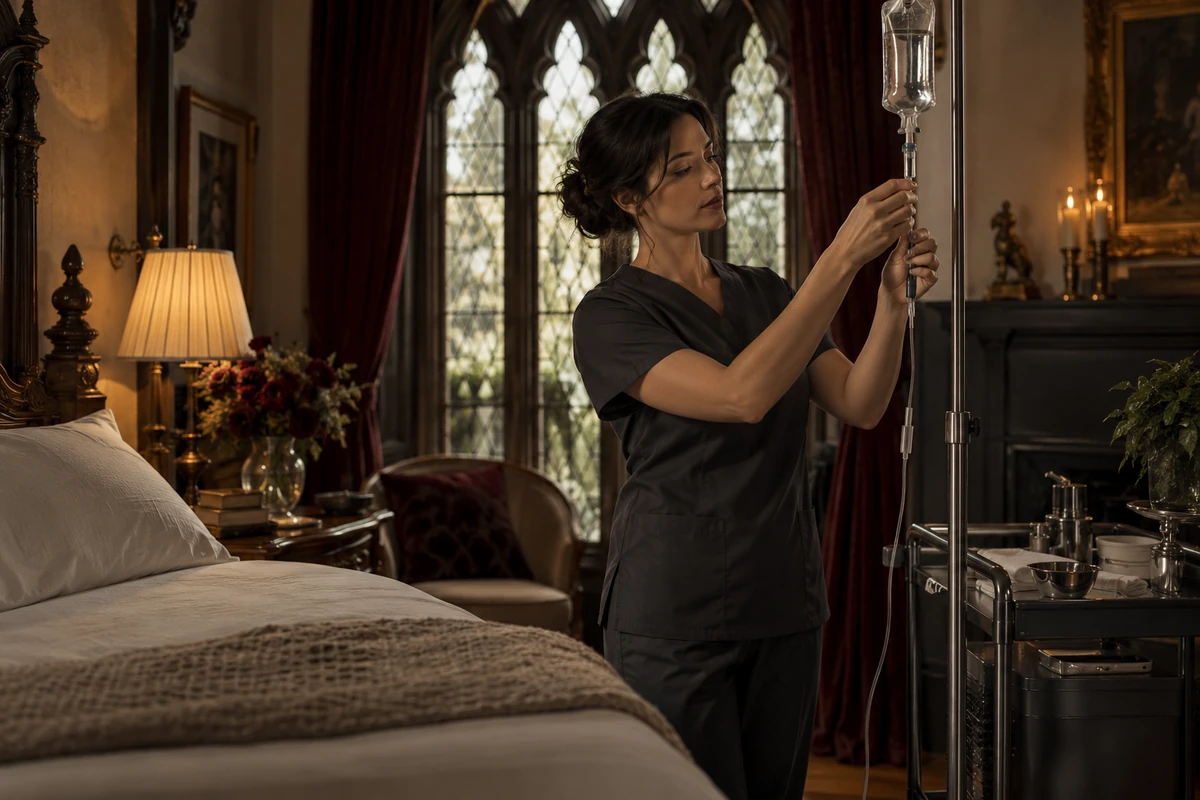
Nurse-led romance is most distinctive when the heroine’s clinical command has consequences for her own safety. In Alisson Bento’s catalogue, Their Captive Nurse places Maya Lin inside a secluded private clinic. Claimed by the Surgeon Don and Healing the Pakhan establish Elena Rossi through hospital work. These verified openings distinguish treatment authority from control over one’s circumstances.
A private call restricts the nurse’s movement
Maya takes discreet calls from wealthy patients avoiding hospital paperwork. An urgent late-night caller says a man is dying and a car is waiting. Her willingness to help outweighs the unanswered destination, but the vehicle’s missing door handles make her loss of control concrete before arrival.
At a gothic house she finds a fully equipped clinic and a bleeding patient. She assesses his wound and directs the men watching from the shadows. Choose this medical mafia reverse harem premise if you want competence operating inside confinement: Maya can give treatment orders while other people control where she is and how she reaches the outside world.
Hospital observation makes competence visible
In Claimed by the Surgeon Don, Elena begins work in a pediatric intensive-care unit after returning to New York following her mother’s death. She notices a trapped medication line before an alarm and later recognizes a child’s deterioration despite reassuring monitor readings. Her concise safety report reaches chief surgeon Nikolai Romanov.
The public profile also establishes Romanov’s Bratva connections and a protective marriage proposal. This is a different route into dangerous circumstances: the nurse first appears within ordinary hospital responsibilities, and her documented work draws attention. Pick this for clinical observation tied to a Russian mafia marriage-of-convenience framework.
Professional history can shape the first meeting
Healing the Pakhan introduces Elena transferring from pediatric surgical recovery with four years of experience and a medication protocol she helped revise. Romanov has studied her recommendation and asks her to present a nursing-quality report. The opening concentrates on professional scrutiny and the personal charge of an exacting chief’s attention within a medical reverse harem premise.
These profiles describe separate standalone books, so matching character names do not establish a reading order or shared storyline. Choose according to the nursing situation you want to enter: urgent care in a controlled house, patient-safety work followed by criminal entanglement, or a new hospital appointment built around earned expertise. The fictional clinical details establish character and workplace stakes; the reading choice concerns how each heroine’s authority meets a different source of pressure.
Read another angle: Biker and motorcycle-club romance: loyalty, authority, and individual choices · Scientist-led romance: discovery, evidence, and a relationship under pressure · Medical romance careers: finding chemistry beyond professional competence
Explore the wider romance catalogue. The catalogue groups books by genre and trope; it does not confirm every preference discussed in this guide.