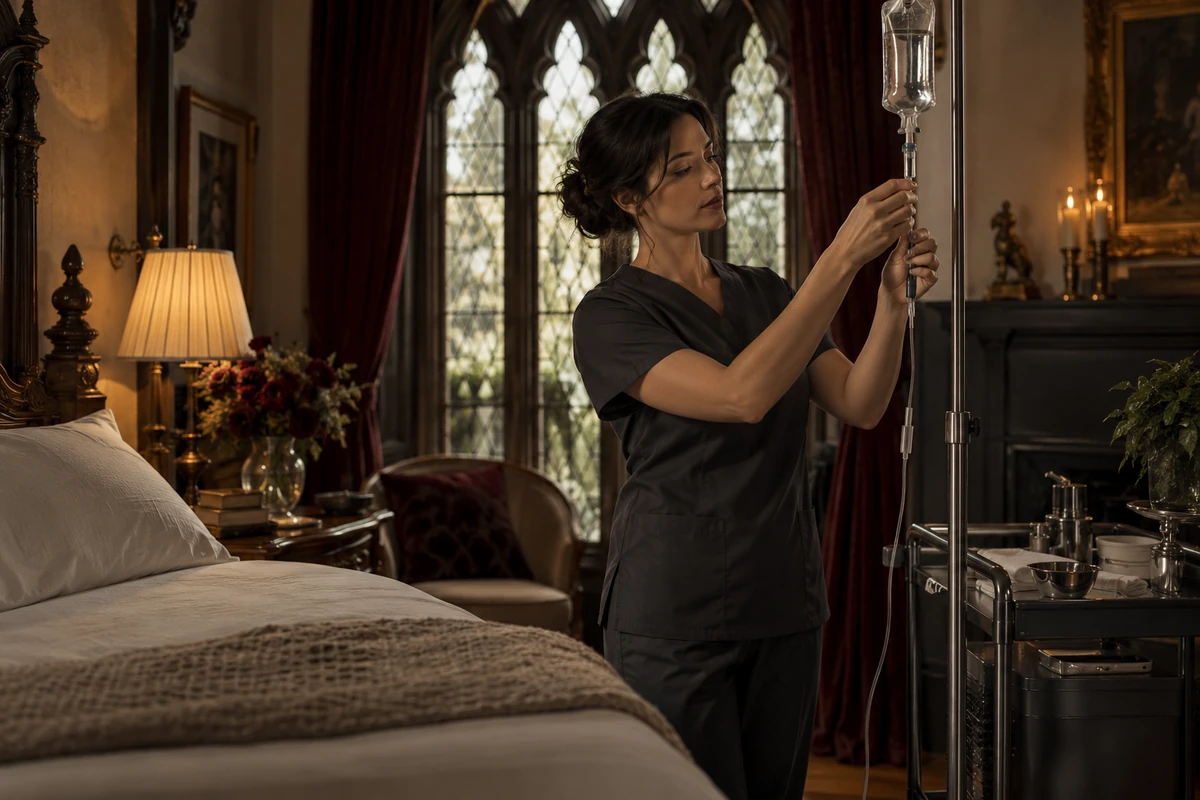
Nurse-led romance is most distinctive when the heroine’s clinical command has consequences for her own safety. In Alisson Bento’s catalogue, Their Captive Nurse places Maya Lin inside a secluded private clinic. Claimed by the Surgeon Don and Healing the Pakhan introduce Elena Rossi through hospital work. The openings separate treatment authority from control over one’s circumstances.
Start with the nursing scene you most want to read. It may be urgent assessment, noticing something others overlook, or professional work being evaluated by a demanding superior. Each puts attention and judgment under a different pressure. A heroine can be capable in all three, but the scene pattern will shape how the romance first becomes interesting.
The details here come from the openings and explicitly described premises. Clinical details set up fictional work and stakes; they do not provide treatment guidance. The comparison also leaves later outcomes and relationships open. Its purpose is to distinguish the environments in which the nurse acts, rather than promise that every book shares every medical or criminal feature.
A private call restricts the nurse’s movement
Maya takes discreet calls from wealthy patients avoiding hospital paperwork. An urgent late-night caller says a man is dying and a car is waiting. Her willingness to help outweighs the unanswered destination, but the vehicle’s missing door handles make her loss of control concrete before arrival.
At a gothic house she finds a fully equipped clinic and a bleeding patient. She assesses his wound and directs the men watching from the shadows. Choose this medical mafia reverse harem premise if you want competence operating inside confinement: Maya can give treatment orders while other people control where she is and how she reaches the outside world.
Maya’s first decision is whether to respond to an urgent need without a clear destination. Payment has been settled and transport arranged, which gives the call a practical surface. The missing information still matters. Readers who enjoy care beginning through an uncertain invitation can follow how the apparent assignment changes before she reaches the patient.
The vehicle makes restriction physical. Missing door handles carry more weight than a vague warning that the client is powerful. Maya can recognize that her movement is controlled before she knows the household. If you are drawn to confinement premises, this opening gives a precise source of unease to assess; if that pressure is unwelcome, the professional label will not remove it.
The clinic then changes what she can do. A fully equipped treatment space gives her resources for the work, while the secluded house still controls her surroundings. The contrast is central: access to clinical equipment is not the same as freedom to leave. Readers can appreciate her command of a task while remaining aware of the wider constraint.
The patient’s bravado does not distract her from assessing the wound. That detail makes professional attention visible through what she prioritizes. The men watching from the shadows do not stop her from giving orders and beginning treatment. The opening therefore offers a nurse whose immediate authority concerns care, while other people retain authority over where she is.
Choose Their Captive Nurse if you want those two kinds of control to collide in the first encounter. It is an urgent-care entrance into a medical mafia reverse-harem premise. The description does not confirm a later period of convalescence or show how the household eventually responds to her personal limits, so those remain separate questions.

From Alisson Bento’s books
A mafia romance about a curvy heroine worshipped exactly as she is.
Kindle edition · Check Kindle Unlimited availability on Amazon.
Hospital observation makes competence visible
In Claimed by the Surgeon Don, Elena begins work in a pediatric intensive-care unit after returning to New York following her mother’s death. She notices a trapped medication line before an alarm and later recognizes a child’s deterioration despite reassuring monitor readings. Her concise safety report reaches chief surgeon Nikolai Romanov.
The public description also sets out Romanov’s Bratva connections and a protective marriage proposal. This is a different route into dangerous circumstances: the nurse first appears within ordinary hospital responsibilities, and her documented work draws attention. Pick this for clinical observation tied to a Russian mafia marriage-of-convenience framework.
Claimed by the Surgeon Don starts from a different baseline: Elena is back in New York and working in a pediatric intensive-care unit. Her tasks sit in an ordinary hospital context before the criminal connections become relevant. That can appeal to readers who want professional identity demonstrated in a familiar institution before danger alters its meaning.
The trapped medication line and the child’s deterioration make observation matter more than simply trusting the displayed information. Elena spots one problem before any alarm sounds and reads another behind reassuring numbers. These are the book’s fictional demonstrations of attention. The literary point is that she interprets a situation rather than merely reacting to an announced emergency.
Documentation carries that attention beyond the bedside. The chief of surgery receives her concise safety report, so what she notices becomes information another person evaluates. Readers who like professional work to create contact can follow that connection directly. Attraction does not have to supply the only reason he is paying attention.
Nikolai’s hospital authority and Bratva business coexist in this description. Coded book purchases and suspicious supply payments connect the institution to another sphere of activity. That is a different route into danger from Maya’s unknown destination. Elena begins with ordinary work, then the description places criminal authority in the same institution that reviews her report.
The protective marriage proposal links safety to a name that already has both professional and criminal significance. The description sets out the proposal and the marriage-of-convenience framework, not a final judgment that the arrangement is safe or freely chosen in every later respect. Readers interested in that entanglement can choose it as a distinct premise.
Compare a new assignment with a record of prior work
Healing the Pakhan gives Elena an established history before the new appointment. Four years in pediatric surgical recovery and a revised medication protocol make her contribution specific. Readers may enjoy a heroine whose past work arrives with her, so a first meeting concerns a record of what she has already done rather than only how she presents herself.
Beatriz prepares her for a chief who tests newcomers in conference. That makes the induction an evaluative situation, with expectations supplied by another nurse before the chief speaks. If you enjoy hospital hierarchy and professional anticipation, this opening offers a different pressure from an immediate wound or a bedside discrepancy.
Romanov has read the recommendation carefully and assigns a nursing-quality presentation and delivery of the protocol to his office. The description links scrutiny to tasks. Readers can follow what his attention requires Elena to do, rather than treating an exacting superior as an abstract personality type.
Her reason for entering surgery is disclosed only in guarded terms. That leaves personal context partly private while professional history is being examined closely. A reader may enjoy the contrast between a record that can be reviewed and an inner reason not yet freely shared. The opening does not explain every part of that history.
Choose this premise if your preferred first contact involves earned expertise being assessed in a new hierarchy. The medical reverse-harem framework accompanies that work, but does not settle every later partner’s role or the full spread of attention. Ask about those dynamics separately if they are essential to your choice.
Distinguish treatment authority from institutional authority
A nurse can know what a patient needs while having limited influence over the room, assignment, or employer. Maya’s clinic makes the distinction stark through confinement. The hospital examples make it visible through reporting and assessment by superiors. Readers interested in work can follow the particular kind of authority available instead of asking whether the heroine is simply powerful.
Reports also move information between levels of responsibility. A bedside observation, a safety report, and a protocol presentation are different forms of work. The first interprets an immediate situation; the second records it for others; the third brings prior practice into an evaluative setting. These differences help explain why the three openings feel distinct despite a shared profession.
The surrounding environment changes what personal attention means. In a secluded clinic, being watched can intensify confinement. In a new hospital appointment, close scrutiny can combine professional evaluation with a charged encounter. Neither automatically proves care or attraction’s later form. Read what the attention requires and permits in the actual scene.
You may prefer the heroine to negotiate practical conditions, concentrate on the immediate patient, or defend the value of prior work. Those are different scenes to request. A broad medical-romance label may identify possible books, but the narrower action tells a recommender what kind of nursing perspective you actually enjoy.
Choose the pace of contact
Maya reaches care through a late-night call and a coercive journey, so urgency precedes a stable understanding of the household. Claimed by the Surgeon Don gives Elena a first shift and a report that draws attention. Healing the Pakhan introduces a transfer and a deliberately scrutinized meeting. The timing of contact is part of the reading difference.
If you like immediate danger, the private-clinic opening is a concrete option. If you want ordinary skilled work first, the hospital premises offer more of that starting context. This is a choice about the introduction, not a promise that one complete book is always faster or another contains less danger.
Ask how much clinical work remains on the page after the first encounter. You may want recurring professional tasks, or be content with nursing establishing the heroine’s identity before the external plot grows. A full-book reader can discuss the balance without revealing an injury outcome, a criminal discovery, or the relationship’s final decision.
Keep the separate books separate
Matching names can invite assumptions about continuity. Here, the descriptions cover independent standalone premises, so Elena and Nikolai appearing in more than one description is not a sign of a required sequence. Choose according to the situation each opening sets up, rather than treating one as an earlier stage of another’s nursing career.
The romantic frameworks differ too. Claimed by the Surgeon Don is identified through Russian mafia marriage of convenience, while Healing the Pakhan carries a medical reverse-harem premise. Their shared hospital vocabulary does not make every relationship feature interchangeable. Confirm the framework you want for the particular title you choose.
For a focused request, try: “A nurse heroine whose clinical work changes the first encounter. Please distinguish urgent treatment in a controlled private clinic, hospital observation followed by criminal entanglement, and a new appointment built around prior protocol work.” Then add your preference for danger, hierarchy, or group dynamics.
Content and ending requirements need their own information. Nursing expertise does not guarantee gentle treatment of danger, and a protective proposal does not confirm a particular outcome. The path the opening supports is to choose the professional situation first, then obtain any firm additional facts without asking the recommender to disclose the final medical or romantic resolution.
Read another angle: Biker and motorcycle-club romance: loyalty, authority, and individual choices · Scientist-led romance: discovery, evidence, and a relationship under pressure · Medical romance careers: finding chemistry beyond professional competence
Explore the wider romance catalogue. The catalogue groups books by genre and trope; it does not confirm every preference discussed in this guide.