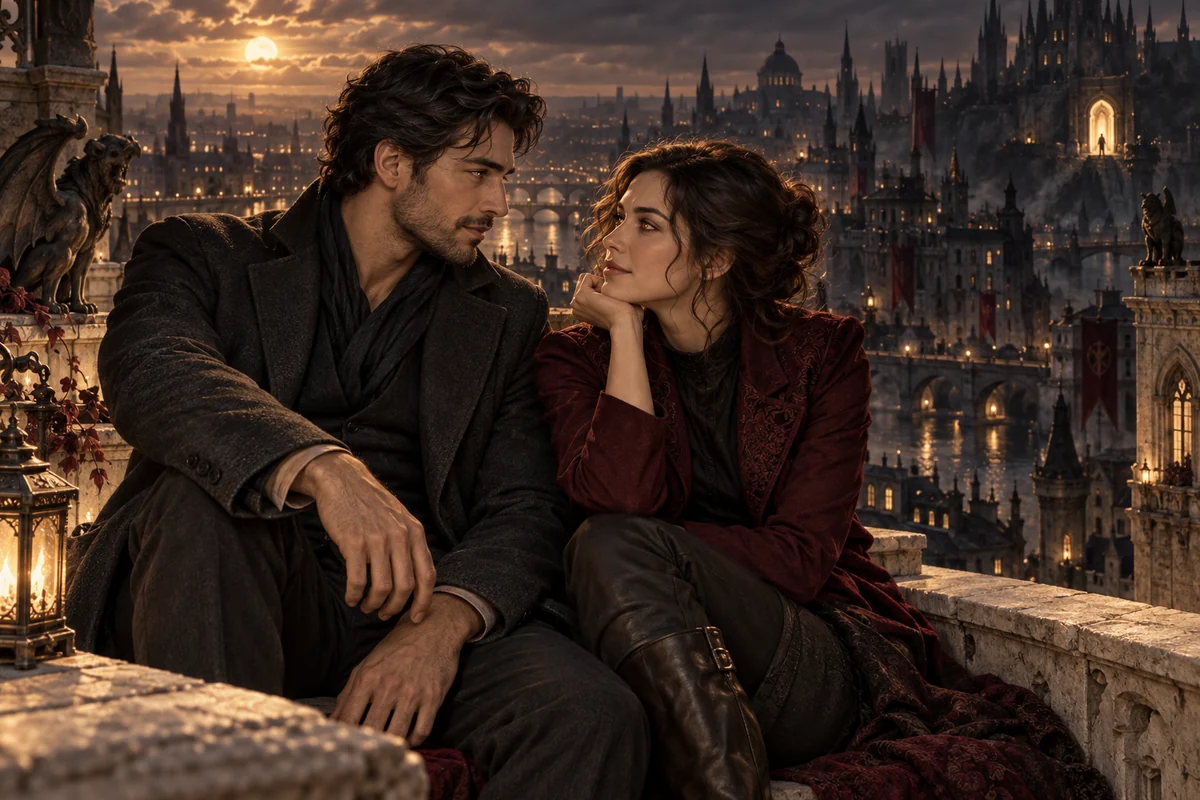
Vampire romance returns to reading lists every autumn, and the seductive vampire has been part of fiction since the early nineteenth century. Readers who look for a vampire love story today are often asking the same questions that early writers raised: what does a long life cost, and what happens when a human heart is drawn into it? This guide explains why the figure keeps coming back, where it came from, and how to choose a vampire romance that fits your taste.
Why the immortal love interest keeps returning
The vampire lover offers a fantasy that is hard to match. He has seen centuries, he is stronger than the people around him, and he has chosen, or been compelled, to remain in the mortal world. That combination makes him both a protector and a threat. A heroine who attracts him is drawn into a life that is larger and more dangerous than her own, and the story asks whether she can survive it on her own terms.
Because immortality stretches time, vampire romance tends to examine patience and memory. A lover who has outlived several eras may be careful with feelings, slow to reveal his past, or convinced that love is a risk he should not take. The reader is invited to wonder what it would be like to hold someone whose life is measured in centuries. That question feels as fresh in a modern novel as it did in a Victorian one, which is a large part of the genre’s staying power.
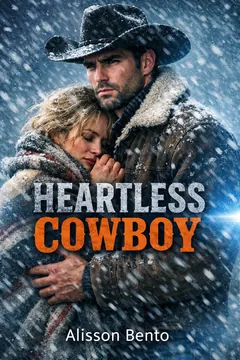
From Alisson Bento’s books
A cowboy romance about a single dad who never planned to fall again.
Kindle edition · Check Kindle Unlimited availability on Amazon.
Where the vampire lover comes from
The figure of the undead blood-drinker has deep roots in folklore from across central and south-eastern Europe, where local beliefs described corpses that were thought to return and trouble the living. Those stories were often frightening and practical, concerned with village misfortune and funeral rites rather than romance. The literary vampire arrived later, and it was shaped by the imagination of nineteenth-century writers who were interested in desire, inheritance and the fear of outsiders.
John William Polidori’s short story The Vampyre was published in 1819. It grew out of the summer of 1816, when Polidori, Lord Byron’s physician, was staying near Lake Geneva in the circle at the Villa Diodati with Byron, Percy Shelley and Mary Godwin, soon to become Mary Shelley. Polidori’s aristocratic seducer set a pattern that later writers adapted. Sheridan Le Fanu’s Carmilla, published in 1872, presented a female vampire whose attachment to a young woman is both tender and predatory. Bram Stoker’s Dracula, published in 1897, gave the figure a fuller gothic framework, told through letters, journals and newspaper cuttings. All three texts are in the public domain, and they are worth reading for the way they frame desire as danger.
Immortality, memory and the price of a long life
Modern vampire romance often gives a long life a practical cost. The hero may have lost details of his human life, or he may carry too clear a memory of the people he has outlived. Some stories go further and build magic systems in which memory itself becomes currency. An example is The Vampire’s Forgotten Key. Zerya Pendelton, a ruin-diver, casts a holding rune to save her partner when the Glass Basilica begins collapsing, and the magic takes a sensory memory as payment: she can remember standing in the rain, but she no longer recalls its smell. The book is a standalone gaslamp fantasy romance, and her spell draws vampire cartographer Cyprian Althoff into the same ruin, leaving them with matching marks and a connection he recognises with dread.
That idea of loss runs through the genre. A hero who has lived for centuries is shaped as much by what he has lost as by what he remembers, and a heroine who shares his world must decide whether she can accept a relationship with someone whose memory is both a gift and a wound. Readers who enjoy this theme should look for books where the past is not just backstory but a force that shapes the present. For a closer look at time, memory and a shared future, Vampire romance immortality trope: time, memory, and a shared future covers the immortality trope in more depth.
Restraint, danger and why the bite is never just a bite
Restraint is the vampire romance’s most distinctive tool. A vampire who could take what he wants and chooses not to offers the reader a steady tension, and the question of control drives many of the best scenes. Restraint can be sensual, political or moral. It can be shown in a hero who keeps his distance until she asks for more, or in a rule that protects the heroine from the court around him.
Blood bonds and shared marks are common ways to heighten that tension. They make a bond physical and sometimes uncomfortable, because the connection cannot be fully controlled. In Tamed by the Triumvirate, Delphine Fontenot-Sainte negotiates under a magical deadline with three vampire brothers whose powers she has been taught to fear. Her briefing claims that binding herself to all three before dawn will interrupt a dangerous mechanism, yet she cannot verify the account given by the man controlling her trigger phrase. The book is a standalone supernatural reverse-harem romance, and its central tension is the distance between instructions and truth. Blood bonds in vampire romance: intimacy, information, and limits explores blood bonds and their limits in more detail.
The mortal heroine and her choices
The mortal heroine is the reader’s anchor. In the strongest vampire romances she is not simply swept off her feet. She investigates, bargains, refuses and sometimes outsmarts the immortal beings around her. Her choices matter because her life is short by comparison, and because a bond with a vampire can change her body, her reputation and her family. A story that keeps her decisions at the centre gives the supernatural elements a human stake.
The Vampire’s Decree places a researcher at the centre of a succession dispute. Serena Holt, a laboratory researcher, has spent three years studying an unexplained marker in her own blood. A late-night test makes the sample glow, and an obscure account of a bloodline becomes relevant. Meanwhile the northern vampire court faces a decree that requires it to produce a queen bonded to its bloodline before the Blood Moon, and its three unbonded princes have not yet found a compatible woman. The book is a standalone urban fantasy reverse harem in which scientific curiosity meets an old court law.
Her agency becomes especially visible when a plot depends on information that others withhold. A heroine who asks for the full paperwork, tests a claim against evidence or refuses to accept a supernatural rule without understanding it is doing the same work as a detective. That kind of reasoning gives vampire romance a clear narrative engine, and it lets the reader enjoy the romance and the mystery at once.
Settings that change the story
The setting of a vampire romance shapes the kind of desire and danger on offer. A gothic house, with its locked rooms, long corridors and family portraits, makes the past feel present and invites the reader to notice what has been hidden. A gaslamp city, with its fog, its crowded streets and its emphasis on reputation, turns the vampire’s secret into a question of social survival. A royal court turns the romance into politics, where every marriage and bloodline matters to the people watching. A modern laboratory or office makes the supernatural feel uncomfortably close to ordinary life, because the vampire must hide in plain sight among rules and records.
Choosing by setting is often the easiest way to find a book that suits your mood. If you enjoy atmosphere and slow dread, a gothic or gaslamp story will probably give you what you want. If you prefer momentum and a clear sense of stakes, a court or institutional setting may fit better. Modern settings can offer a middle ground, with the immortal hero moving through a familiar world that is quietly hiding something large.
How the heroine’s world meets his
Vampire romance often depends on a meeting of two worlds, and the way the story handles that meeting is a useful guide. Some books put the heroine into the vampire’s world by force, through abduction, a contract or an obligation. Others let her step in by choice, drawn by curiosity, by family debts or by a professional need. The first kind usually makes the early chapters tense and watchful. The second often builds the romance more slowly, through conversation and shared problems.
Pay particular attention to anything that would change her permanently. Turning, a blood bond or a shared mark can alter her body, her lifespan or her privacy, and these changes sit at the heart of the subgenre. A careful book makes her agreement to them clear and treats any change made without it as a serious wrong rather than a romantic shortcut. If the blurb hints at a bond she did not choose, read the content notes before you begin, and decide whether you want to watch her fight that bargain or would rather read a story where she sets the terms from the start.
Choosing a vampire romance that suits you
Vampire romance covers a wide range, from gothic introspection to fast political intrigue. A short checklist can help you narrow the field before you read the blurb closely:
- Setting: gothic houses, gaslamp cities, a modern laboratory or a royal court. Each shapes the kind of danger on offer.
- Number of love interests: a single vampire hero, or a group of brothers or lords. Check whether the story is built around a why-choose structure.
- Source of tension: a mystery, a magical rule, a court law or a personal secret.
- Content notes: captivity, coercion, violence and the way blood-drinking and intimacy are handled vary widely between books, so check each one.
Use the checklist with the blurb rather than the cover. A striking image may promise darkness that the story never delivers, or it may hide a gentle, character-led book. The clearest guide is the premise: what does the heroine want, what stands in her way, and what does the vampire have to lose? Once you can answer those three questions, the rest of the choice usually becomes simple.
Quick answers
Why do vampire love interests suit autumn reading?
Autumn brings darker evenings and seasonal reading lists, and vampire stories fit the mood naturally. Their settings, atmosphere and sense of old history suit readers who want a story with weight. The figure has also been part of gothic fiction for more than two centuries, so each autumn there is a deep shelf of old and new stories to choose from.
Is the immortal love interest always dangerous?
Not in the same way. Some heroes are a real threat, some are restrained, and some are bound by rules that limit what they can do. Read the premise to see whether the danger is physical, political, emotional or a mix. The heroine’s agency is often the best guide to how the relationship will be handled.
Where should I start with the classics?
Begin with Polidori’s short story for a compact introduction, then move to Carmilla for a different approach and Dracula for the full gothic experience. All three are in the public domain and available in many editions. Reading them alongside modern romance shows how the genre has changed and what it has kept.