Halloween month often sends readers looking for darker supernatural heroes, and demons have a special place in that search. A demon romance usually asks a sharper question than a vampire or shifter story does: not only what the hero wants, but whether a being built around temptation can choose something other than the fall. This guide explains what readers find in demon romance, how it differs from fae bargain stories and vampire romance, and what to check before you start, so the dark appeal you enjoy does not come with surprises you did not want.
Where the demon comes from in storytelling
The demon of romance has ancestors in several old traditions. Dante’s Inferno, written in the early 1300s, places devils and damned souls in carefully ordered circles of punishment. Milton’s Paradise Lost, published in 1667, makes the tempter a seductive and articulate figure whose arguments are persuasive enough to unsettle the reader. In German tradition, a chapbook printed in Frankfurt in 1587 told the story of the scholar Johann Faust, who trades his soul for knowledge and power. Christopher Marlowe’s play Doctor Faustus soon dramatised that bargain for the English stage, and it has been retold ever since.
These stories share a structure that romance has found irresistible. A powerful being offers something the protagonist wants badly, the price is written down or spoken aloud, and the reader watches a person decide whether to pay it. Romance keeps that structure but changes the stakes. The bargain becomes a relationship, the tempter becomes a love interest, and the question shifts from whether the protagonist will be damned to whether the two of them can build something honest out of a deal that began unfairly.
You’re on the list. Your free stories are waiting in the Reader Vault. The Unchosen Tribute
Temptation and the forbidden attraction
Temptation is the emotional engine of demon romance. The hero is attractive precisely because he is dangerous, and the heroine is drawn to what she has been taught to resist. Readers who enjoy a slow build of forbidden pull will recognise the pattern. The best examples make the attraction feel like a choice the heroine is making with her eyes open, rather than a spell that removes her judgement. When the story treats her reactions as hers, the temptation carries weight.
It helps to think of temptation as a question of agency. If the heroine is simply overwhelmed, the romance becomes a story about surrender. If she is weighing the offer, questioning the terms and sometimes refusing, the romance becomes a story about decision. Many readers prefer the second, and that is the difference to look for when you read a blurb. Words such as bargain, pact or terms usually signal a story about choice; words such as claimed or owned may signal a darker power imbalance that you should examine before you begin.
Bargains, contracts and the fine print
Contracts are where demon romance shows its teeth. A demon bargain is rarely a simple exchange, because the power of the being lies in the wording: what is promised, what is withheld and who bears the cost. That gives the heroine a natural role as the reader of fine print, and some of the most satisfying demon-influenced stories turn on a heroine who insists on understanding every clause.
The Vampire King’s Obsession is not a demon romance, but it shows the same principle clearly. Hallie Miller is a museum archivist, and she responds to her brother’s predatory loan the way an archivist would: she wants the complete paperwork and refuses to accept that a threat becomes lawful simply because it appears in an agreement. Her habit of examining documentary evidence shapes the opening conflict, where a cropped contract and rapidly changing charges matter as much as the threat itself.
When you read a bargain-driven story, look for three things. First, whether the terms are visible to the heroine. Second, whether she can refuse without being punished for it. Third, whether the story acknowledges that a deal made under pressure is not the same as a deal made freely. These questions separate a story that uses a bargain for romantic tension from one that uses coercion as a plot device.
Bargains also come in different shapes, and each shape suits a different reader. A wish bargain puts the heroine at the centre of a clear exchange: one desire for one price. A protective pact turns the bargain into a shield, so the story asks what the protection costs over time. A debt bargain draws on everyday money pressure, which can feel more unsettling than any supernatural rule because it is so familiar. A soul-level contract raises the stakes to the afterlife itself, and it usually depends on the hero’s past to show whether he can be trusted. Decide which of these shapes appeals to you before you choose, because the amount of ambiguity and the speed of the romance will follow from it.
How demon romance differs from fae bargains and vampire romance
Demon romance is often compared with two neighbouring subgenres, and the differences matter when you choose a book. Fae bargain stories usually run on rules: names, iron, dates and the exact words of a promise. In most romance the fae are written as alien rather than fallen, governed by their own logic, and the danger lies in misunderstanding that logic. The pleasure of a fae story comes from working out the rules before the heroine is trapped by them.
Vampire romance, by contrast, tends to be about appetite, territory and time. A vampire may be immortal, possessive or hungry, and the central question is often how two people can share a future when one of them will outlive the other. Vampire romance immortality trope: time, memory, and a shared future explores that immortality theme in depth. The demon, in the Christian tradition most of these stories draw on, is defined by a fall. The core question is not whether the being is monstrous but whether a creature that chose temptation can be trusted to choose differently.
Sold to the Immortal shows how a bargain can drive a story without a demon at its heart. Honora Gentry is trying to keep a dying homestead alive, and Jericho Calderon arrives with the claim that her father sold the water rights and abandoned her. Honora refuses to accept his authority over her land or her body, so the opening turns on who has the right to make decisions about her life. That is the same question demon romance asks, approached from a frontier homestead rather than a hell.
Redemption arcs that feel earned
The redemption arc is the element demon romance promises most often, and it is the easiest to get wrong. A hero who has made a terrible bargain or caused harm needs to change, and the change needs to cost him something. Readers quickly notice when a redemption is simply a reward for the heroine’s suffering, because the hero’s transformation happens without any real accountability, and her forgiveness becomes the only test he has to pass. Four signs suggest a redemption has been earned:
- Accountability: the hero acknowledges what he did, without the story minimising it or making the heroine responsible for fixing it.
- Cost: his change involves giving up something he wanted, not just adopting a gentler manner.
- Her choices: the heroine decides whether to trust him, on her own timetable, and the story respects a no.
- Consistency: the redeemed man still behaves like himself, with his nature shaping how he changes.
A good redemption arc also keeps the heroine’s agency intact. She should not be the only person doing emotional labour, and her decisions should matter to the plot rather than merely reacting to his. If the story gives her the power to refuse, to negotiate or to walk away, the eventual hope has more meaning.
Candlelight, banter and gothic houses: the range of moods
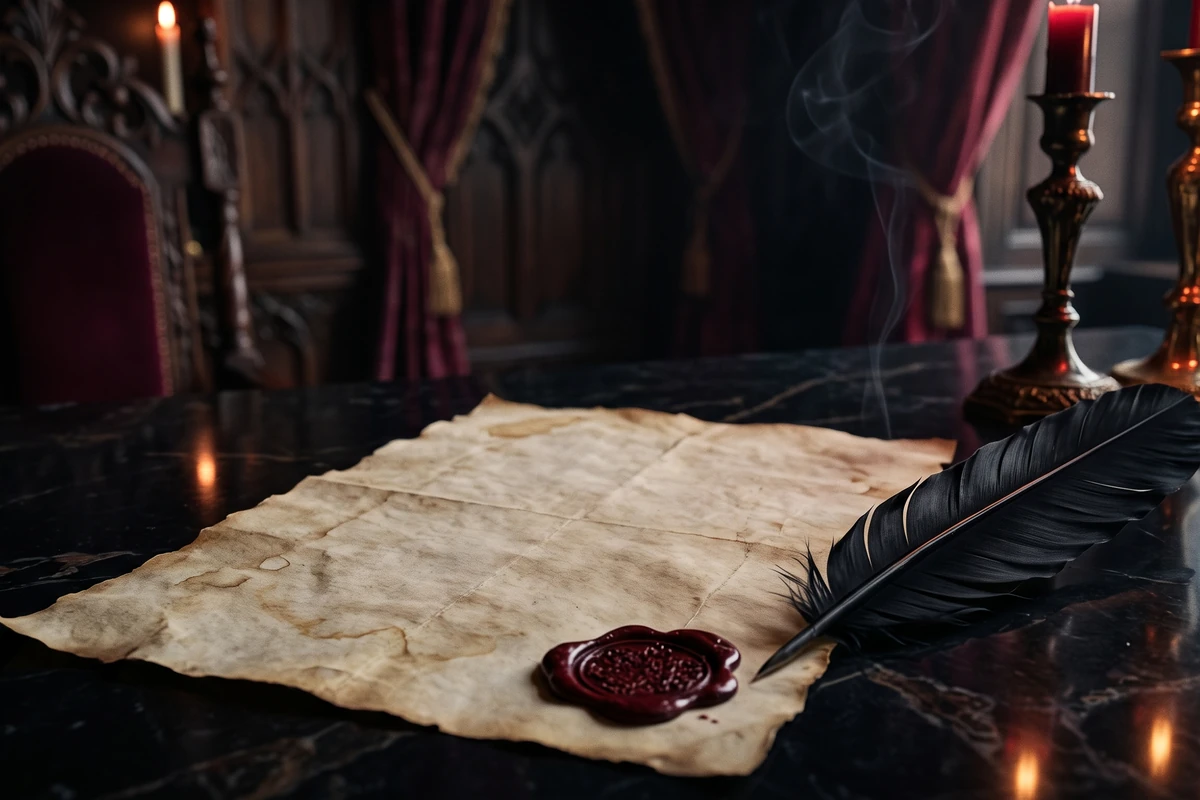
Some readers come to demon romance for the atmosphere alone: candlelit rooms, old contracts sealed with wax, and a hero who speaks as though every word has been weighed. That style works best when the writing keeps the heroine’s perspective sharp, so the mood never swallows her point of view. A good test is to read the first chapter and notice whether she is still asking questions, still noticing details and still making choices, or whether she has simply become a witness to the hero’s intensity.
Not every demon romance is solemn. Some use the subgenre’s wit: sharp dialogue between a sceptical heroine and a demon who finds her unimpressed, or a bargain that goes slightly wrong in ways neither party intended. These stories often lean on banter and clever contracts rather than on menace. If you want darkness with a playful edge, look for descriptions that mention humour, rivalry or a heroine who enjoys a good argument.
Her Four Vampires belongs to the gothic side of the same mood. A physician accepts a royal summons to an isolated estate where the household’s omissions challenge her ability to establish the facts, and the gates close behind her. The clinical habits she brings to the house make the atmosphere feel precise rather than vague. It is a vampire story rather than a demon one, but readers who like a gothic setting, an experienced physician heroine and a household that withholds the facts will find the same appeal of unanswered questions.
Content notes to check before you start
Demon romance can include coercion, manipulation, violence and power imbalance, and these are often central to the appeal. That is not a reason to avoid the subgenre, but it is a reason to read carefully. Check the content notes for dark themes, and look for signs of how the story handles consent. Ask whether a deal was made under duress, whether the heroine can say no, and whether the romance treats her limits as real. Monster romance vs dark romance: choose the creature, the mood, and the boundaries offers a practical way to think about creature romance boundaries, and it is worth reading before a dark supernatural title.
Also check how the story frames the supernatural. Some books use demons as metaphors for addiction, debt or family pressure, while others treat them as literal and terrifying forces. Neither approach is wrong, but your reading experience will differ. A story that uses debt as its demon will ask different questions from one that places a supernatural pact at the centre of the plot.
Quick answers for demon romance readers
Is a demon romance always about damnation?
No. Many demon romances use damnation as a backdrop and focus on temptation, choice and whether a bargain can be renegotiated. Some stories end with the hero’s fall reversed, while others keep the consequences of the bargain visible throughout.
How is a demon different from a vampire in romance?
Vampire romance usually centres on appetite, immortality and territory. Demon romance centres on a fall, a contract and the question of change. The two can overlap, but a demon story will generally put the bargain and the choice at its heart.
What should I check before starting a dark demon romance?
Read the content notes, look for how the heroine’s consent and refusals are treated, and check whether the story is a bargain, a captivity plot or a debt story. Those details shape the emotional experience far more than the supernatural label does.