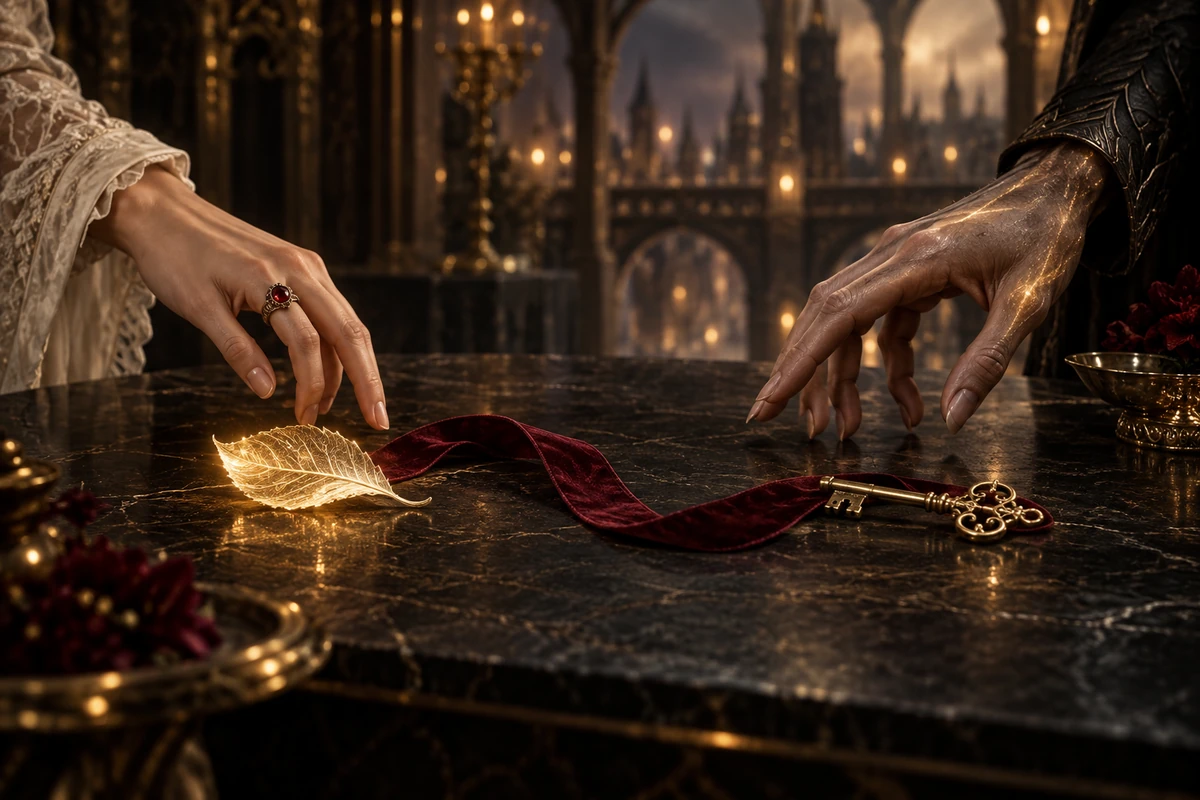
Halloween week is the season for monstrous heroes, cursed princes and dark fairy tales, and few stories have supplied more of them than Beauty and the Beast. This guide traces where the beastly hero came from, why the figure keeps working in romance, and how modern authors handle the uncomfortable bargain at the centre of the original. It is written for readers who want to choose a book with care, not just a creature with fangs.
Where the beastly hero comes from
The version most readers know descends from two French texts. Gabrielle-Suzanne Barbot de Villeneuve published a long tale in 1740, and Jeanne-Marie Leprince de Beaumont published a shorter, simpler version in 1756 that became the one generations of children read. Both stories share the same core. A merchant who has lost his fortune picks a rose from the garden of a mysterious palace; its owner, a Beast, says that the merchant must die unless one of his daughters takes his place; and the youngest daughter goes to the palace in his stead.
What keeps the tale alive is not the rose but the question it leaves open. What does a woman owe a man who took her away from home, and what does he owe her in return? Beaumont’s heroine goes willingly, to save her father, and the story treats her sacrifice as honourable. Yet the moral weight rests on a debt she did not create, and modern readers notice that at once. A beastly-hero romance that ignores this question is not really retelling the tale. It is only borrowing its furniture.
You’re on the list. Your free stories are waiting in the Reader Vault. The Unchosen Tribute
Why the beast works as a romantic hero
The beast is dangerous and lonely at the same time. Beaumont’s Beast is courteous, frightening and hurt by Beauty’s absence, and readers have always been able to hold both truths: a man can be a threat, and the threat can be the surface of something wounded. Romance writers take that structure and move it into new settings, such as a shifter whose scent exposes him, a cursed Alpha, or a fae lord whose gift comes with strings attached.
The appeal depends on earned trust. In the fairy tale, the spell breaks when Beauty chooses the Beast freely, after she has seen enough of his kindness to know it is real. Romance works the same way when the hero’s softness is shown rather than declared. The reader needs to see him keep a promise, accept a refusal, or step back when the heroine asks for room. A beast who never yields is only a threat. The romance lives in watching danger become a person with limits, and in noticing whether those limits hold when they are tested.
This is why the best beastly heroes are not defined by their appearance. The monstrous body can be a metaphor for fear, grief or a loss of control, or it can be literal, with claws, horns or a shifting form. Either way, the question for the reader is the same. Does the hero use his power to make the heroine’s choices easier, or does he make them for her?
Captivity and consent: the uncomfortable core
Captivity is the part of the story that romance writers either embrace or take apart. Beauty goes to the palace to save her father, she cannot go home without the Beast’s permission, and the whole plot begins with a bargain she did not make. A reader who picks up a modern beastly-hero romance expects that tension to be handled on purpose. Two things matter most: who controls the terms, and whether the heroine’s refusal changes anything.
Captivity romance covers a wide range. Some books treat confinement as a source of tension while the heroine keeps her judgement, her plans and her right to say no. Others use it as a plot device that the narrative eventually reframes, and a few lean on it so heavily that the romance never fully leaves the cage. None of these is automatically better, but they promise different reading experiences. If you want a heroine who negotiates, plans and keeps her own counsel while the hero is dangerous, look for that in the blurb and the first chapters.
If the bargain itself is the hook, our guide to the fae romance bargain trope covers prices, promises and romantic trust in more depth: Fae romance bargain trope: prices, promises, and romantic trust. The idea applies well beyond fae courts. Underneath, every beastly-hero story is about a deal that one party did not fully understand or could not easily refuse, and the romance depends on what each side does with that imbalance afterwards.
Content notes matter more here than in most romance. A reader who enjoys dark themes should still check how much of the confinement appears on the page, whether violence is described in detail, and whether the heroine is given real choices before the book asks her to accept them. A blurb tells you what the premise is. A content note tells you what the book contains, and that is the information you need before you start.
The first chapter is also a fair test. Notice what the heroine knows at the start and whether she is allowed to ask questions that get real answers. Notice whether the hero speaks to her as an equal in the scene or as a problem to be managed. Many beastly-hero openings are built on fear, so the question is not whether the heroine is afraid. The question is whether her fear is treated as information, or whether the story asks you to read it as a sign that she needs to be handled.
Cursed heroes in fantasy and dark romance
Once the beast became a curse, a whole family of heroes followed: the cursed prince, the shifter who cannot control his other form, the fae lord bound by an old contract. The curse does useful work for a romance writer. It explains the monstrousness, sets a condition or a deadline, and gives the heroine something concrete to investigate.
None of the following three novels from Alisson Bento’s own catalogue is a retelling of the fairy tale, but each opens on the Beast’s central bargain, protection that also confines, and moves it to a new setting. Rainbound Omega places its heroine, Corisande, in rain-soaked Seattle, where the rain strips away the scent she has spent years concealing. Three men offer her a warded estate and physicians who will not report her, yet they have also blocked her exits. The opening asks whether an offer of protection can also be a trap, and Corisande’s suspicion keeps her escape decisions at the centre.
Four to Claim Her, a dark urban fantasy why-choose romance, starts with a captive being transported to a criminal compound in New Orleans governed by four lords. Her captors have left her satchel and her grandmother’s ring, so she has tools to observe the journey and keep a sense of herself. The arrival is a puzzle, and the unexpected gathering of the four lords suggests that her captors have not told her the whole reason for her delivery.
Bound to the Alphas opens with an Omega whose suppressing collar is failing, and a sudden release of the psychic energy it holds back could kill her. When three Alphas drive off the hunters pursuing her, the pack leader refuses to break the collar and says he will manage it under his territory’s protection instead. A rescue that keeps the restraint in place is not the same as freedom, and that tension between rescue and control drives the opening.
A curse also works as a clock. When the restraint is failing, the heroine is racing against a mechanism rather than a villain, and every hour changes the risk. When the curse has a condition, the reader can track whether the hero is moving toward it or away from it. Both forms give the romance a structure beyond the attraction itself, which is why a good cursed-hero book usually makes the restraint visible early, even when the full explanation waits for later chapters.
Across these three openings, the restraint or the bargain is the question, and the response of the powerful party is the test. That is the same test the fairy tale sets the Beast. Setting matters too. A fantasy romance usually builds a court or a kingdom with its own rules, while a dark urban romance puts the danger into streets and buildings the reader recognises. If the world-building is what draws you in, High fantasy vs low fantasy romance: choose the world you want to enter explains how the setting changes the reading experience.
How to choose a beastly-hero romance you will enjoy
- Ask who controls the curse or restraint. A hero who could free the heroine and chooses not to is a different book from one who simply lacks the means.
- Look for a heroine who weighs offers with real information. Her suspicion, planning and refusals should change the outcome, not only decorate it.
- Read the blurb for words such as captive, collar, bargain, debt or curse. They signal how central confinement will be.
- Decide how monstrous you want the hero. Some books keep the beast metaphorical; others make the creature physical and immediate.
- Check content notes before you start, especially for violence, confinement and power imbalance.
Single-hero romances and why-choose books treat the beastly figure differently. A why-choose story gives the heroine more people to judge, so her evaluation of each man carries more weight. If you prefer one hero to earn your trust slowly, a single-hero book will usually give that focus. If you enjoy a group dynamic, pay attention to whether the heroine’s voice stays strong across the whole cast.
Finally, check whether a book is a standalone or the opening of a longer series before you buy. Many cursed-hero stories are built to open a world, with the curse or the collar carrying over into later books. If you want a complete arc in one volume, read the book description for the word standalone. If you enjoy the slow unfolding of a larger mythology, a series may suit you better, and you can start with the book whose premise you find most immediately compelling.
Quick answers about beastly heroes
Is Beauty and the Beast always a romance?
Not in the way modern readers expect. Villeneuve and Beaumont tell stories about patience, virtue and a bargain, and the love that develops is the reward for a long and difficult trust. Modern romance tends to keep the pattern but move more of the power into the heroine’s own decisions.
Do I need to know the original tale to enjoy a cursed-hero romance?
No. Each book introduces its own curse, rules and cast. Knowing the rose, the bargain and the father’s debt simply helps you recognise the pattern and judge whether an author is building on it deliberately or repeating it without thought.
How do I avoid a beastly-hero book that treats captivity casually?
Read the content notes, sample the first chapter and watch what happens when the heroine says no. If the story treats her refusal as an obstacle to overcome, you know what kind of book you are holding. If her refusal shapes what comes next, the book is taking the bargain seriously.