Halloween eve is the night many readers want a romance that is genuinely frightening rather than merely moody. Horror romance puts fear and attraction into the same scenes, and the labels around it, including dark romance, paranormal romance and romantic suspense, are easy to mix up. This guide sets out what each term means, explains why fear and desire can share a story, and shows how to check intensity before you start. Three dark thrillers from Alisson Bento’s own catalogue show different sources of fear along the way.
Horror romance, dark romance and paranormal romance are not the same
Horror romance is defined by its central pressure. The story is built around a threat that makes the reader’s pulse rise and that the characters cannot simply reason away, and the love story develops inside that fear. The threat may be supernatural, human or institutional, but it has to keep the reader uneasy for long stretches of the book. If you could remove the fear and the romance would still stand exactly as it is, the book is probably closer to something else.
Dark romance is defined by its emotional and moral register. It deals with power imbalance, morally grey heroes, obsession, trauma and relationships that begin in coercive or dangerous circumstances. Horror is possible within dark romance, but it is not required. A dark romance can be intense and disturbing without anything in it resembling a horror story. Romantic suspense is a neighbouring category, defined by an investigation and a clearly traceable source of danger, and the distinction is useful when you are comparing labels.
Paranormal romance is defined by its supernatural elements: vampires, shifters, witches, ghosts or other creatures. Some paranormal romances are cosy, with humour and warmth, and others are dark. The presence of a monster does not make a book frightening, and the presence of fear does not make a book paranormal. Keeping the three definitions apart helps you avoid picking a book that promises one kind of experience and delivers another.
A single book can sit in several categories at once. A dark vampire romance can be paranormal, dark and horror-adjacent all together. The labels are best read as a guide to what the book prioritises, not as a set of boxes that a book must tick. When a blurb mixes labels, ask which one describes the opening pages. That is usually where the author’s priorities are clearest.
You’re on the list. Your free stories are waiting in the Reader Vault. Every Letter a Sin
Why fear and desire can share a story
Fear and attraction can produce similar physical signals. Both quicken the breath, narrow attention and make the body hyper-aware of another person. A good horror romance uses that overlap deliberately. A character who is frightened notices the other person more closely, and a character who is attracted to someone may read their intentions more carefully than they would otherwise. The two states feed each other on the page.
Protection is the second link. When the threat is real, a character who stands between the heroine and danger becomes visible in a way that ordinary romance rarely requires. The reader sees what he does when the stakes are high, which is often more revealing than a quiet conversation. Survival is the third. Trust earned during a crisis carries particular weight, because the characters had little choice but to rely on each other. The fourth link is uncertainty. Both horror and romance depend on not knowing who to trust, and a book that keeps that question open for long enough can make the reader feel both kinds of tension at once.
The combination only works when the fear has a function in the story. If the monster or the threat is decoration, the book becomes a costume party with a love scene attached. If the threat is specific, with a clear source, a clear cost and a clear reason it matters to the couple, then the romance can grow out of how the characters handle it. Ask of any horror romance whether the danger changes the relationship or simply sits beside it.
Three novels that use fear in different ways
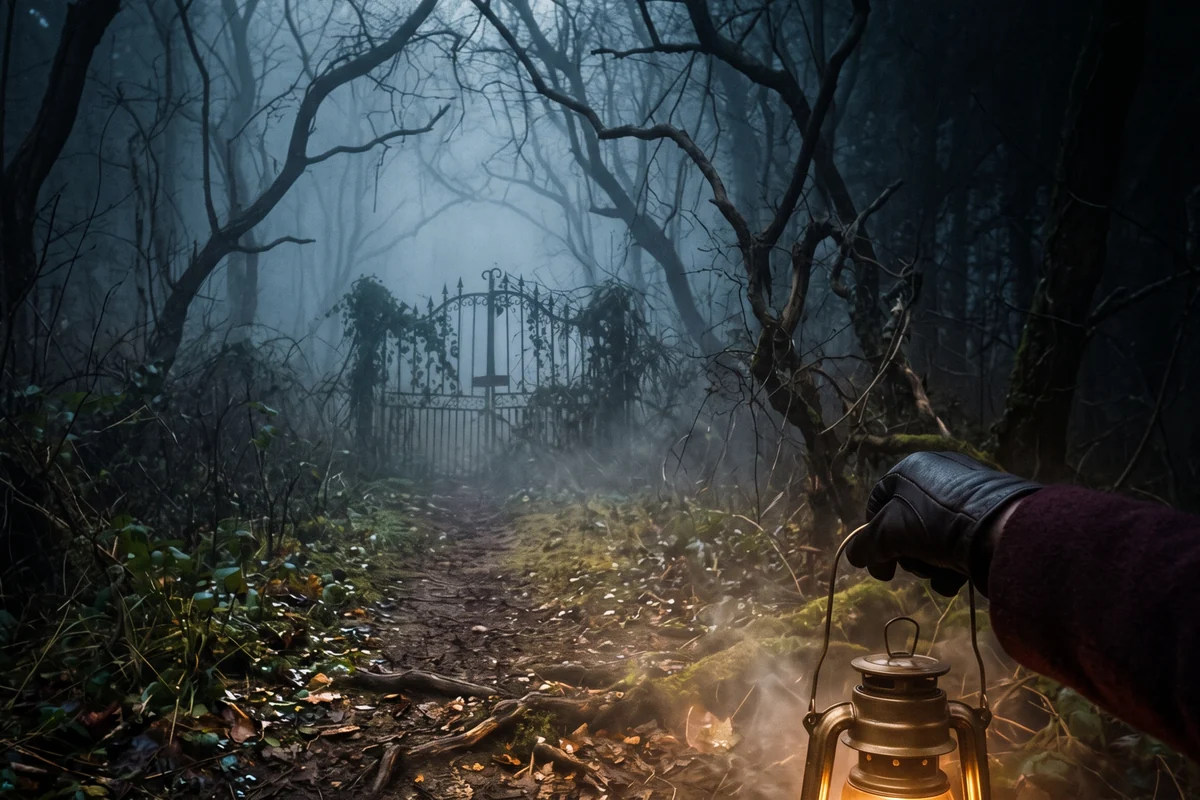
None of these three is sold as straight horror; each is a dark or gothic thriller, and they are here because each draws its unease from a different place. The Prisoner of the Cliff is a neo-noir gothic thriller in which fear is largely environmental. An editor drives to an isolated house with a contract, a foreclosure notice and an instruction to obtain a reclusive author’s manuscript. The narrow coastal approach, failing navigation and threatening weather make the journey itself a test, and a gatekeeper refuses entry until she invokes the approaching foreclosure. Then he warns that the storm may prevent her from leaving. The fear here comes from landscape and isolation: a professional visit that may not be brief, in a place that can cut off retreat.
Beautiful Manipulator approaches fear through observation. Its hero has watched a woman’s kitchen window for many nights, telling himself he will stop, and his surveillance has revealed men connected to a criminal fixer following her. Stalker romance is one of the most sensitive tropes in the genre, because unwanted watching is the premise rather than a side detail. The book presents the hero’s conduct as something he has to question, and it uses the threat of a darkened van to escalate the danger. If you choose it, read the content notes carefully before you begin, and decide whether a story built on surveillance is one you want to read at all.
Profane Offerings builds its fear from a confrontation rather than a landscape. A woman kneels in a Boston confessional with a false confession prepared, and the priest on the other side of the screen has reason to believe she betrayed him years earlier. The threat is psychological and social. The confession is a staged performance, an old theft of syndicate money lies between them, and the suspense comes from concealed truth and controlled performance rather than from anything supernatural. It suits readers who enjoy a deliberately manipulative heroine and a priest whose authority is tested in a confined space.
Set side by side, the three books show how one genre can source its fear in very different places. One draws it from weather and distance, one from the act of watching and being watched, and one from a conversation in which every sentence might be a lie. Think about which of those sources unsettles you most. You may find that you dislike one kind of fear on the page while enjoying another, and that is useful information for the next choice.
How to check intensity and content notes
- Read the content notes for violence, stalking, captivity, medical material and religious trauma. Each of these changes how a horror romance feels, and a short note can save you from a book that does not suit you.
- Notice whether the threat is shown in detail or only implied. Non-graphic horror can be very frightening, and implication is often more unsettling than description.
- Check whether the fear is sustained or resolved early. Some horror romances keep tension running through the final act, while others release it once the couple is safe.
- Look at the power balance. Horror romance often blends protection with control, and the difference between them is a central question in many books. Ask whether a heroine’s choices really change the outcome, or whether she is only a reason for the hero to act.
- Use Dark romance content warnings without major spoilers: a practical reading check for a practical method of checking warnings without spoilers, especially if the blurb is vague about the threat.
If you are unsure whether a book is horror, dark or paranormal, Monster romance vs dark romance: choose the creature, the mood, and the boundaries compares monster romance with dark romance and helps you choose by creature, mood and boundaries. Reading that comparison first can make the labels on a book easier to interpret.
Protection, control and the line between them
Horror romance leans heavily on the protective hero, and that is where many readers feel the genre’s tension most sharply. A man who stands between the heroine and danger is comforting in one scene and unsettling in the next, because the same instinct that keeps her safe can also take choices away from her. Good horror romance keeps those two readings in view and lets the heroine respond to both.
Gothic settings make this line easy to see. In a storm-bound house, a gatekeeper’s refusal can be a protective act or an obstruction, and the reader is left to judge which. The best books in this subgenre do not resolve that question quickly. They let the heroine test the protection she is offered, weigh the cost of refusing it and decide what she will accept. When you read a horror romance, watch for that process. A book that makes the heroine’s judgement part of the fear is usually doing something more interesting than one that simply raises the stakes.
Choosing a horror romance for the week
Start with the kind of fear you want. If you prefer atmosphere and isolation, look for gothic settings and landscapes that cut off escape. If you prefer psychological tension, look for stories built on secrets, confessions and manipulation. If surveillance or stalking makes you uneasy, skip that subgenre entirely, because no clever ending will change how the premise feels while you read it. Matching the fear to your own limits is the most useful choice you can make.
Then read the opening pages with the content notes beside you. Horror romance often starts with a small wrong note: a message that should not have arrived, a gate that opens too easily, a confession that sounds rehearsed. Notice whether the book makes that wrong note feel like a question you want answered. If it does, you are probably in the right book.
Quick answers about horror romance
Is horror romance the same as dark romance?
No. Dark romance describes the emotional and moral register of a relationship, while horror romance describes a story built around sustained fear. The two often overlap, but a book can be dark without being frightening, and a book can be frightening without being dark in the romantic sense.
Can a horror romance be a cosy read?
Rarely. Horror romance keeps the threat active for much of the book, so it is not usually cosy in the way some paranormal romances are. If you want warmth with a supernatural setting, look for paranormal romance with a lighter tone, and check the content notes before you assume.
What is the quickest way to decide on a horror romance?
Read the content notes first, then the first chapter. Ask whether the fear is specific, whether the heroine has real choices and whether the threat is one you are willing to live with for the length of the book. If all three answers are yes, the book is likely to suit you.
Keep a short note of what worked for you after each book. Horror romance is a crowded shelf, and a list that records the setting, the heroine’s voice or the pacing of the threat will make the next search faster and more accurate than starting from the blurb each time.