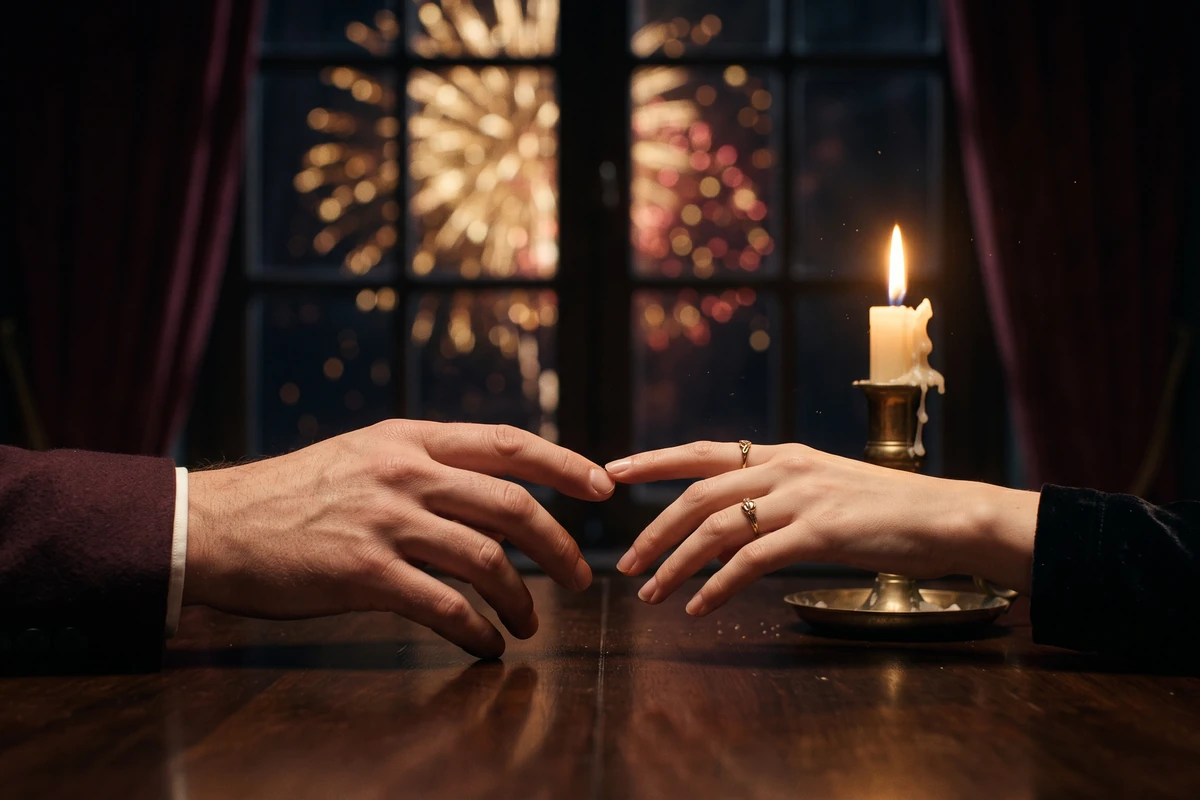
On Bonfire Night, 5 November, fireworks fill the sky over many towns and cities in Britain, and a night built on something bright and a little dangerous is a fitting moment to look at the trope that runs on the same charge. The words “we shouldn’t” turn an ordinary attraction into a question of cost, and readers lean in to see whether the characters will pay it. This guide explains the main kinds of forbidden romance, why the barrier creates tension, how good stories resolve it, and what adult readers should check before they choose a book.
Four common kinds of forbidden
Most forbidden romances fall into a few families. Family and feud stories put lovers on opposite sides of an old quarrel. The classic example is Shakespeare’s Romeo and Juliet, written in the 1590s, in which an old grudge between two households makes a match between their children unthinkable. Workplace stories place the barrier in a job: a boss, a client or a colleague who controls someone’s career and income. Social stories turn on class, status or a relationship that would damage a person’s reputation. Institutional stories set the barrier in a code of rules, such as religious vows, a criminal loyalty or a magical law that forbids the match.
Older stories had this structure long before modern romance. In the story of Cupid and Psyche, as told by the Roman writer Apuleius, Psyche is forbidden to look at her unseen husband, and the rule shapes everything that follows. Perrault’s Bluebeard, published in 1697, turns on a locked room that the bride is told never to open. In both stories the prohibition is the engine of the plot, and the reader keeps asking what will happen when someone breaks it.
Mafia and underworld romances mostly sit in the institutional category, where loyalty to a family, a debt or a power structure makes a relationship dangerous. These barriers are fictional, and the best books treat them as a set of rules that characters can test, bend or break. They are not a recommendation of any real group, and they should never be read as glamorous portraits of crime. The drama comes from the people inside the rules, not from the rules themselves.
You’re on the list. Your free stories are waiting in the Reader Vault. Blood Oath at Midnight
Why a barrier makes attraction louder
A barrier turns every ordinary moment into a decision. A look across a room, a shared drink or a long silence becomes a choice that might cost someone a position, a family or a measure of safety. Readers feel that cost because the characters feel it. A character who is not supposed to want something has to hide the want, and the effort of hiding produces tension on the page. Forbidden romance therefore rewards slow scenes, close observation and dialogue that says less than it means.
The barrier also gives a story a clock. If the relationship cannot continue without consequences, the reader senses that a moment might be the last of its kind. Good writers use that clock sparingly. They let the pressure build through small reversals and near misses, so the tension rises without the book becoming an endless countdown.
Most of all, a barrier reveals character. A rule shows what a person is willing to risk, what they are afraid to lose and whom they protect first. When a character keeps a secret, bends a rule for someone else or walks away from a temptation, the choice tells the reader more than any description could. That is why forbidden romance often works best when the barrier is specific to the people in the story, rather than a general obstacle that could belong to any book.
How stories resolve the forbidden
A forbidden romance has to end the forbidding somehow, and the method matters. A barrier that disappears through coincidence or a convenient death can feel like a cheat. Readers usually respond better when the characters change the situation through their own choices: they confront the person who made the rule, expose the lie that supports it, or decide that the rule was never theirs to keep. The resolution should cost them something, and it should show who they have become.
Three books from Alisson Bento’s list show how differently the barrier can be built. Claiming His Widow begins at a funeral, where a ballerina must look devastated while privately feeling relief that her violent marriage is over. Her brother-in-law, now the new head of the family, watches the mourners closely and sees the strain beneath her performance. The forbidden element is built into family succession and into the question of whose attention is protective and whose is not. The story asks whether either of them can trust the other’s motives, which is a more interesting question than whether attraction is allowed.
Bratva Priest builds its barrier around vows. Maren Solberg travels to an isolated island disguised as a nun, with instructions to study a priest suspected of serving a criminal group. Her false religious identity turns ordinary conversation into a risk, and her target observes her closely. Readers who care about faith should note that this story uses religious office as a disguise and a barrier, which is different from portraying a faith sympathetically. Here the forbidden feeling grows out of deception and suspicion, and much of the opening tension rests on what she can keep hidden from a man who watches so closely.
The Mobster’s Doctor places the barrier in a hospital. A surgeon worn down by debt and long shifts is pulled into a crisis when armed men bring a wounded patient to her emergency department. Her duty to that patient places her in the path of the people who brought him in, and the story’s forbidden element lies in that unavoidable proximity. Here the barrier is a matter of danger and professional responsibility rather than a single rule, so the reader watches a capable woman try to keep everyone around her safe.
Why the forbidden feels so satisfying to read
Part of the pleasure is safety. A forbidden romance lets readers experience the thrill of defying a rule without paying the price, and the story can explore what it would mean to choose against expectation. A character who breaks a family rule or a professional code is tested in ways that a comfortable romance rarely requires, and the reader gets to see the testing from the inside.
Another part is clarity. Real life seldom presents a boundary as neatly as fiction does. In a novel, the rule is named, the consequences are described and the characters must respond. That clarity lets readers think about questions of loyalty, honesty and courage without a long preamble. Forbidden stories tend to feel memorable because their choices are so concentrated.
The best forbidden romances also reward patience. Because the attraction cannot be acted on freely, the reader gets time to understand each character’s history, fears and values before the relationship moves forward. A slow build is not an absence of heat or emotion; it is a way of showing that the characters have reasons for their choices. When you find a book whose barrier and whose characters seem to belong together, the reading experience can be unusually absorbing.
Adult consent and the difference between forbidden and harmful
Every character in these books is an adult, and the appeal of a forbidden romance should rest on choices made by adults who know what they want and what they fear. That is the line adult readers should keep in view. A forbidden relationship can involve danger, rivalry and loyalties that make a choice difficult, and it can still be consensual, respectful and clear. It is different when the barrier is used to justify control, or when one character’s choices are removed for the sake of drama. A story can be dark without making coercion look like romance.
Dark and mafia romance often include captivity, coercion, violence or abusive pasts. Those themes can be part of a well-made story, but they call for content notes. Check whether the blurb mentions violence, abuse, captivity or debts, and whether the story suggests how its characters will handle those issues. A forbidden plot can carry a great deal of tension, but if the tension depends on removing someone’s say, you may find it hard to enjoy the romance that follows. Choosing mafia romance with a capable heroine discusses how a capable heroine changes the balance of a mafia story, which is a useful lens when you read a forbidden plot.
What to check before you choose a forbidden romance
- The barrier. Is it rooted in family, work, faith or a criminal code, and is the rule explained clearly enough that you understand what breaking it would cost?
- The cost. What does each character risk if they choose each other, and does the book show those costs in scenes rather than only in summaries?
- Consent and control. Do both adults keep the power to say no, and does the story respect those refusals when they happen?
- Content notes. Look for violence, captivity, abuse, religious themes and any imbalance of power between the characters.
- The resolution. Does the ending come from choices and changed behaviour, or from a coincidence that removes the barrier without any cost?
A short check like this will not tell you everything about a book, but it will show whether the forbidden element is doing meaningful work in the story. Most disappointing forbidden romances fail on one of these points rather than on the basic idea of the barrier.
How to choose your next read
Which kind of forbidden barrier suits me best?
If you enjoy old quarrels and public loyalties, choose a family or feud story. If you prefer tension inside daily life, a workplace or social barrier may suit you better. If you like rules that carry real consequences, look at institutional settings, where vows, debts or criminal codes shape every decision. Read the first chapter to see which barrier the author treats as central.
How do I know whether the forbidden element is controlling?
Watch the decisions. A healthy forbidden romance keeps both characters making choices, even when those choices are risky. A controlling one lets a character’s options shrink while the story calls the shrinking romantic. If the blurb describes one partner’s power over the other as the main attraction, expect the book to explore that dynamic closely, and check the content notes before you begin.
Is a forbidden romance more intense than other romance?
Not necessarily. The barrier raises the stakes, but intensity comes from the themes and the author’s approach. A forbidden story can be gentle and character-led, or it can be dark and confrontational. Decide what level of intensity you want before you choose, and let the content notes, rather than the trope label, guide that decision.