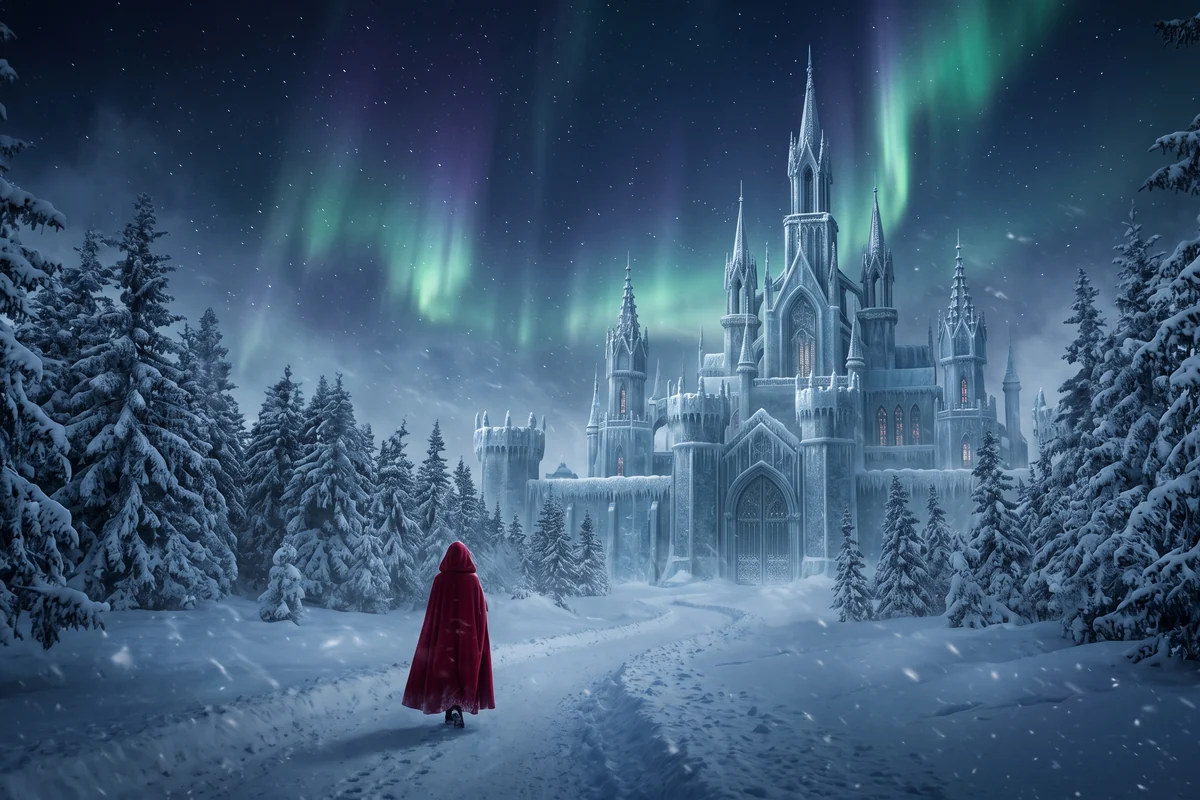
As the first frosts arrive and the nights lengthen, fantasy romance with ice palaces, frost magic and fires lit against the dark comes into its own season. Winter in fantasy is more than scenery, though. Cold shapes how a world eats, travels, governs and falls in love. This guide looks at the motifs that make winter fantasy romance distinctive, what they add to a love story, and how to choose a book whose world suits the mood you want.
The winter motifs readers recognise
Several images recur whenever a fantasy romance is set in the cold. There are ice courts, where glittering walls signal wealth and danger at the same time. There is frost magic, which gives an author a physical way to show power, since it can freeze, bind, preserve or wound, and the cost of using it often falls on the body of the magic-user. There are survival journeys across snow and mountain passes, which test whether two characters can rely on each other once comfort is gone. And there are the long nights, which create a slow, inward rhythm in which people speak more honestly than they would in daylight.
Folklore supplies many of these images with their roots. Hans Christian Andersen’s The Snow Queen, first published in 1844, follows a boy named Kay whose eye and heart are pierced by splinters of a magic mirror, and his friend Gerda, whose warmth and tears reach him and thaw the ice. In Norse myth, Fimbulwinter is the great winter that comes before Ragnarok, a sign that the order of the world is failing. These stories show why cold is so useful to romance. It threatens the body and the heart, and it makes warmth a matter of choice and sacrifice rather than simple comfort.
You’re on the list. Your free stories are waiting in the Reader Vault. The Unchosen Tribute
Why cold sharpens intimacy
Cold is a practical threat, so it sharpens intimacy. A shared blanket, a fire built together or two bodies sheltering in a cave can carry tension without a word about desire. For a romance, the real question is what the warmth means: comfort, obligation, protection, or the first time one character admits to needing the other. The best winter scenes make the physical stakes real. Characters are not simply beautiful in the snow. They are hungry, tired and aware of how little time they have before the weather decides for them.
Survival journeys add a second layer. When two people must cross dangerous country together, every decision about rest, food and shelter becomes a small test of trust. Who keeps watch? Who admits to being injured? Who gives up a warm cloak? These choices often linger longer than the battles, because ordinary needs reveal character so plainly. A journey gives a romance a route, and every stop along it can carry emotional weight.
Fire against ice is one of the genre’s most used pairings, and it works because it sets two temperaments against each other. A fire-hearted hero or heroine may be impulsive, warm and quick to anger, while an ice-touched partner may be careful, withdrawn or disciplined. The pairing is attractive, but it can flatten people into symbols. Look for a book in which heat and cold are habits and wounds rather than costumes: a warmth that is chosen at a cost, and a coldness with a reason the story takes seriously.
Scarcity, famine and failing worlds
Winter in a fantasy world is also about scarcity. Stored food has to last, roads close, and a kingdom that depends on trade can be starved by a blockade long before any army arrives. Some of the strongest picks for this mood use that pressure rather than snow. The Hollow Citadel follows a princess who works beside miners while a pirate blockade keeps iron and food from arriving. A royal summons brings news that the last gold shipment has sunk and that the city’s flour will last three days. The kingdom’s hunger gives the political bargain its urgency, and every choice feels immediate because the stores are nearly empty.
Hunger can also make a rivalry sharper. The Witch and the Winged Lord uses a failing harvest in a similar way. A hedge-witch can hear the suffering of crops through the soil, but a spreading Blight has defeated her treatments and left the village close to starvation. The elders are ready to blame the neighbouring fae forest, while Bryony traces the trouble to poisoned groundwater. The enemies-to-lovers premise is framed by that dispute, and the fear of starvation gives the enemies-to-lovers conflict an edge: a village that cannot afford to be wrong about who is responsible.
Cold as a worldbuilding tool
The strongest winter worlds treat cold as a system rather than a mood. Architecture comes first: thick walls, shuttered windows, hearths placed where they warm the rooms people actually use, or an ice palace whose beauty hides the problem of heating it. Clothing follows, in the form of layers, furs, dyed wool and the cloak a character hands over without comment. Food and fuel matter most of all, because a winter is decided by what was stored in the autumn. A reader who notices a larder, a woodpile or a locked granary is already learning how the people in the story live.
These details also shape romance. A couple who must share one room because the others are unheated has a reason to talk. A character who knows how to mend a torn cloak shows care in a practical way rather than through declarations. Worldbuilding that takes cold seriously gives romance a set of small, believable gestures, and those gestures often do more work than a grand speech. When you read a winter fantasy, notice whether the author has thought about the everyday mechanics of staying alive, because the answers usually reveal character.
Ritual, captivity and the cost of endurance
Cold landscapes are not the only place where hardship shapes a romance. Ritual and captivity can produce a similar sense of isolation. The Void God’s Bride opens on the day of a divine ascendance, when Thaleia Damaris prepares to become an offering to the God of War. A scalding purification bath and a public procession test her endurance before the city, and her semi-divine heritage protects her flesh while she suppresses the impulse to call on colder magic. The book treats obedience as a bodily and public cost, which makes it a strong starting point for readers who enjoy a heroine trapped by expectation.
Captivity is another route to the same kind of pressure. One of the darker picks here, The Prisoner with Ash Wings, begins with a winged prisoner whose petrified wings are so heavy that sitting and eating require careful negotiation with pain. Her memories survive only as fragments of falling, smoke and a red sky, and the warden treats her as a subject of study rather than a person. The smoke-and-ash imagery gives that book a different temperature from a snowbound court, and its emotional question is how to keep small choices alive inside a place designed to remove them. Check the content notes before you begin, because the premise is harsh.
Hospitality, the stranger and the storm
Winter stories often turn on hospitality. A traveller arrives in a storm, a household must decide whether to share its last fire, and the stranger’s presence tests what the household values. Many folk tales use this structure because it compresses character into a single decision: who is let in, who is turned away, and what each choice costs. For a fantasy romance, the arrival of a stranger in winter is a natural opening, because the outsider has to be trusted before the reader knows whether the trust is deserved.
The romance grows from that uneasy welcome. A host who takes in a guest has to notice the guest’s needs, and the guest has to decide what to reveal in return. Some fantasy romances use this to build trust slowly, with small favours and debts that are repaid in kind. Others use it to create a power imbalance: a guest who depends on a host’s goodwill, or a host who holds the guest’s safety in hand. Both can work, but readers should know which dynamic they are getting, especially when a book’s premise involves captivity or bargains.
Choosing a winter fantasy romance
Winter fantasy is often sold on atmosphere, so read past the cover and the title. Look for three things: the world’s pressure (scarcity, war, a blockade or a blight), the source of conflict between the lovers (a political bargain, a rivalry, a ritual or a captivity), and the kind of cold or fire the story actually uses. If a blurb promises an ice palace but the description is all court politics, the book is about power rather than weather. If it promises a survival journey, check whether the romance grows through shared hardship or waits behind the quest.
It also helps to know where a book sits within the wider genre. Romantasy vs fantasy romance: choose the balance you want explains how romantasy differs from fantasy romance, and that difference often shows in how much of a book is world and how much is relationship. High fantasy vs low fantasy romance: choose the world you want to enter compares high and low fantasy, which tells you how much magic and politics to expect in the background. Both distinctions matter more in a winter story, where the setting can feel vast and the characters can seem small against it.
Finally, pay attention to what magic costs. Frost magic and other cold powers often come with a physical or emotional price, and readers who enjoy a magic system with consequences will find that the tension lasts longer. Check whether a book explains its rules or simply shows them through the characters’ bodies. A colder power that a heroine must hold back, or the physical damage that marks a captive, makes the world feel real. Magic that never costs anything can be dazzling, but it rarely gives a romance the same weight.
Do I need a snowy setting to enjoy winter fantasy?
No. Many readers want the mood of the season rather than the snow itself: long nights, scarcity and a sense of endurance. Those qualities can come from a famine, a blockade or a dying land as much as from frost.
How do I tell a meaningful warmth from a label?
Watch what the warmth costs. A fire-hearted character whose warmth is a habit, a wound or a bargain usually carries more emotional weight than one whose heat is only a descriptive tag. Read the sample to see whether the feelings are tested by hardship or simply announced.
Which picks suit a darker mood?
The captive and ritual picks above carry heavier content than the political fantasies. Check the content notes first. If you want more room to breathe, start with the kingdom under blockade or the village with a blight, where the stakes are serious but the emotional tone is more practical.