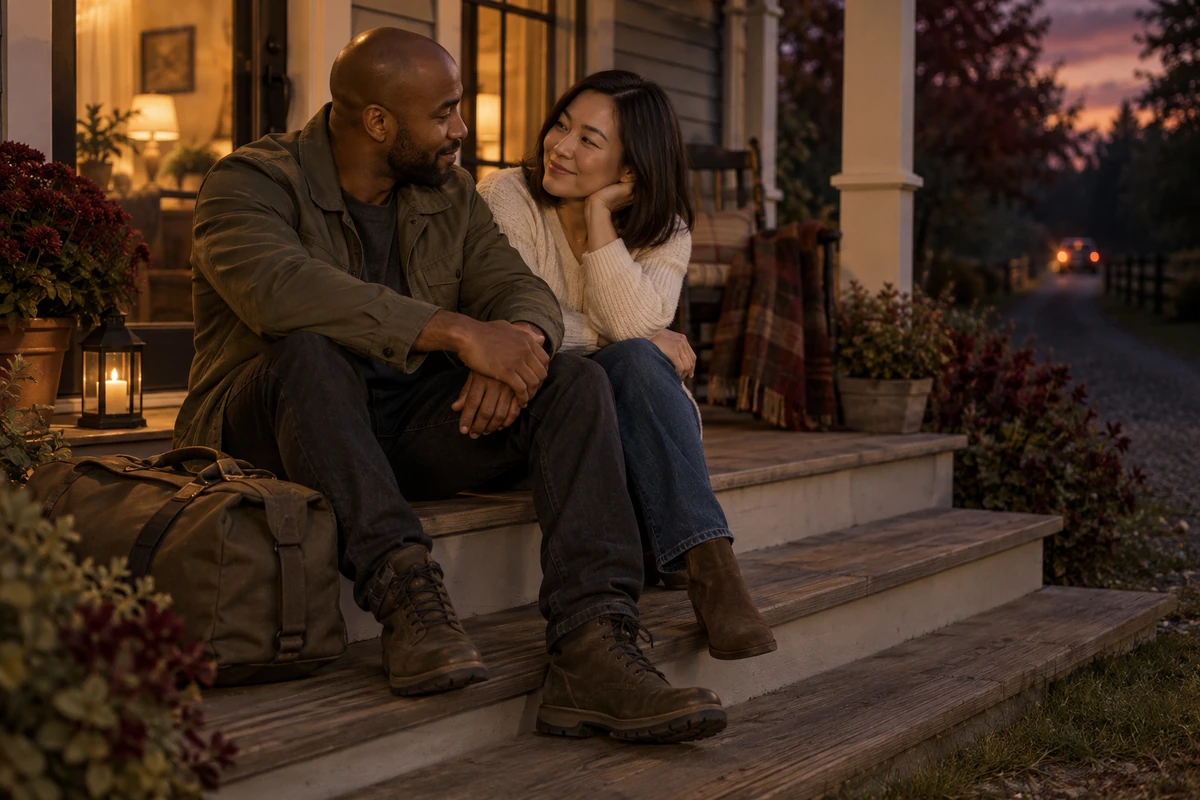
11 November is Remembrance Day in the United Kingdom and across much of the Commonwealth, and Veterans Day in the United States: a day to remember those who died in war and to honour those who served. It is also a fitting moment to look at how military romance treats service, separation and homecoming. The genre can be moving when it is written with care, and careless when it uses service as set dressing for a hero. This guide explains how to tell the difference and how to choose a book that treats service as a human story.
Two observances, one date
Remembrance Day falls on the anniversary of the 1918 Armistice that ended the fighting of the First World War, and in the United Kingdom and much of the Commonwealth it is a time to remember those who died in war and in service. Veterans Day in the United States, also 11 November, honours all who have served in the armed forces. The two observances have different emphases but share a purpose: to recognise a debt that is easy to forget between one anniversary and the next. A romance writer who approaches military life in that spirit tends to write differently from one who sees service mainly as a source of excitement.
In Britain and the Commonwealth the day is marked by red poppies, a symbol taken from the poppies that grew on the battlefields of Flanders and made famous by John McCrae’s 1915 poem In Flanders Fields, and in Britain by a two-minute silence at eleven o’clock. When a novel includes these rituals, they deserve to be written as what they are, acts of mourning and gratitude, rather than as decoration for a romantic scene. A character who stands silently at a memorial, or who wears a poppy for a particular name, can say a great deal without a single line of dialogue.
You’re on the list. Your free stories are waiting in the Reader Vault. The Voice Under the Numbers
Service without glamour
One of the easiest failings in military romance is glamorising. A hero in uniform is a striking figure, and it is tempting to let his competence, his scars and his silence do the work of making him attractive while the cost of his work goes unexamined. Respectful writing keeps that cost in view. It shows what training demands of the body, what being away does to a family, and how the job narrows a person’s choices long before any romance begins. War is not a romantic backdrop, and the best books never treat it as one.
A respectful author also avoids a second trap: turning trauma into a costume. Some stories borrow the outward signs of hurt, such as nightmares, irritability or a dramatic withdrawal, without giving the character a believable inner life. Readers notice when a reaction feels generic. Good writing gives trauma specific causes, specific triggers and a realistic relationship to daily routine, and it is willing to show that recovery takes time rather than resolving in a single kiss.
Deployment, waiting and the partners at home
Much of military life is waiting: for a message to arrive, for a phone call that may or may not connect, for news that is slow to come and sometimes wrong. Partners at home often run households alone during a deployment, handling money, children, repairs and the calendar, while carrying the uncertainty of not knowing where the person they love is. Romance that gives these partners their own voice and competence treats service as something a whole family does, not only the person in uniform.
Respectful stories also remember that separation is real even when it is romantic. A relationship built on letters, short calls and delayed messages has its own intimacy, but it is strained by time zones, rules about communication and the plain fear of missing something important. Bodyguard romance vs a protective hero: when care becomes duty discusses when care becomes duty, which is a useful lens for judging whether a protective hero respects the heroine’s own life as well as her safety.
Homecoming is a long chapter
Homecoming is often treated as the happy ending, but for many people returning from service it is the start of a long period of adjustment. Routines that once held a person together may feel strange. Crowds, noise, sleep and the sudden freedom of unscheduled days can all be difficult. Families must learn who they are now, and both partners may need time, support and honest conversation. The most respectful romance treats homecoming as a process rather than an event, and lets the relationship change alongside the person.
If you read a homecoming romance, look at how the book handles practical detail as well as emotion. Does the hero struggle with sleep, or with being in a room full of strangers? Does the heroine have to renegotiate her own place in the household? Does the story acknowledge that help exists, and that asking for it can be part of love rather than a failure? Books that answer those questions with specificity usually feel more honest than books that rely on a dramatic rescue to settle everything.
Some military romances also deal with people who did not come home: a widowed partner, a friend lost in service, a family that marks the date every year. These stories ask for particular care. Loss should be given a name and a history rather than used as a plot device, and the new relationship should leave room for the person who is gone. If you are drawn to this kind of story but find the subject close to home, check the content notes for bereavement before you begin, and give yourself permission to put the book down.
Friendship and the people who understand
Fiction often recognises the bond between people who served together, and it can honour that bond by giving a character a circle beyond the romance. A friend who understands the jargon, a colleague who checks in without making a fuss, or a group that meets to talk about everyday things can show that the character is not alone. Romance benefits from that circle. A partner does not have to carry every memory, and a character with other relationships looks more whole than one who must be rescued by a single person.
Respectful writing also avoids making the partner the sole cure. A beloved person can offer comfort and patience, but the story is more credible when it shows other sources of support, such as friends, routines, medical care and time. Readers who have lived through similar experiences may notice when a book suggests that love alone solves everything, and are more likely to trust a story that is honest about what love cannot do.
How romantic suspense uses a military background
Military backgrounds appear often in romantic suspense, where a service member’s training can be useful for protecting someone or solving a threat. The appeal is real: skills under pressure, loyalty and a clear code of conduct. Suspense can also turn service into a shortcut to competence, however. The question for a reader is whether the skills serve the story and the people in it, or whether they are used to make violence look clean. Military romance vs romantic suspense: choose the plot behind the service background explains how military romance and romantic suspense differ, which helps you tell whether a book is about service or about a plot that happens to include a uniform.
Fiction also has a responsibility with detail. Invented units, ranks and missions usually serve a story better than claims about real operations, because readers who have served know how easily an inaccurate detail can jar, and because made-up structures keep the focus on the characters rather than on events that real people lived through. A book that presents itself as a fictional world can be rich and specific without implying anything about real people or real operations.
The Marriage Protocol offers a different angle. Its heroine is an interpreter whose seven years of work at embassy receptions depend on preserving every speaker’s words and reading a room’s acoustics, while keeping conversations out of written records. Her skill is professional discipline rather than physical combat, and the suspense grows from what she hears. The military element sits alongside a diplomatic setting, which makes the book a useful example of service beyond the front line.
Frequency of the Heart is a grumpy-and-sunshine military romance built around listening. A linguist is asked to review a degraded military intercept that a captain expects to close as unrecoverable. Beneath the static she hears a deliberate pattern of taps and recognises a voice from four years earlier. The romance grows from a professional disagreement and from grief, and the emotional centre is the possibility that a person’s last attempt to be heard may still be recovered. That gives the story a focus on care for a lost person rather than on spectacle.
Choosing a military romance with care
Begin by asking what the book is about. Is the service a background detail, a source of professional skill, or the emotional centre of the story? Each approach can work, but a reader who wants a homecoming story should not expect a thriller, and a reader who wants a thriller should not expect a long study of adjustment. Check the blurb for the kind of danger involved, and for whether the characters are described as individuals with lives beyond their jobs.
Then look at how the book treats the people who are not in uniform. Partners, children, friends and colleagues show whether the author sees service as something a community carries. Look also at the content notes. Military stories can include combat, injury, loss and psychological strain, and those themes are serious. A book that handles them responsibly does not need graphic detail to be moving, and it lets the consequences of violence weigh on its characters. If a book’s themes are close to your own experience, read the sample first and consider whether it helps you or stirs memories you are not ready to revisit. If service has affected you or someone you love, reputable support services in your country can offer help.
Is a military romance always about war?
No. Many military romances are about the people around a service member, the work that is not combat, or the unusual professional skills that military life develops. An interpreter or a linguist can belong on a military-romance shelf without a battle in sight.
How can I tell whether a book glamorises service?
Look at the cost. A book that shows what training demands, what separation does and how the characters cope afterwards is more likely to treat service with respect. A book in which violence is quick, clean and rewarded without consequence is asking you to admire the spectacle rather than the people.
What should I read on a day like this?
Choose a book that matches the mood you want. If you want to honour service, look for homecoming and partner-focused stories. If you want suspense, pick one that makes its evidence and its people specific. Either way, take a moment to remember the people who served, and the families who waited for them.