
A standalone romance generally resolves its central story in one volume. An interconnected standalone does the same while sharing a setting, cast, or story world with other books. It may make sense without earlier installments, but it can still reveal earlier couples’ outcomes or include background connections you would appreciate more in order.
The decision is therefore not simply series or no series. Ask two separate questions: will this book give me a complete central arc, and what will I gain or lose by entering this shared world here? The answers help you choose a starting point without turning an enjoyable reading choice into homework.
Standalone vs interconnected standalone: completion and connection
A standalone is usually described as a book whose main story can be understood and completed within that volume. In romance, the key concern is often the central relationship: do these adults reach the promised romantic resolution here, or do you need another installment to see their arc finish?
An interconnected standalone adds connections to other books while retaining its own central story. Adult friends, siblings, teammates, neighbors, or colleagues may each become the focus of a different volume. Familiar people return, but a new relationship receives the main attention.
The connections may be light, such as a brief cameo from a previous couple, or substantial, such as a family history that affects several stories. The label does not measure their density. A series can be easy to follow independently while rewarding readers who recognize its recurring details.
Keep completion and connection separate. A book can be complete and connected. It can be largely isolated yet open-ended. A numbered cover, a shared town name, or the presence of recurring characters does not settle whether the central romantic arc ends within its pages.
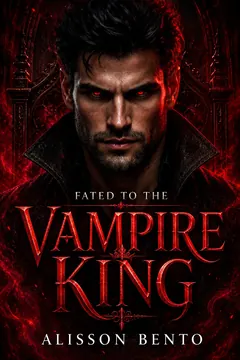
From Alisson Bento’s books
Vampire
A vampire romance about a captive bargain that turns into the only place she wants to be.
Kindle edition · Check Kindle Unlimited availability on Amazon.
What makes a story independently readable?
Independent readability concerns what a new reader needs to understand the current story. The book should establish its central characters, their relationship problem, and relevant background well enough for the main arc to work. Recognizing every returning character is a different level of knowledge.
For example, an invented adult heroine might refer to her brother’s wedding from an earlier volume. If the current story explains that he is married and shows why the occasion matters now, a new reader may understand the scene perfectly well. They do not necessarily need the entire courtship that led to the wedding.
However, understanding the scene does not mean preserving the earlier surprise. Learning that the brother is married may reveal a destination you would rather discover in his own book. That is a spoiler preference, even when it is not a comprehension problem.
Ana Huang’s author FAQ makes this distinction explicitly for her interconnected standalones: earlier books are not necessary for understanding, while reading within a series in order helps avoid spoilers. The general lesson is to ask about independence and spoilers separately, using the relevant author’s note for the book you are considering.
Three story structures that numbered covers can hide
One complete story outside a continuing sequence
An isolated standalone may focus on one adult couple and resolve the central story without requiring any companion book. You can start, finish, and leave that world satisfied. Even here, the label does not by itself identify heat, emotional tone, or every subplot’s treatment.
If you want a single reading commitment, ask whether the book completes its central arc rather than whether the author has written other books. An author may publish many separate standalones. A shared author name is not a continuity requirement.
A new couple in a familiar world
An interconnected standalone often follows a different central couple in each volume. The town, team, workplace, or family creates a recognizable frame. Previous leads may appear as supporting characters while the new leads receive their own problem, development, and resolution.
This structure can suit readers who enjoy returning to a place without staying inside one unfinished romance for several books. It also leaves room for different moods and dynamics within that world. Do not assume every couple’s story has the same viewpoint or intimate detail.
A central arc continuing across volumes
A continuous series or duet may follow the same adult couple through an unresolved romantic arc. Book two can be necessary rather than optional because the first volume leaves their central relationship question open. That is a different reading commitment from a new-couple interconnected standalone.
The same characters can also return after a complete first story, so repetition of a couple’s names is only a clue. Ask whether later material completes the first arc or begins another stage. The actual description of continuity matters more than a number on the cover.
An invented sibling series shows the tradeoff
Imagine a fictional series about three adult siblings who run neighboring businesses. These are invented examples for comparing reading experiences, not real books or descriptions of the site’s catalog.
Book one centers on a sibling who runs a bakery and falls for an adult delivery coordinator. Book two follows another sibling, a florist, and an adult architect. The second book explains its own romantic conflict and resolves it, so a reader starting there can follow the central story.
Yet the bakery couple appears together in the second book, discussing a shared home. You can understand the florist’s romance without reading book one, but you have learned something about the bakery couple’s outcome. If that outcome was part of the surprise you wanted, independent readability has not protected it.
Another recurring detail may work differently: an old family argument shapes the florist’s reaction to help. Book two can explain enough for that reaction to make sense. A reader of book one might recognize more history and feel an additional layer, while a newcomer still understands the current choice.
Finally, suppose a neighborhood redevelopment question continues through all three volumes. Each central romance can resolve while that external thread remains open. A reader wanting every community issue settled may prefer the full sequence. A reader wanting one complete couple’s arc may be satisfied with one book. Both are responding to the same structure with different priorities.
Can you start with book two or three?
Often you can, when the author identifies the book as independently readable. But the useful answer has conditions: how much background is explained, what earlier outcomes appear, and whether any larger arc requires another book. Start with the author or publisher’s description of that particular volume.
If a later book has the relationship dynamic you want most, entering there can be a sensible choice. You may value immediate enjoyment more than preserving every earlier surprise. An established couple appearing in the background can even make you curious about their courtship afterward.
If you dislike knowing outcomes before reading their buildup, start with the recommended beginning. That preference is not an obligation every reader must share. It is simply a reason order matters to you, even when later volumes are technically comprehensible alone.
What if a recommendation says you can start anywhere but also insists you must read in order? Ask what must means. It may refer to comprehension, spoilers, emotional impact, or a personal favorite route. Those reasons have different consequences, and naming them removes the apparent contradiction.
Do prequels, bonus scenes, and spin-offs change the promise?
A prequel happens earlier in the fictional timeline, but that does not automatically make it the best opening. It may assume familiarity, reveal information designed as a later discovery, or offer extra context for established readers. Check whether the author recommends it first instead of treating chronology as instruction.
A bonus scene can extend an already completed romance without being essential to its resolution. It can also contain context you would enjoy. The question is whether the main book finishes its task without that material. Do not assume optional extras are required simply because they exist.
Spin-off is another connection label rather than a completion guarantee. A new series may share a world with an older one, follow a supporting character, or begin in another setting. Ask whether the new entry point explains what you need and whether it exposes significant earlier outcomes.
These details belong to the specific author’s reading guidance. There is no universal rule that all prequels come first or all spin-offs are completely independent. For a broader approach to order, the site’s romance series reading-order guide focuses on following the actual arc and recommended route.
What to check before committing to one volume
You can make a useful decision with a small set of checks. Begin with the central relationship, then check continuity and spoilers. There is no need to read detailed reviews of every book in the universe just to identify whether one story suits your available reading time.
- Arc: Does this volume complete its central romance, or does the same relationship continue unresolved?
- Entry point: Does the author say it can be read independently?
- Spoilers: Will returning characters reveal earlier relationship outcomes or important external events?
- Connections: Is there a larger storyline whose resolution needs other volumes?
- Extras: Are any prequels or companion pieces required, recommended, or simply optional?
Can an interconnected standalone end on a cliffhanger? The label alone is insufficient to decide. Some books complete the romance but leave an external threat or a next-couple teaser. Others are marketed loosely. Ask what remains unresolved. Our cliffhanger guide distinguishes romantic uncertainty from continuing series stakes.
If you are avoiding a multi-volume commitment, use clear wording: I want a complete central romantic arc in this one book, even if other characters have their own stories. If you also want no unresolved external plot, add that. The second condition is stronger and may rule out connected books that otherwise provide a satisfying couple’s story.
Choose your doorway by what you enjoy preserving
Three different priorities can lead to three sensible starting points. A reader who wants to discover every couple in sequence can follow the author’s recommended order. A reader seeking one particular dynamic can choose an independently readable later volume. A reader who dislikes wider unfinished threads can look for an isolated standalone or confirm that the connected volume resolves them too.
Keep a brief note of your own decision if it helps: starting here because this couple interests me, and earlier outcomes are acceptable. Or starting at the beginning because surprises matter. That makes your choice deliberate instead of letting the word standalone do more work than it can.
You do not have to collect every companion story to enjoy a shared world. Nor do you have to jump around just because you are allowed to. Choose the kind of completeness you want, verify the connections that affect it, and enter through the book that offers your preferred experience. Familiar faces are a pleasure when you know what their return will reveal.