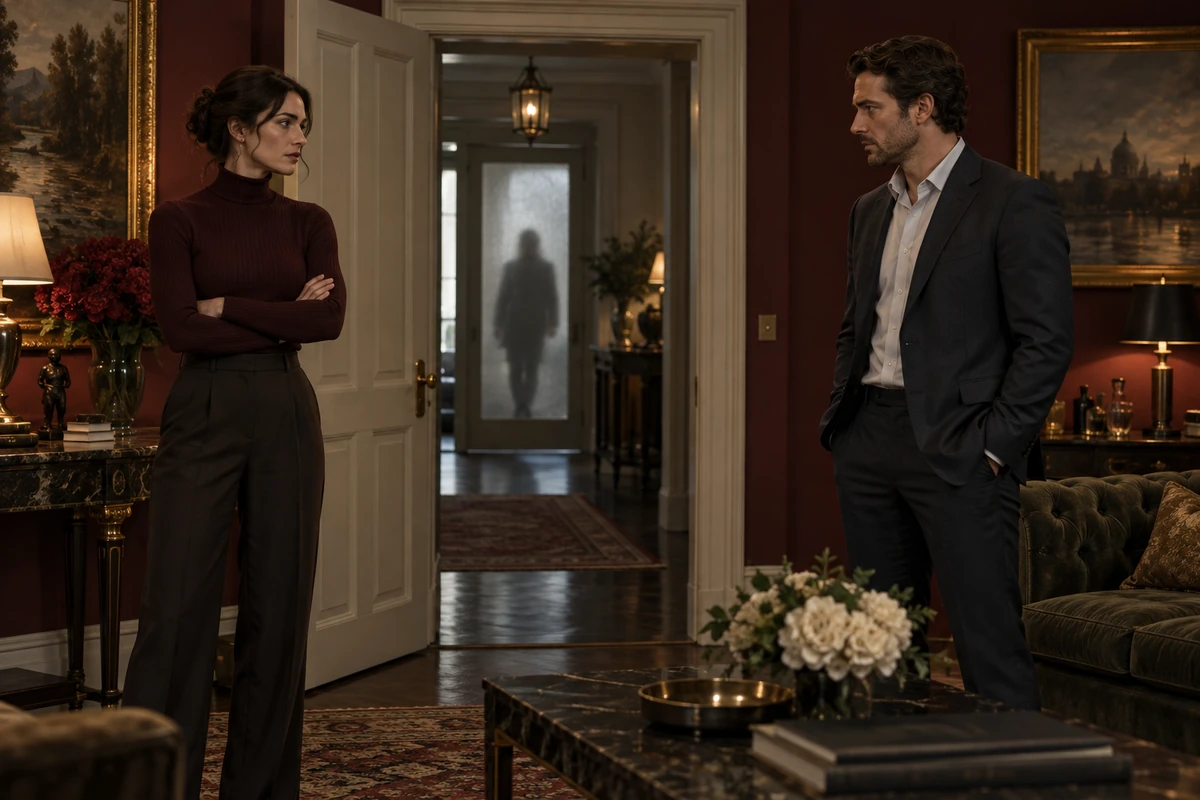
For readers experiencing northern autumn in late October, darker, moodier stories can suit the season. But dark romance itself spans two distinct traditions that feel fundamentally different, even though both use possessive heroes, high stakes and forbidden attraction. Gothic dark romance—rooted in atmosphere, isolation and dread—differs sharply from modern dark romance, which anchors itself in contemporary criminal worlds, taboo power dynamics and danger that feels immediate rather than whispered. Understanding the gap between them helps you choose the emotional experience you actually want this season.
What dread does differently from danger
Dread and danger are not the same emotion, and the two romance subgenres rely on different ones. Gothic dark romance builds on dread: the slow recognition that something is wrong with the world itself, or with the isolated space you occupy within it. You feel watched. The weather turns hostile. Doors lock for reasons the heroine cannot fully understand. Dread accumulates gradually, like fog rolling across moorland at twilight—you sense the threat before you can name it. The question driving the plot is often “What is happening here?” rather than “Will I survive?”
Modern dark romance, by contrast, opens with danger already visible. The criminal underworld is real. The possessive hero’s power is concrete and acknowledged. The heroine knows the threat; she has chosen to enter it, or been forced into it with her eyes open. Modern dark romance asks “How will I navigate this?” or “Can I trust him?” The tension comes from present, named peril rather than atmospheric unease. A reader choosing modern dark romance wants to feel the electricity of walking through an active criminal empire; a reader choosing gothic dark romance wants to feel the creeping unease of a decaying manor where the servants speak in riddles.
You’re on the list. Your free stories are waiting in the Reader Vault. Every Letter a Sin
Setting signals: how landscape and weather tell you which tradition you are reading
Setting is the fastest way to identify which subgenre you are entering. Gothic dark romance almost always positions the heroine in a remote, enclosed or historically layered space: a manor on the moors, a village accessible only by boat during winter, a castle with sealed wings, an old university town where fog never fully lifts. The physical environment itself becomes a character—it has moods, secrets, a weight of history. Weather is unpredictable and often hostile; storms trap characters inside, and seasons shift with narrative tension. The space itself resists the heroine’s freedom; windows overlook cliffs, gardens lead in circles, servants bar doors without explanation.
Modern dark romance typically unfolds in recognizable contemporary cities or urban sprawls: penthouse apartments, nightclubs, corporate headquarters, cartel safehouses, intelligence agency bunkers. The heroine knows where she is geographically, but she may not know the invisible power structures controlling that space. A nightclub is a real place with functioning exits, but the men inside operate according to rules she has not learned. An office building stands in downtown Manhattan, but the executive floor’s sealed elevators and privacy glass create a private world within public space. Modern dark romance does not hide its setting; it hides the social rules governing it.
Pay attention to the opening pages. If the heroine is struggling to understand the geography itself—”Which corridor leads to the exit? Why are there so many locked doors?”—you are likely reading gothic dark romance. If she understands the geography but does not understand the power hierarchy—”I know this is a cartel safehouse, but I do not know what role I am meant to play”—you are reading modern dark romance.
Hero archetypes in each tradition
Both subgenres feature possessive, controlling heroes, but they embody different mythic archetypes. Gothic dark romance heroes often carry elements of the supernatural or the mysteriously unknowable: the aristocrat with secrets in his bloodline, the man who may or may not be trustworthy because his motives remain obscure, the figure whose power is old and atmospheric rather than newly acquired. He may own the manor, but you cannot quite understand how he maintains it. He may appear human, but something about him does not quite fit human social rules. His possessiveness often feels like a curse rather than a choice—as though he cannot release her even if he wanted to.
Modern dark romance heroes are typically men who have chosen their position within a criminal or corporate hierarchy: the cartel leader who built his empire through ruthlessness, the CEO who maintains control through technology and leverage, the syndicate member who operates according to explicit power dynamics. Their possessiveness is a deliberate choice rooted in their worldview—she is valuable to them, and they do not give up valuable things. Modern dark romance heroes often explain their logic, even when that logic is disturbing. Gothic dark romance heroes frequently leave their logic unspoken, forcing the heroine to interpret their behavior through observation and guesswork.
Consider The CEO’s Cage: the hero’s control is technological, immediate and explicitly enforced through building systems he owns and understands. The captivity is not mysterious; it is precisely calculated. By contrast, a gothic dark romance hero might control the heroine through the house itself—through servant networks, through rumors among villagers, through the weather that prevents departure—and she would never be certain whether his control is supernatural or simply old-fashioned cruelty leveraging geography.
Heroine agency and the question of choice
Both subgenres complicate the heroine’s agency, but in different directions. In gothic dark romance, the heroine often lacks information. She does not understand the rules of the world she occupies, so her agency is constrained by knowledge gaps. She may choose to explore a forbidden room, but she does not know what she will find. She may choose to trust a servant, but she does not know whether that servant is loyal to her or to the master. Her choices are real, but they are made under fog—she is deciding without seeing clearly. This can feel like her agency is present but limited by her own uncertainty.
In modern dark romance, the heroine usually understands the rules; the constraint on her agency is power imbalance rather than information gap. She knows the hero is dangerous. She may know he will not let her leave. She may choose to negotiate, to appear compliant while planning escape, to seduce him to lower his guard, to leverage secrets she discovers. Her agency is exercised within a system of overt constraint. This can feel like her agency is sharper and more tactical, even though she has fewer practical freedoms.
When you are choosing between the two subgenres, ask yourself: do you want the heroine to be struggling against unknown forces (gothic), or do you want her to be strategizing against known forces (modern)? The emotional texture of her agency differs significantly.
How consent is written in each tradition
Consent in gothic dark romance is often written through ambiguity and gradual revelation. Early scenes may feel coercive—the heroine is isolated, instructed, moved through the narrative without her permission—but the reader (and sometimes the heroine) gradually understands that consent operates on a different timeline or according to different signals. A gothic dark romance might open with what reads like captivity but resolves into a situation where the heroine always had exits she did not recognize. The hero’s possessiveness is clarified as connection, or the environment’s hostility is revealed to be protective. Consent becomes retroactive; what felt like coercion is recontextualized as safety once the heroine understands the true threat.
Modern dark romance typically handles consent more directly within the framework of power imbalance. The heroine may not consent to captivity, but the romance is built on her consent to the sexual and emotional connection despite (or because of) her captivity. Alternatively, modern dark romance often features scenarios where the heroine consents to entering dangerous situations with full knowledge—she accepts the criminal premise, the possessiveness, the restricted freedom as the cost of what she wants from the hero or what she stands to gain. Consent is contemporaneous rather than retroactive; she is saying yes to the situation as it actually is.
Both approaches require careful reading of content notes. Dark romance content warnings without major spoilers: a practical reading check offers a method for understanding dark romance content warnings without major spoilers. Always check what the book promises about consent mechanics before you read; the difference between “she is coerced into captivity, which is later recontextualized” (often gothic) and “she knowingly enters a captive situation” (often modern) fundamentally changes the emotional experience.
Pacing and chapter rhythm in atmosphere versus action
Gothic dark romance typically uses longer, slower pacing to accumulate dread. Chapters may circle around the same location—the manor, the village—observing it from different angles, with each observation adding a layer of unease. A scene might spend eight pages on the heroine noticing small wrongnesses: a portrait’s eyes seem to follow her, the household staff knows things they should not know, her locked door opens from the inside but locks from the outside. Tension builds through repetition and observation rather than plot acceleration. The rhythm mirrors the experience of dread, which compounds through small recognitions rather than through sudden shocks.
Modern dark romance typically uses shorter chapters and faster escalation. Stakes rise quickly. The heroine encounters concrete obstacles, makes tactical decisions, faces immediate consequences. A chapter might open with her discovering a piece of information and close with the hero’s response to that discovery. The pacing reflects danger that demands quick reactions. Where gothic dark romance asks you to sit with unease, modern dark romance pulls you through action.
If you want to read more slowly, contemplatively, sitting with atmosphere and small wrongnesses accumulating, gothic dark romance delivers that experience. If you want narrative momentum, tactical problems and quick responses, modern dark romance moves at that speed.
Reading content notes as a roadmap to the book’s actual mood
Content notes for dark romance can initially seem overwhelming because dark romance as a category addresses many serious themes: captivity, possessiveness, power imbalance, dubious consent mechanics, violence, criminal activity. The same note—”captivity”—can describe a gothic dark romance where a heroine discovers the locked doors were always open, or a modern dark romance where she is literally imprisoned. The same note—”possessive hero”—can describe atmospheric dread or contemporary danger. Content notes are not mood indicators; they are category warnings.
To use content notes effectively, read the full note description rather than just the category header. A book might note “captive romance: heroine is restricted from leaving the compound during winter; she cannot contact outsiders; she cannot access the road. Gradual trust and discovery of external threat recontextualizes her restriction.” That description signals gothic dark romance mechanics. Another book might note “captive romance: heroine is deliberately imprisoned by hero; captivity is acknowledged throughout; she negotiates within constraints.” That signals modern dark romance. The content is the same category; the consent and emotional framing are different.
When you encounter a content note that concerns you, look for clarifying language: “coercion that is later explained,” “power imbalance with negotiated boundaries,” “restriction with gradual trust,” “captivity with acknowledged agency.” These refinements help you understand not just what happens, but how the book frames it.
Three chapters: a sample-reading method to identify the subgenre
If you are still uncertain after reading the cover copy and content notes, read the first three chapters with one question in focus: “Do I understand the rules of this world?” In gothic dark romance, the answer to that question should be no, or only partially. The heroine is observing behavior she cannot fully decode. Characters make references to things she does not understand. The environment itself seems to operate according to logic she has not grasped. That opacity is the heart of the subgenre.
In modern dark romance, you should be able to identify the power structure clearly by the end of chapter three. You may not know the hero’s exact intentions, but you understand the hierarchy: she is subordinate, he is in control, there are specific rules governing behavior, and she is aware of them even if she resents them. The questions driving the plot are “What will she do?” and “Will she trust him?” rather than “What is actually happening?”
Try this with Neural Obsession and The Bratva’s Target. Both feature heroines in immediate danger with controlling men, but Neural Obsession opens in a cyberpunk world with explicit power structures—syndicates, data theft, neural implants—where rules are named immediately. The Bratva’s Target opens with a heroine in witness protection on a remote ranch with specific (if restrictive) instructions, but the world’s rules and the men’s intentions unfold more gradually. Reading three chapters will clarify which emotional experience each offers.
Mood matching: choosing the autumn dark romance that suits you now
Both subgenres belong in late autumn reading. Both feature obsessive heroes, high emotional stakes, and atmospheres that grow darker as the season progresses. The choice between them is not about which is “better”—it is about which emotional texture matches what you want to experience.
Choose gothic dark romance if you want to feel atmospheric dread, if you enjoy slowly accumulating unease, if you like heroines who are strategizing against unknowns, if you want a slower page-turn and time to sit with what characters are not saying. Gothic dark romance pairs well with actual autumn weather—reading it while rain hammers outside creates resonance between the text and your physical experience.
Choose modern dark romance if you want narrative momentum, if you prefer power dynamics that are explicitly named, if you enjoy heroines making tactical choices within clear constraints, if you want to feel the electricity of criminal intrigue or high-stakes corporate danger. Modern dark romance delivers the thrill of watching someone navigate a world she understands intellectually even as it challenges her emotionally.
You might also read both. Many readers move between atmospheric dread and tactical tension depending on their daily energy level—gothic dark romance for contemplative autumn evenings, modern dark romance for days when you want your tension concentrated and immediate. The subgenres are distinct enough that alternating between them offers real variety.
Building your autumn dark romance shelf
Once you have identified which subgenre (or both) appeals to you, check Dark romance vs romantic suspense: follow the source of danger for the boundary between dark romance and romantic suspense—that guide clarifies which subgenre emphasizes the heroine’s relationship versus which emphasizes external danger. If heroine agency matters deeply to your reading experience, Dark romance heroine agency: choices that matter beside a powerful hero explores how agency operates in dark romance across different scenarios.
For a concrete starting point within modern dark romance, The CEO’s Cage offers a contemporary captive scenario with explicit power mechanics and corporate intrigue. Frozen Bounds combines modern dark romance with military and intelligence-world settings where heroine agency centers on her analytical skills deployed against systemic corruption. Secrets in the Oasis pairs modern dark romance with the isolation of a desert compound, giving you some atmospheric texture within a contemporary framework. The Cartel’s Obsession uses a nightclub setting to explore how possessive attention operates in a criminal underworld where the heroine’s performance career intersects with cartel power.
Late October invites you toward darker stories and moodier reading. Now that you can distinguish between the subgenres, you can choose the specific darkness that will deepen your autumn—whether that is atmospheric, uncertain, and slowly building, or immediate, explicit, and strategically urgent.