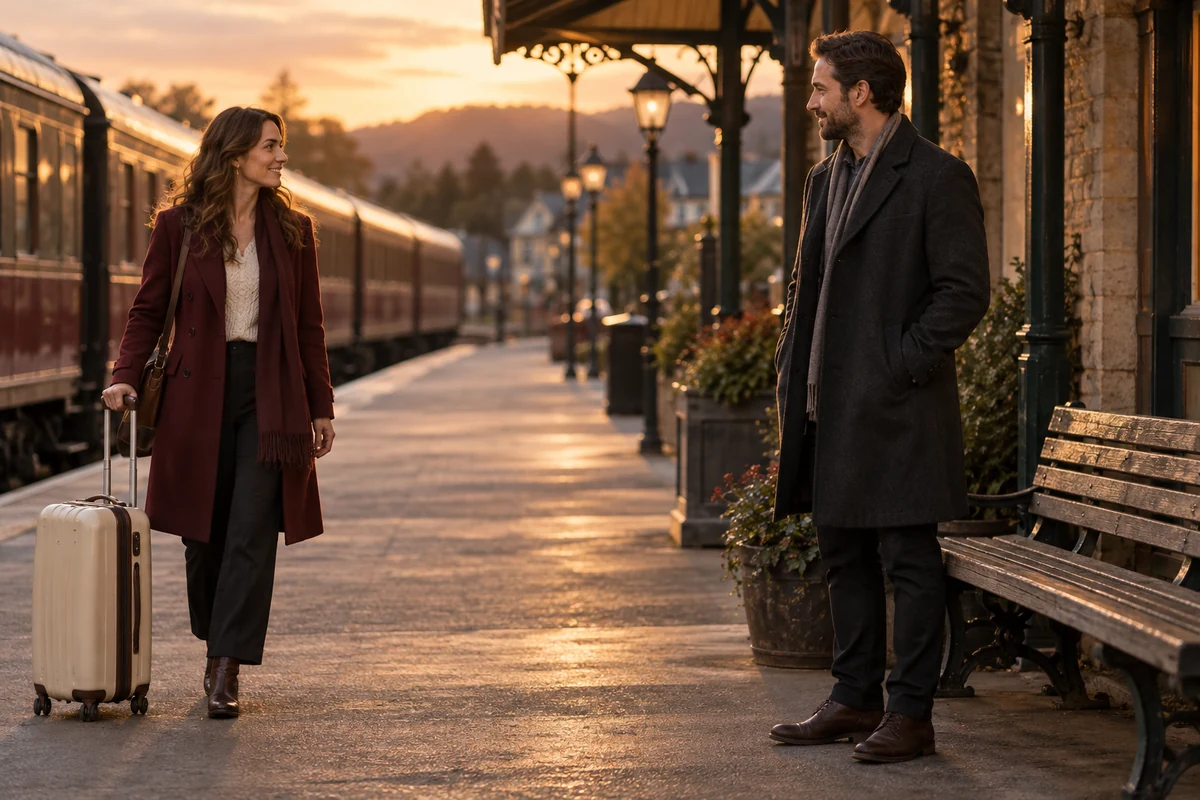
As US Thanksgiving approaches on November 26, many readers turn to stories about returning home. But not all homecomings are the same. A holiday reunion between two people who knew each other differs fundamentally from a second-chance romance—and understanding that difference helps you choose the right book for the emotional journey you want. One story is about meeting someone again after years apart; the other is about repairing what broke between two people who already loved or hurt each other. The distinction shapes everything: the weight of memory, the nature of accountability, and what “coming home” actually means.
Reunion versus restart: the core difference
A reunion romance often begins when two people cross paths again after time apart. They may have been close once—friends, brief lovers, people who mattered—but separation has created distance. The reunion itself is the catalyst. In contrast, a second-chance romance starts from a place where something ended badly, was left unfinished, or broke under pressure. The second chance is not just about seeing each other again; it is about the possibility of doing something differently this time.
The emotional texture differs sharply. A reunion can carry nostalgia, curiosity, and the pleasure of rediscovery. A second chance carries weight: regret, unresolved hurt, the fear that history will repeat. When you read a reunion story, you are often asking, “What could happen between us now?” In a second-chance story, you are often asking, “Can we fix what broke, or forgive what happened?” One is open-ended possibility; the other is active repair.
Consider A Cowboy’s Way Home. Beck Calhoun returns to Cedar Gulch after a decade away, and his family still carries the marks of what he left unfinished: his mother’s death, a bridge wreck that injured his brother Wyatt, and his father’s condemnation. Beck has spent ten years running. His return is forced by emergency—his father’s stroke—not by reconciliation. This is second-chance territory: he cannot simply slip back into the role he abandoned. He must confront the people whose lives continued without him and the damage his departure left behind. The book’s emotional work is not about discovering who Beck has become; it is about whether he can face what his family has borne and whether they can move forward together.
You’re on the list. Your free stories are waiting in the Reader Vault. The Taste of a Lie
Shared history as evidence and burden
Shared history is the spine of both reunion and second-chance romance, but it functions differently in each. In a reunion, shared history is background—pleasant or bittersweet memory that flavors the present. In a second-chance story, shared history is active evidence. It explains why trust is hard now, why certain words sting, and what needs to change before reconciliation is possible.
A second-chance romance cannot ignore what happened before. If one person left and the other stayed, that asymmetry matters. If a promise was broken, if choices were made that harmed someone, if grief or fear drove people apart, those facts remain part of the landscape. The second chance is not a restart; it is a continuation that requires acknowledgment.
In A Recipe for Forever, Caroline left Magnolia Creek at eighteen and has built a demanding pastry career in New York. When her grandmother’s death brings her home, she discovers that the tea room Mabel left behind is burdened by a leaking roof and a bank note that a developer sees as an opportunity. Wyatt, now a single father raising Daisy, has been quietly repairing the building and knows Mabel’s worries better than Callie did. More significantly, Wyatt represents the past Callie left behind: a disappointment she has never forgotten. Her return home is not a simple homecoming. It requires her to reckon with the cost of her absence to people who stayed, to grieve Mabel in a place where that grief is collective, and to face Wyatt with the knowledge that her leaving shaped his life too. The shared history is not sentimental backdrop; it is the reason why reconnection is complicated.
Accountability and the work of change
Second-chance romance often demands that someone take responsibility for what went wrong. This is where it diverges most sharply from a simple reunion. In a reunion, both people may be equally curious and equally free to start fresh. In a second-chance story, one person may need to apologize, explain, or prove they have changed. That asymmetry is painful and necessary.
Change is central to second-chance romance because the reason the first relationship ended or stalled still exists unless something has shifted. The heroine or hero cannot come home and pretend the past never happened. They must show, through action and choice, that they are different now—or that the circumstances that broke them apart have changed enough to matter. This might mean years of therapy, a new career path, a decision to stay put rather than run, or the willingness to be vulnerable with people who have hurt them before.
Sunset at Walker Ranch opens with June returning from Seattle to Bitter Creek, Montana, where her father’s veterinary clinic is in disrepair and her father himself is confused and struggling. Her years away are immediately visible as absence: unpaid obligations, neglected treatment rooms, and Arthur’s deterioration. Across the property line, Nash Walker has been maintaining the fence alone, and he still carries anger about June’s departure ten years earlier. Her return is not welcomed as a reunion; it is met with the weight of what her absence cost. June’s second chance requires her to take on her father’s care, to understand the veterinary clinic not as a place she escaped but as a responsibility she abandoned, and to face Nash with the knowledge that her leaving was part of what wounded him. Change, in this story, is not a feeling; it is the concrete choice to stay and do the work.
Hometown memory versus present-day reality
Readers of second-chance romance often find a sharp gap between how the protagonist remembers home and what home actually is. Memory is selective and shaped by the age at which someone left. Home as an adult returning is different: the town may be smaller or more tired, the people may have aged, businesses may have closed, and the reasons someone left may feel less urgent now. That collision between memory and reality is the emotional territory of second-chance stories.
In a reunion, memory can be more playful. Two people remember each other and rediscover what they enjoyed. In a second-chance story, memory is often painful because it reveals how much time has passed and how much has changed for everyone else. The protagonist has been growing and changing elsewhere while the people at home have been living their own lives, facing their own losses and challenges. Coming home means seeing that you are not the same person you were, and neither is anyone else.
The Pilot and Her Cowboys brings Taryn back to Crosswind Ranch on a six-week contract to teach aerial support and emergency flight procedures. The work has clear boundaries and a fixed end date, which makes it feel like a temporary return. But Crosswind is not the same place she left, and neither is she. The ranch now includes rescue horses and a veterinary clinic. The three men—Gavin, Mason, and Jonah—remember the woman who left without resolving their connection to her. Taryn’s military flying has given her skills the project needs, but it has also changed how she relates to risk, to staying put, and to people who know her history. Her return is practical and professional on the surface, but every encounter surfaces the gap between the person she was and the person she has become.
Evidence of genuine change
In second-chance romance, readers look for concrete evidence that change is real. This is not about grand declarations or sudden emotional insights. It is about observable shifts: someone making a hard choice that costs them something, showing up consistently when they used to run, listening when they used to defend, or taking action that prioritizes someone else’s need over their own comfort.
Change might be external—a person staying in one place, taking a new job, or committing to regular presence. It might be internal—grief processed, therapy attended, assumptions questioned. Often it is both. Readers trust change that has a cost. If a character simply decides to be different and nothing in their life reflects that decision, the second chance feels hollow. But if staying means giving up something the character wanted, or facing people who have every reason not to forgive them, or doing unglamorous work day after day, that change becomes credible.
In A Cowboy’s Way Home, Beck’s change is visible in small choices: answering Charlie’s call about Jed’s collapse and driving toward the hospital instead of away, staying present when every instinct tells him to leave, and letting the emergency cut through his plan to leave after one drink. These are not dramatic gestures. They are the opposite—the quiet, painful choice to stay and face what he has avoided for a decade. The book’s emotional work tracks whether Beck can sustain this choice and whether his family can believe that this time is different.
Nostalgia as a trap
Nostalgia is seductive in both reunion and second-chance romance, but it functions as a warning in second-chance stories. Nostalgia is the feeling that the past was simpler, better, or more complete than it actually was. In a second-chance story, nostalgia can be the thing that pulls people backward instead of forward.
When someone returns home and feels a rush of remembered emotion—a favorite meal, a place where they spent hours, a person who knew them intimately—nostalgia can make them believe that the past relationship or place is still as it was. It is not. The other person has changed, the town has changed, the reasons the first relationship ended are still present unless something has actively shifted. Second-chance romance that ends well often requires the protagonist to grieve the past—to acknowledge that it was important but cannot be recreated—and to choose the present-day version of people and places instead.
The House With Two Gardens opens with Marina entering a quiet old house in early fall and inventorying what previous lives have left behind. Empty shelves, worn enamel, letters, and small kitchen details trigger memories of her mother. The obligation is practical—maintain the garden for one year—but the emotional work is about the temptation of nostalgia. The house holds memory. The hedge divides formal grounds from a wilder half, suggesting that some parts of the past are ordered and some are untended. Marina’s second chance is not about returning to her mother’s life or her own childhood. It is about moving through the house and grounds, doing the work that is in front of her, and allowing that physical presence to reshape her relationship to loss and to the possibility of beginning again.
Present-day choices and the decision to stay
One of the defining features of second-chance romance is that the protagonist often has to choose, actively and repeatedly, to stay. In a reunion, staying might be pleasant or feel natural. In a second-chance story, staying is often a choice that contradicts earlier patterns or requires giving up something else.
This choice is rarely made once and settled. It is made again and again: the choice to show up to a difficult conversation, to keep working on the property or the relationship, to be present for someone’s grief or challenge, to accept help or offer it when vulnerability is required. Each choice is a small second chance, a moment where the protagonist could leave or retreat or protect themselves and instead moves toward. Readers of second-chance romance are often reading to see whether someone can sustain this choice across time.
The decision to stay takes different forms. It might be staying in a small town when the character spent years building a career elsewhere. It might be staying present in a family that hurt them. It might be staying with a house or a property that represents obligation and grief. It might be staying engaged in a rescue project that reconnects them to people they once loved. In each case, the character is making a daily or weekly choice to remain, to work, to show up.
Distinguishing reunion from second chance: a practical checklist
When you are deciding between reunion and second-chance romance, consider these markers. A reunion-focused story typically features two people who have pleasant or neutral shared history and whose separation was not marked by conflict or broken promises. They meet again and discover that the spark between them is still there. The past is happy memory, and the present is about possibility.
A second-chance romance typically features at least one character who left or who was hurt by the other’s actions. There is a reason the relationship ended or stalled—betrayal, abandonment, circumstance that proved too hard, or simply time that created distance and difficulty. The return is complicated by that history. Someone has to take responsibility, change, or both. The present-day relationship cannot exist without addressing what happened before.
Ask yourself: Is the separation explained as bad luck or circumstance, or as a choice one person made that affected the other? Does the story acknowledge that someone was hurt, wronged, or disappointed? Is there a reason why the two people could not simply drift along as they are? Does the return home require one character to take on responsibility they avoided before, or to face people who suffered their absence?
If the story hinges on apology, accountability, or the concrete choice to stay and do difficult work, you are reading second-chance romance. If the story hinges on rediscovery, the pleasure of recognizing someone you liked, and the opening of new possibilities, you are reading reunion romance. Both are valuable. Knowing which one you are picking helps you settle into the emotional experience the story offers.
The role of place in returning
In second-chance romance, place often carries as much weight as the human relationships. Coming home means returning to a landscape that has been lived in by others, that holds memory and practical problems. A house that needs repair, a business that has declined, a town that has changed, a property threatened by development—these are not just backdrop. They are part of what makes the second chance necessary and what shapes whether it is possible.
Place holds evidence of time. It shows what happened while the protagonist was away. The overgrown garden, the neglected clinic, the deteriorating ranch building, the leaking roof—these are not metaphors for emotional neglect, though they often reflect it. They are practical problems that require work, attention, and usually money and skill the returning character has to draw on.
Readers often find that the emotional and practical work of a second-chance story are inseparable. The protagonist returns home and must immediately face the cost of their absence: a parent in declining health, a family business in trouble, a property that requires intervention. That practical work becomes the container for emotional work. Showing up to repair something, to care for someone, to maintain a place—these actions prove that the second chance is real.
Why second-chance stories resonate at homecoming time
Second-chance romance finds readers during the season of return. Thanksgiving travel, the shift toward winter, and the calendar’s approach to the new year all prompt reflection on home, family, and the passage of time. People who have moved away often feel the pull of Thanksgiving—the obligation and desire to return to the place where their family of origin still gathers.
Second-chance romance speaks to that complexity. It does not pretend that returning home is simple or entirely joyful. It acknowledges that going home means confronting people whose lives continued without you, facing the cost of your absence, and choosing again whether you belong there. It honors the difficulty of staying when staying is hard, and it validates the weight of memory and responsibility that comes with family and place.
These stories ask: Can we do this differently this time? Can we take responsibility for what happened? Can we stay present even when it is uncomfortable? Can we choose each other—or choose home, or choose the people we left behind—knowing what we know now? Those questions resonate deeply as the year turns and people consider what they want to carry forward and what they are ready to address.
Books to explore second-chance reunion and return
If you want to sit with the emotional territory of second-chance return, A Cowboy’s Way Home offers a portrait of a man forced by emergency to confront his family and the work he abandoned. A Recipe for Forever places grief and inheritance alongside unfinished personal history, letting practical responsibility and emotional repair unfold in a small-town tea room. For a story where returning home means taking on property and caretaking alongside complicated reunion, Sunset at Walker Ranch tracks June’s negotiation between her father’s needs and her own second chance with Nash.
Each of these stories treats return as something that requires sustained choice and offers readers the chance to witness characters facing what they have avoided and deciding—day by day—to stay. That is the heart of second-chance romance: not the moment of return, but everything that comes after.