To check dark romance content notes without major spoilers, decide which subjects you need screened and how much detail you want. Start with author or publisher notes, then ask narrow questions about any gaps: whether a subject appears, whether it is directly depicted, and whether it involves the romantic leads. You can often learn enough to choose a book without learning the twist, although no approach can promise zero spoilers.
The aim is useful information for your next read. You do not need to explain why a topic matters, prove that your limits are reasonable, or read an entire plot summary. A specific request usually produces a more useful answer than “Is this book really dark?” because readers use that description for many different experiences.
Decide what counts as a spoiler for you
Some readers consider any mention of a future event a spoiler. Others are comfortable knowing a subject appears as long as identities, timing, and outcomes remain hidden. Before opening a detailed warning page, decide where you sit for this particular book.
You might accept knowing that confinement occurs but not want to know who causes it. You might need to know whether a pet dies, even if that answer reveals an event. Another reader might want a full explanation of every difficult scene. These are different information preferences, not competing levels of courage.
Can content warnings be completely spoiler-free?
Not always. Identifying a subject can reveal that the book contains something you would otherwise discover later. However, a note can withhold the surrounding circumstances. The practical compromise is to request the minimum information needed for your decision, rather than treating all detail as equally revealing.
If even a broad subject label is more than you want to know, let someone else screen it against a short list of your boundaries. They can tell you whether the book fits without naming every item. This works best when you agree beforehand what “fits” means.
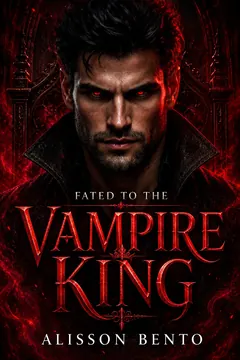
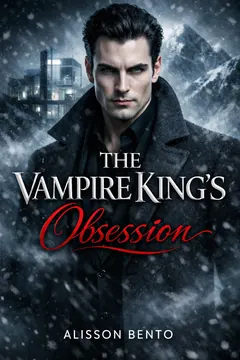
From Alisson Bento’s books
Dark Romance
A vampire romance about a captive bargain that turns into the only place she wants to be.
Kindle edition · Check Kindle Unlimited availability on Amazon.
Make a short reading-boundary list before searching
Begin with subjects you need to avoid or understand more clearly. Keep preferences about heat, pace, and ending on a separate line; those can matter just as much to choosing the book, but they are not answers to content questions.
For each sensitive subject, decide which versions matter. Perhaps you want to avoid an event shown in detail but are comfortable with a brief reference. Perhaps you care whether it affects a main character or appears anywhere. You can also decide that all forms are outside your current reading preference.
- Subject: What exact theme or event do you want checked?
- Presentation: Is a mention acceptable, while direct depiction is not?
- Scope: Does it matter who is affected or whether the romantic leads are involved?
- Answer format: Do you want yes/no, a broad category, or a fuller explanation?
Keep the list as brief as your needs allow. “No direct depiction of confinement; backstory references are fine” gives the person checking something concrete to assess. “Nothing upsetting” leaves them guessing what your experience will be.
Do you have to share a personal reason?
No. “Please check for this subject” is enough. You can state a reading preference without describing your history. If someone needs clarification, it should concern the requested content or level of detail rather than your justification for asking.
Where should you look for dark romance content notes?
Start with the exact book’s author or publisher page and any notes included with the edition you intend to read. Look for labels such as content warnings, content notes, trigger warnings, reader advisory, or a note from the author. Placement and wording vary, so do not assume one label or location covers every book.
Check the title carefully, especially with similarly named books or a series. A general catalog statement may describe recurring themes without identifying which appear in one volume. A book-specific list is usually more useful for a specific boundary question, but it can still leave details unclear.
As one example of different levels of information, Cara Hollis’s content-warning page separates general catalog notes from title-specific sections and explains that the latter may disclose plot elements. That is a concrete format you may encounter, not a universal practice or a guarantee that every title has completed notes.
What if the book sends you to a website?
Use the author’s stated destination and find the precise title there. Avoid reading neighboring books’ notes if they concern events later in the same series. If the page contains a broad warning and a separate detailed section, start with the broad layer before choosing whether to continue.
Read the warning’s wording as carefully as the subject
A single theme can be presented in several ways. “Mentioned” generally tells you less than “depicted on the page.” “Past” concerns timing in the story, while “off-page” concerns presentation. A past event might still be described in detail through a memory or conversation.
Do not turn shorthand into a certainty it does not provide. If a note says violence, you may need to know whether it is brief or sustained. If it says loss, you may need the type of loss. Ask only for the distinction relevant to your choice.
For relationship material, terms such as dubious consent and nonconsent identify different concerns but may be used with different degrees of precision. If the distinction matters, request clarification about how the author uses the term. A broad dark-romance label cannot answer it.
Likewise, a warning about abusive family history does not by itself establish how the romantic partner behaves. Separating source, timing, and presentation can help you avoid assuming more than the note says. It also makes follow-up questions shorter.
Use narrow questions instead of asking for the whole plot
Include the exact title and explain what you want screened. A good question tells the person answering what information to include and what to leave out. The examples below are invented reader requests, not content claims about particular books.
Ask about presence before context
“Does this book include animal harm? Please answer yes, no, or uncertain without naming the animal or describing the scene.” This screens a subject while preserving circumstances. If the answer is yes and that is enough to rule the book out, you do not need to continue investigating.
Ask about depiction when references are acceptable
“Is sexual violence directly depicted, or only mentioned as backstory? Please keep identities and outcomes unspoiled.” The response may still reveal a broad content feature, but it need not recount the scene. Specify whether a detailed recollection also falls outside your preference.
Ask about relationship involvement without the twist
“Does either romantic lead deliberately confine the other, or does confinement come from an outside threat? Please omit the reason and the escape details.” This answers a relationship-boundary question more directly than asking whether the protagonists eventually trust each other.
If the question cannot be answered without a major revelation, ask the person to say so first. You can then choose whether to accept the spoiler or select another book. Uncertainty should remain visible rather than being replaced with reassuring guesses.
Choose how to use reviews and reader databases
Reader resources can supplement official notes when a subject is missing or unclear. They are especially useful when a reader explains exactly what they are reporting. However, a review’s focus is different from yours: it may discuss the ending freely or spend most of its time on a theme you did not need screened.
Search within a review or page for a specific term before reading every paragraph. Treat a negative search result cautiously because the writer may use a synonym or omit the subject. Finding nothing is different from receiving a clear answer that the material is absent.
Some resources separate broad labels from more revealing context. For example, the Dark Romance Reads FAQ describes a general trigger list and a second list marked for spoilers. Read the resource’s own explanation of its labels before opening the more detailed layer.
When accounts conflict, compare what they actually mean. One reader may call a scene on-page because it is described in dialogue; another may reserve that term for action occurring in the present. Ask about presentation rather than arguing over the label. If the answer still matters and remains unresolved, keep the book marked uncertain.
Let someone else screen the detail if that suits you
A trusted friend can read the full notes and report only the information you requested. Give them your list, the exact title, and the answer format. They do not need to decide whether the book is good, whether you would love the couple, or whether the difficult scene is justified.
For a simple process, agree on three responses: fits your stated boundaries, does not fit, or unclear. Ask them to flag uncertainty instead of filling it with assumptions. If you want one short reason, specify the subject they may name without describing the event.
For example, an invented reader is comfortable with violence between fictional adult antagonists but wants to avoid direct depictions of harm to children. Their friend can screen that single distinction and leave the antagonist, betrayal, and ending untouched. The reader gets a decision-relevant answer without a full synopsis.
This option depends on access to someone willing and able to help. If you prefer to do the screening yourself, a layered approach serves the same purpose: begin broad, check the subjects you need, and read context only when the first answer is insufficient.
What cannot replace a content check?
A cover, a popular trope, a heat rating, and a romantic ending describe different parts of a book. The difference between dark romance and romantic suspense also needs a separate check. None establishes that your particular boundary is respected. An explicit romance can avoid a subject that appears in a less explicit story, and an optimistic resolution can follow events you do not wish to read.
Is an opening sample enough?
A sample can help you judge voice, tone, and early character dynamics. It does not cover every later event. Use it alongside content information rather than as proof of what the whole book excludes. A familiar author also does not mean every title will contain the same material.
Absence of a warning is another incomplete signal. Notes may be brief, unfinished, or phrased broadly. If you need an affirmative answer about a specific topic, seek that answer rather than converting silence into one.
Keep a useful answer for your future reading mood
Once you have enough information, record the book title and a short personal note such as “fits current limits,” “skip for this subject,” or “recheck presentation.” You do not need to store a detailed spoiler summary. A small note prevents repeating the entire search when the book returns to your reading list.
Preferences can change between reading sessions. You may want a difficult story another day or decide it will never fit. Either is a valid choice. If new information appears after you start, you can stop without finishing the book to justify the decision. Useful content notes leave you with the freedom to choose how much fictional darkness you invite onto the page.