Why choose vs love triangle comes down to the question the romance asks: will the central character select one partner, or can several romantic connections continue? A love triangle usually presents competing possibilities. Why-choose romance generally invites you to invest in multiple continuing relationships without expecting a single winner. Counting attractive people in chapter one will not settle the difference.
That distinction matters when you are about to fall hard for a fictional adult cast. You might love the suspense of choosing between two convincing futures. Or you might want the pleasure of seeing several bonds become a shared future. Both offer uncertainty, longing, and difficult decisions; they direct those feelings toward different destinations.
The romantic destination separates these two structures
In a love triangle, the competing connections often raise a selection question. Each person can represent a different future, a different set of values, or a different understanding of the protagonist. The romantic tension asks which relationship will become the lasting one. Sometimes the triangle is lopsided or temporary, and some stories use the label for more complicated arrangements.
In why choose, multiple connections are part of the romantic promise rather than a shortlist to reduce. Kyrsten L. Shealy’s Clemson thesis abstract describes the central convention as a heroine forming relationships with multiple male partners without ultimately selecting one monogamous pairing. Individual books can use broader configurations, so the author’s description remains important.
The useful reader question is therefore not, “How many people want the protagonist?” It is, “Does the story ask me to anticipate elimination or continuing relationships?” A crowded opening can lead to either. An additional admirer might be a false lead, an antagonist, a friend, or someone whose connection develops later.

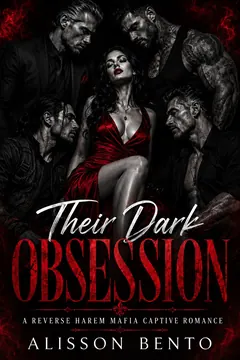
From Alisson Bento’s books
Why Choose
A mafia romance about a curvy heroine worshipped exactly as she is.
Kindle edition · Check Kindle Unlimited availability on Amazon.
One invented premise, two different reading promises
Consider an invented example involving three adults: Tessa, a musician preparing to reopen a performance space; Adrian, an old collaborator; and Noor, a new producer. Tessa develops attraction to both. That opening gives us multiple possibilities but does not identify the romantic structure. The next question changes the whole reading experience.
The love-triangle version asks which future she wants
Adrian hopes Tessa will return to touring with him. Noor wants to build a permanent local venue with her. Both can be appealing, and neither needs to become cruel for the other relationship to make sense. Their competing plans expose what Tessa wants from her life, and the narrative may develop toward one partnership.
The emotional payoff depends partly on making that choice convincing. A reader can appreciate the unchosen person and still accept the resolution if the story explains the incompatibility. Wanting a triangle does not necessarily mean wanting the losing character humiliated; the pleasure can lie in understanding a difficult decision.
The why-choose version asks how both bonds can continue
In a second invented version, Tessa wants ongoing relationships with Adrian and Noor, and both adults are interested in that possibility. Their different ambitions still create friction. They must decide how touring, local commitments, and time together fit into the future they want. Nobody becomes an extra simply because another connection develops first.
The story now has a different task: make each relationship specific and show why continuing them matters. The answer is more than Tessa announcing that she refuses to choose. Adrian and Noor also make decisions, express expectations, and affect the arrangement. Multiple partners create more consequential choices, not an absence of choices.
The opening scene cannot reveal every connection
Perhaps Adrian and Noor are friends. Perhaps they also become romantically involved with each other. Neither possibility follows from both being interested in Tessa. That detail concerns the relationship configuration, while the triangle-versus-why-choose distinction concerns whether continuing multiple bonds is the invitation. Our guide to MM in why choose explains those additional connections. Keep the questions separate when reading a description.
Can why choose still contain rivalry or jealousy?
Yes. Multiple continuing relationships can contain competition for attention, uncertainty, embarrassment, or disagreement. A partner might be comfortable with the overall arrangement yet upset that an important conversation happened without them. Another might worry that a newer bond will eclipse an established one. Conflict alone does not turn the story into a love triangle.
Look at what the conflict is trying to resolve. Is the narrative repeatedly asking which person deserves to stay, or is it exploring how these adults can maintain relationships they want? The same jealous reaction could appear in either story. Its meaning depends on the surrounding romantic arc rather than the intensity of one scene.
A why-choose book can also deliberately resemble a triangle early on while its characters discover a different possibility. If that early uncertainty is uncomfortable for you, ask whether rivalry is temporary and whether the intended group eventually becomes cooperative. Our separate guide to jealousy in why choose examines that conflict more closely.
Does why choose mean nobody ever makes a choice?
No. The phrase describes freedom from a required single-partner selection; it does not erase agency. Adult characters can choose whom to trust, when to begin a relationship, what they can offer, and whether they want to participate. A meaningful group romance gives the partners a voice instead of treating them as prizes collected by the protagonist.
This is also why every person introduced as attractive need not become a permanent partner. A book can include nonreciprocal attraction, an unsuitable admirer, or a previous relationship. The why-choose promise concerns the central continuing romantic configuration, not an obligation to retain everyone who flirts. Check a specific book’s notes if losses or changes within the central group are a firm boundary.
Nor does the label require identical feelings toward everyone. Different histories can produce different kinds of closeness. What matters to a reader seeking the group promise is whether those differences remain meaningful bonds, rather than disguising a conventional selection contest beneath a larger cast.
Read the blurb for competing or continuing language
A description can signal its invitation through verbs and questions. Language about choosing between two lives, deciding who owns the protagonist’s heart, or discovering the one person they need suggests competing possibilities. Language about building a group relationship, several continuing partners, or a central character who will not select one partner suggests why choose.
These are clues, not a private code with guaranteed meanings. Dramatic blurbs sometimes use competitive language even when the author identifies the book as why choose. Covers can feature several people without defining their roles, and a trope list may be incomplete. When the description and the label pull in different directions, prioritize clearer author information.
- Look for an explicit why-choose, reverse-harem, or relationship-configuration note.
- Check whether the book is one complete romantic arc or an installment.
- Separate the number of partners from connections between those partners.
- Check heat and difficult content independently of the relationship label.
The overlap between why choose and reverse harem is a terminology question of its own. Those labels often appear together, but they do not provide a complete relationship diagram. Our why choose vs reverse harem comparison explains their overlapping use without assuming the presence of multiple men explains everything.
How can you check the ending without learning the plot?
Ask for the type of resolution rather than its events. A useful question is, “Is the intended romantic resolution one partner or multiple continuing partners?” Another is, “Does this volume complete the relationship arc, or does it continue into later books?” Neither requires someone to identify a confession, a breakup scene, or a final reveal.
If a central group member leaving would spoil the experience for you, make that preference explicit. “Does the advertised romantic group remain the intended group?” is more precise than “Is this really why choose?” It helps distinguish a label disagreement from a specific outcome you want to avoid. The answer can still reveal a structural spoiler, so decide how much reassurance you need.
Be careful with review shorthand. A reader calling a book a triangle may be describing the first half; another calling it why choose may be describing the series destination. Notice whether they discuss a single volume or the completed arc. An opening sample is useful for voice and chemistry but may stop before the structure becomes clear.
What if the description is deliberately ambiguous? You can enjoy the uncertainty if either destination would satisfy you. If one would undermine the reason you chose the book, clarity is a reasonable reading preference. Ask for the intended structure, and leave the events that establish it unexplained. You can know the shape of the romantic promise while still discovering how the adults arrive there.
For example, “I want to stay attached to both advertised love interests” identifies your concern more clearly than “I hate triangles.” You might enjoy a triangle that resolves into a continuing group, or dislike a group story that keeps threatening elimination. Specific language helps another reader answer the question you actually mean, instead of guessing which familiar label is most reassuring.
A series can delay the destination without changing it
Does every why-choose volume need to end with a settled group? No. A continuing series may introduce connections gradually, leave one relationship unresolved, or end an installment before the group understands its future. That can suit a reader who wants long development. It can frustrate someone who expected a self-contained romance that evening.
Distinguish a complete-series promise from a complete-book promise. If book one ends with only one established partnership, the later intended structure may still be why choose. Conversely, several attractive candidates throughout a trilogy do not establish a group ending. The author needs to tell you enough about the series structure to support your expectations.
For a useful decision, combine two pieces of information: the romantic destination and the distance to that destination. “Multiple continuing partners, completed in one volume” and “multiple continuing partners, developing across several installments” are different reading commitments even though both may use the same label.
Choose the kind of uncertainty you want tonight
You can enjoy love triangles and why choose for different reasons. Want to compare two compelling futures and understand a final selection? A triangle may fit. Want to become attached to several distinct relationships and watch the adults find room for them? Why choose may fit. A preference today does not require a lifelong allegiance to one structure.
You can also have a favorite partner while reading why choose. Your personal favorite does not need to become the story’s exclusive winner. The practical question is whether you will enjoy the other bonds continuing too. If their scenes feel like interruptions to the only relationship you want, a single-partner romance may better match your current mood.
Before choosing a book, finish this sentence: “I want the uncertainty to be about…” Answering “which relationship lasts” or “how these relationships will work together” gets you closer to the right invitation. Then check the book’s configuration, content notes, and series status. Let the actual promise guide you into a cast you can enjoy investing in.