Why choose and reverse harem often overlap in romance descriptions. Reverse harem commonly names a story centered on one heroine with several male love interests. Why choose emphasizes the possibility of multiple continuing romantic partners and can be used for broader gender configurations. Neither term tells you every connection, the heat level, or how many books the romance needs.
If those labels have made you wonder whether you are browsing two different genres, you are not missing a secret rule. Authors, publishers, and reader communities do not all apply them identically. Treat them as useful invitations, then read the details that turn an appealing premise into the actual reading experience you want.
Why the two terms often appear together
A book described as reverse harem may also be described as why choose because both phrases can point toward the same central invitation: one protagonist has multiple romantic connections that need not become a contest with one winner. Using both terms can help readers recognize a premise through whichever vocabulary they already know.
Carmine Pen Press’s romance dictionary, for example, lists the terms together for its heroine-centered convention. That is an example of how a publisher uses the labels, rather than a binding definition for every romance. The useful fact is the overlap; the mistake is assuming every retailer, community, and author follows that glossary exactly.
Sometimes an author chooses one phrase throughout a website and another appears in reader reviews. That alone does not establish two separate versions of the story. Before comparing the labels, check that the descriptions refer to the same title, edition, and series. Then compare what they say about the adults and their continuing relationships.

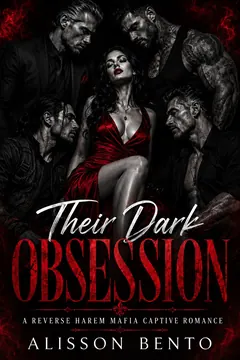
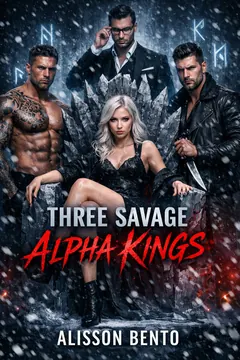
From Alisson Bento’s books
Why Choose
A mafia romance about a curvy heroine worshipped exactly as she is.
Kindle edition · Check Kindle Unlimited availability on Amazon.
What reverse harem usually signals in romance marketing
In this reading context, reverse harem commonly suggests a heroine surrounded by multiple male romantic interests, with her relationships forming the center of the book. It tells you where the romantic attention is directed. It does not tell you whether the partners begin as friends, strangers, rivals, or an established group.
Some communities attach a minimum number of male partners to the label. The Why Choose? tracker FAQ explicitly uses one woman and three or more men as its inclusion rule. Other descriptions use looser language. A site’s threshold explains what you may find there; it does not settle every author’s classification.
Does that mean a heroine with two partners cannot belong in your why-choose reading search? No. It means that a tracker organized around one particular reverse-harem definition might classify or omit that story differently. Search for the actual configuration as well as the broad term when the number of partners matters to you.
The terminology here concerns fictional marketing conventions. It should not be treated as an explanation of historical households, cultural institutions, or the lives of real people. You can understand what a romance blurb promises without turning the word into a universal social description.
What the broader why-choose label leaves open
Why choose foregrounds the destination: the central character is not required to reduce several meaningful romantic connections to one exclusive partnership. The phrase can be used beyond a heroine with an all-male group. Adult characters of different genders, additional relationships between partners, and differently centered groups may appear under that umbrella.
That breadth is useful, but it also makes detail important. A why-choose label does not necessarily mean every member dates every other member. Nor does it automatically mean an existing group invites a newcomer, or that all relationships begin together. Those are distinct fictional setups with different kinds of trust, discovery, and romantic anticipation.
Is why choose always a more precise label? No. It may be more flexible, but flexibility can leave more unanswered questions. The clearest description combines a recognizable category with a plain explanation of the relationships. If you are looking for a particular gender configuration, use that preference directly instead of asking the broad label to communicate it silently.
Three configuration questions matter more than a name
Imagine several invented romance descriptions involving adult characters. Each says why choose, yet each could invite a different reading experience. You do not need to memorize a long chain of initials to tell them apart. Start with the people, the connections, and the narrative center.
Who has continuing romantic partners?
In one invented premise, an adult heroine forms separate relationships with three adult men. In another, an adult protagonist forms relationships with adults of different genders. Those descriptions give different configuration information while leaving plenty of room for similar emotional pleasures: several specific bonds, anticipation, and an expanding romantic future.
Ask whether the description names committed or continuing relationships, rather than merely multiple suitors. Being pursued by several people does not necessarily identify the final structure. If the question you need answered is whether the protagonist selects one person, our why choose vs love triangle guide handles that comparison.
Are any partners involved with each other?
A heroine and three men can form a fictional group without the men having romantic relationships together. Another group may include those additional bonds. Neither arrangement follows from the partner count. An MM note commonly signals male-male relationship content, but the amount and shape of that content require their own description.
If that distinction matters, check what MM means in why choose. It addresses configuration more closely. The important point here is that reverse harem and why choose are broad labels; they are not complete maps of every romantic connection.
Whose experience holds the story together?
A book may keep one protagonist at the emotional center while showing several partners’ perspectives. Another may distribute attention more widely among an interconnected group. You might enjoy either, but multiple viewpoints alone do not identify which structure you are getting. Look for what the blurb calls the central journey.
Consider whether you want to follow one person’s discovery of several bonds, an established group’s evolving life, or several relationships with similarly weighted arcs. That preference concerns narrative emphasis. It helps explain why two books with the same label can feel very different even when their partner counts match.
Do either of these labels guarantee spice or slow burn?
No. Relationship configuration, romantic pacing, and explicitness describe different aspects of a book. A larger group does not establish how much intimacy appears on the page. A story can spend substantial time building emotional connections, present intimacy briefly, or include more detailed adult scenes. The label does not choose among those options for you.
Similarly, several partners do not mean several relationships move at the same speed. An old friendship may shift into romance while a wary newcomer is still learning to trust. If you want gradual development throughout the cast, look for that specific promise. Our slow-burn why-choose guide explores those different relationship clocks.
Darkness is another independent preference. Neither why choose nor reverse harem automatically means a dark setting, coercive fictional dynamics, or violent external stakes. Use content notes and the premise to assess those elements. A cheerful contemporary group and a dangerous fantasy group can share relationship vocabulary without sharing their mood.
How to read a label when a blurb is vague
Start with explicit author notes, then the description of the romantic arc. A short trope list can help, but it cannot replace a fuller explanation when the configuration is important to you. A cover featuring several adults is a visual invitation, not proof that all of them become partners.
Use a compact question sequence rather than collecting every tag you find:
- Does the central character have multiple continuing romantic partners?
- What gender configuration does the author describe?
- Are there romantic connections between any of those partners?
- Does the relationship arc conclude in this book or continue through a series?
- Do the pacing and content notes fit the experience I want?
When two sources disagree, consider their scope. A tracker may be applying its own inclusion rule. A review may describe one installment. The author may describe the completed series. Those sources can appear contradictory while discussing different questions. If the answer remains unclear, ask for plain configuration information rather than debating the correct label.
A spoiler-light request could say, “I am looking for one adult protagonist with several continuing partners. Does this series have that structure, and are partners romantically involved with each other?” This gives someone enough information to answer without summarizing the turning points.
What if a book says reverse harem but its opening looks like a two-person romance? The description may cover a developing series, with other partners introduced later. Check whether the author is explaining the present volume or the intended overall configuration. A smaller opening cast does not contradict a later group, but a later promise also does not guarantee this volume supplies the group experience you want now.
You can ask, “Are the main partners introduced in this book, or does the group assemble over subsequent installments?” That is a format-and-timing question. It lets you choose between meeting the whole cast quickly and enjoying a gradual expansion without demanding the identities or entrance scenes of every adult.
Should you search both why choose and reverse harem?
If you are looking for a heroine-centered group with male partners, searching both terms can help you encounter descriptions that use different vocabulary. Add one preference that actually changes your choice, such as gradual relationship development or a complete standalone arc. Do not assume a result fits simply because both labels appear.
If you want another gender configuration, name it. A broad why-choose search may produce many heroine-centered results even though the phrase can be used more widely. Adding a configuration preference helps the search express your intention. These are practical wording suggestions, not predictions about rankings, search volume, or how any particular platform organizes its catalog.
Keep optional preferences separate from essentials. You may absolutely require multiple continuing partners while being flexible about setting. Or you may require particular relationships between the partners and be willing to try several settings. Knowing the difference keeps an unfamiliar label from excluding a book that has the exact emotional structure you want.
Choose the description that gives you enough clarity
Do you need to prefer one term? No. You can recognize the overlap while asking for the details that matter to you. Some readers find why choose an immediately clear expression of the romantic destination; others encounter reverse harem more often in the descriptions they browse. Your vocabulary does not need to become a test of belonging.
The better reading decision is specific: identify the central character, identify the continuing partners, and check the connections between them. Then choose pace, mood, and series commitment separately. Once those details align, the label has done its useful job. It has opened the door to a romance whose actual relationships you want to follow.