Before starting why-choose romance, check four reading preferences: who is romantically connected to whom, how the individual bonds develop, whose viewpoints you can access, and how many books complete the group’s arc. Then check heat and content boundaries separately. This gives you a useful reading brief instead of a decision based only on the number of love interests.
You can love one why-choose book and dislike another without changing your mind about the whole category. An established cooperative group, a slow formation of rival adults, and a sprawling fantasy ensemble can offer very different experiences. Choosing the structure that fits your mood helps you understand what you are asking the book to deliver.
Preference one: which romantic connections do you want?
Relationship configuration concerns the connections themselves. Several adult partners may be romantically involved with a central protagonist without being romantic partners with one another. Another book may include relationships between some of those partners. A group can also include important friends whose bonds stay platonic.
Do not infer a complete configuration from the number of names in a blurb. “Three love interests” does not tell you whether those adults begin as strangers, friends, or established partners. It also does not confirm which relationships continue into the intended ending. Author relationship notes can be helpful when a particular arrangement matters to you.
Does why choose mean everyone dates everyone?
No. The broad label does not establish every pair’s connection. Look for explicit information about who becomes romantically involved. If you need an explanation of common shorthand, the guide to MM in why-choose descriptions addresses one specific label. Check the actual book’s notes rather than treating any abbreviation as a diagram of the whole group.
Your preference can be flexible: “I enjoy several continuing partners and am open to romance among them.” Or it can be firm: “I want this particular configuration.” Naming it makes your search clearer while leaving room to enjoy adults whose personalities differ from one book to another.

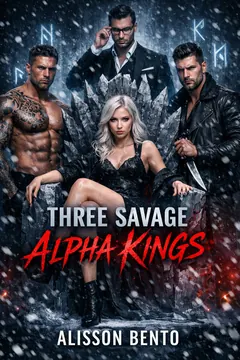
From Alisson Bento’s books
Why Choose
A mafia romance about a curvy heroine worshipped exactly as she is.
Kindle edition · Check Kindle Unlimited availability on Amazon.
Preference two: how should each bond become meaningful?
Individual development concerns how you come to believe in each connection. You may want several gradual romances, a mix of friendship and fresh attraction, or an established group whose commitment faces a new test. These structures ask you to invest in different kinds of emotional work.
A story that opens with secure partners can spend time showing how well they know one another and what a disruption changes. A forming group may need to establish attraction, trust, and expectations. Neither starting point is automatically deeper. What matters is whether the scenes give you reasons to care about the adults and their choices.
Think about your patience for uncertainty. If you want reassuring devotion quickly, a long period of ambiguous interest may frustrate you. If you love earned trust, an immediate declaration may feel too quick. The same milestone can satisfy different readers at different moments.
Must all the romances move at the same pace?
No. A longstanding friendship and a new alliance have different histories. One relationship can become secure while another remains tentative. If gradual individual connections are your priority, ask for that rather than demanding synchronized milestones. For more on those differences, see slow-burn why choose.
Also separate pace from explicitness. A gradual romance can become highly explicit later, and immediate attraction can appear in a story with limited on-page detail. “Slow burn” does not settle the heat question you will check afterward.
Preference three: whose thoughts do you want to hear?
Viewpoint changes how you discover the group’s feelings. A single viewpoint lets you share one adult’s uncertainty about everyone else. Multiple viewpoints can show several adults’ private concerns and reveal information the protagonist does not yet know. Both can produce romantic tension.
Consider the difference between waiting to discover whether someone cares and already knowing they care while waiting for them to say it. A single perspective can make small gestures feel mysterious. Another adult’s chapter may shift suspense toward the cost of admitting what they feel.
Are multiple viewpoints always better for a large romantic cast?
No. More viewpoints provide access, not automatic depth. Several chapters can repeat the same reaction, while one perspective can reveal distinct adults through dialogue, choices, and observed behavior. Ask whether you like the voices and the kind of uncertainty the book creates. Your preference for access is separate from the quality of its execution.
A sample can help you test this. Look for clear viewpoint cues and whether the opening voice appeals. A sample featuring one narrator does not prove the entire book stays in that perspective, so check available descriptions when viewpoint is a firm requirement.
You can also distinguish “some partner viewpoints” from “every partner gets chapters.” The first may suit you perfectly. If you specifically want access to every adult’s inner life, make that part of your reading request instead of assuming “multiple POV” includes everyone.
Preference four: where does the group’s arc finish?
Format concerns how long you will follow the central relationships before their intended resolution. A standalone can resolve the group arc in one volume. A continuing series can develop the same adults across several books. Interconnected standalones may change the central group while preserving a familiar community.
Decide whether you want closure now, an already complete sequence, or the experience of following releases over time. These are different commitments. A completed trilogy can still contain cliffhangers between volumes; completion lets you continue without waiting for the conclusion to be published.
Check official reading order, descriptions of adjacent volumes, and cliffhanger notes. If a later book follows the same protagonist and unresolved bonds, it may be required for the romance you are beginning. If it follows a friend with a different group, it may provide a new story rather than finish the current one.
For the fuller distinction, see why-choose standalone versus series. Here, your selection question is practical: how much continuing attention do you want to give this particular group before you receive romantic closure?
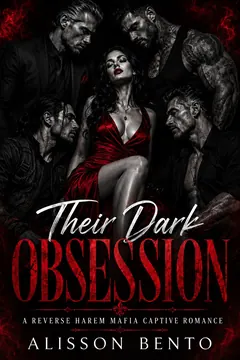
From Alisson Bento’s books
Why Choose
A mafia romance about a captive bargain that turns into the only place she wants to be.
Kindle edition · Check Kindle Unlimited availability on Amazon.
Build a reading brief from those four preferences
A brief does not need to be elaborate. One sentence can organize your choices: “Several continuing adult partners, gradually developed individual bonds, access to some partner viewpoints, and a complete group arc in one book.” You have now described a reading experience without naming a specific setting or personality type.
Next, mark which parts are essential and which are flexible. Perhaps one-volume closure is firm, while viewpoint can vary. Perhaps a particular configuration matters most and you are happy with any length. This prevents an optional wish from excluding a book that might satisfy your main preference.
- Must have: the structural promise you would feel disappointed to lose.
- Prefer: a feature that improves the fit but is open to variation.
- Open to: an element you are curious to try without requiring it.
For an invented adult reading request, suppose you want belonging more than rivalry. Your brief might ask for a cooperative group, established friendships, several viewpoints, and a completed arc. Another reader might want strangers becoming partners, distinct slow bonds, one viewpoint, and a continuing fantasy adventure. Both requests fit the broad label while pointing toward different books.
Keep your brief short enough to use. A list containing every trope you have ever enjoyed can bury the preference that matters tonight. Start with the four structural choices, then add one setting or dynamic that calls to you.
Check heat and content boundaries after the structure
The four preferences tell you how the group is presented; they do not identify every event in the book. Check on-page explicitness, violence, coercive themes, infidelity, and other personal content boundaries where relevant to your reading choice. Use the author’s available notes rather than assuming one broad label answers those questions.
For example, a cooperative romantic group can exist inside a violent external plot. A story with little external danger can contain intense jealousy. A fantasy bond can create reassuring devotion or an unwanted obligation. Configuration, setting, and content are connected in the narrative but remain separate checks for your selection.
Jealousy deserves precise wording if it changes your enjoyment. “Little internal jealousy” concerns relationships within the group. “Possessive love interests” may instead concern reactions to outsiders. If you want internal rivalry, name it; if you want reassurance among the partners, name that too.
A firm boundary does not require a long justification. You are choosing what you want to read. If the available information cannot establish something essential, keep that uncertainty in the decision rather than treating silence as confirmation.
At the same time, avoid turning every flexible taste into a warning. You may be happy to experiment with a viewpoint you usually skip while keeping a particular content boundary firm. Separating those two decisions allows curiosity without obscuring what matters.
Use the blurb, notes, and sample for different jobs
The blurb helps you identify the central adults, setting, and emotional problem. Relationship and series notes can clarify configuration and continuity. The sample lets you assess voice, dialogue, pacing, and how the opening distributes attention. Each gives you a different part of the decision.
Do not ask the opening sample to prove the ending. An adult introduced briefly may become important later, and an early mystery about another partner’s feelings may be intentional. Likewise, a description promising multiple viewpoints cannot tell you whether you enjoy the actual voices. Use both pieces of information where they help.
An invented sample-reading exercise might involve three adults debating a move to another city. Notice whether their concerns feel distinct. One may worry about work, another about leaving a community, and the protagonist about being expected to solve everyone’s uncertainty. You are assessing how the voice handles a group, not checking whether every possible partner appears immediately.
- Read the description for the central romantic promise.
- Check configuration and completion notes for any must-have preference.
- Read the sample for voice and group interaction.
- Confirm heat and personal boundaries before committing.
If the voice does not appeal, you can choose another book even when every label matches. A checklist narrows your options; it cannot replace the experience of enjoying a page.
Questions that make your next choice clearer
What if I am new to why choose and do not know my configuration preference? Begin with an arrangement clearly explained in the description, then keep a short note about what you enjoyed. You do not need to settle every taste before your first book. Clarity about the promise is a useful starting point.
Can I prefer a smaller romantic group? Yes. The number of partners can affect how much individual interaction you want to follow. It does not establish balance or depth by itself. Ask for the group size you enjoy while still checking how the bonds are developed.
What if I liked the romance but lost track of the cast? Note whether the difficulty came from similar names, unclear voices, rapid introductions, or simply your current reading mood. That distinction helps you choose a more manageable next book without rejecting every ensemble.
Should every future read match my brief? No. Use it as a record of what you are seeking now. You might want reassuring devotion this week and difficult group formation next month. Preferences can change with your mood, and a good fit does not require a permanent rule.
When your brief is ready, explore the why-choose catalog and compare each book’s actual description with your priorities. The aim is to find adults you want to spend time with, connections you want to see develop, and a commitment you understand before the first chapter.