Choose a single-dad cowboy romance with a skilled heroine by watching what happens when she names a price, sets a working hour or considers a job elsewhere. His affection for his child can be appealing, but the sharper question for this reading mood is whether he respects an adult woman’s expertise before he hopes she will fit into his life. You want room for her work as well as his responsibilities.
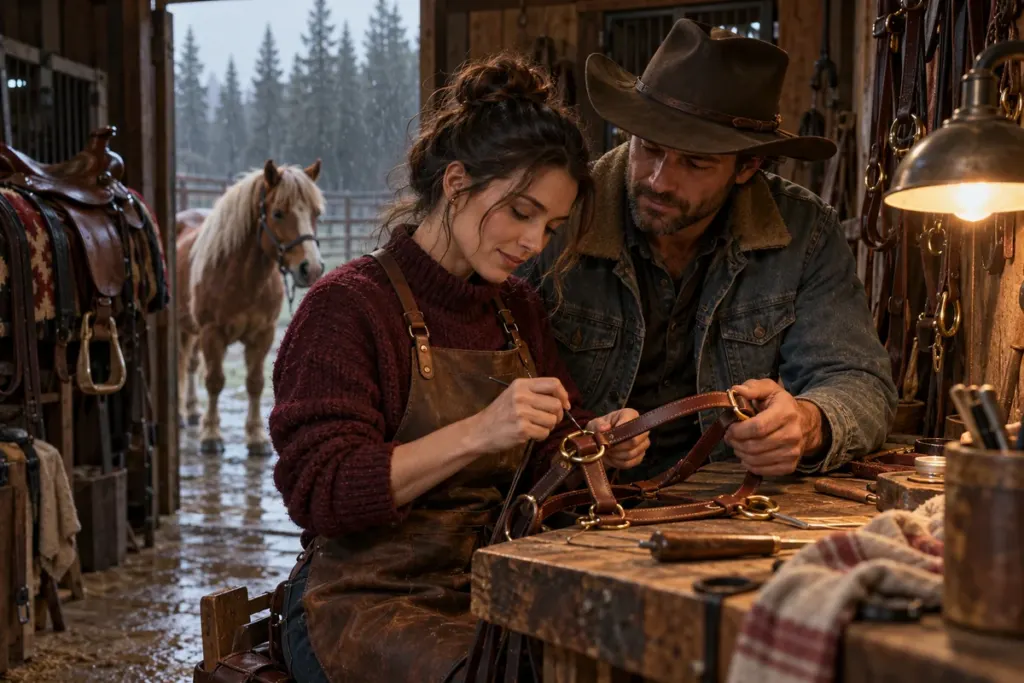
In Where the Summer Holds, that question arrives as a broken buckle. Ada Mercer has returned to Bitter Creek for a week of shop inventory. Jonah Bell needs a pony halter repaired. His daughter Lily has an opinion about the repair, Ada has the knowledge to assess it, and Jonah has to wait for a quote. The opening makes professional respect visible before anyone has promised a shared future.
A repair job can be a more revealing meeting than a rescue
The first encounter in Where the Summer Holds is slightly awkward. Jonah puts the buckle on the counter before Ada has found the light switch. She has been inside the shop for four minutes; her suitcase is still in the way. She answers his abrupt request with humor, opens the curtains and begins to examine what he brought. Their temperaments have friction without requiring a feud.
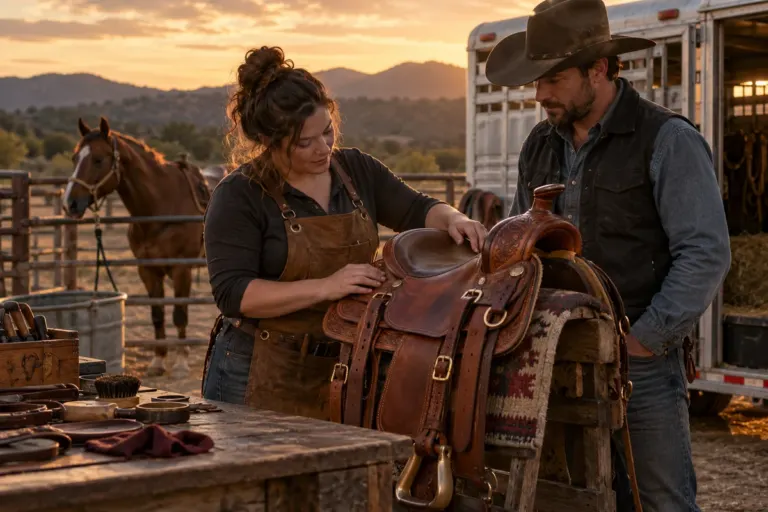
A commissioned repair gives the heroine authority in a concrete area. Ada can say she needs to inspect a seam before naming the price. Jonah may know his own rural work, but the object on her counter is her assessment to make. This is different from a meet-cute in which the cowboy demonstrates competence while the newcomer supplies admiration. The first attraction can grow around his recognition that she knows something he needs.
It also puts a limit on the service. Ada gives a collection time rather than implying that a friendly customer can occupy her whole day. A small job can be useful without becoming a claim on every tool she owns. If you enjoy heroines whose independence is expressed in ordinary decisions, this kind of exchange may tell you more than a blurb calling someone feisty.
The repair is fictional work, not a lesson in tack maintenance. You do not need to reproduce Ada’s inspection to appreciate its role. The narrative value is that she observes, judges, explains and asks the customer to decide. Her skill has consequences in the conversation. That is enough to establish why the job creates an opportunity for these particular adults to see one another differently.
You’re on the list. Your free stories are waiting in the Reader Vault. Where the Summer Holds
Follow the quote: what does he think her time is worth?
When Ada names her price, Jonah reacts. She assumes he considers it too high and points out that another shop exists. His objection turns out to be the opposite: he thinks she has charged too little. He offers a deposit. The surprise is gentle, but it changes the encounter. His respect takes a form that belongs to her work rather than a compliment detached from it.
The scene is particularly useful because Ada’s guarded response is understandable. She has arrived to sort out a business with bills, family history and an uncertain future. A customer who wants a favor could become another task she is expected to absorb. Her readiness to defend the quote gives the exchange tension; his answer gives her a reason to revise an initial impression.
That revision should stay specific. Paying for a repair does not prove every future romantic choice. It establishes a promising starting behavior: he notices that her time counts. A novel can build on such a moment, complicate it or expose its limits. As a reader, you can enjoy the early signal without declaring the whole relationship settled after one transaction.
Compare an invented alternative. A rancher calls a leatherworker brilliant, then asks her to finish his order overnight because he knows her aunt. The praise might sound warm while the request makes her skill easier to exploit. In Ada and Jonah’s actual opening, the deposit and agreed collection time give admiration a different shape. The difference concerns whether competence generates respect or simply a larger queue of unpaid expectations.
Her tools belong to a history that romance did not create
Lily notices Ada’s tool roll and asks whether it is hers. Ada made the roll and some handles; her aunt Ruth gave her the knives when she finished her apprenticeship. These details establish a working identity with a past. Ada did not acquire a convenient skill because this father and daughter entered the shop. They have encountered something she has already spent years becoming.
That distinction can change the pleasure of a rural homecoming romance. A returning heroine may be discovering what she wants now, but she need not be an empty space waiting for the town to fill it. The tools, the apprenticeship and the old work counter give Ada connections that exist alongside the new attraction. Jonah can become important without becoming the origin of everything she values.
Her conversation with Ruth adds texture. Ada asks where particular needles are kept and encounters a pattern she made as a teenager. Ruth kept it despite its impractical design. The remembered mistake allows affection and professional development to coexist. Skill is not a magical gift the heroine has always performed flawlessly; it has a family context and a history of learning.
If this is your favorite part of a romance, look for evidence that the heroine makes decisions in her own domain. A job title in the opening paragraph is less revealing than a scene where she evaluates an object, admits uncertainty or sets a boundary with someone who wants her help. The work becomes a source of voice rather than a decorative badge of independence.
The inventory week is not a promise to reopen forever
Ada has come back for a particular task and a limited time. Jonah asks whether she is reopening. She says she is taking inventory and that Ruth is deciding what to do with the shop. Those are different answers. The distinction leaves room for family attachment without allowing every local hope to turn into a decision Ada has already made.
There is romance potential in being wanted by a place. There is also pressure. A small business may represent remembered kindness, familiar objects and useful services to everyone who walks through its door. For the person doing the work, it can also mean accounts, tired tools and a future she has not chosen. A satisfying reading experience can give both views their emotional weight.
The temptation is to read every request as evidence that she belongs and therefore should stay. This opening asks for a more patient interpretation. Being capable of meeting a community need does not automatically make that need her life’s assignment. If you want the heroine’s professional autonomy to remain central, watch whether people ask what she plans before announcing how much they need her.
Ruth’s desire for an honest account of the place is another useful distinction. Nostalgia might ask Ada to preserve the shop exactly as it was. Inventory can ask her to look at what is actually there. That creates a professional question with emotional roots. The romance can develop beside the question, but a kiss cannot do the counting or determine which future feels like hers.
A paid opportunity can still become an expectation
Jonah mentions that the fair needs someone to check demonstration tack. He identifies it as paid work and offers to pass along Ada’s number. She specifies her business number and says the organizer can ask. The exchange is brief, yet it states an important difference: an introduction is permission to make a request, not an agreement that she will accept it.
For a reader tired of a useful heroine becoming everybody’s solution, that precision can be attractive. The town may have good reasons to want her expertise. Jonah may genuinely believe the opportunity suits her. Ada still has to decide. Her warmth and willingness to work do not make the distinction unnecessary.
A hypothetical version could make the same invitation feel very different. Imagine a hero announcing at a gathering that the heroine will repair everything for the fair because he knows she will not let the children down. That would turn community feeling into public obligation. Ada’s actual opening gives the request a smaller doorway: a business contact, an organizer and an answer that has not yet been supplied.
The story description places an uncertain fair site and rain-threatening tools alongside attraction. Those are reasons to expect pressure on her working life, not a reason to invent how a real fair should be assessed or how equipment should be protected. For choosing the novella, the useful point is that her tools and time have something to lose. Her expertise remains part of the stakes.
Helena should remain a possible future, not a character flaw
The opening mentions a museum in Helena considering Ada’s application. The premise describes a paid job waiting there. That alternative matters because it gives the heroine something to choose toward, not merely somewhere to flee. Her career possibility exists before the romance asks whether she might build a life in Bitter Creek.
A move to another town can be written as an emotional threat to a developing couple. It need not be evidence that the moving character has failed to appreciate home. Readers who like independent working heroines may want the alternative to receive serious consideration: what part of herself would that job recognize, and what part of herself is being recognized here?
You can prefer a staying fantasy without wanting the story to belittle leaving. The emotional reward can come from a choice that feels owned rather than a professional door that mysteriously closes at a convenient moment. This is a question to carry into the reading, not a disclosure of which arrangement Ada eventually makes. The story description promises a happy ending without requiring the reader to know its logistics.
It also changes what you might ask in a recommendation. Instead of asking whether the heroine is career-minded, ask whether her outside opportunity remains a credible option after attraction begins. That tells another reader which part of the conflict matters to you. A person can be deeply affectionate, enjoy a child and still want a job whose value is not measured by how near it keeps her to the hero.
Lily can notice the craft without assigning Ada a family role
Lily is eight, and the opening lets her be particular. She explains why Pippin’s halter matters, watches the tools and corrects a possible underestimate of her age. Her presence changes the shop conversation without making her responsible for the adults’ future. Her interest in Ada’s work is a character interaction, not an announcement that Ada has become her caregiver.
Jonah also recognizes Ada’s working time when Lily asks about returning to show the fit. Ada can answer from her own professional understanding. The scene allows all three people to have a perspective: the daughter wants to explain something, the father notices the craftswoman is busy, and the craftswoman identifies what belongs within the service she has offered.
The broader single-dad cowboy guide explores family life, scheduling and adult attraction. Here the narrower pleasure is seeing a family encounter someone whose work remains her own. Lily’s approval would not by itself decide whether Ada’s future fits Jonah’s. The adult romantic choice needs more than a delighted child at a counter.
Harlequin’s cowboy romance guide includes single-dad stories among its reading categories. That is a useful starting label, but it cannot specify the heroine’s profession or the role she takes in a household. In this novella, the opening gives you a repair commission. It does not give you a nanny appointment, custody dispute or invitation to infer the history of Lily’s other parent.
Choose the work-centered version of tenderness
Where the Summer Holds suits a mood for gentle humor, professional appreciation and an original adult M/F couple. Its intimacy is described as sensual kisses and implied closed-door adult intimacy without graphic detail. The single-dad label supplies family context, while the actual heat description supplies the content expectation. They should be checked separately.
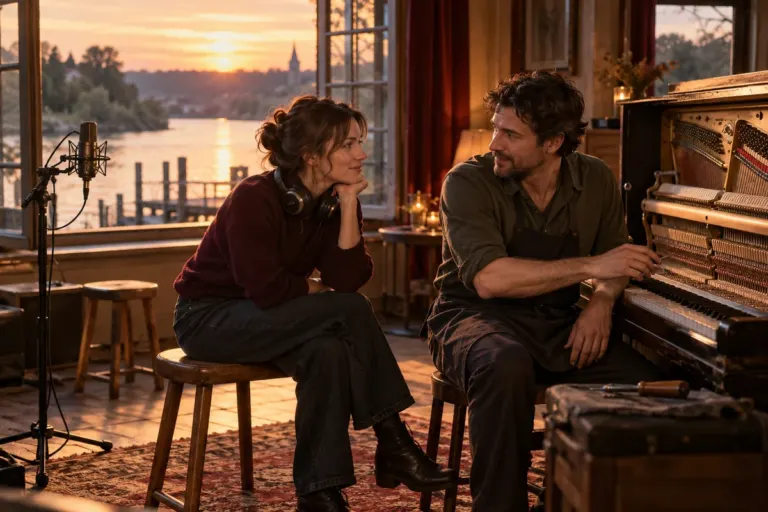
For a different setting in which a working parent meets questions of privacy and recognition, consider the discussion of being heard and being exposed in single-dad musician romance. If you want another rural craft-centered angle, the article on a quiet cowboy and a curvy craftswoman shifts attention toward being believed. These are different reading decisions and different people, not chapters in Ada’s family history.
The paid book this prequel accompanies is The Cowboy’s Sunshine. Ada and Jonah’s story takes place near Bitter Creek, Montana, in the preceding summer, with an original couple and no main-story revelations. The Wild Sky Legacy collection name does not establish one shared ranch, family or required sequence across all its titles.
Use the free-story discovery hub to compare premises, or explore Ada’s first repair commission. Read the opening free in your browser, then confirm your email to continue the novella. The most useful first question is already on the counter: when she tells him what the work requires, does he listen? From that small answer, the larger possibility of making room for each other can begin.