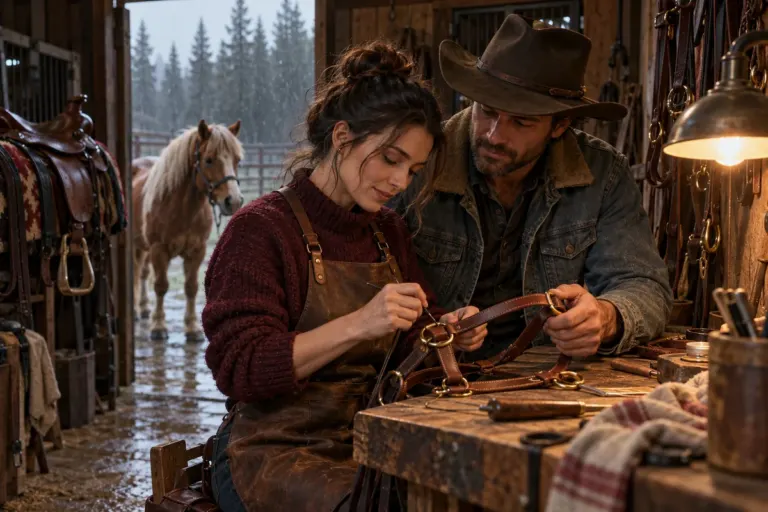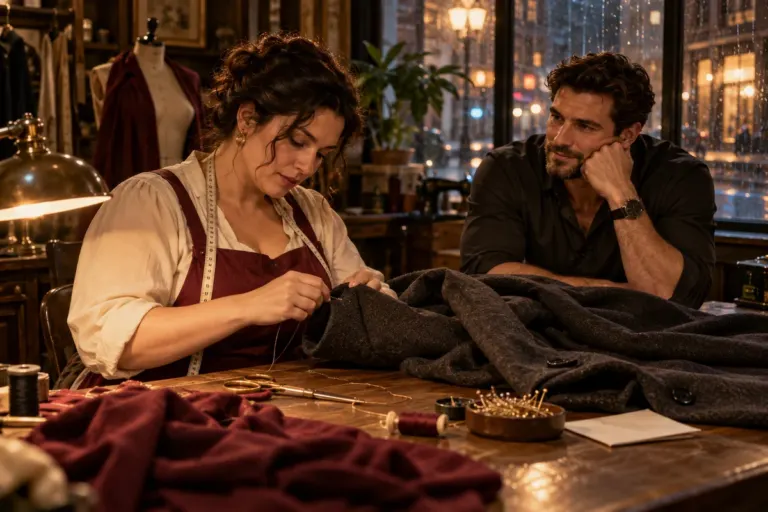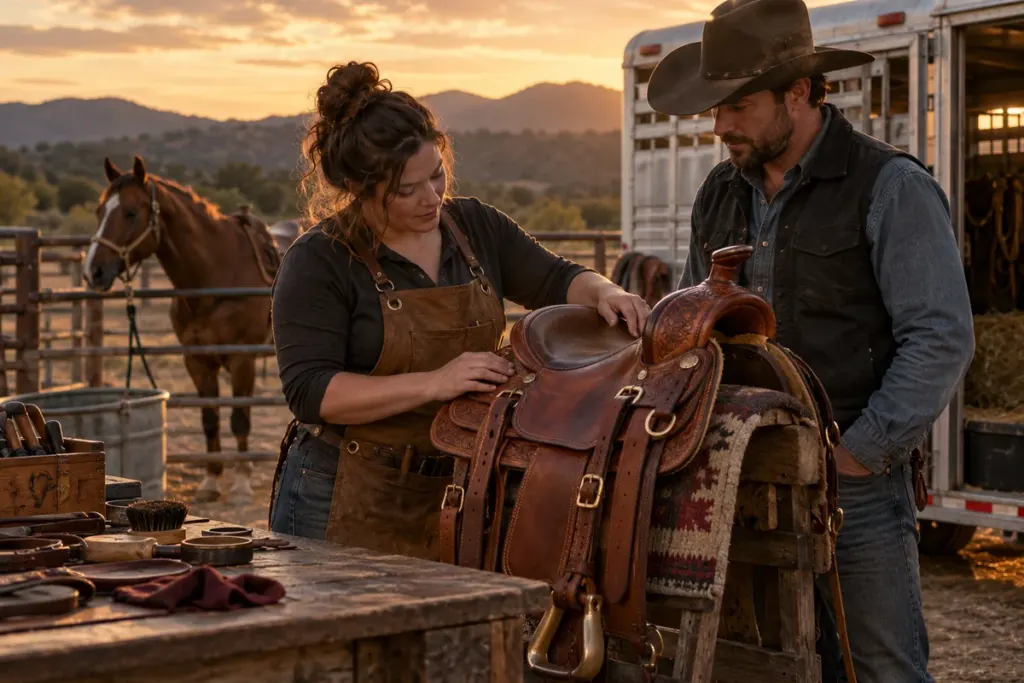
A quiet cowboy can be deeply reassuring in a romance when his belief makes it easier for the heroine to act. If you want a curvy working heroine whose judgment matters, look at what happens after she says something another person has dismissed. Does the hero listen closely enough to help with her actual problem? Can she correct his understanding? Does his support leave her with a voice in the next decision?
Those are the central reading questions in The Saddle That Fits. Nell Avery, an independent saddlemaker, discovers that her mare has been sent away without her agreement and that her pattern case is missing. Beck Calder, a livestock hauler, offers a way east. The attraction is adult M/F, with sensual kisses and closed-door intimacy. Its particular comfort comes from a man who takes her account seriously while a journey gives them reasons to learn more about one another.
A missing mare changes the meaning of being believed
Nell’s first scene is a finished piece of work. She examines a saddle repair, puts her own maker’s name on it and accepts payment. Before the reader knows anything about the missing horse, the story establishes that Nell can identify a problem, solve it and charge for doing so. That matters because the later dispute does not introduce competence she must suddenly earn.
When she reaches Crosswind, her mare Cinder’s stall is empty. Ruth at the boarding yard believes Nell authorized the collection. A paper carries an imitation of Nell’s signature. The disturbing part is larger than a misunderstanding: someone has turned a refusal into something that looks like permission. Nell is forced to argue for the meaning of a decision she already made.
For a reader, this creates a precise appetite for reassurance. The desired scene is not simply a handsome man saying the heroine is wonderful. She needs somebody to hear what she refused and respond to the situation she describes. Romantic support becomes especially satisfying when the heroine has been made to sound unreasonable for insisting that her own answer counts.
The opening of The Saddle That Fits also gives the loss a material shape. There is a full water bucket, hair against the stall door, a damaged truck lock and an empty space behind a seat. These details keep Nell’s fear attached to recognizable things. Her distress does not make the reader forget the woman who was working capably a few pages earlier.
You’re on the list. Your free stories are waiting in the Reader Vault. The Saddle That Fits
The stolen patterns are a different kind of loss
A mare is a living individual Nell wants back. The blue case carries another part of her life: patterns, measurements and evidence of work made under her own name. The story does not ask those losses to be interchangeable. Cinder’s absence supplies immediate fear; the case threatens hours of thought and the fragile independence of a business becoming recognizable as hers.
This is why a craftswoman makes the credibility question so sharp. The contents may look like scraps to someone who does not know what they are seeing. To Nell, a piece of card can hold a succession of decisions. A pattern records something she has worked out, not just a product another person can claim to have helped her sell. Losing the case means losing access to part of that practical memory.
Readers who enjoy working heroines can notice whether the prose distinguishes the finished object from the work behind it. A beautiful saddle can attract admiration in a single glance. The knowledge required to make it belongs to a longer process. Nell’s opening cares about both. Her maker’s stamp and the case’s absence establish why credit and possession feel personal without needing a speech about professional worth.
That gives the romance a specific opportunity. Beck can be interested in what she knows, rather than simply buying an expensive replacement and making the difficulty disappear. The journey’s appeal includes the possibility of conversation about something that matters to her even when it does not belong to him. If you want that kind of intimacy, ask for a hero who becomes curious about the heroine’s work.
Belief can make room for facts that remain uncertain
One version of romantic belief is absolute certainty: the hero immediately knows the heroine is right about everything. Another version takes her seriously while helping her separate what she witnessed from what she suspects. The second can be especially absorbing in a suspenseful road romance, because cooperation still has somewhere to go after the first supportive response.
Nell knows she did not agree to the mare’s removal. She also finds her case missing and the lock damaged. Those experiences support her account of what she has lost; they do not make her an eyewitness to every step that caused it. A story can preserve that distinction while remaining firmly on her side. The emotional issue is whether someone uses uncertainty as an excuse to ignore her or helps her pursue what she can establish.
This is a reading distinction, not guidance for a real dispute. In fiction, it lets a heroine remain active. She can send information, ask questions and follow a lead because the other adult has not decided the whole story on her behalf. The suspense and the relationship develop together through what they find out and how they respond.
If your favorite protector scenes include calm attention rather than instant revenge, this is a useful preference to name. You might ask for a hero who believes the heroine’s refusal, takes her expertise seriously and supports her next move without pretending to know everything. That describes an emotional experience more precisely than asking for a man who is protective.
An ally can have been wrong before she helps
Ruth makes the opening more complicated than a simple division between people who believe Nell and people who do not. She accepted the collection paper without calling Nell. When Nell challenges it, Ruth admits that she should have checked, then starts making calls. Her later help matters, but the mistake still hurt someone she knows. The scene leaves room for both accountability and continued cooperation.
This may suit readers who want the quiet hero’s belief to feel distinctive without requiring every other relationship to become worthless. Beck brings a conflicting dispatch record and an attentive response; Ruth brings access to the carrier and the willingness to keep asking. Nell can accept both contributions while remaining angry about the original failure. Romantic reassurance does not have to erase another difficult relationship or make the hero her only possible source of useful company.
Watch the offer of help before watching the road
A road trip can create closeness through shared space, changing weather and the practical need to keep moving. Before any of that, there is an offer. Its terms tell the reader whether the heroine is being invited into cooperation or quietly handed a new obligation. A promise that sounds generous can still leave important questions unanswered.
Beck’s work as a hauler makes him useful to Nell’s problem. It also gives him responsibilities that existed before she needed him. That is part of the attraction: capable help comes from a person whose competence is visible in what he already does. The romance has more texture when helping her involves decisions about his time instead of treating every previous commitment as irrelevant.
Money can affect the tone of a scene without turning the article into financial advice. Nell is a working adult, and an unexplained favor may be difficult to interpret when she is frightened. If you like romance where help is made understandable, look for whether the characters can discuss what an offer involves. A straightforward answer can make room for desire because the heroine is not left wondering what she has silently agreed to repay.
The broader guide to heroine agency beside a powerful hero considers goals, information and alternatives. Nell’s road story gives that question an everyday scale. The decision concerns a vehicle, a destination, a person offering time and a heroine who still needs to know what happens next. Independence becomes something visible in an interaction, rather than a personality label.
Quietness earns its warmth through responses
A quiet hero is not necessarily cold, hostile, shy or emotionally unavailable. He may simply use fewer words. For readers, the distinction becomes clear when he has an opportunity to answer a direct question. Silence that allows the heroine to speak can feel spacious. Silence that leaves her doing all the interpretation can feel exhausting. You can enjoy one texture and dislike the other without disliking quiet heroes generally.
Beck’s appeal is practical specificity. The story identifies a man whose knowledge belongs to vehicles, horses and time on the road. Nell has a different field of skill and a quick wit. Their potential chemistry comes from those voices meeting, with her noticing more than the heroic outline of a man beneath a hat. A clipped answer can be warm when it actually responds to what she asked.
Consider two hypothetical scenes when choosing your next read. In one, a heroine explains that she needs to collect something important, and the hero says he has handled it. In another, he asks which part needs doing first, then offers the help he can give. Both could belong to an enjoyable romance. The second is a closer description of the pleasure of collaboration: the heroine’s knowledge remains necessary after assistance arrives.
A different reader may want the first version’s sweeping certainty and relief from deciding anything. That is a valid fantasy too. The useful choice is whether tonight’s comfort means being taken care of completely or being accompanied while you keep acting. Nell and Beck’s premise especially suits readers drawn to the latter.
Her body is present while the problem stays hers
Nell’s curvy body belongs in the story without supplying an explanation for the theft, the forged permission or her professional judgment. In the opening, she wants equipment that fits the rider who will actually use it. That thought connects her body to something she knows how to evaluate and make. She is a person with preferences, not an appearance waiting for a man’s verdict.
The romance can therefore offer physical desire alongside professional belief. One does not have to stand in for the other. A man can want her body and still need to listen to her account of the missing case. He can respect her craft and still become distracted by her presence. Readers who enjoy both kinds of attention need not choose between competence and sensuality.
For the broader representation question, the existing guide to curvy heroines and rural belonging considers how to identify the body-related experience you want. Here, the narrower question is credibility during a specific loss. Beck’s belief should be read through what it helps Nell do, rather than treated as a cure for every feeling she has ever had about herself.
The missing mare, stolen work and dangerous weather keep this from being an entirely untroubled journey. That combination may matter if you want a restful comfort read. The declared heat is sensual and non-graphic, but low explicit detail does not mean no fear or conflict. Choose tone and intimacy separately.
Two useful questions before you commit to the sample
Do I want a rescue story or a partnership story?
You may want both, but decide which pleasure needs to remain after the opening. A rescue can be emotionally satisfying because somebody finally takes the burden away. A partnership can satisfy because the heroine’s decisions become easier to carry out with another person beside her. Nell’s missing-mare journey offers the second question even while Beck has something useful to contribute. Her knowledge of Cinder, her papers and her own work cannot simply be supplied by his strength.
A sample can show that difference before it reveals the outcome. Look at whose questions direct the conversation and whether the heroine can disagree without having her need for help used against her. These are scene-level observations. They tell you more about the romantic texture than the size of the hero’s truck or the intensity of a protective tagline.
Do I want attraction to begin before every difficulty is resolved?
Nell notices Beck while the day is already going badly. That does not trivialize her mare’s absence. It allows fear and desire to coexist in an adult who has not stopped being a whole person. If you enjoy humor appearing at inconvenient moments, that mixture can be part of the appeal. If you need the suspense settled before romantic attention becomes comfortable, it is useful to know that this premise brings them onto the same road.
The attraction also has to become more than gratitude for transport. The description promises an original couple’s complete romance, not an obligation to reward the man who helps. You can read toward the moment when the characters make their interest legible for its own sake without needing a spoiler about where or how that happens.
Choose the next kind of working romance deliberately
If the craft relationship interests you but you want a different domestic pressure, the article on a single-dad cowboy and a skilled heroine considers room for more than one kind of work. That is a change in family setup, not a claim that Beck is a father. Follow it for the reading question of how the heroine’s skill shares space with existing responsibilities.
If you want greater danger and a different imbalance, the curvy craftswoman in a Bratva bargain moves the professional theme toward criminal power and shelter. It should not be mistaken for the quiet hauler’s role. The contrast can help you decide whether you want help offered as collaboration or tension built around a dangerous bargain.
The Saddle That Fits is an exact companion prequel to Curves on the Range, opening in Wyoming ranch country in an earlier autumn. Nell and Beck are new protagonists with their own local conflict. The paid novel follows a different heroine and a more dangerous mafia-cowboy romance; the shared setting does not make Nell’s missing patterns part of its criminal plot.
A useful next-read request is a curvy craftswoman whose account is taken seriously, a quiet hauler who helps without replacing her decisions, and road proximity with sensual rather than graphic intimacy. Explore Nell and Beck’s journey through the free browser opening, then confirm your email to continue reading. The broader free-story collection offers other starting moods; choose this one when being believed sounds as romantic as being wanted.