A love story the player can make time for
In Keza MacDonald’s pre-release reporting for The Guardian, Rockstar’s Rob Nelson described a romantic connection the player can nurture by spending time with Jason and Lucia. The official setup puts them in a criminal conspiracy after a job goes wrong and gives them reasons to depend on each other. Those two facts create an interesting possibility. A pair can cooperate under pressure while their willingness to spend an ordinary evening together remains in play.
Think about an evening in a fictional game when you could make one story task your next stop or let the two leads sit down somewhere quiet. The same ten minutes might feel indulgent on one playthrough and overdue on another. A choice can carry emotion before a conversation has begun because you were the one who decided the conversation could fit. That remains an interpretation of how optional time works. Rockstar’s brief and MacDonald’s reporting give us enough to ask what emotional weight a player can give to a pause.
From Alisson Bento’s books
Vampire
A vampire romance about a captive bargain that turns into the only place she wants to be.
Kindle edition · Check Kindle Unlimited availability on Amazon.
What a page does with the same pause
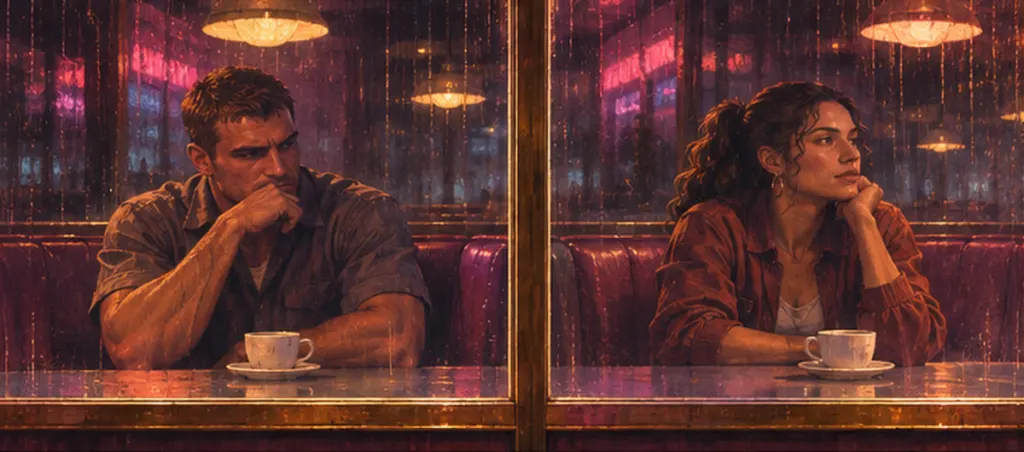
A novel can make a late supper matter by deciding whose attention the reader follows. Suppose a woman has spent the afternoon waiting for a man to explain a decision they should have made together. She reaches a café before he does and orders the two coffees she remembers them drinking on their first morning together. She knows one of the orders will be too sweet for him now. By the time he arrives she has tried to decide whether to finish his, replace it or let him find it as it is. The scene has movement before the two people sit across from each other.
On the page, timing is part of the interpretation. The reader learns the old order before the new complaint and can consider what has changed while the coffee cools. A game built around an optional visit could get a different effect from a comparable scene. The audience would first decide whether to make the visit. Then it could learn that the woman in the café wanted something more particular from the evening than the person choosing the visit imagined. That gap lets the character retain a private life even when somebody else can guide the story.
Time together can be different from agreement
A decision to spend an hour together can matter without resolving every question the two people bring into the room. In a made-up scene, a character opens a notebook expecting to settle a plan for the weekend. His partner takes the chair closest to the door because she wants to discuss what happened yesterday. They have both chosen to show up. The scene still has a negotiation about which conversation they are ready to have and how they will notice when one has tried to change the subject.
That relationship tension can survive a chase or a fight. A driver can trust somebody to get to a meeting point at the promised time and still be unsure whether they will take the trouble to explain an absence. Repeated cooperation gives the audience enough history to register a shift in how comfortable the pair feels when they have free time. It also gives a quiet scene something to inherit. When one of them arrives early, the decision can call back to an earlier moment when the other had to wait.
The difference between an action and its meaning
Suppose a fictional player has a character give an umbrella to a partner before they split up. The player might choose it because it is raining. The partner might remember an earlier evening when she was expected to get home without help. The same gesture can have practical and emotional weight, and the person making the choice may discover its second meaning after it is made. That discovery is a pleasure readers know from novels, where an ordinary item can connect a present action with a detail introduced earlier in the chapter.
Games have their own way of making an audience remember the umbrella. A player may recall how hesitating made them feel, especially if there was another reasonable thing to do. A novel can show us the way the character remembers having hesitated. Both create space for the act of generosity and what it means to the recipient. Their strongest version gives those two things a relationship the audience can follow.
How to read a preview without guessing the ending
Studio interviews are best read at the scale of the example they describe. A statement that a relationship can change supports a conversation about how change might feel to a player. Details such as the number of outcomes, the exact point at which a choice takes effect, and the structure of any ending require separate evidence. A trailer can show chemistry and tell us a great deal about the presentation of these people while leaving the role of any individual scene open.
The most useful question while watching a preview is which observations belong to the person who played and which come from a developer describing a feature. In MacDonald’s piece, both kinds of evidence are present. Keeping them in view lets a reader discuss a real design idea and preserve the surprise of encountering it in the game.
The experience you can choose tonight
A reader drawn to the feeling of making room for two people can look for a novel whose characters have competing plans before they meet. A free hour matters when it has a believable cost. The first chapters of a crime romance can establish that by showing work, family or another commitment the characters care about. When one rearranges a day for the other, the action arrives with something of the weight a player feels in choosing to take an optional turn.
The best conversations afterward may start with the smallest decisions. What made you want the two people to stop for a while? What did the writer or game show you about what each hoped to get from that time? Those questions work even if everyone is avoiding spoilers. They give the group a chance to talk about how a love story fit into the day they spent with its characters.
Rockstar Games – Grand Theft Auto VI
The Guardian – Grand Theft Auto VI
Further reading · Partners in Crime Romance Books for Fans of Bonnie-and-Clyde Couples
Independent editorial illustration inspired by Rockstar Games’ GTA VI gallery.