Start with who can hear the music
Rockstar’s official GTA VI music page presents the score, songs from the soundtrack and samples from selected in-game stations. It credits Justice with the original score and describes that music as adaptive. There is an important difference between the music an audience hears as a scene changes and the station a person in a car can reach over to turn down. A crime story can make each kind of music tell us something different about who controls the moment.
Imagine two people driving home after they have put off a difficult conversation. A song is playing through the speakers. One knows the tune and moves a hand in time where the other can see it. A separate score could put a subtle rhythm under the same drive and affect the audience before either traveler speaks. The music coming from the dashboard creates an opportunity inside the car. The person who changes the station is changing the space the two of them have to share.
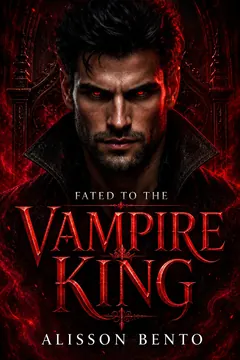
From Alisson Bento’s books
Vampire
A vampire romance about a captive bargain that turns into the only place she wants to be.
Kindle edition · Check Kindle Unlimited availability on Amazon.
A station choice can become a conversation
The decision to change a station is small enough that a character may make it without thinking. If the other person has chosen the song, the change can land like an interruption. If the driver is giving a passenger a ride for the first time, offering the dial can make the car feel briefly borrowed by both of them. A writer can show that shift with a hand movement and a detail about who has been doing most of the talking.
In an invented drive, a woman who has accepted a lift reaches to lower the volume before asking where they are going to stop. The driver says he can turn it off. She keeps it low because she had already heard enough of the song to associate it with the place they have just left. A gesture that looked like preparation for a difficult question also lets the reader see what she wants to carry into the next part of the drive.
Listen for what becomes audible when music stops
In a slow scene, switching something off can have the force of opening a door. The rattling vent becomes clear. A direction spoken from the back seat carries farther than intended. A person on the phone can suddenly be heard by the other passenger. The silence changes what somebody can fairly claim to have noticed, and a little uncertainty about who heard can give a later conversation its shape.
Picture the travelers approaching a place where a friend has promised to be waiting. The driver lowers the volume to hear a voice from outside. The passenger makes out someone calling to a family member by the sidewalk and realizes their friend may still be waiting elsewhere. The practical answer is to keep driving. The more interesting point of tension is that turning down the song has made a piece of somebody else’s evening available to a person in the car.
A novel can suggest the song without quoting it
Music on a page can come through a moving body, the length of a pause or the noise a song is covering. A protagonist notices a singer taking breath just as a passenger begins to explain an earlier choice. She catches the last two words and decides she has understood the rest. The missing words can become important later, when the person who spoke believes the explanation has already been given. The scene has used music to change what was heard instead of asking it to supply a general mood.
Memory provides another tool. A driver recognizes where a drumbeat ought to come in and reaches a red light a second before it does. The memory belonged to drives taken with somebody else, who used to stop talking in time for that part of the song. The current passenger keeps going. The scene can show the driver weighing two relationships through the fraction of a second in which she expected something to happen and turned her full attention to the person beside her.
What happens when the song comes back
A repeated cue works when the story has changed enough for the listener to hear it differently. The first time a character recognizes a song, she might be riding in somebody else’s car and judging whether to mention it. Later, alone, she can find it again and let it play. If she changes stations halfway through on a third drive with the same person, the audience has two memories available for interpreting that small decision.
Traffic can give the repetition a physical shape. A return drive follows the same road but stops in different places. A familiar piece of the song comes on while they wait by a shop a person needed to visit earlier. The listener has time to remember how late they were and see the empty doorway as something more specific than scenery. Music that belongs to the car has given the characters a reason to share that memory at the same moment.
Pick a crime story by the way it sounds
When you sample a crime novel, listen for a sound the viewpoint character would have a reason to notice. A station comes through the kitchen wall because a neighbor has turned it up while working. A person listens for the click of a turn signal because it will tell her that somebody has decided to take the familiar road. A quiet street lets a voice reach a person who would usually miss it. If the book gives sounds that kind of work, you can often tell how much time you will spend inside one character’s attention and what the next silence might let them learn.
Rockstar Games – Grand Theft Auto VI
Rockstar Games – The Music of Grand Theft Auto VI
Further reading · Miami Dark Romance Books for When You Want More Vice City
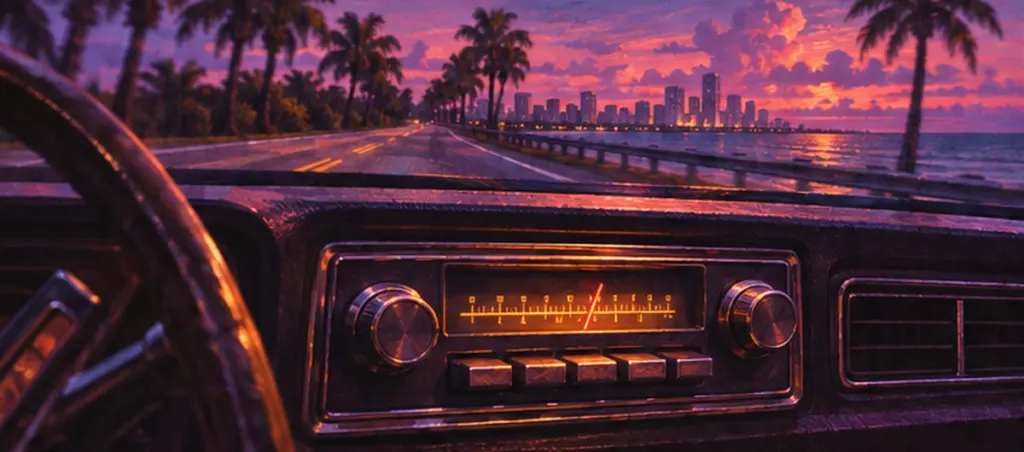
Independent editorial illustration inspired by Rockstar Games’ GTA VI gallery.