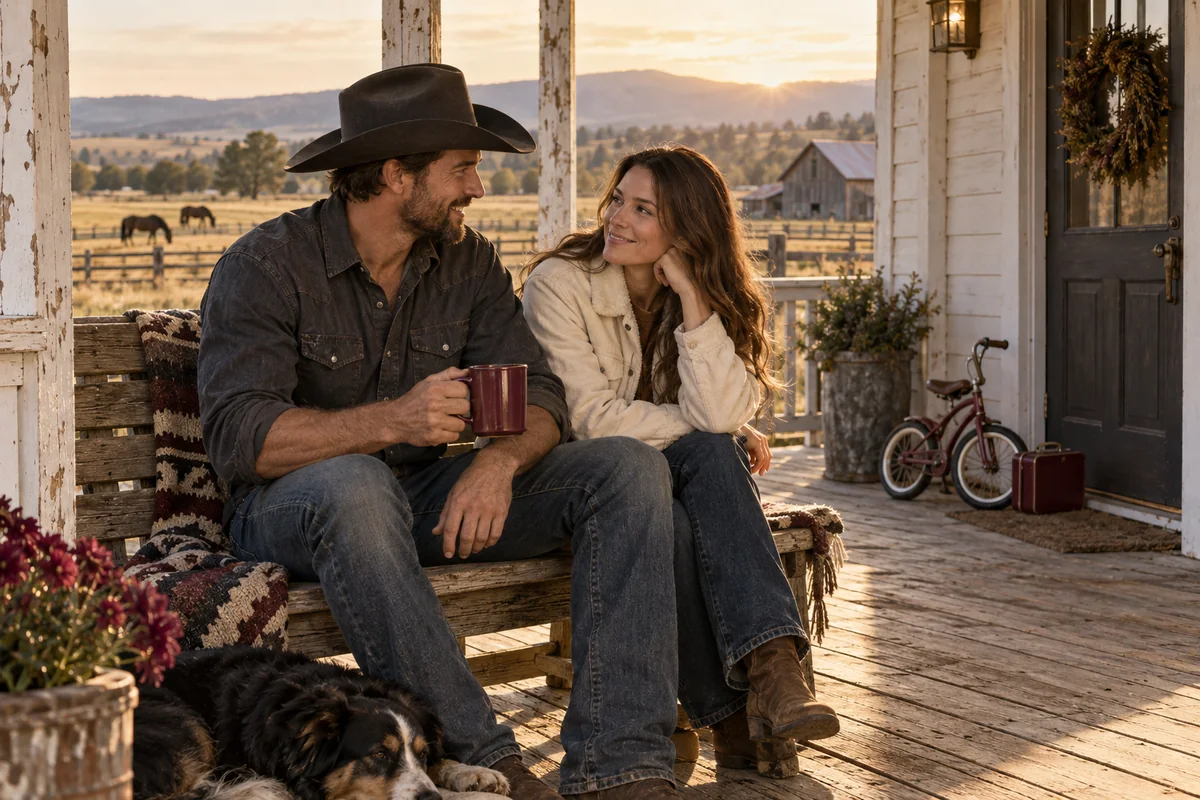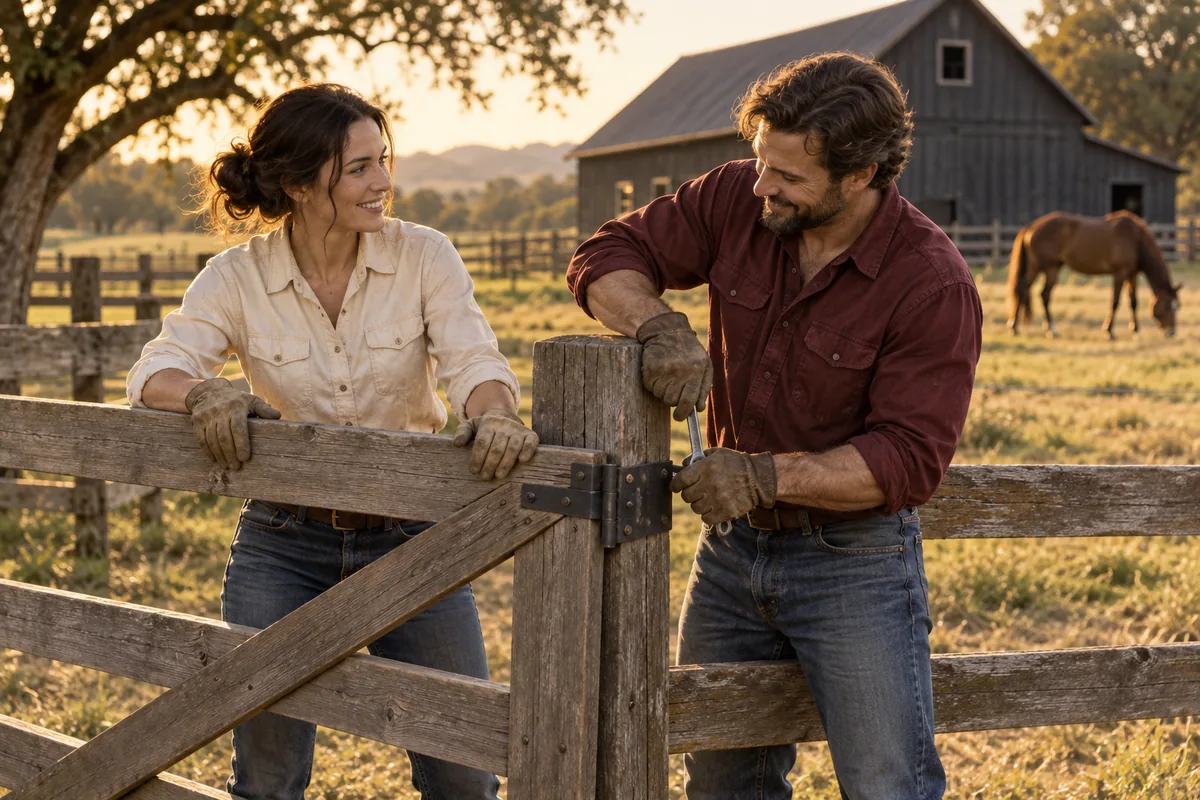
Ranch romance can make forced proximity feel practical: adult protagonists share work, routines, and decisions that repeatedly bring them together. The attraction develops as they notice how the other person handles responsibility, disagreement, and an ordinary demanding day. Being nearby creates opportunities; choosing trust and intimacy turns those opportunities into romance.
The most useful question is not simply whether the adults stay at the same ranch. Ask what keeps them in contact, what each contributes, and what they remain free to choose. A working relationship, a temporary visit, and a joint project can all offer close quarters while creating different romantic stakes.
What forced proximity means in a ranch romance
Forced proximity describes circumstances that make avoiding each other difficult. The fictional adults might coordinate the same project, live on the same property, or need to finish a shared obligation before going separate ways. The mechanism limits distance; it does not establish a right to another person’s affection.
Kirkus’s discussion of close-quarters romance describes forced proximity through circumstances requiring characters to work together nearby. In a ranch setting, repeated duties can supply that structure without every scene requiring a dramatic accident or an isolated bedroom.
Does every ranch romance contain forced proximity?
No. A ranch may be important scenery while the central adults meet by choice and maintain separate daily lives. To identify the trope, look for a concrete reason their paths must keep crossing: shared work, an agreed stay, or a responsibility neither can simply ignore.
The strength of the setup depends on that reason. “They both visit the ranch once” does not promise the same experience as “they must collaborate there for a month.” The second premise gives the romance repeated encounters, accumulated impressions, and a clear point at which the arrangement may end.

From Alisson Bento’s books
Cowboy & Western · Forced Proximity
A cowboy romance about snowed in, stuck together and running out of excuses.
Kindle edition · Check Kindle Unlimited availability on Amazon.
Shared routines let attraction gather evidence
Repeated contact can make small choices visible. One adult returns to a conversation they postponed. Another remembers a colleague’s suggestion, credits it, and changes a plan. Neither action needs to become a grand romantic gesture to reveal something about how the person treats others.
For a reader, this can make attraction feel connected to behavior rather than appearance alone. A character may notice that the other adult is patient when explaining a task, honest about uncertainty, or willing to accept a better idea. The work supplies a situation in which those traits can emerge.
Does working together automatically mean slow burn?
No. Repeated encounters can support gradual attraction, but the romance may also develop quickly. Forced proximity tells you why the adults spend time together; slow burn tells you something about the pace of the romantic progression. If you want a patient buildup, look for that promise separately.
A useful sample question is whether each encounter adds something. The first scene might establish friction, the next reveal competence, and another expose an unexpected concern. If the adults repeat the same argument without learning anything, the routine may feel stalled rather than satisfyingly gradual.
Competence becomes more romantic when it is reciprocal
A ranch-set romance can invite admiration for a capable character, but capability need not belong to only one adult. One protagonist may understand the local working routine; another may organize a complex project, notice a communication gap, or contribute relevant experience from elsewhere.
Reciprocity does not mean both adults perform identical roles. It means the story recognizes that each has something meaningful to offer. A newcomer can ask sensible questions without being treated as foolish, and an experienced character can receive help without losing all dignity.
Notice what happens when a suggestion comes from the less established person. Does the other adult listen and assess it, or dismiss it because of who spoke? A moment of changed judgment can carry more romantic weight than another scene of effortless mastery. It shows that attraction makes room for respect.
Can an inexperienced newcomer still have agency?
Yes. They can admit what they do not know, decide which responsibilities they accept, and make choices about their own goals. Being new to one environment does not make an adult incapable in every area of life. Their learning can be part of the appeal without turning them into a permanent dependent.
A useful invented example would pair an adult ranch manager with an adult event coordinator. The manager knows the working context; the coordinator knows how to organize the agreed project. Friction can arise from differing priorities, while the romance develops through recognizing each other’s expertise.
An invented storm scene shows cooperation rather than instruction
Imagine an adult temporary worker, Lena, and an adult ranch owner, Tom, reviewing their fictional project before a forecast storm. The scene is about communication and shared responsibility, not a guide to weather preparation, animal care, or actual ranch operations.
Tom explains which parts of their agreed schedule are changing. Lena asks for clarification and points out that two commitments now overlap. Instead of treating the question as criticism, Tom checks the conflict. Lena then identifies a task she can take responsibility for while another experienced worker handles a different concern.
The exchange reveals several things at once. Tom can acknowledge an oversight. Lena can be honest about her limits without abandoning her contribution. Both can adjust a plan without making the disagreement personal. Those are specific story actions that can support a believable shift from irritation to respect.
After the immediate work is finished, Tom might ask whether Lena wants company for dinner. That invitation creates a separate personal choice. She can accept, decline, or suggest another time. The work brought them together; her response determines whether the evening becomes more intimate.
The distinction keeps the romantic moment legible. Lena is not required to reward Tom for explaining the job, and Tom is not entitled to her time because he owns the setting. Their new connection gains meaning because it extends beyond what the practical arrangement requires.
Pay attention to roles, housing, and room to disagree
A ranch owner and employee begin from a different arrangement than two independent collaborators. If one adult controls the other’s work or accommodation within the fictional premise, that imbalance can affect how freely they respond. Read how the narrative handles it rather than assuming the setting creates equal choices.
This is a question about the story’s portrayal, not employment or legal advice. Does the adult with less authority get to question a plan? Can they decline personal attention without the book presenting their livelihood as a bargaining chip? Does the other protagonist recognize the difference between work obligations and romantic invitations?
The answers may shape your reading preference. Some readers want clearly negotiated boundaries; others seek fiction that deliberately explores more difficult power dynamics. The trope label alone cannot establish which version a book offers. Look for roles in the blurb and specific content information when those dynamics matter.
Does forced proximity mean the characters have no choices at all? No. They may have limited options about where to work while retaining choices about what to share, how to communicate, and whether to become personally involved. A satisfying setup can acknowledge practical constraints without treating every private boundary as an obstacle to be conquered.
Only one bed and isolation are optional additions
A ranch romance can use the only-one-bed trope, but shared work does not require shared sleeping arrangements. Two adults can spend long days collaborating and return to separate rooms. The attraction may gather force precisely because they keep choosing another conversation when the required work is done.
Likewise, a ranch setting does not automatically mean complete isolation. The premise may include coworkers, relatives, visitors, or a nearby community. If you want a story concentrated almost entirely on the couple, look for that directly instead of assuming distance from a city removes every supporting character.
What is the difference between proximity and intimacy? Proximity is access to repeated contact. Intimacy grows when the adults understand each other more deeply, disclose something meaningful, or respond with care. A shared lunch can remain purely practical; a brief conversation across separate rooms can become emotionally revealing.
That difference gives ordinary scenes their spark. The romantic turn may be one adult noticing the other is unusually quiet and asking an open question, then accepting that they are not ready to answer. The setting provides time together; respect determines what that time can become.
A working partnership needs space for separate ambitions
Shared tasks can make a couple look compatible before the story addresses their future. One adult may plan to stay at the ranch, while the other accepted a temporary role with a clear end date. They can work beautifully together and still need to discuss whether their broader plans fit.
Look for the point where practical cooperation turns into a personal question. Does the temporary worker want to extend the stay for their own reasons? Can the established character imagine changing a routine? A romance becomes more specific when both adults’ goals survive the attraction long enough to be negotiated.
Does staying prove love? Not by itself. A character can choose to stay, leave, or build another arrangement, depending on the story. The emotional payoff lies in a future both want rather than an automatic demand that one adult abandon every plan formed before arriving.
A ranch plot can also involve family responsibilities, but those deserve their own attention. The single-dad cowboy romance guide explores parenting and working routines together. Here, the central question remains how shared adult work creates opportunities for respect and attraction.
Choose the working dynamic before choosing the scenery
Start with who is at the ranch and why. An owner hosting a visitor, an employee working a temporary contract, and equal partners developing a project offer different reasons for contact. Choose the arrangement that draws you in, then check how much of the story actually follows it.
- For everyday competence: seek a premise where the adults’ duties affect their decisions and impressions of each other.
- For mutual learning: look for distinct skills or perspectives that both protagonists can contribute.
- For gradual closeness: check the pace of the romantic arc separately from the shared setting.
- For privacy: check whether the book emphasizes an isolated couple or a larger social world.
- For clear boundaries: notice authority, accommodation, and how personal invitations are handled.
A sample can show whether the dialogue makes work scenes lively and whether disagreements reveal character. It cannot confirm the entire relationship’s development or every later intimate scene. Use exact-book descriptions and available content notes for heat, important themes, and the couple’s ending.
Explore the cowboy romance catalog with a clear idea of the partnership you want. Shared work is most compelling when it gives the adults more than an excuse to stand close: it lets them discover how the other person acts, what they value, and whether another day together could become a chosen future.