
Choose a protector whose assignment can be tested
Danielle L. Jensen’s A Fate Inked in Blood gives Freya protective magic and gives Bjorn an order to protect her. The order comes from his father, a jarl who believes Freya’s power can help him rule Skaland. The premise gives you a protector with obligations beyond the person he is guarding and a woman whose ability to protect herself is part of what puts her in danger. Start here if you want a Norse-inspired fantasy romance where the reason for keeping someone safe matters to the relationship.
In this kind of book, ask who decided the two people had to stay together. A guard hired by a traveler can be asked to leave. A guard commanded by a ruler may have obligations that continue even if the traveler wants a different arrangement. In an invented example, a captain asks a guard to keep a messenger safe until dawn. The messenger learns that waiting will leave a village without warning of an attack. Both can agree that the messenger should live and still disagree about where they should go.
In a sample, look for a reason the protector’s assignment will matter during an ordinary conversation. If a character wants to cross a street to speak to someone, can the protector ask them to wait or make them wait? The difference can show you how much authority the guard has and how the book plans to use it. When both characters can make decisions that affect the other, a small disagreement has room to develop into trust, suspicion or attraction.
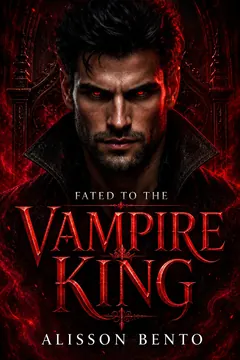
From Alisson Bento’s books
Vampire
A vampire romance about a captive bargain that turns into the only place she wants to be.
Kindle edition · Check Kindle Unlimited availability on Amazon.
A shield maiden who can protect herself
The publisher’s description starts with Freya trapped in a marriage she never wanted. Her husband betrays her to the jarl, and in a fight against the jarl’s son she reveals a power that lets her repel attacks. The jarl binds her with a blood oath and gives Bjorn the job of guarding her. Freya still has to learn to control her magic and train to fight. The synopsis sets up the romance alongside those demands and identifies this as the opening book of the series.
The protective magic matters even before you know what will happen in a fight. Another character wants control of what Freya can do. A guard can keep her alive while also making it harder for her to act without being watched. If you like your fantasy romance to put attraction next to questions about who gets to decide, the setup gives you something concrete to follow from the beginning.
You can also use the premise to decide how much action you want. A person learning to fight may spend time training, while a person trying to keep their ability secret has a different kind of problem in a crowd. A reader interested in the relationship can look for what the characters learn about each other while those problems are still active. You may find you are most interested in the guard’s opinion of the assignment, the shield maiden’s own ambitions, or the moment when the two have a reason to talk about what they want.
Penguin Random House’s page for A Fate Inked in Blood
Read the oath as closely as the battle
Consider an invented character named Elias who stands before a burning gate while his sworn shield, Kaelen, waits for orders. Kaelen has taken the oath to stop any attack that threatens the village behind him. He holds his spear ready and scans the smoke for enemy archers or raiding parties. Yet he cannot decide where his charge goes because the path forward is blocked by collapsing stone walls. This specific moment traps the protector in a state of paralysis that tests his resolve more than any physical blow would. The text does not name real authors or published titles, but it constructs a scene where action halts due to internal conflict rather than external defeat.
The story explores how a bond formed by oaths can become a cage when circumstances shift too quickly. Kaelen looks at Elias and sees a boy who has never seen war before him. He knows he must protect the charge at all costs, but he lacks the authority to move without explicit command from a leader who is injured and unconscious inside the keep. Every second of hesitation increases the danger for the villagers hiding in the cellar. The narrative forces the reader to watch Kaelen weigh the risk of moving blindly against the certainty of standing still. He knows that charging into the dark might save some lives but could also lead his shield to fall before he can reach safety. This tension creates a quiet intensity that rivals the loudest battles found in other stories.
Readers will find themselves holding their breath as Kaelen scans the horizon for any sign of movement. The prose describes the dust settling on his armor and the sound of distant thunder rolling over the hills. He thinks about the promise he made to stand between the innocent and the violence. Yet the fog obscures the road, making it impossible to choose a direction without risking everything. The author does not offer an easy solution or a sudden rescue from above. Instead, the text lets the silence grow louder until Kaelen must make a choice that defines his character. This section serves as a reminder that true strength often lies in the struggle to decide when no clear path exists. The reader leaves this part of the guide with a deeper understanding of what it means to be bound by honor while facing an unknown future.
When the person giving orders wants something else
In an invented court, when a leader issues a command, the expectation is usually clear obedience. Yet situations arise where the person giving orders also wants something else that conflicts with the public directive. This creates a tension known as divided loyalty. Imagine a fictional court in the kingdom of Aethelgard facing an urgent evacuation order due to a sudden magical storm. The High Chancellor stands at the center of the crisis, holding two conflicting responsibilities. On one hand, he must ensure every citizen flees the capital before the lightning strikes. On the other hand, he secretly wants to keep his private collection of ancient star charts safe in the royal vault beneath the palace.
The Chancellor knows that moving the star charts will delay the evacuation by at least an hour. He believes these maps are too valuable to lose, even if their loss costs lives. His desire for the charts represents a personal attachment that overrides the duty to protect the general population. This internal struggle defines the moment of divided loyalty. The reader can see how his hesitation changes the flow of events outside the palace doors. Citizens wait in the rain while guards argue over whether to force open the vault doors. The Chancellor watches from his window, torn between saving his work and saving people. His secret wish acts as a hidden variable that alters the outcome of the entire evacuation plan.
This scenario shows how personal desires can quietly undermine official commands without anyone realizing it at first. The story does not rely on grand villainy but on a small, selfish choice made by someone in charge. It illustrates that divided loyalty often looks like indecision or slow action to those outside the room where the decision happens. Readers should notice how the character’s private goal shapes the public result. In this imagined court, the delay caused by protecting the charts leads to a flood of refugees trapped inside. The narrative forces the audience to confront the cost of putting personal treasures above human safety. Such stories help readers understand the complexity of leadership when duty and desire clash in real time.

From Alisson Bento’s books
Vampire
A vampire romance about a hero who claims her and never lets anyone forget it.
Kindle edition · Check Kindle Unlimited availability on Amazon.
Watch what changes when magic runs out
Consider a moment in a story where a character casts a defensive barrier to protect their companion from an incoming attack. The text explicitly states that maintaining this shield drains the caster’s life force, requiring them to bleed heavily if the magic fails or ends too soon. This specific rule changes how the characters interact during the fight. When the threat is active, the protected person stands close to the one holding the spell up. They do not move away to find safety on their own because doing so would leave the caster without enough energy to keep the wall standing. The physical proximity becomes a sign of reliance rather than fear. The reader sees that staying together is the only way both people survive the immediate danger.
The scene shifts when the magic finally runs out. The barrier vanishes instantly, and the air grows cold around them. At this exact moment, the character who was casting the spell collapses to one knee while blood stains their shirt. Their companion does not run away from the fallen body or the sudden vulnerability. Instead, they drop to the ground beside them and wrap an arm around the shivering figure. This reaction shows that trust has survived the loss of power. The reader understands that the bond between them is stronger than the magical protection itself. The person who lost their magic does not feel abandoned because the other person stepped in to fill the gap left by the spell. They share body heat and silence while waiting for help to arrive.
This exchange reveals how the story handles the end of a supernatural advantage. Without the shield, both characters must rely on their own physical strength and courage to face whatever comes next. The narrative does not show one person saving the other through magic again. Instead, it shows two people supporting each other with bare hands and steady breaths. The reader learns that true safety comes from knowing another person will not leave you when things get hard. The collapse of the spell forces the characters to confront their reality without any magical crutch. It proves that their connection was built on mutual care rather than shared enchantments. The scene ends with them moving forward together, even though one of them is injured and weak.
Decide whether the fantasy or the romance should take the lead
You must choose whether the fantasy world or the romantic relationship drives the story forward. A series opener often spends many pages establishing magic systems before introducing a love interest. This setup allows readers to understand rules and history without immediate emotional pressure. In contrast, a standalone novel usually balances both elements from the very first chapter. The plot moves quickly because there is no need to return for more later. Readers who want deep lore might prefer the slower pace of an opening volume. Those seeking quick emotional payoff should look for books where feelings develop alongside adventure.
Check the sample synopsis to see which element holds more weight in the text. If the description focuses on battles and political intrigue, the fantasy takes the lead. The romance becomes secondary to the larger conflict or serves only as a subplot. Conversely, if the summary highlights emotional conversations and personal growth, the romance dominates the narrative structure. You can also examine how often character interactions interrupt action sequences. Frequent pauses for dialogue suggest the relationship is central to the plot progression. Less frequent interruptions indicate that external forces control the story direction regardless of who feels what.
Check the series page or a spoiler-free note to distinguish a series starter from a standalone. A series opener often leaves major questions unanswered or ends with a cliffhanger. This technique encourages readers to buy the next volume to find answers and closure. The relationship may remain unresolved because the main plot requires continuation. A standalone novel provides complete satisfaction within its own pages. Every thread gets tied up before the final page turns. The fantasy elements do not need expansion in future books because the world feels finished. Choose based on your desire for ongoing adventures or a single complete experience. Both formats offer valid paths to enjoyment depending on your current mood and time availability.
Pick the kind of protection you want to read
When you seek a sworn guard, you find protection rooted in duty and unspoken loyalty. This character stands between danger and the beloved because it is their sacred vow, not personal desire. Imagine a man who watches a quiet village from the woods. He does not speak much, yet he knows every path and every threat before it arrives. His strength comes from training and a code older than kings. You choose this figure if you want safety that feels solid and reliable. The tension builds slowly as external forces try to break his oath. Readers who love quiet moments will see how his silence speaks louder than words ever could. This type of romance offers comfort through steadfastness rather than grand gestures or sudden changes.
A magical partner brings a different kind of shield into the story world. Here, love itself becomes a powerful force that defies normal laws of nature. Consider a woman who can weave light around her home to keep out shadows. She does not fight monsters with steel but with spells born from deep affection. This choice suits those who want wonder mixed with emotional intensity. The magic grows stronger whenever the couple faces hardship together. You might see a scene where their combined power saves a child from falling darkness. Such stories explore how supernatural abilities reflect the depth of human connection. Readers seeking fantasy elements without losing emotional truth will find this path very appealing.
Choosing a character who protects someone from their employer adds workplace stakes to personal devotion. This setup creates conflict between job demands and heart desires. Picture a manager who must fire a friend to save his company from collapse. He struggles with guilt while trying to keep the business running smoothly. The romance develops as he seeks ways to fix both problems without losing either person. This angle works well for stories about ethics, loyalty, and professional pressure. You will see how corporate rules clash with personal morals in meaningful ways. It allows writers to examine power dynamics within modern settings. Readers interested in realistic struggles alongside romantic feelings will appreciate this specific flavor of conflict.