Start with Lorraine Heath’s The Duchess Hunt if you want a heroine who has to help the man she loves look for a wife. Try Sherry Thomas’s Tempting the Bride for a viscount who has long wanted a woman who dislikes him. Choose Mackenzi Lee’s The Gentleman’s Guide to Vice and Virtue for a queer young adult adventure in which Monty starts a tour of eighteenth-century Europe with a secret crush on his best friend. In each, an existing duty or relationship gives the person doing the longing reasons to stay close.
The seven choices include marriage, work, friendship and an old attraction renewed after years apart. Some characters start out wanting different things. Others cannot tell whether the person they love has felt the same all along. The guide describes what the opening or published premise lets you know. It gives you a way to sample by the source of the ache, without revealing who finally says what.
Unrequited love historical romance books
Unrequited love is romantic feeling that the other person does not return at the point in the story you are considering. A partial point of view can make that hard to confirm. A heroine may know that a man plans to marry someone else and draw a reasonable conclusion. A longtime friend may assume that what they share can never become romantic. In a story about apparent one-sided love, that conclusion can be the character’s best guess while the reader has other evidence. The difference matters if you want to see someone genuinely change their feelings or if you would rather watch two people find out what the other has been hiding.
Historical settings make that uncertainty concrete. A private secretary can read the letters that arrive for her employer, but she may have no standing to ask him what he wants for himself. Someone whose income depends on marriage has a reason to weigh a proposal differently from the person who made it. A long friendship may offer a place to speak while giving both people something to lose. For contemporary books and the broader differences between these forms of longing, see the unrequited love romance guide.

From Alisson Bento’s books
Vampire
A vampire romance about a captive bargain that turns into the only place she wants to be.
Kindle edition · Check Kindle Unlimited availability on Amazon.
Heroine pining for hero romance novel
Penelope Pettypeace and Annabelle Huxley are two good starts if you want to follow the heroine’s feelings from the beginning. Penelope has years of professional responsibility and a new assignment that appears to settle what the duke wants. Annabelle has years of shared history and a reunion that forces her to reckon with what she remembers. Theo in The Ugly Duchess has a different experience. A proposal appears to answer her question before she learns why it was made. Choosing among these women means deciding what kind of uncertainty you want to follow, even before you pick a time period or an author.
You can also ask how much of the hero’s perspective you want early. If you can read that someone is attracted to her, the tension comes from the gap between what they know. If all you can see is how he behaves around her, you may share her unease for longer. Neither arrangement guarantees a gentler book. A proposal made for practical reasons can still have consequences after both people know they are interested in each other.
The Duchess Hunt by Lorraine Heath
Hugh Brinsley-Norton, the Duke of Kingsland, gives his private secretary Penelope Pettypeace the job of helping choose his duchess. Penelope has worked for him for years and loves him. The opening puts her at a desk considering the letters sent by candidates. Her ability to do the work is exactly the reason he has asked, and there is no easy way to complete it without thinking about the role she would like to have herself. The novel is the second book in Once Upon a Dukedom. HarperCollins edition Publisher’s opening excerpt at Everand
Choose this for longing sharpened by the ordinary language of work. One person can request a letter, change a deadline or decide which applicants to see. That gives the secretary actual work to do while the romantic question remains hers alone to consider. The setup also gives you something more precise than a love triangle. The first question is how the duke sees the woman doing the work, while an entire group of applicants knows him through the possibility of a title. Read the opening if you want a heroine whose professional judgment matters even when the assignment hurts.
Ever Yours, Annabelle by Elisa Braden
Lady Annabelle Huxley loved Robert Conrad when they were young. He got her out of trouble until one rescue left him seriously injured and changed his future. Seven years later, Robert is the man she has to meet again, with a life that has changed in ways she cannot infer from the boy she remembers. The author describes his adult attraction and his continuing urge to protect Annabelle. The opening tension comes from the history of her affection and what she can know about him after the separation. Elisa Braden’s book and prequel details
Read this for the difference between loving a memory and listening to the person who has lived through the intervening years. Childhood affection may be sincere without giving somebody a full understanding of another adult’s choices. A return creates new opportunities to ask what is welcome and to understand the cost of things that used to be taken for granted. Braden identifies it as a prequel to Rescued from Ruin. It gives you a way to enter the series through Annabelle’s story, even if you found the numbered books first. A reader who prefers a heroine with a career at stake can pick Heath instead.
The Ugly Duchess by Eloisa James
Theodora Saxby, known as Theo, has been James Ryburn’s close friend since childhood. A public proposal before the prince appears to make his feelings plain. James’s father has another reason to want the marriage. He needs Theo’s money to salvage the family’s finances and tells his son to persuade her that he loves her. James recognizes in the opening that learning the cause of the proposal could cost him their friendship as well as their marriage. The author sets the emotional question inside a story inspired by The Ugly Duckling. Eloisa James’s synopsis and chapter excerpt
This is a good pick if you want a heroine who has to reconsider the meaning of a gesture that once reassured her. It takes more than one speech for her to be able to believe what someone says about the past. Read the sample to see that the friendship exists before the proposal and has its own value. If the arrangement itself is what interests you most, there are more starting points in the historical marriage-of-convenience guide. That guide compares the reasons characters accept a bargain. Theo’s story asks what one person is allowed to know before accepting it.
The Countess Conspiracy by Courtney Milan
In 1867, widow and scientist Violet Waterfield listens as Sebastian Malheur gives a lecture on work they discussed together. He is her longtime friend, and the theories he presents as his belong to her. When Sebastian considers ending the arrangement, Violet has to think about what she wants to keep, and which parts of her life can remain hidden. The two have been connected for a long time, but their public partnership gives observers little reason to understand what they mean to each other. Sebastian’s long attachment and Violet’s uncertainty give the book its slow movement toward a more honest relationship. Courtney Milan’s synopsis, excerpt and content notes
This is the choice for a Victorian romance in which affection has to coexist with respect for work. Notice how the first chapter changes meaning once you know who did the research, and how an offer to help can look different if the person making it has been able to speak for both of them. The desire to be taken seriously stays on the page alongside the desire to be loved. Milan lists the novel as book three of The Brothers Sinister and records the intervening novellas separately. To find the same story in French, look for Violet and Sebastian in Le Complot de la comtesse. French edition on Milan’s site
The Duke Who Didn’t by Courtney Milan
Jeremy Wentworth has been away from the village of Wedgeford for three years. Chloe Fong once told him he could pursue her when he learned to be serious. He comes back still thinking about her, and the excerpt makes clear that he has been considering how to persuade her that his feelings are real. Chloe has her own plans and is used to making lists. His determination and her doubts set up a romance where one person has already taken feelings seriously, while the other has reasons to pay attention to more tangible commitments. Milan’s description and excerpt
Set this beside The Countess Conspiracy if you want to choose between two situations from the same author. Violet and Sebastian share research and the risk of ending an agreement. Chloe and Jeremy have old humor and a question of whether she can hear a sincere statement from someone she thought was joking. The Duke Who Didn’t opens The Wedgeford Trials. Read The Marquis Who Mustn’t and then The Earl Who Isn’t to continue through the series. Start with Chloe if you want village life and a lighter courtship to put some distance between this book and the more anguished cases on the list. The Wedgeford Trials reading order
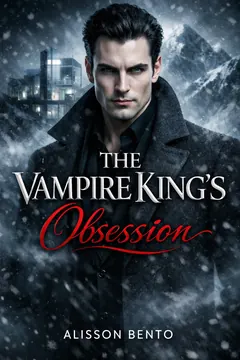
From Alisson Bento’s books
Vampire
A vampire romance about a hero who claims her and never lets anyone forget it.
Kindle edition · Check Kindle Unlimited availability on Amazon.
Tempting the Bride by Sherry Thomas
David Hillsborough, Viscount Hastings, has loved Helena Fitzhugh for years. Helena has little patience for him and is involved with the married Andrew Martin. When an encounter threatens to expose her affair, David helps her protect her reputation and they elope. An accident leaves Helena with gaps in her memory, and David has a chance to present the relationship from a different position. The author’s excerpt gives you his feelings while showing how much he has done to make sure they will be hard for Helena to believe. Sherry Thomas’s excerpt Berkley edition
Choose this for years of affection complicated by the way someone has actually behaved. David’s feelings by themselves would be easy to describe. How he has spoken to Helena, and the reason she would judge him as she does, give those feelings consequences. It is also a story about what someone is entitled to know if an earlier opportunity to say no has disappeared. The claim of a marriage or the opportunity to make a better impression cannot settle the past by itself. The book is the third full-length novel of the Fitzhugh trilogy, after Beguiling the Beauty and Ravishing the Heiress.
The Gentleman’s Guide to Vice and Virtue by Mackenzi Lee
Henry “Monty” Montague is a young bisexual man about to take a Grand Tour of Europe with Percy, his longtime friend and crush, and his sister Felicity. His father expects him to take on family responsibilities when the trip ends. Monty wants a last stretch of freedom and time with Percy. A reckless move changes the trip and gives him more to think about than whether a flirtation will work. This is young adult historical adventure with an important love story, a good choice when you want the relationship to unfold beside travel, mishaps and family expectations. Mackenzi Lee’s book page
Lee starts with a long friendship and lets the unfamiliar places give Monty different reasons to reconsider what he has known about Percy. A crush that makes sense in one room has to make sense in the next place he finds himself. For a book club that wants a different setting from an English drawing room, pay attention to who the friends are able to speak to at home and how the tour changes their options. The book opens the Montague Siblings series. Follow with Felicity’s The Lady’s Guide to Petticoats and Piracy if what interests you next is what she wants to do after the trip. Publisher’s Montague Siblings series in Brazil
What changes when the person who is loved can finally answer?
Some of these books make you wait for a decision, and others make you wait for the conditions of a decision to change. Penelope’s place in the duke’s household affects who can start a private conversation. Theo has been offered a marriage before she knows what made it possible. Helena has to think about a relationship while some of the information she would normally use is missing. Compare those situations by asking which person can end the conversation or reject the offer without losing something unrelated to love. In historical fiction that something can be an income, support from a family or the ability to go on living in the same house.
Doing the same with Milan’s two books leads somewhere different. Violet and Sebastian have been talking to each other about science for years. The work is what lets one of them make an offer the other person must take seriously, even if they disagree about how to protect it. Chloe and Jeremy have ways of speaking that were shaped by play. A sincere offer has to sound different to her before it can even be weighed. Both versions can be about patient affection, and they make the loved person’s own priorities particularly visible.
Which reading order lets you start with the couple you want?
For a first volume with very little earlier series context, choose The Duke Who Didn’t or Monty’s adventure. Annabelle’s book is a prequel, so it is another route in through a couple’s early place in its fictional world. Heath and James position their stories further along their series, but their public descriptions identify the new leads and the problem those leads are facing. Check those descriptions if you want to begin with a wedding search or a proposal and decide about earlier books later.
Thomas’s Fitzhugh books offer a reason to consider publication order even if you can follow Helena’s situation. Helena is Fitz’s sister, and the earlier Ravishing the Heiress gives his side of a family that has already negotiated its own promises. In Milan’s Victorian series, reading earlier volumes connects you to the social group before you ask what Violet and Sebastian are keeping private. If you want to read one book this week, use the opening that interests you most. If you want to return to the same circle, keep the author’s series order handy.
How do you find the right edition and pick the right kind of longing?
For Monty and Percy, the Brazilian edition is O guia do cavalheiro para o vício e a virtude, Record, 9788501114235. The V&R Spanish edition is La guía del caballero para el vicio y la virtud, 9789877473216. Pocket Jeunesse publishes Les aventures d’un apprenti gentleman in French. In Italy, Mondadori’s 9788804729693 combines Monty’s Guida ai vizi e alle virtù per giovani gentiluomini with Felicity’s book. In Germany, look for Cavaliersreise. Die Bekenntnisse eines Gentlemans, 9783551560384, from Königskinder. Record edition Spanish V&R edition record French library catalogue Italian collection record German edition record
If you want a quiet impossibility sustained by daily work, choose Heath. For the difference between a public promise and its motive, choose James. Braden lets the passing years change both people, and Milan gives you a choice between shared scientific work and a past friendship in a village. Thomas is the choice for hurt that has accumulated in conversation. Lee keeps the stakes of the crush while sending the characters far from home.
Try reading until someone does a favor for the person they want. Find out why the favor is possible and what it costs, and whether the other person can see what it means. A professional task, a ride through a new city and years of conducting research together give people different ways to be generous. The book best suited to your mood is the one where the next thing the characters owe each other is still worth finding out after you know somebody is in love.