In a romance book sample, look for a voice you enjoy, a viewpoint you can follow, dialogue that makes you curious, and a balance of scene and explanation that suits your mood. You are testing what it feels like to read these pages. A perfect list of favorite tropes cannot compensate for sentences you keep wanting to escape.
The opening is useful evidence about style, but limited evidence about the whole story. Read it with a few clear questions, then check the description and content notes for things those pages cannot establish.
Give the sample one job: test the reading experience
A blurb can tell you about rival adults sharing a workplace, a dangerous fictional family, or a second chance after years apart. A sample lets you experience how the writer handles attention, hesitation, humor, and emotion. That difference matters because similar premises can feel very different on the page.
Before reading, name what you want tonight. Perhaps you want a sharp internal voice that turns embarrassment into jokes. Perhaps you want quiet observation and room to linger over a conversation. This is a preference check, not an examination the book must pass for every reader.
Should you use a sample even when you love the premise? Yes, if one is available and style strongly affects your enjoyment. The purpose is to learn whether the premise arrives in a form you want to spend time with. You may discover that a trope you rarely seek becomes irresistible in the right voice.
Read enough actual narrative to notice a pattern. Front matter, dedications, and contents pages tell you little about the storytelling rhythm. You do not need to finish the entire preview if the answer becomes clear sooner.
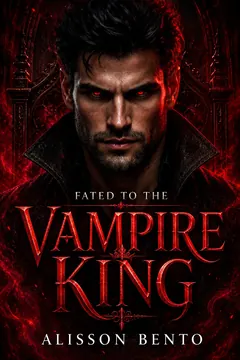
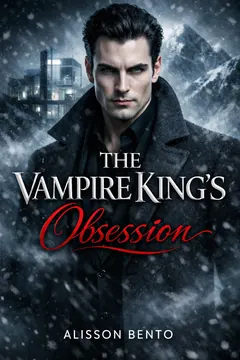
From Alisson Bento’s books
Vampire
A vampire romance about a captive bargain that turns into the only place she wants to be.
Kindle edition · Check Kindle Unlimited availability on Amazon.
Notice viewpoint distance before choosing a favorite POV
Point of view, or POV, describes whose perspective shapes the scene. First person uses an I narrator; third person refers to a character as he, she, or they. These labels help describe the presentation, but they do not tell you exactly how intimate the narration feels.
First person: do you enjoy this particular mind?
Ask whether the character’s observations interest you. Do you enjoy their humor, defensiveness, certainty, or contradictions? A narrator can make flawed choices while still being compelling company. You do not need to agree with a character to enjoy following their view of a room.
Pay attention to how much internal commentary accompanies action. Some readers love an adult narrator who argues with every inconvenient feeling. Others prefer fewer explanations between spoken lines. Your response to the actual paragraphs is more useful than deciding that all first-person romance will feel the same.
Third person: how close does the scene bring you?
Third-person narration can stay close to one character’s reactions or take a wider view. Notice whether you feel anchored in someone’s immediate experience, guided by a more visible narrator, or moved between perspectives. Any of these approaches may suit you when the transitions are clear and the voice appeals.
If the sample switches viewpoints, check whether you can tell who is noticing and wanting what. If it shows only one viewpoint, do not assume the full book uses only one. The description or author information may clarify the structure without revealing plot.
Read sentence rhythm as a pleasure signal
Rhythm is the movement you feel across sentences and paragraphs. A clipped exchange can sound alert, tense, or brisk. A longer passage can hold uncertainty, build atmosphere, or let a thought change direction. Neither length is a guarantee of energy or emotional depth.
Instead of counting short sentences, ask whether your attention moves comfortably. Does a description give you an image before the next action? Do fragments add force or repeatedly interrupt your flow? Do reflective passages deepen the moment or make you impatient to return to it?
Separate slow romance from slow-feeling prose
A relationship can take time to develop while individual scenes move quickly. Equally, characters may feel immediate attraction inside a leisurely narrative. When a sample feels slow, name what you mean: delayed interaction, dense description, repeated internal debate, or simply a rhythm you do not want tonight.
That observation keeps you from rejecting every slow-burn premise because one opening did not suit you. The practical question is whether you want more time inside this movement of language. Reading for pleasure does not require you to admire a style from a distance until it becomes enjoyable.
Listen for dialogue chemistry beyond witty lines
Dialogue chemistry can appear through jokes, but also through restraint, uneven honesty, careful listening, and a question one adult refuses to answer directly. You are looking for an exchange that changes your interest in the people speaking.
In an invented example, two adult event planners disagree about a seating chart. One offers a playful challenge; the other answers it, then quietly moves a chair to accommodate the first person’s concern. The attraction might live as much in that attentive action as in the clever reply. This is a hypothetical scene, not an excerpt from an existing book.
Notice what the exchange lets you infer. Can you distinguish the speakers without every line being explained? Does the teasing sound enjoyable to you? If someone speaks harshly, does the surrounding narration make clear how that lands? Fictional intensity can be appealing, but a label alone cannot tell you which presentation you will enjoy.
What if the romantic leads have not met in the sample? You can still evaluate speech patterns, humor, and the protagonist’s interactions with others. Keep couple chemistry marked as unknown rather than treating an unseen meeting as proof that the relationship will be weak.
Check how the opening balances scene and explanation
A scene gives you a present situation: someone wants something, acts, meets resistance, or changes course. Explanation provides context about history, setting, and relationships. Both can be useful. The question is whether their balance supports your involvement.
Try describing the current moment in one sentence. An adult architect needs a colleague’s approval before a deadline; a traveler discovers the host is a former partner. These invented examples offer a situation you can follow even before you know the whole past.
If you cannot say what is happening, consider why. An opening might deliberately create mystery, or it might introduce more names and history than you can comfortably hold. Being uncertain about a secret is different from being uncertain who is speaking or where the scene takes place.
Ask whether backstory changes the present moment
A detail about an old disagreement may make a current greeting feel charged. Several pages of family history may suit a reader who wants to settle into a wider world. Notice your own response rather than assuming every paragraph of explanation is a flaw.
You do not need a spectacular event on page one. A quiet scene can grip you when a small choice matters. Likewise, a dramatic opening can leave you cold if the voice gives you no reason to care about the person making that choice.
Know what a romance sample cannot confirm
Can the sample tell you how explicit the later scenes are? Usually not reliably. An opening without on-page intimacy does not establish the full book’s heat level. A flirtatious opening also does not establish every later scene’s presentation. Use specific author content information or a clear description for those questions.
Can it confirm the ending? No. A preview stopping mid-scene is a boundary of the preview, not proof that the full book has a cliffhanger. For whether a relationship continues into another volume, consult series guidance rather than the sample cutoff.
Amazon describes its Read Sample feature as a preview and documents limitations across formats and languages. Check the selected edition’s available preview. There is no need to assume every edition or reading setup offers the same experience, and an unavailable sample gives you less information, not a verdict on the prose.
Content boundaries deserve their own check. The absence of a theme in a few opening pages does not mean it is absent later. A sample can show something you do not want to read; it cannot certify everything the rest of the book avoids.
If you will read a translated edition, sample that edition when possible. The same fictional events may reach you through different language choices and rhythms. Enjoying an English preview does not fully answer whether you enjoy the prose in your intended reading language. Likewise, an audio preview adds a performance to the written voice. Keep your response to the narrator’s delivery separate from what the words themselves do, especially if you are choosing between listening and reading.
Use a three-question voice check without scoring the book
After reading, pause and answer these three questions in ordinary words. A scorecard with twenty categories can make a simple choice feel heavier than it needs to be.
- Would I enjoy spending more time in this viewpoint? Consider the narrator’s observations, emotional distance, and the amount of internal commentary.
- Did a specific exchange or image make me curious? Name one detail that worked, such as restrained humor, an awkward admission, or a setting you could picture.
- Do I want the next scene now? Distinguish active curiosity from feeling that you should continue because other readers love it.
If your answers are mixed, identify the missing information. You might enjoy the voice but need to check relationship resolution. You might like the premise while finding the narration too busy for your current mood. Those are different reasons to wait, and neither requires a public review.
How many pages should you give it? There is no universal number. Read enough to encounter the narrative itself and make a useful choice. A brief preview may leave more unknowns; a longer one may still fail to resolve a later-content question.
Turn your response into the next reading decision
If the sample works, move to the exact edition details and any outstanding content checks. If it does not, name one feature you would prefer in your next try: less internal debate, clearer viewpoint transitions, more restrained dialogue, or a more immediate present scene.
Keep that note specific. Loved the premise, wanted quieter narration tells you more than not for me, while remaining a statement of your experience. A different book by the same author could have a different narrator or structure, so avoid turning a small sample into a claim about an entire catalog.
For a way to remember those preferences, use a small romance reading tracker. If you have already started a book and want to stop, the DNF guide helps separate a mood mismatch from a lasting boundary.
Explore an available sample or a free story with that same curiosity. Let one interesting sentence lead to another, and let your response to the actual voice carry more weight than a crowded collection of labels.