
For free romance audiobooks, start with your library’s digital services or an established public-domain recording project. Then check whether the particular recording is available to you, complete, and in a language you want. A result labelled “free” is only the beginning of that decision. It may lead to a loan, a promotional extract, a subscription offer or an unrelated upload.
The most useful search has two parts: identify a legitimate route, then choose a recording that fits your reading life. This guide explains both. It uses official service documentation and catalogue records, rather than a personal borrowing test. Access remains dependent on your library, country, account and edition; no contemporary romance named elsewhere on this website is promised as a free audiobook here.
Decide what kind of free access you need
A library loan suits someone who wants to hear a book during a defined period and is comfortable returning to the catalogue afterwards. A public-domain recording can suit someone who wants an older work and a clearly identified downloadable recording, subject to relevant local rights. An authorized promotion can suit someone interested in that specific offer, provided its conditions are acceptable. These routes answer different needs.
Before searching, finish this sentence: “I want a complete romance audiobook in this language, without a new paid subscription.” Add a deadline if you have one. This removes tempting but irrelevant results: a famous narrator’s ten-minute excerpt, a discounted ebook, or a membership you do not want to manage. If you are happy to pay later, make that a separate choice rather than letting a search result make it for you.
Distinguish a story preference from a format requirement. You might be flexible about small-town versus historical romance, but unable to use streaming on a journey. In that situation, checking offline playback matters more than finding a perfect trope. If a particular narrator is essential, free access to another recording of the novel will not satisfy the same wish. Write down the non-negotiable first.
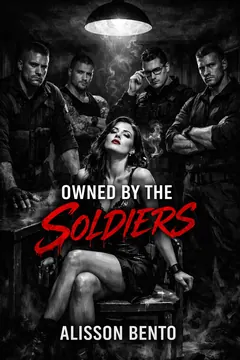
From Alisson Bento’s books
A military romance about a hero who claims her and never lets anyone forget it.
Kindle edition · Check Kindle Unlimited availability on Amazon.
Follow the library’s own doorway
Libby’s official introduction describes audiobook borrowing with a participating library card; each library chooses its collection. Begin on your institution’s website, where you can identify the digital service attached to your membership. Do not assume that a platform used by a reader in another country is included with your card.
Check membership conditions before building a list around the service. A library might distinguish local residents, visitors, students and other categories. Ask which category you qualify for and whether it includes digital audio. A registration page that accepts an application is not a confirmed borrowing entitlement. If membership has a charge, include that in your decision about whether this is a free route for you.
Inside the correct collection, search a known title and author, then apply audiobook and language filters. For discovery, broaden to a romance category after establishing that the results belong to your library. Look at the actual borrowing control, not only the cover. “Borrow,” a reservation option and a sample are different next steps. You need a usable route to the whole recording, not merely proof that somebody catalogued it.
Keep a second candidate available if the first requires waiting. The alternative can share the feature you care about most: contemporary setting, relationship setup or manageable duration. This is more useful than treating an unavailable bestseller as proof that free audio has nothing for you. It also avoids starting a paid trial simply because tonight’s first search did not produce an immediate loan.
Check other library services on their own terms
Hoopla’s official introduction describes card-based access through participating libraries, with collections and borrowing limits varying by institution. If your library lists it, inspect your own account’s conditions. If it lists another provider, follow that provider’s help instead of searching for buttons from a Libby tutorial.
Treat the available borrows as part of your listening plan. If your account displays a limited allowance, compare recordings before committing a borrow. A preview can help you choose; using the full borrowing action merely to discover that the language is wrong can waste an opportunity. Check whether an item is one complete novel, one instalment or a collection before deciding how it fits your allowance.
When an error appears, identify its category. An expired card, unavailable title, device problem and borrowing limit require different responses. Note the exact message and ask the library or provider’s official support about that problem. Repeatedly creating accounts is unlikely to clarify which entitlement is missing. Never give a public discussion board your card number or credentials to troubleshoot a romance loan.
Treat public-domain audio as a distinct reading choice
LibriVox introduces itself as a volunteer project distributing recordings of public-domain texts. Its catalogue is a useful starting point for exploring older writing. It should not be treated as a mirror of the latest retail romance releases. Searching for a current bestseller there because another free-audio list mentions the project confuses different collections.
Its copyright guidance uses US status and asks listeners elsewhere to check local rules; translations and editions need separate attention. Start from the particular record and its linked text, rather than making a legal conclusion from the author’s age alone. If local status is unclear, use a confirmed library route or seek reliable local guidance before downloading. A reachable website does not settle that question.
Choose an older book because its language, social world or narrative interests appeal to you. “Free” does not make every classic the right romance for every evening. If you want present-day dating, a historical courtship novel may not meet that wish. If you enjoy tracing misunderstandings through dialogue, an older text may offer the listening attention you want to give. Read the description without assuming modern genre promises.
One novel can have several different recordings
Two examples show why title alone is insufficient. LibriVox’s English version 4 of Pride and Prejudice identifies Elizabeth Klett as reader. Its English version 2 identifies Annie Coleman Rothenberg. These are recording identifiers, not a ranking of performances. They give you something precise to compare and save.
The linked version 4 labels its first section Chapter 1; version 2 labels its first section Chapters 1–4. Those labels therefore identify different places to pause at the end of the first track. If you want to pause after one literary chapter, that distinction matters more than which version has the larger number. Inspect the specific production’s list rather than assuming another app packages its files identically. If you switch between text and audio, record the chapter as well as the track number. Our text-and-audio chapter map addresses navigation for a different recording. Use its table only with the edition it identifies; it is not a map of the two versions above. The access question comes first here.
Compare the same short portion when possible, using a comfortable listening level and your ordinary headphones or speaker. Notice whether you follow changes of speaker, hear sentence endings and sustain attention. These are personal fit questions, not claims that one volunteer or professional is objectively better. You need not finish a tiring recording because it was free, or defend preferring another delivery.
Save the recording’s direct catalogue link, narrator and language. A note containing only “Austen audiobook” will not reliably return you to the same performance next week. This matters if a later search places a commercial adaptation above the recording you originally selected. An accurate note saves another round of checking.
Check completeness before investing your evening
Look for a clearly described full book, an identifiable production and an orderly section list. One long audio file does not establish completeness: it might be a collection, repeated material or one part of a longer work. Many small files may form a complete legitimate recording. The useful question is how the provider describes the edition, and whether its parts make sense together.
Do not use duration alone to diagnose an abridgement. Speaking speeds and production choices change running time. Look for the edition description, any explicit abridged or adapted label, and the relationship between sections and the underlying work. If you want the unabridged text and cannot establish what is offered, choose a clearer listing. Avoid treating a shorter performance as evidence of unauthorized copying.
Suppose, hypothetically, that you find “Book One, Part Two” with an attractive cover. Before borrowing it, locate Part One and check whether both belong to the same production. If only the second part is accessible, you have found an incomplete route for your purpose. Save the details and choose another listen, rather than assuming the missing opening will appear inside the file.
Narration labels deserve their own check. Two credited voices do not tell you exactly how dialogue is allocated. If performance style matters, our guide to dual, duet and full-cast editions explains what to investigate. Knowing who made a recording helps identify it; knowing how access works tells you whether you can hear it.
Evaluate promotions and trials before agreeing
An author, publisher or authorized retailer may direct readers to an audio offer. Follow the link from that official source and read the conditions. Ask whether it covers the complete recording, your territory, your account type and the period when you intend to listen. A short social post saying “free audio” may not answer these questions; the destination needs to supply the detail.
If an offer asks you to start a paid membership, decide whether you want that arrangement on its own merits. Check renewal, cancellation and access conditions before agreeing. A zero initial payment is a different decision from a library loan, particularly if you wanted one evening’s entertainment. Keep promotional access separate from a permanent copy in your notes unless the terms clearly support the latter.
Do not assume an ebook promotion includes audio. Text, performance and distribution are separate parts of the product you seek. A free novella offered through an author’s reader list might be text only; an audiobook preview might be available without the full recording. Neither is a failure when clearly described, but neither belongs on your list as a complete free audiobook.
A worked search with a clear stopping point
Imagine you want an English romance for a weekend train journey and no new subscription. This is a hypothetical exercise, not an access report through any named library. You have two requirements: a complete recording and a way to hear it during the journey. A particular bestselling title is a preference, not a requirement.
First, open your library’s digital-audio page and confirm active membership. Your first candidate has a reservation option, so you save it for later rather than planning the trip around an uncertain arrival. The second can be borrowed, but its language is wrong for your plans. You move on without spending your borrowing allowance or confusing an available translation with your intended edition.
The third result matches the language and full-book description. Inspect narrator information, try the sample and check the provider’s offline instructions for your device. Before departure, follow those instructions and verify that the required audio is ready. If you cannot establish offline access, choose another option while you have time, rather than relying on a download icon whose meaning you have not checked.
If no library option works, decide whether an older public-domain recording appeals. Check applicable rights guidance, identify one production and inspect its files. If it also fails your requirements, stop the free search. A later date, a different book or an authorized paid option is a reasonable outcome. Endless searching is not a hidden requirement of enjoying audiobooks affordably.
Match the recording to your available listening time
A free loan is useful only if its timing works for you. Use an ordinary week, rather than an ideal holiday, when estimating your listening capacity. In a hypothetical example, an eight-hour recording requires sixteen half-hour sessions at its original speed. If you usually listen only on five commuting days each week, that is more than three weeks of sessions. Compare your own calculation with the actual loan deadline shown in your account; this example does not describe any provider’s loan period.
Choose a shorter work, a later start or another eligible recording if the figures do not fit. Increasing playback speed can change the experience, and you do not owe a book an uncomfortable pace just to finish before return. For a romance built around conversation, missing a reply can be more disruptive than missing a descriptive detail. Leave room to rewind and enjoy the exchanges instead of treating every available minute as a deadline to beat.
Keep a small, useful listening record
For each candidate, save title, author, language, narrator or cast, provider and direct link. Add the access type in plain language: library loan, waiting, complete public-domain recording after local checks, sample, or offer needing a decision. This keeps the list useful when you return tired, without reconstructing what “free” meant. Do not store passwords alongside book notes.
Add only practical timing information: when a loan ends, whether the required download is complete, and your current literary chapter. Avoid turning leisure reading into a complicated tracking project. The point is one reliable next listen, not hundreds of untested links. Keep an unfinished series note separate from a borrowing deadline so that the two do not create unnecessary pressure.
If your desired book is absent, our library ebook-request guide explains the separate task of suggesting a digital purchase. It does not establish audio availability, and an acquisition request is not tonight’s loan. For broader story discovery, browse Alisson Bento’s book catalogue and check the format actually offered for any interesting title.
Your next step can be modest: choose one legitimate provider, confirm one complete recording, and make sure its conditions fit your plans. That gives you a real book to hear, with a known route back to the same edition, rather than another appealing promise in a search result.