
Start with Beach Read if you want two novelists testing each other’s assumptions, The Roughest Draft if you want the pressure of making something together, or Seven Days in June if you want a shared past tangled with public creative lives. For a writer working behind someone else’s name, compare Business or Pleasure with The Dead Romantics. The former puts a client relationship beside attraction; the latter adds ghosts and bereavement to a fiction writer’s crisis.
These are different reasons to read about writers. A character who writes alone may still have an intensely social job: somebody commissions the work, evaluates it, buys it or recognizes themselves in it. That gives a romance several possible sources of tension beyond two people reaching for the same laptop. The useful choice is whether you want another writer as an equal, a collaborator with a disputed history, or someone whose professional relationship makes intimacy complicated.
The comparisons below begin with the authors’ and publishers’ advertised premises. They are reading recommendations, not claims to have audited the complete novels for every possible concern. Original English titles identify the works throughout; a translated title or a different cover does not automatically identify the same edition.
Beach Read: Start With a Disagreement About Stories
Emily Henry’s Beach Read pairs romance novelist January Andrews with literary novelist Augustus Everett. Their creative challenge involves trying another kind of fiction. The official publisher description establishes the contrast, rather than merely calling them both authors.
For a reader, the attraction of this setup is intellectual friction with personal stakes. Being asked to explain why a love story matters can feel different from being asked how to improve a paragraph. One concerns craft; the other can sound like a judgment on the audience, the writer’s values and the legitimacy of what they spend their life doing. That makes this a useful entry for someone interested in creative respect as part of romantic compatibility.
The genre challenge also provides an unusually clear distinction from the other books here. January and Gus are not being asked to produce a single shared manuscript. The appeal is in looking sideways at another person’s process. If your favorite kind of workplace chemistry involves noticing a skill you initially undervalued, this is the premise to examine first. Someone wanting two names on one book cover should look instead at The Roughest Draft.
Do not choose solely because the title sounds like a promise of uncomplicated holiday reading. A seaside location and a light-looking jacket cannot measure the emotional demands of a novel. Here the useful question is whether you want the act of imagining different stories to become part of the romantic conversation. If you would rather leave professional arguments outside your leisure reading, the writer-versus-writer setup may matter more than the vacation scenery.
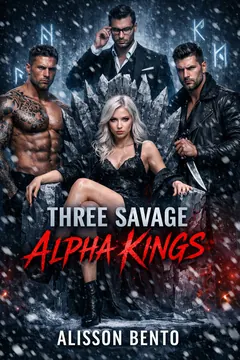
From Alisson Bento’s books
A shifter romance about one heroine, more than one devoted hero, and no choosing.
Kindle edition · Check Kindle Unlimited availability on Amazon.
The Roughest Draft: When Collaboration Is the Pressure
In The Roughest Draft, Emily Wibberley and Austin Siegemund-Broka introduce former writing partners Katrina Freeling and Nathan Van Huysen, brought back together by an unfinished contractual obligation. The US publisher’s synopsis and Pan Macmillan’s edition page identify coauthorship as the central professional arrangement.
That shared ownership changes the reader’s question. Two independent authors can disagree and return to separate desks. Coauthors have to decide what belongs in a piece of work for which both will be responsible. An apparently small editorial decision can therefore carry the larger problem of trust: whose judgment counts, who yields and whether the result still feels like something both people can claim.
This is the strongest starting point here if you want creative dependence rather than creative comparison. The manuscript gives the relationship a task it cannot solve simply by admiring talent. From a reader’s perspective, the interesting distinction is between finding another person impressive and being willing to make consequential decisions with them. Those are related pleasures, but they are not interchangeable.
Compare it with Beach Read before choosing. Henry’s advertised setup offers a contrast between kinds of storytelling; this one makes producing a common work the reason for renewed proximity. If you enjoy a romantic problem that keeps reappearing inside practical work, the coauthor premise may be more compelling. If you prefer a pair to retain separate creative territory, begin with January and Gus instead.
The authors’ own partnership is not evidence about what the fictional characters do. Read the novel as Katrina and Nathan’s story, not as a key to the private lives of the people whose names appear on its cover. Speculating about real couples adds nothing necessary to this particular reading choice.
Seven Days in June: Public Books, Private Meaning
Tia Williams’s Seven Days in June centers writers Eva Mercy and Shane Hall, whose adult reunion carries an earlier relationship. Their books also hold a private conversation. Those elements come from the publisher’s presentation, with additional context on the UK edition page.
The distinctive reading pleasure here is not just that both characters understand deadlines. It is the difference between an audience reading a work and one particular person recognizing a message within it. Public creative success cannot by itself settle a private misunderstanding. That gap gives this premise a different attraction from rivals assessing each other’s professional ability for the first time.
Choose this route if you want to think about two audiences receiving the same words. A published passage can attract admiration for one reason and carry another significance for somebody with private knowledge. The uncertainty of interpretation may be the appeal: when does recognition become communication, and when does a reader supply a meaning the words cannot settle? These are questions raised by the advertised device, not claims about particular pages or scenes.
Compare this with Katrina and Nathan’s shared manuscript. There is a difference between producing words together and treating separate works as a private address. Joint authorship requires one public text; an exchange through separately written books leaves individual voices in place. If you like creative knowledge between a pair without making every sentence a common decision, this is a useful alternative. Ask whether you want the labor of collaboration or the charged experience of being read by somebody specific.
This is also where a general label such as “bookish romance” becomes inadequate. Someone looking only for publishing banter might miss the appeal of a complicated past. Someone looking for a reunion might find the professional world an especially satisfying place for private and public identities to meet. The key is which question you want the relationship to answer, rather than which occupation appears in the blurb.
Business or Pleasure: The Writer Is Not the Name on the Cover
Rachel Lynn Solomon’s Business or Pleasure gives ghostwriter Chandler Cohen a memoir project with actor Finn Walsh. An earlier sexual encounter complicates their working arrangement. The author’s book page and Berkley’s description establish both the writing work and the adult premise.
This offers a different professional asymmetry from the two-author books. A ghostwriter works with another person’s account of themselves. For readers, that makes attention itself potentially charged: listening carefully is necessary to the job, yet careful attention can also resemble intimacy. The interesting question is how professional understanding differs from the personal trust needed in a relationship.
Memoir also brings a distinct kind of material into the comparison. A novelist can invent a character’s mistake; someone shaping a real person’s life story has to negotiate what that person is willing to reveal. This observation describes the appeal of the work arrangement, not a report about how every scene resolves. If you like romance in which someone learns to articulate what they want rather than merely appear desirable, this is the advertised setup to investigate.
The title should not lead you to mistake this for a restrained office comedy. Sexual communication is part of the stated premise. Readers wanting to avoid that subject should make their choice with the full publisher description in view. Conversely, a reader actively interested in the relationship between vulnerability, conversation and desire may find that feature more relevant than the celebrity element.
Compared with The Roughest Draft, the central professional connection is client and writer, not equal coauthors. Compared with The Dead Romantics, the word “ghost” refers to credited invisibility rather than an assurance of supernatural content. Those distinctions are worth keeping: two books can share a job title while offering quite different emotional and imaginative experiences.
The Dead Romantics: A Writing Crisis Meets Literal Ghosts
Ashley Poston’s The Dead Romantics follows romance ghostwriter Florence Day through bereavement and a supernatural encounter involving her editor. The publisher’s book page makes clear that the ghost is not just a metaphor. The official reading guide also identifies Florence’s ghostwriting relationship with Anne Nichols.
Select this one when you want imagination to change the rules of the romantic world, rather than simply be the characters’ profession. A supernatural premise invites a different kind of curiosity: not only whether two people can understand each other, but what connection can mean within the particular possibilities the story establishes. It is a significant change of reading mode from an entirely contemporary workplace setup.
Florence also offers a useful contrast with Chandler. Both make words for work that another name represents, yet fiction ghostwriting and memoir ghostwriting raise different reader interests. In the first, an established storytelling identity frames the assignment; in the second, another person’s lived experience supplies the material. You might be drawn to the invisible labor in both while still strongly preferring one surrounding story.
Bereavement is a central selection consideration, not a minor footnote to a cheerful cover. A book about love and ghosts can be inviting on one day and the wrong emotional company on another. That does not require ranking it as darker or lighter than every other title here. It means identifying the actual subject you would be spending time with. Someone wanting only creative rivalry has several more direct options on this list.
Read the paranormal premise without demanding that it operate as a realistic account of publishing employment. Its value to this comparison is precisely that it puts a working writer inside a world with an additional imaginative rule. Whether that appeals is a matter of reading taste, not a test of how seriously you take fiction.
Choose the Working Relationship Before the Trope Label
For a first choice, reduce the list to two genuinely different options. If you want two people recognizing each other’s creative authority, compare Beach Read and The Roughest Draft. The first offers separate projects and a genre challenge; the second offers shared work and a disrupted partnership. You are choosing between exchanging perspectives and having to build one result together.
If you want the boundary between professional knowledge and personal knowledge, compare Seven Days in June and Business or Pleasure. A previous relationship and a current commission create different reasons for knowing more about someone than a stranger would. The appeal can lie in discovering that knowledge is incomplete, however well someone can describe the other person publicly.
For writing in a supernatural frame, The Dead Romantics is the clearest departure among these five. That makes it useful as an alternative after a contemporary novel, rather than evidence that all writer romances have similar atmospheres. A sensible reading pair might deliberately change the world’s rules while keeping your interest in creative identity.
Those preferences can be combined with the broader guide to finding romance through trope combinations. Here, however, the named working relationships are the starting evidence. You do not need to assemble an elaborate list of labels before deciding which two premises interest you most.
Writer, Editor and Book Lover Are Different Starting Points
A novel can celebrate books without putting a professional writer at its center. An editor, agent, bookseller or enthusiastic reader brings a different kind of work and authority into a relationship. That is why this shortlist is narrower than a collection of every romance with a book on its cover. Wanting a protagonist who produces words is a reasonable preference in its own right.
For example, the interest in Chandler or Florence is partly the gap between doing the writing and being publicly recognized for it. Replacing them with a generic “person in publishing” would lose the reason for comparing them. Similarly, Katrina and Nathan’s coauthorship matters because both have a claim on a common work. A nearby profession would not automatically create that same relationship.
If what you actually enjoy is practical competence rather than literary culture, the guide to work and competence in blue-collar romance offers a useful neighboring question. It explores a broader attraction; this shortlist stays with particular writers and the different ways their work places them in contact with love.
A Reading Pair That Gives You a Real Comparison
For a small personal reading project, choose one question and two books rather than all five at once. A hypothetical reader fascinated by credit might pair Business or Pleasure with The Dead Romantics, observing how visible authorship affects their interest. Another reader who loves collaborative tension might pair The Roughest Draft with Beach Read and notice whether shared responsibility or independent ambition is more compelling.
After reading, ask which moments made the occupation feel necessary to the romance. Was the appeal a disagreement about taste, the vulnerability of sharing unfinished work, the distance between a public voice and a private person, or the simple pleasure of watching someone take another person’s work seriously? These are discussion questions, not instructions for evaluating the novels against an identical checklist.
Keep the choice tied to the actual edition you plan to read. This guide uses original titles to make identification easier and does not promise local-language publication, identical bonus material or current stock. The publisher or rights holder should identify the translation you select. There is no reason to buy a second edition merely because a cover makes the same work look unfamiliar.
Start with the professional relationship that most interests you, then sample the prose to see whether the voice is good company. If you want another kind of romantic world afterward, explore Alisson Bento’s romance catalog by the setting or relationship you feel like reading next. The best result of a writer-led shortlist is a clear next book, not a longer pile of uncertain possibilities.