Romance has many labels, and a newcomer can meet several of them in one blurb: dark, billionaire and mafia, for example. Those labels describe different things, including setting, tone, heat, conflict and the number of love interests, so they are easy to confuse. Many new readers now meet them first in short social media posts and video clips that use the labels without explaining them. This guide offers a plain map of the main romance subgenres, from contemporary and small-town romance to dark romance and romantasy, and suggests how to choose a first book.
Labels describe different things
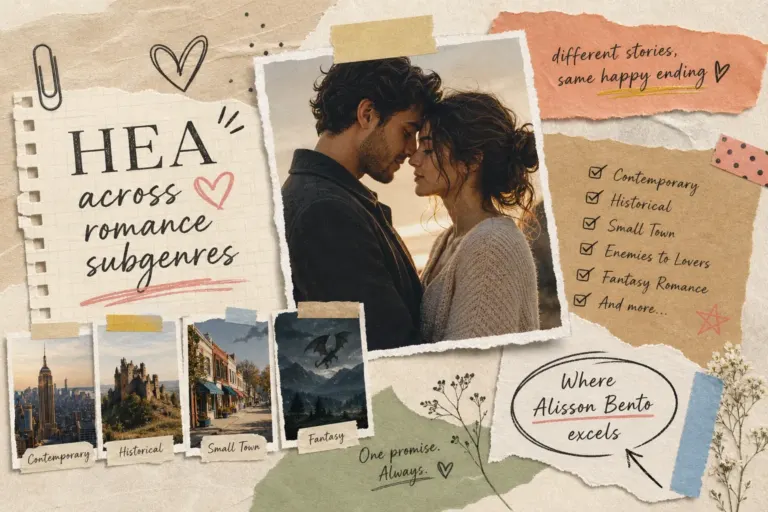
The first step is to notice that romance labels are not all the same kind of description. Some name a setting, such as small-town, cowboy or royal. Some name a period, such as historical. Some name supernatural elements, such as paranormal, shifter or vampire. Others describe tone or heat, such as cosy, slow-burn, dark or spicy. A single book can carry several labels at once, which is why a blurb can sound contradictory when it is simply layered.
It helps to ask four questions: where is the story set, what kind of world does it have, how intense is the conflict and how much heat does it include? If you can answer those four, you can usually find the right shelf faster than by scanning titles. Answering the questions also shows you which labels matter most to you and which can be left to chance.
You’re on the list. Your free stories are waiting in the Reader Vault. Every Letter a Sin
Heat and tone are a separate scale
A common source of confusion is treating heat as if it were a genre. Heat describes how explicit the intimate scenes are, and it can range from a story that fades away before the bedroom door to one that is open-door and spicy. Readers often use the words open-door, closed-door and spicy to describe that range. Heat is a separate scale from genre, so a dark romance can be sensual or restrained, and a cosy small-town romance can include steamy scenes. Tone is different again. It describes the emotional weather of a book: whether it feels warm, playful, tense, melancholy or bleak.
Keeping the three scales apart makes choosing much easier. If you know you prefer a warm tone but are unsure about heat, look for a clear statement of heat in the blurb or the sample. If you want a tense tone, the subgenre label will tell you more about the conflict than about the bedroom. Treating heat, tone and genre as three questions rather than one lets you find books that fit your preferences without guesswork.
Contemporary, small-town and cowboy romance
Contemporary romance is the broadest category. Its characters live in the modern world, with jobs, families and problems a reader would recognise. Small-town romance narrows the setting to a close community where everyone knows everyone. Cowboy romance adds ranch life, rural work and often a western landscape. These are setting labels, so they combine easily with others: a small-town cowboy romance can be sweet, emotional or steamy depending on its other tropes.
Settings like these can be an easy entry point because the community and the work give the story its structure. A reader who wants comfort can look for a slow-burn tone, and a reader who wants more intensity can look for a contemporary romance with a sharper conflict. Both sit on the same shelf and feel very different in practice.
Dark, mafia and romantic suspense
Dark romance covers stories with morally grey heroes, intense conflict and themes that can be uncomfortable. Captivity, obsession, violence and power imbalance are common examples. Mafia romance is often placed inside dark romance because the criminal setting raises the stakes, though the tone varies widely. Real organised crime causes serious harm, and fiction that borrows its look should be read as fiction, not as a glamorous or harmless world.
Romantic suspense is different. The story centres on danger and an investigation, and romance runs alongside. The difference matters: a reader who wants a thriller may be disappointed by a book that spends most of its time on the relationship, and a reader who wants a slow romance may find a suspense plot tiring. The guide Dark romance vs romantic suspense: follow the source of danger sets out the simplest way to tell the two apart: ask where the danger comes from.
If you are considering dark romance, read the content warnings before you start. Dark romance content warnings without major spoilers: a practical reading check shows how to check for major themes without spoiling the plot. The most intense themes are not always listed in the first lines of a blurb, so it is worth looking at a fuller description or a sample.
Paranormal, romantasy and fantasy romance
Paranormal romance includes supernatural beings such as shifters, vampires and ghosts, usually inside a world close to our own. Romantasy blends romance and fantasy, and the magic system, the political structure and the invented world often carry as much weight as the love story. Fantasy romance is a looser term for a romance set in an invented world, which may or may not include strong magic. The question to ask is which element leads: the romance, the supernatural or the fantasy setting.
Once you know which element leads, the book choice gets easier. If the couple’s relationship is the centre and the supernatural is part of their everyday life, paranormal romance will probably suit you. If you want a large world with politics, quests and magic that the plot must solve, romantasy may fit better. Both are romances, but the reader’s attention goes to different places.
Sports, historical and other popular categories
Sports romance centres on athletes, teams and competition, and a training schedule or a season often shapes the romance. Historical romance is set in an earlier period, and its social rules, manners and expectations supply much of the tension. Both categories have their own conventions, so a reader who likes one may need to adjust expectations for the other. Sports romance can move through seasons and tournaments, while historical romance often spends more time on what characters can and cannot say to one another.
Other popular categories, such as military romance or workplace romance, work the same way. They combine a setting with a type of conflict. When you meet an unfamiliar label, ask what job, place or rule shapes the central relationship, and you will usually understand the category quickly.
Books to see the labels in action
All three examples below are Alisson Bento’s own novels, chosen because they show labels and premises working together. Dallas Danger shows how several labels can share one story. Michelle Kennedy arrives at a Dallas law firm pretending to be a nervous applicant for temporary data-entry work. Hidden in her blazer is a biometric drive holding evidence of a laundering operation, and she survived a car bombing three days earlier. The book is described as a mafia cowboy billionaire romance, so its labels point to a criminal plot, a western flavour and wealth all at once, while the opening itself plays out like suspense.
Corrupt Calculations is a story in which danger comes through numbers. Forensic accountant Priya Nasser begins with a charitable fund and a discrepancy of nine cents, and that small routing error opens onto shell companies and political connections inside a powerful family’s firm, where protection is hard to separate from control. It is a useful example of how romantic suspense’s investigative focus can sit inside the power dynamics that dark romance readers look for.
The Kingpin’s Songbird shows how a premise can tell you about intensity before any label does. Violinist Tamsin Croft is forced into espionage: Callum Hawkes controls a hostage’s access to medication and orders her to copy financial records inside a tightly monitored fortress. Coercion, a hostage and a medication deadline signal a high-pressure read, so check the content notes carefully before you begin.
Reading a blurb for its labels
A blurb usually gives you the labels in a predictable order. The opening lines name the situation and the setting, the middle describes the conflict and the central pressure, and the closing lines often summarise the tone or add a tag such as a trope or a subgenre. Read the whole blurb before deciding. A label that appears only at the end may be the most important clue about the book’s emotional shape, while a striking first line may describe a plot device rather than the romance itself.
Look for three things in particular. First, find who the romance is between, because some books focus on two people and others on a group. Second, look for the source of danger, if there is one, since that tells you whether the suspense is criminal, supernatural or personal. Third, check whether the blurb mentions content warnings or themes such as captivity, grief or betrayal. When a blurb is vague, the sample and the content notes can fill the gap, and a reputable blurb should make the main tropes easy to spot without spoiling the ending.
How to choose your first romance
Start with three questions: what setting do you enjoy, how dark do you want the story to be, and how many love interests can you comfortably follow? If you want warmth, begin with contemporary or small-town romance and a slow-burn or cosy tone. If you want suspense, try romantic suspense, where the danger drives the plot. If you want darkness, read a dark romance with clear content notes and decide in advance which themes you will accept.
If you want magic, choose between paranormal romance, where the supernatural is part of the couple’s world, and romantasy, where the fantasy setting and the romance are both central. Each choice asks the reader to accept different rules, and it is better to know which rules you enjoy before you start.
Then sample. Read the first chapter of two or three books in the subgenre you are considering. A sample reveals voice and pace in a way that a label cannot. Notice whether the romance begins early or the plot arrives first, and whether the tone feels warm, tense or bleak. Compare the descriptions of any books you are considering, including the examples in this guide, with their samples before you decide.
Quick answers
What is the difference between romance and romantasy?
Romance centres the relationship, while romantasy gives equal weight to a fantasy world, a magic system and political or personal conflicts. A romantasy usually has a romance at its heart, but the fantasy plot can lead the story.
Do I need to read dark romance before mafia romance?
No. Mafia romance covers a wide range, from stories with a lighter tone to much darker ones. Check the tropes and content notes for each title. The criminal setting is fiction, and real organised crime causes serious harm, so read each book for how it handles that.
Which subgenre is best for a first book?
There is no single right answer. Choose the tone you want for the next few evenings, sample two or three books, and let the first chapter decide. A slow-burn contemporary is an easy start if you are unsure about darker themes, and a dark romance is best chosen after you have checked its content notes.